Creating a Positive First Impression: Onboarding Best Practices
Create powerful first impressions with new employee onboarding. Discover best practices that improve retention, productivity, and employee satisfaction in your organisation.

Creating a Positive First Impression: Onboarding Best Practices
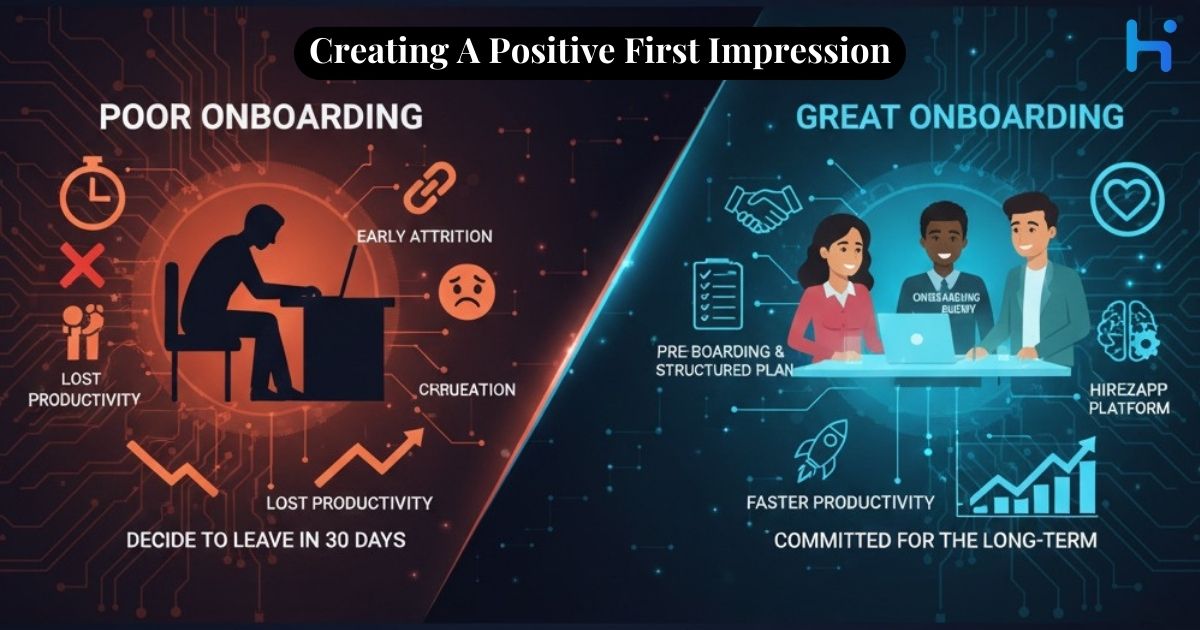
Your new hire walks through the door on their first day.No one greets them.They spend an hour finding an empty desk.No one explains the culture or introduces teammates.
By lunch, they are questioning their decision to join.
This scenario happens every day. Many organizations fail to realize that first impressions during onboarding determine whether great talent stays or leaves early.
“You only get one chance to make a first impression, especially with new employees.”
The Critical First 30 Days
Research reveals a sobering reality.
Key onboarding facts:
- 70% of new hires decide within the first month whether they will stay
- 29% make that decision within their first week
- 20% to 23% quit within 45 to 90 days
- Each failed hire costs $25,000 to $50,000 depending on seniority
The causes are clear:
- 30% leave due to misaligned expectations
- 19.5% cite lack of team or culture connection
- 17.4% leave because of poor onboarding
Even more alarming, 44% of new employees report regrets in their first week, with many emotionally overwhelmed and second-guessing their choice.
This shows that onboarding is not about comfort.It is about retention and survival in competitive talent markets.
Why First Impressions Matter During Onboarding
Onboarding is your only chance to set the psychological tone of employment.
When new hires experience:
- Warmth
- Organization
- Clear direction
They perceive the company as competent and caring.
When they experience:
- Confusion
- Isolation
- Administrative chaos
They question their decision almost immediately.
The impact of strong onboarding:
- 50% to 82% higher retention
- 34% faster productivity
- 54% to 70% higher performance
- 62% meet early performance milestones
“Great onboarding doesn’t just welcome people. It commits them.”
Strategy 1: Pre-Boarding Begins Before Day One
First impressions start before the first day.
Effective pre-boarding includes:
- A personalized welcome email within 24 hours
- Introduction to the team and company culture
- Prepared workspace and system access
- A manager briefed on the hire’s background and goals
When employees arrive to a ready desk and prepared manager, they feel valued instantly.This signals professionalism, care, and intention.
Strategy 2: Make Day One Intentional and Welcoming
Day one should be designed, not improvised.
Key elements of a strong first day:
- A personal welcome from the manager
- Team introductions done individually
- A walkthrough of facilities and workflows
- Sharing the company story, mission, and values
- Clear expectations for the first week
Small human details matter. Correct name pronunciation.Genuine enthusiasm.Recognition of individual strengths.
“People remember how you made them feel long after they forget what you said.”
Strategy 3: Provide Structured Role-Specific Onboarding
After the welcome, clarity becomes critical.
Best practices include:
- Clear explanation of responsibilities and success metrics
- Learning spread across weeks, not one day
- Bite-sized training modules
- Assigned mentors or onboarding buddies
Provide a 30, 60, and 90-day roadmap with measurable goals.This structure reduces anxiety and accelerates confidence.
Strategy 4: Build Connection and Cultural Integration
Culture is not a document.It is relationships.
Effective cultural onboarding includes:
- Informal team interactions like coffee chats or lunches
- Cross-department introductions
- Leadership sharing vision and values
- Storytelling that reflects company behaviors
When new hires feel connected, they feel they belong.Belonging drives retention.
Strategy 5: Set Clear Expectations and Feedback Loops
Misalignment is the top reason new hires leave.
Combat it early by:
- Clarifying role expectations on day one
- Explaining growth paths and performance standards
- Being transparent about policies and benefits
- Scheduling weekly manager check-ins
Feedback during the first month should support, not evaluate. Early conversations prevent small issues from becoming exits.
Strategy 6: Make Onboarding Personal and Engaging
Consistency matters, but personalization matters more.
Different people learn differently.
Strong onboarding adapts by:
- Offering multiple learning formats
- Adjusting pace based on experience
- Recognizing early wins publicly
- Asking for onboarding feedback
When employees feel seen as individuals, commitment follows naturally.
“Belonging is the strongest first impression.”
Measuring Success
Track onboarding effectiveness intentionally.
Key metrics to monitor:
- 30, 90, and 365-day retention
- Time-to-productivity
- New hire engagement scores
- Onboarding satisfaction feedback
When new hire engagement matches or exceeds company averages, onboarding is working.When it doesn’t, the process needs adjustment.
The Competitive Advantage
Organizations excelling at onboarding:
- Retain talent longer
- Reach productivity faster
- Build stronger cultures
- Strengthen employer brand perception
Strong onboarding shows that people matter.
Your onboarding process is not HR administration.It is your first and most important leadership act.
Ready to create lasting first impressions? HireZapp’s onboarding workflows, structured checklists, and engagement tools ensure every new hire feels welcomed, prepared, and supported while nothing slips through the cracks. Build loyalty from day one with HireZapp.
Frequently Asked Questions
1. Why is first impression onboarding so critical?
Because 70% of employees decide within the first month whether they belong. Strong first impressions build commitment while poor ones trigger early exits.
2. What does poor onboarding cost organizations?
Early attrition costs $25,000 to $50,000 per hire, damages productivity, and harms employer brand reputation.
3. What defines onboarding best practices?
Pre-boarding, intentional day one experiences, structured training, cultural integration, clear expectations, feedback loops, and personalization.
4. How long should onboarding last?
Typically 90 days, with the most intensive focus in the first 30 days.
5. What is the difference between onboarding and orientation?
Orientation is administrative. Onboarding is holistic, spanning culture, training, relationships, and engagement.
6. How does onboarding improve retention?
Formal onboarding improves retention by 50% to 82% by addressing expectations, connection, and support early.
7. What role does the manager play?
Managers are the most critical onboarding influence. Their engagement directly impacts retention and productivity.
8. How should onboarding success be measured?
Through retention, engagement, performance milestones, and direct new hire feedback.