Skills Assessment and Screening: How to Hire Better Candidates
Master candidate screening and evaluation with expert strategies. Learn proven techniques, tools, and best practices to identify top talent and reduce hiring mistakes.


Skills Assessment and Screening: How to Hire Better Candidates
Every day, hiring managers face the same frustration
A candidate looks perfect on paper.You schedule the interview.Twenty minutes in, it becomes clear they overstated their experience.
Hours of effort are wasted on someone who was never qualified.
This scenario repeats across organizations constantly, slowing hiring momentum and draining resources.
“A polished resume without real skills is the fastest way to waste interview time.”
The Real Cost of Poor Candidate Screening
Most hiring teams underestimate how much ineffective screening costs.
Time spent reviewing resumes:
• Initial screen: 6 to 8 seconds per resume
• Detailed review: 30 to 90 seconds each
• For 200 to 500 applications: 5 to 15 hours
• At scale: up to 25 hours analyzing 500 resumes
This administrative burden steals time from strategic activities that improve hiring outcomes.
Quality concerns are even worse
• 62 percent of applicants falsify resume information
• Inflated responsibilities
• Fake skills
• Incorrect employment dates
• Exaggerated qualifications
Candidates who misrepresent themselves often perform poorly, damaging team productivity and culture.
Most teams still rely on:
• Gut feelings
• Subjective judgment
• No structured scoring
• Unclear evaluation standards
This creates inconsistency and missed talent.
Building a Structured Candidate Screening Process
Effective evaluation begins with clarity.
Step 1: Define requirements before reviewing any resume
Create a scorecard separating:
Must-haves
• Critical experience
• Essential skills
• Certifications
• Industry knowledge
Nice-to-haves
• Bonus capabilities
• Additional tools
• Value add experience
This transforms decisions from subjective impressions to objective measurement.
Step 2: Build your evaluation framework
Rank what matters most.
Example for software roles:
• Must-have: 5 years coding experience
• Preferable: knowledge of specific programming languages
Prioritisation prevents good candidates from being rejected for minor mismatches.
Use Multiple Screening Layers
1. Skills Assessments
Test whether candidates have real skills.
• Coding tests
• Project management tests
• Writing assessments
These provide objective data rather than relying on claims.
2. Structured InterviewsUse STAR method (Situation, Task, Action, Result).
Instead of asking: “Are you a good leader?”
Ask: “Tell me about a time you led a team through a challenging project. What did you do and what was the result?”
3. Background ChecksVerify what matters:
• Employment dates
• Education
• Job titles
• Responsibilities
• References
This prevents misrepresentation from slipping through.
“Structured evaluation replaces guesswork with evidence.”
How Evaluation Impacts Quality of Hire
Research shows the power of skills-based evaluation.
• Skills tests used before resume screening deliver 87 percent hire satisfaction
• When used after, satisfaction drops to 78 percent
• Multi-measure testing delivers 92 percent satisfaction
Retention impact is dramatic
Employees hired through skills evaluation show:
• 25 percent higher performance ratings• 40 percent lower turnover
This creates compounding benefits:
• Lower replacement costs
• Stronger culture
• Better team continuity
One organisation reported 15 percent improvement in retention after implementing skills-based systems.
Quality of hire determines the entire success of your hiring strategy.
Using Technology to Enhance Screening
Modern hiring tools transform evaluation.
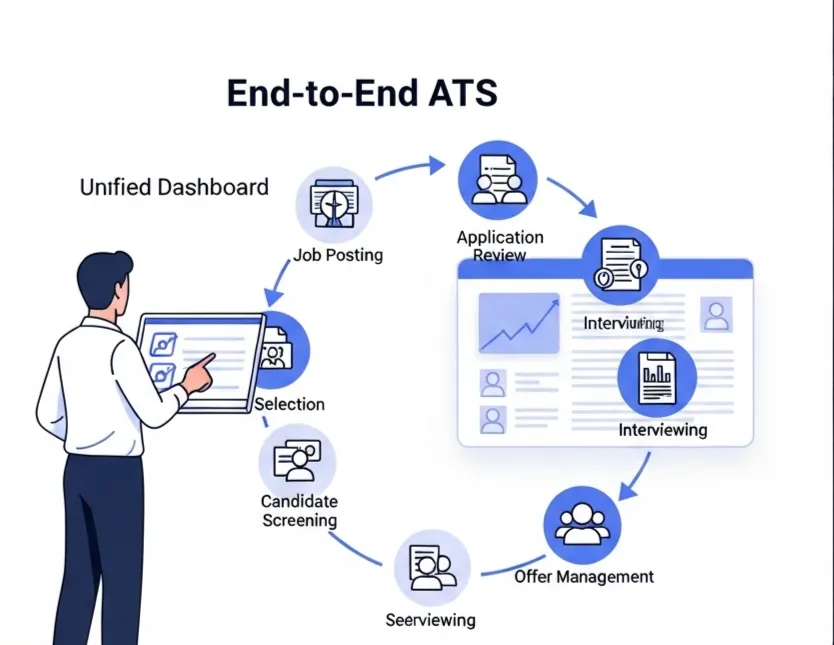
Applicant Tracking Systems (ATS)
They automatically:
• Parse resumes
• Extract skills
• Identify experience
• Highlight education
• Create searchable profiles
This eliminates manual data entry and saves time.
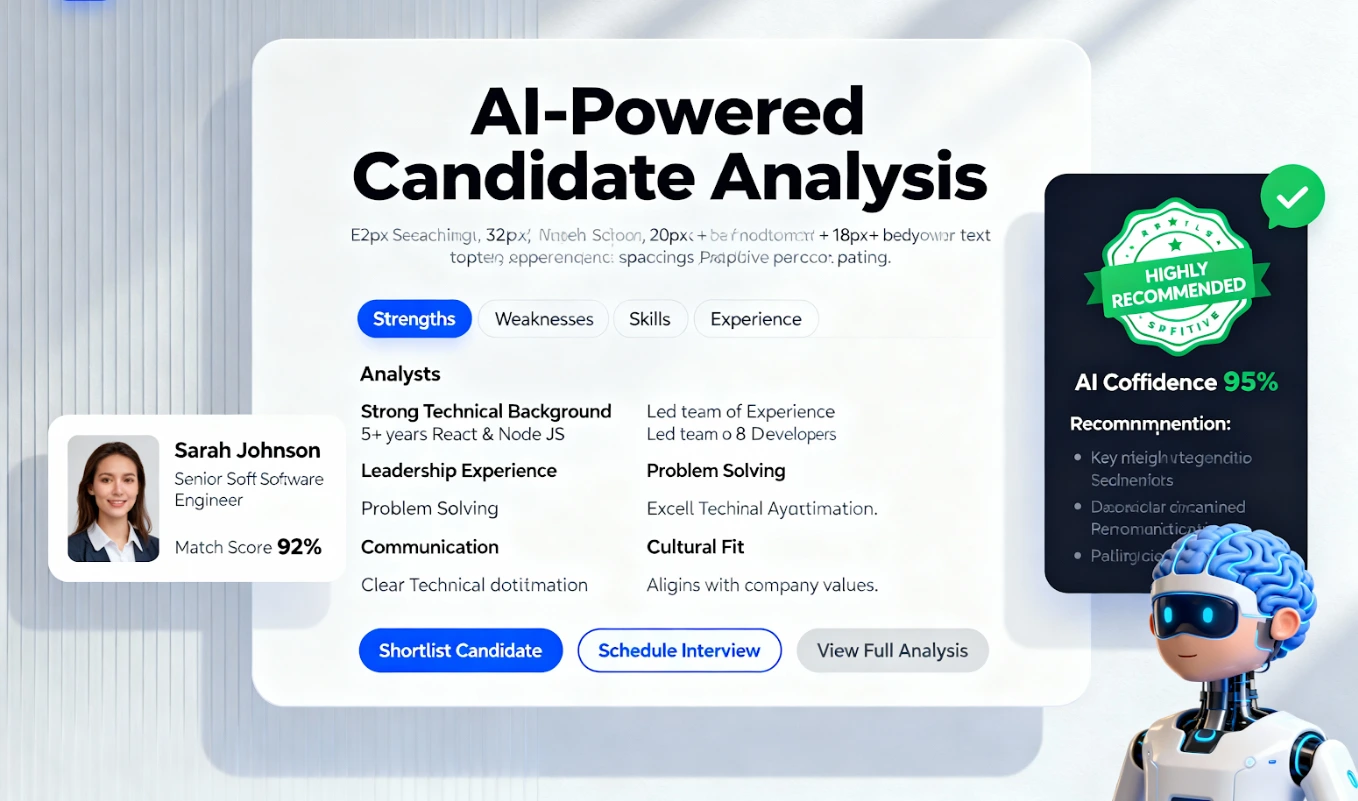
AI-powered screening
Machine learning analyzes:
• Patterns in successful hires
• Traits that predict performance
Organizations using AI report:
• 35 percent to 53 percent reduction in time-to-hire
• 75 percent less interview hours
• One team saw 63 percent faster hiring with AI resume analyzer
Skills Assessment Platforms
• Coding challenges
• Writing assignments
• Case problems
These show real capability, not resume polish.
Video Interviewing
• Asynchronous responses
• Assess communication
• Understand personality
Technology is a tool, not a replacement.
Let tech handle:
• Resume parsing
• Initial filtering
• Tests
Recruiters focus on fit, values, and relationship building.
Reducing Bias in Candidate Evaluation
Even well-intentioned teams experience bias.
Common biases include:
• Confirmation bias
• Halo effect
• Affinity bias
Combat bias through structure
• Standardised criteria
• Blind resume reviews
• Diverse hiring panels
• Documented scoring
• Skills-based testing
A coding challenge does not care where someone studied.It shows whether they can write functional code.
“Skills reveal what resumes hide.”
Real-World Implementation: Getting Started
Step 1: Audit your current process
Ask:
• Where do mistakes happen?
• Do candidates exaggerate experience?
• Do recruiters reach opposite conclusions?
Step 2: Build your evaluation framework
• Must-haves and nice-to-haves
• Scorecards
• Clear criteria
• Team training
Start with one new method:
• Skills assessment
• Structured interviews
• Background checks
Step 3: Measure results
Track:
• Performance ratings• Retention• Manager satisfaction• Time saved• Impact on time-to-hire
Step 4: Iterate continuously
Hiring evolves: Markets change, tools improve, needs shift.
Update criteria based on real performance data from your organization.
The Competitive Advantage of Smart Screening
Organizations that master evaluation gain advantages:
• Faster hiring
• Better talent selection
• Fewer mis-hires
• Stronger teams
• Higher brand credibility
Candidates notice how they are treated.Fair, fast, respectful screening improves your employer brand.
“Candidates judge your values based on your hiring process.”
Smart screening transforms hiring from reactive to predictable.
It frees recruiters from wasted interviews, accelerates exceptional talent identification, and builds teams that perform and stay.
Ready to transform your evaluation process? HireZapp’s AI-powered screening improves quality of hire by up to 40 percent.
Frequently Asked Questions (FAQs)
1. How long should recruiters spend reviewing each resume?
Initial screen: 6 to 8 seconds Detailed screen: 30 to 90 seconds. Specialised roles: 2 to 3 minutes. High volume roles: use ATS and automation for efficiency.
2. What are pre-employment screening best practices?
• Clear must-haves and nice-to-haves
• Skills assessments aligned to job
• Structured interviews
• Reference checks
• Background verification
• Diverse hiring panels
• Documented decisions
• Consistent criteria
3. How does skills assessment improve evaluation?
Skills tests provide objective evidence of ability.Results:
• 87 percent satisfaction with hires
• 25 percent higher performance
• 40 percent lower turnover
4. What screening criteria should job postings include?
• Must-have qualifications
• Nice-to-have skills
• Role-specific competencies
• Behavioral expectations
Clear criteria allow self-selection, improving applicant quality.
5. How can I reduce bias in screening?
• Standardized scoring
• Blind resume reviews
• Diverse panels
• Skills assessment
• Documented decisions
• Focus on qualifications
6. What is the impact of poor screening?
• Mis-hires
• Underperformance
• Lower morale
• High turnover
• Wasted time
• Damage to employer brand
Over 62 percent of applicants falsify data, making rigorous evaluation essential.