Why Candidate Experience Matters (And How to Get It Right)
Understand why candidate experience is critical for talent acquisition. Get actionable insights on improving your hiring process and building a stronger employer brand.

Why Candidate Experience Matters (And How to Get It Right)
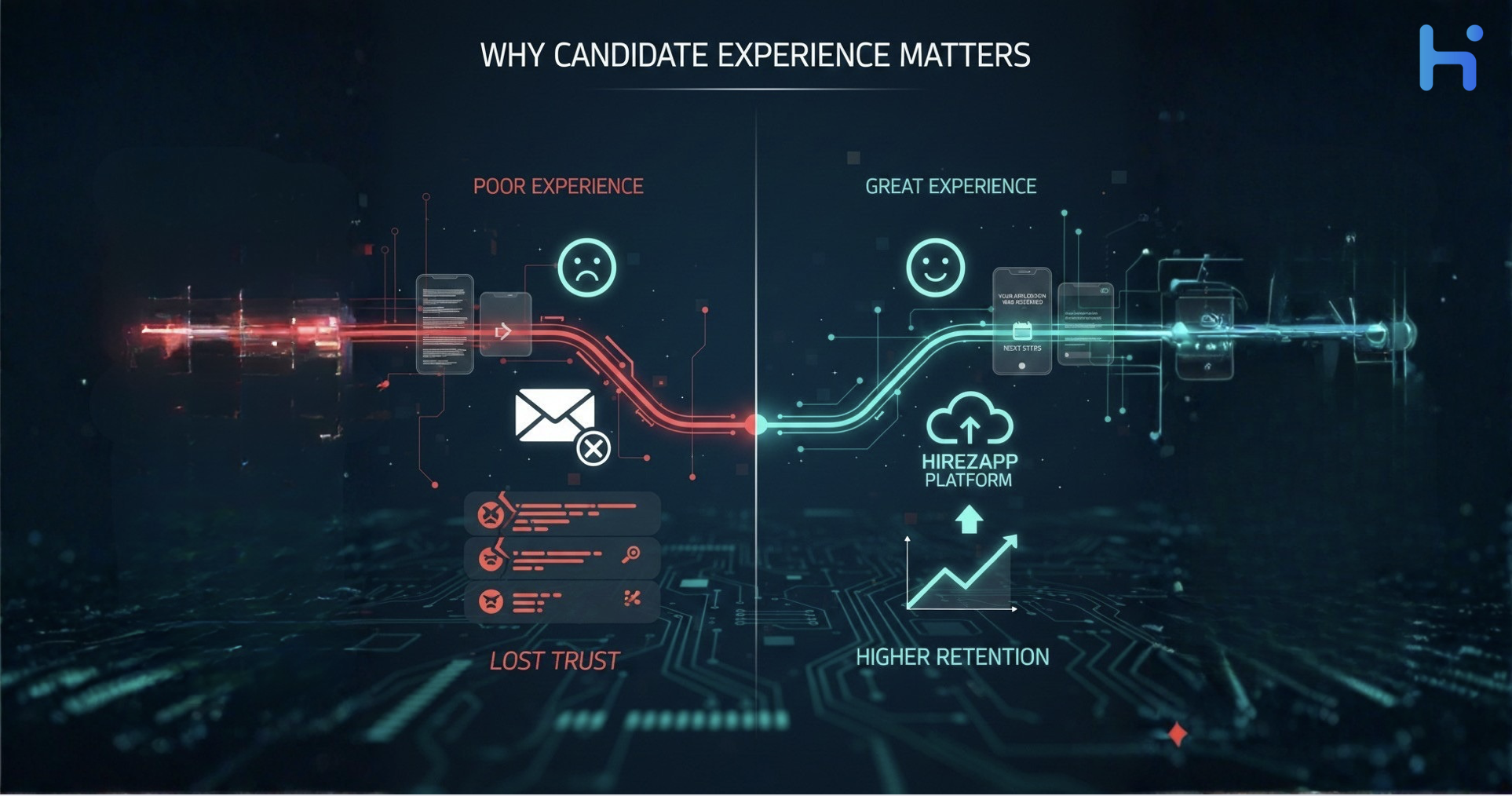
Your company posted an exciting job opening. A qualified candidate applied with genuine enthusiasm.Then… silence.
Weeks passed. No updates. No acknowledgment. Finally, a generic rejection email arrived with no feedback.
That candidate shared their frustration online. Others saw it. Applications dropped.You didn’t just lose one candidate, you lost trust.
This is how poor candidate experience quietly damages employer brands.
Candidate experience is one of the most underestimated factors in modern hiring.
While organizations focus heavily on filling roles fast, they often overlook how candidates feel during the process.
Here’s what the data shows:
- 60% of candidates report having a poor hiring experience
- 72% share that experience publicly on social media or review platforms
- A negative experience can reduce future applications by 22%
One bad experience doesn’t end with one candidates, it multiplies.
And the financial impact is real.
Organizations that prioritize candidate experience see:
- 70% lower cost-per-hire
- Higher offer acceptance rates
- Stronger referral pipelines
Virgin Media famously reported losing £4.4 million due to negative candidate experiences impacting brand perception and customer loyalty.
Why Candidate Experience Matters More Than Ever
Today’s candidates research employers before applying.
They look at:
- Glassdoor reviews
- Social media presence
- Employee testimonials
- Online reputation
75% of candidates research a company before applying.
If what they find feels disorganized, unresponsive, or impersonal, they simply move on.
Expectations have also changed:
- 21% expect interview scheduling within 2–6 days
- 29% expect communication within one week
Silence now equals disinterest.
Every interaction or lack of one shapes perception.
What a Great Candidate Experience Looks Like
1. Clear & Honest Job Descriptions
Roles should outline:
- Responsibilities
- Expectations
- Growth opportunities
- Compensation clarity
This helps candidates self-qualify and apply with confidence.
2. Simple, Respectful Application Process
A strong experience includes:
- Mobile-friendly forms
- Minimal required fields
- No unnecessary repetition
A smooth application signals professionalism.
3. Consistent Communication
Candidates should always know:
- Their application was received
- What the next step is
- When they’ll hear back
Even automated updates build trust.
4. Structured, Human Interviews
Interviewers should:
- Review profiles in advance
- Ask relevant, consistent questions
- Respect the candidate’s time
Preparedness = respect.
5. Thoughtful Closure
Rejections should still feel human.
A short, considerate message with context leaves a positive impression even when the answer is no.
The Long-Term Impact of Strong Candidate Experience
When done right, candidate experience delivers measurable business results:
- 80% repeat applications from past candidates
- 66–79% referral rates
- Higher retention and engagement
- Stronger employer brand perception
Employees who feel respected during hiring begin their journey with trust and motivation.
The hiring process sets the emotional tone for the entire employee lifecycle.
How HireZapp Helps You Get It Right
This is where HireZapp comes in.
HireZapp helps organizations design human-first, data-driven hiring journeys by:
- Streamlining communication at every stage
- Automating follow-ups without losing personalization
- Giving visibility into candidate drop-offs and bottlenecks
- Helping teams deliver faster, more respectful hiring experiences
With HireZapp, companies don’t just fill roles, they build lasting candidate relationships.
Frequently Asked Questions
1. Why does candidate experience matter so much today?
Because candidates share their experiences widely. Poor experiences damage employer brand, reduce applications, and increase hiring costs. Positive experiences, on the other hand, attract better talent and improve retention.
2. How does negative candidate experience impact business outcomes?
It leads to fewer applications, lower acceptance rates, and even customer loss. Studies show companies can lose millions in revenue due to reputational damage from poor hiring practices.
3. What creates a strong candidate experience?
Clear communication, respectful interactions, timely updates, transparent processes, and meaningful feedback, all of which signal professionalism and care.
4. Can small companies improve candidate experience without big budgets?
Absolutely. Simple actions like timely emails, clear job descriptions, and structured interviews make a significant impact without major investment.
5. How does candidate experience affect long-term retention?
Employees who have positive hiring experiences start with higher trust and engagement, leading to stronger retention and performance.