Best Greenhouse Alternatives for Structured Hiring Without the Complexity
Running your hiring through a maze of spreadsheets, DMs, and Google Forms feels chaotic. You get a flood of applicants, but finding the right ones is slow and inconsistent. Great candidates drop off because they never hear back, and you waste time on manual screening instead of talking to top talent. If you've looked at powerful systems like Greenhouse, you know they are built for large enterprises, not for a growing team that needs speed and simplicity.
The goal is simple: create a fair, repeatable hiring process that helps you identify and hire the best person, faster. This guide explores several Greenhouse alternatives designed for teams that need the power of structured hiring without the enterprise-level complexity and cost.
First, What Is Structured Hiring (And Why Do Most Tools Overcomplicate It?)
Structured hiring is just a simple process of asking every candidate for the same role the same questions and evaluating their answers against the same criteria. It’s the fastest way to make fair, accurate, and defensible hiring decisions. For small and medium-sized businesses, this is crucial for building a strong team.
So why does it often feel so difficult to implement? The problem is rarely the concept, but the tool.
- Enterprise Complexity
Many systems are built with thousands of features, permissions, and approval workflows that a smaller team simply does not need. - Steep Learning Curve
Complex tools require significant training and a dedicated administrator to set up and manage scorecards and interview kits. - Rigid Workflows
Some platforms force you into a specific process, making it hard to adapt as your company's needs change. - High Cost
You often pay for a massive suite of features when you only need a streamlined set of tools to screen, interview, and hire. - Poor Candidate Experience
If the system is clunky for you, it is often slow and impersonal for your applicants, damaging your employer brand.
Comparing Your Options: A Practical Look at Greenhouse Alternatives
Instead of a direct feature-by-feature battle, let's look at the types of solutions available. Your ideal tool depends on your stage, team size, and biggest hiring bottleneck. This is a practical applicant tracking system comparison for founders and recruiters.
<b>Alternative 1: Spreadsheets and Forms</b>
This is the default starting point for many founders. You use Google Forms to collect applications, a spreadsheet to track candidates, and email for all communication. It’s a manual but functional system for very low hiring volumes.
Who is this best for?
This approach works for solo founders or very early-stage startups hiring their first one or two employees. Once you have more than one role open or receive more than 20-30 applicants per role, this system breaks down quickly.
<b>Alternative 2: HireZapp</b>
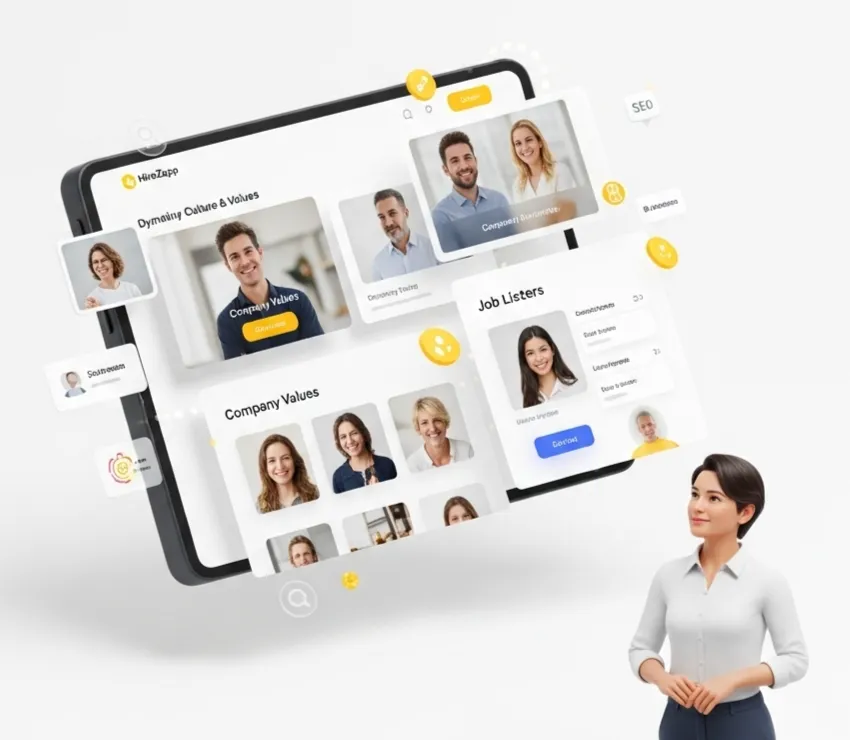
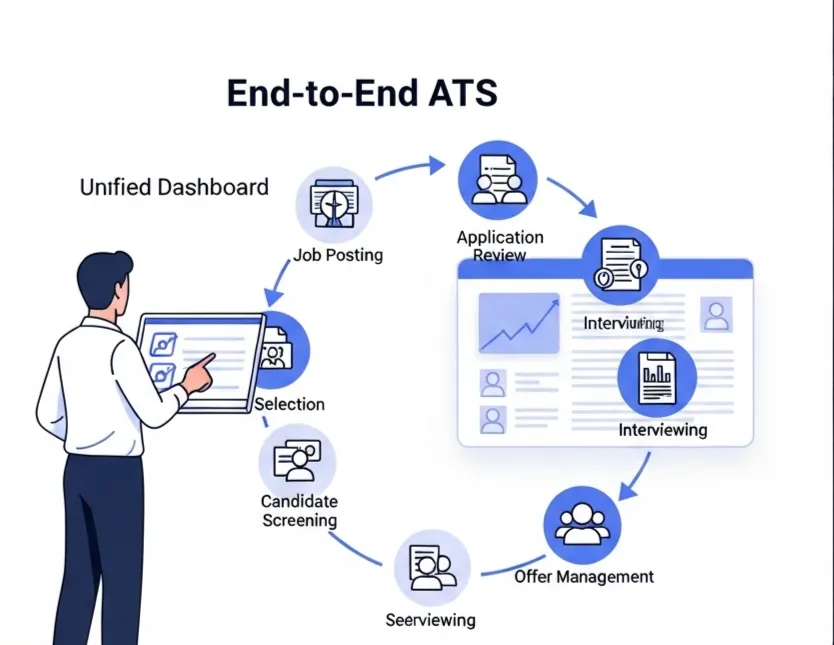
HireZapp is a dedicated hiring platform for startups and growing teams designed to make structured hiring simple and repeatable. It focuses on converting applicants to hires faster by automating the most time-consuming parts of the process, from generating a job description to screening and follow-up.
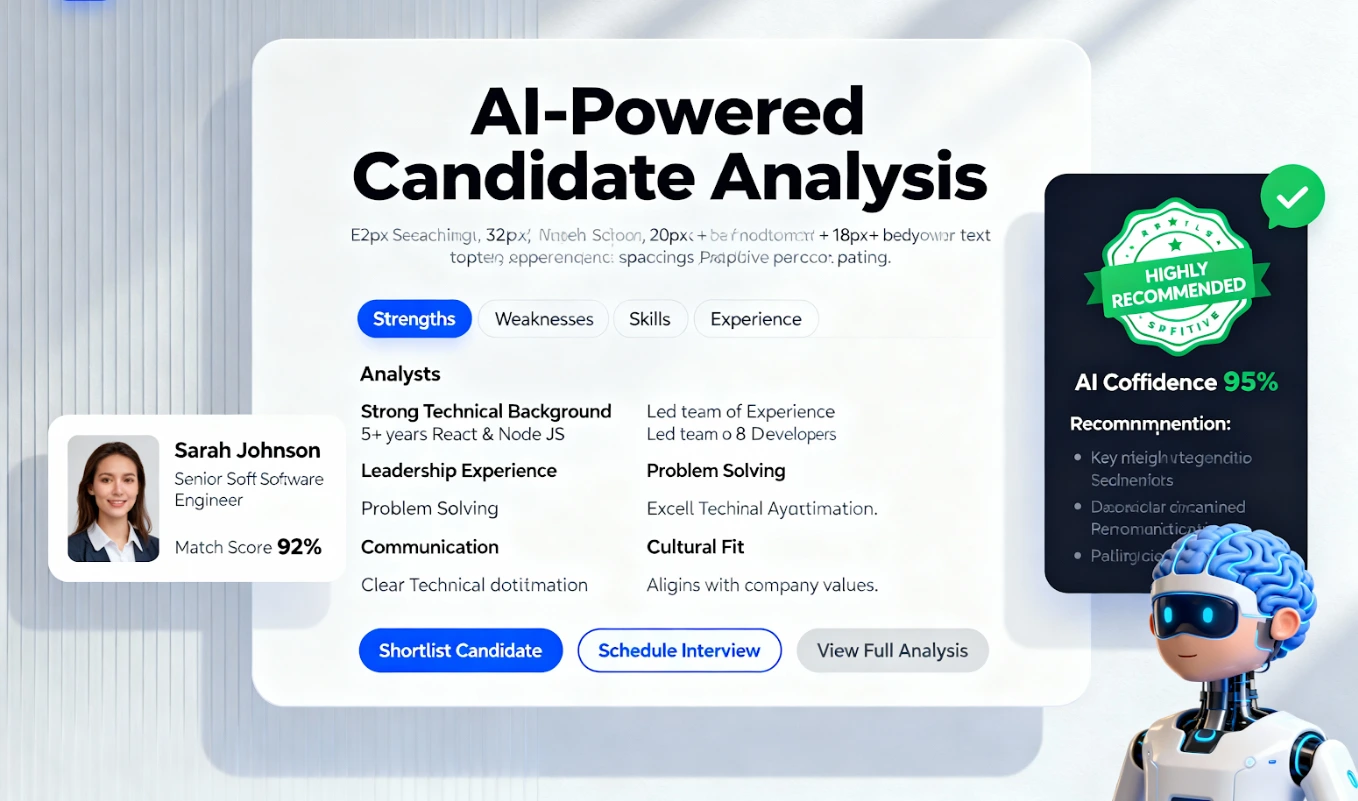
It simplifies structured hiring by embedding consistency right from the start. AI-generated job descriptions and application forms ensure you're asking the right questions upfront. The Job Match Score then provides an instant, data-driven baseline for every applicant, allowing you to focus your time on the best-fit candidates.
Who is this best for?
This is ideal for ad-spending companies tired of applicant drop-off, LinkedIn recruiters drowning in manual coordination, and founders or HR leaders looking for an easy to use ATS to build their first scalable hiring process.
Simplify Structured Hiring. Lower Complexity, AI Power.
Struggling with complex ATS? HireZapp delivers AI-powered structured hiring, automating screening and boosting ROI for scaling teams.
Trusted by 200+ recruiters
|Backed by AWS & NVIDIA
Your Checklist for Choosing the Right ATS for Structured Hiring
As you evaluate options, focus on the features that directly support a consistent and efficient hiring process. Use this checklist to guide your decision.
- Fast Setup
Can you create and post a job with a structured application form in under 10 minutes? - Automated Screening
Does the tool help you automatically surface the most qualified candidates based on job requirements? - Custom Scorecards
Can you easily create and share simple scorecards for interviewers to use? - Candidate Communication
Does the system allow for branded, automated, and personalized emails to keep candidates engaged? - Transparent Pricing
Is the pricing model clear and does it scale with your actual hiring needs, like a credit-based system? - Sourcing Support
Does the platform provide tools or playbooks to help you find candidates, not just manage applicants?
Common Mistakes That Keep Teams Stuck
Switching tools can be a huge leap forward, but only if you avoid these common pitfalls. Watch out for these mistakes when choosing your next hiring platform.
- Choosing another overly complex system that just trades one problem for another.
- Focusing only on recruiter features and forgetting the candidate experience.
- Failing to get buy-in from the hiring managers who will be using the tool daily.
- Underestimating the importance of automated communication for your employer brand.
- Paying for an annual enterprise contract when your hiring needs fluctuate.
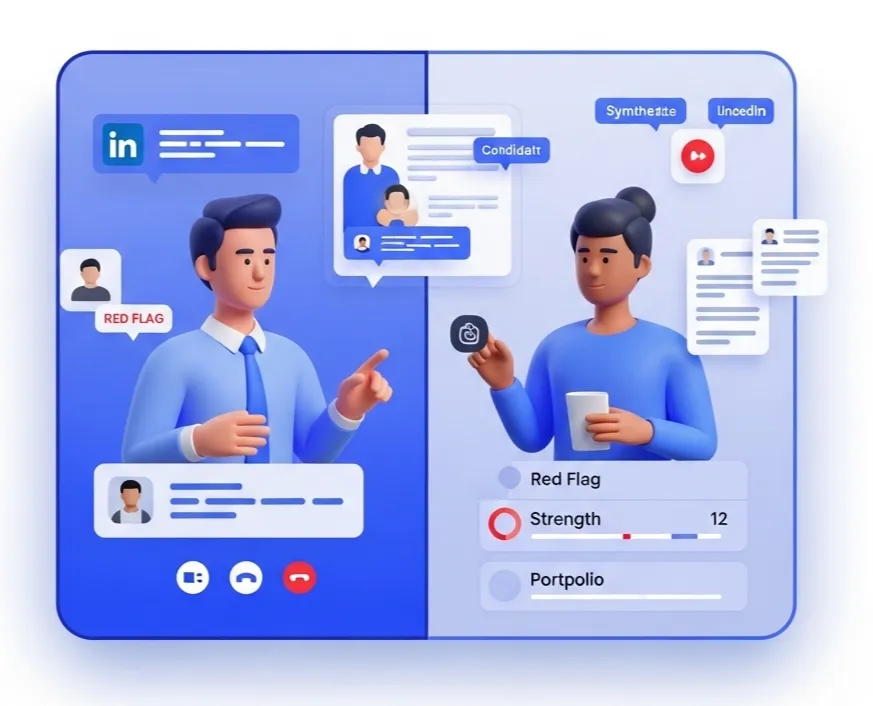
- Ignoring multi-channel screening capabilities that show a candidate's full profile (like from LinkedIn or GitHub).
What a New Tool Alone Won't Solve
An applicant tracking system is a powerful accelerator, but it's not a magic wand. Be realistic about what a new platform can and cannot do for your hiring.
- It won't fix a poorly defined role or unclear performance expectations.
- It won't create a compelling employer brand or company culture for you.
- It won't solve uncompetitive compensation or benefits packages.
- It won't replace the need for human connection and great interviewing skills.
Recruiter reality: “The best tool in the world can’t make up for a broken process. We had to fix our interview structure first, then find a simple tool to help us stick to it. That’s when things really changed.”
Ultimately, choosing one of the many available Greenhouse alternatives is about finding a platform that makes best practices easy to follow. By adopting a structured hiring approach with a tool built for simplicity, you can stop managing spreadsheets and start building meaningful relationships with your future hires.
Frequently Asked Questions
1) What's the main benefit of structured hiring for a small business?
The main benefit is making better, less biased hiring decisions. It creates a level playing field for all candidates and helps you hire based on skills and qualifications, which is crucial for building a strong foundational team.
2) How is a simple ATS different from an enterprise one like Greenhouse?
A simple ATS focuses on core workflows: posting jobs, screening applicants, tracking candidates, and communicating. Enterprise systems add complex layers for compliance, global permissions, and integrations with large-scale HRIS software that smaller businesses don't need.
3) What is the most affordable ATS pricing model?
For many small businesses, a credit-based or pay-per-job model is the most affordable ATS option. It allows you to scale your spending up or down with your actual hiring needs, avoiding expensive annual subscriptions for features you rarely use.
4) Why should I look for Greenhouse alternatives?
You should look for alternatives if you find its features too complex, its pricing out of reach for your budget, or its workflow too rigid for your team's agile nature. Many platforms now offer a more streamlined ATS for structured hiring without the enterprise overhead.
5) What features are essential in recruiting software for small business?
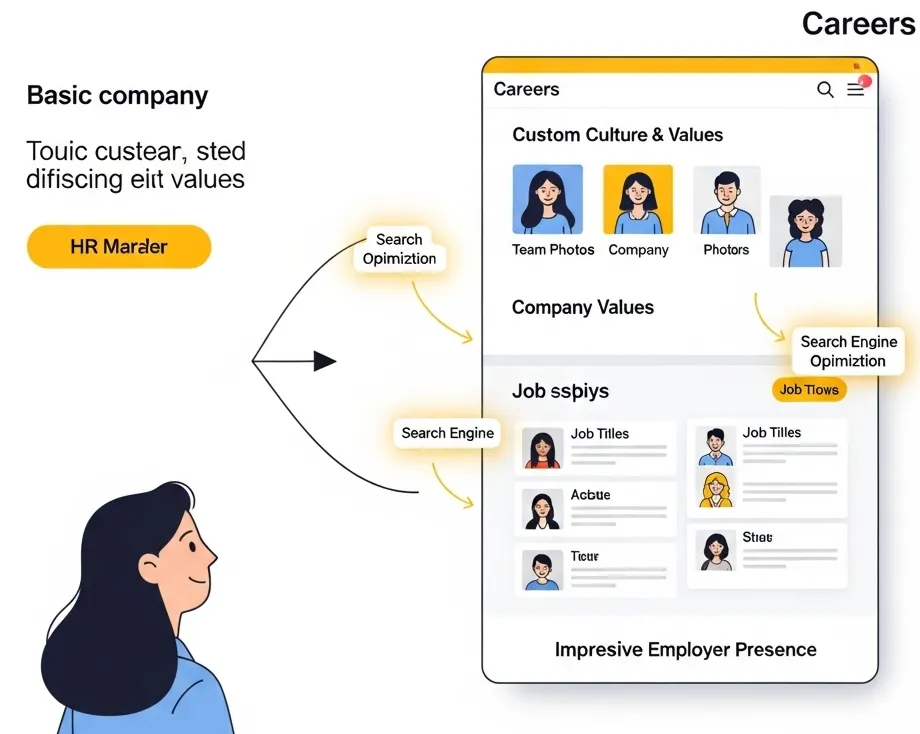
Essential features include an easy-to-use careers page builder, branded job posts, automated candidate communication, simple interview scheduling, and collaborative scorecards for hiring managers.
6) How can I do an effective applicant tracking system comparison?
Start by defining your single biggest problem (e.g., too many unqualified applicants). Then, during demos or trials, focus exclusively on how each tool solves that specific problem. Avoid getting distracted by features you won't use.
7) Can a good Greenhouse competitor also help with sourcing?
Yes. Modern platforms, including HireZapp, often include sourcing playbooks, browser extensions, and guidance on finding candidates across different channels, not just managing inbound applicants.
8) What is the best ATS for founders?
The best ATS for founders is one that saves them time and automates repetitive tasks. Look for features like AI job description generation, automatic resume parsing, and integrated candidate communication so you can focus on building your business.