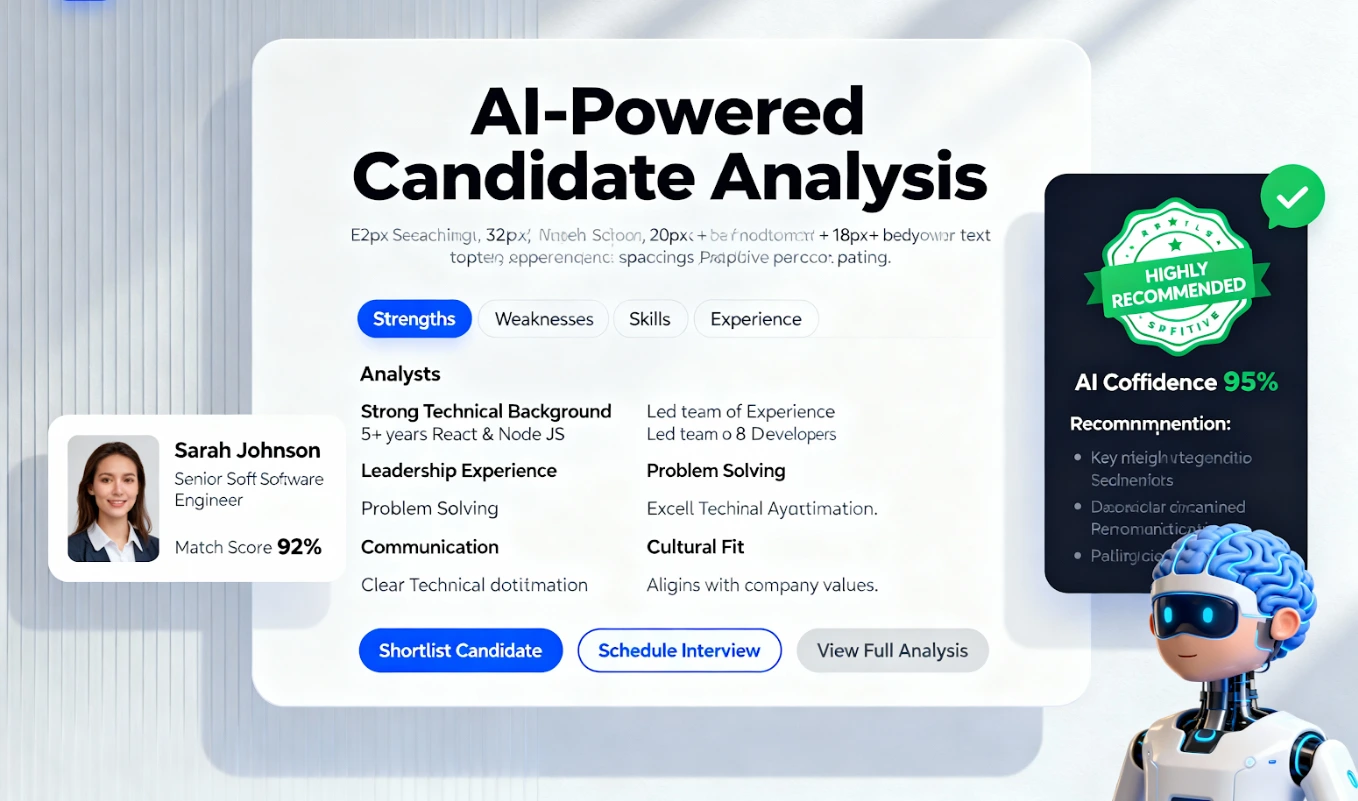
How to Calculate ROI of an AI Recruiting Platform in Your Company
If you're managing hiring, you know the feeling. You're juggling candidates from LinkedIn DMs, sorting applications in Google Forms, and spending money on job ads that attract more spam than stars. It feels inefficient and expensive, but proving it can be tough.


A Simple Guide to Calculate Hiring ROI for Your Business
If you're managing hiring, you know the feeling. You're juggling candidates from LinkedIn DMs, sorting applications in Google Forms, and spending money on job ads that attract more spam than stars. It feels inefficient and expensive, but proving it can be tough.
Recruiter reality: “I'm spending a fortune on ads and still sorting through hundreds of resumes in a spreadsheet. I know there's a better way, but how do I prove it's worth the cost?”
Understanding the ROI of an AI recruiting platform isn't just about getting a budget approved. It's about showing how smart technology can turn a chaotic process into a predictable hiring machine that saves both time and money.
Why Calculating ROI Feels So Complex
The true cost of hiring is often hidden. To get a clear picture, you need to look beyond the obvious expenses. The real challenges in measuring recruiting effectiveness often come from:
- Time spent on manual tasks. This includes manually posting jobs, sifting through unqualified resumes, and sending repetitive follow-up emails.
- Lost productivity from open roles. Every day a key position sits empty, it can impact team morale, project deadlines, and revenue.
- The high cost of a bad hire. A mismatched new employee can cost a company thousands in salary, training, and lost opportunities.
- Inconsistent data tracking. When your process is spread across spreadsheets, inboxes, and forms, you can't see where your best candidates are coming from.
- Manager and team interview time. This is a significant but often overlooked cost that pulls senior team members away from their core duties.
A Clear Process to Calculate Hiring ROI
Here is a straightforward, step-by-step method to measure your return on investment. This process helps you build a business case based on data, not just feelings. The goal is to accurately calculate hiring ROI by looking at the complete picture.
- Benchmark your current state. Before you can measure improvement, you need a baseline. Track how long it takes to fill a role and what you spend on average.
- Identify all direct costs. List every expense, including job board fees, advertising spend, and any freelance recruiter costs.
- Estimate indirect costs. Calculate the hourly cost of everyone involved in interviewing (recruiters, hiring managers, team members) and multiply it by the hours they spend per hire.
- Define your key metrics. Focus on the big three: cost-per-hire, your time-to-hire metrics, and the overall quality of your new hires.
- Project improvements with an AI platform. Estimate how much time and money you could save with automation, better screening, and a centralized process.
- Calculate the total investment. This is the cost of the recruiting software itself. Be sure to use the total annual cost for an accurate comparison.
- Present the final ROI calculation. Use the simple formula: (Gain from Investment - Cost of Investment) / Cost of Investment. The result shows your return.
Tools to Make ROI Calculation Easier
To help you get started, we've created a simple spreadsheet. It has all the formulas built in, so you can just plug in your numbers.
Download Your Free ROI Calculator Template
Another key part of the equation is measuring the quality of hire. A simple scorecard can make this tangible. Ask the hiring manager to rate the new employee after 90 days on these factors:
- Performance in the role
Did they meet or exceed expectations based on the job description? - Team collaboration
How well did they integrate with the existing team? - Ramp-up time
How quickly did they become fully productive? - Cultural alignment
Do they embody the company's core values? - Manager satisfaction
Is the hiring manager happy with the hiring decision?
How an AI Platform Drives Positive ROI
Beyond simple automation, looking at the full range of AI recruiting platform benefits shows how every feature contributes to a better financial outcome. Here is how specific tools translate directly into savings and efficiency:
- AI Job Description Generation
Reduces the time hiring managers spend writing, freeing them up for higher-value work. - Multi-Channel Applicant Screening
Automatically filters candidates from sources like LinkedIn and GitHub, so recruiters only see qualified people. - Job Match Score
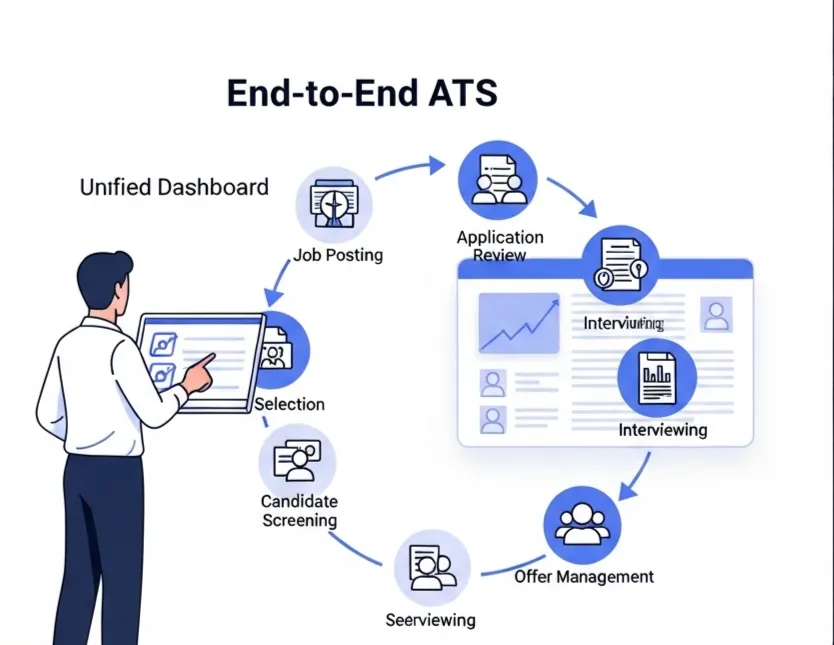
Instantly ranks applicants against job requirements, drastically cutting down on manual review time. - Assessments and ATS Pipeline
Provides concrete data on candidate skills and organizes them in one place, improving decision quality. - Automated Candidate Follow-ups
Keeps candidates engaged and informed without manual effort, reducing candidate drop-off.
Avoid These Common ROI Calculation Traps
When building your business case, be careful to avoid these mistakes that can weaken your argument:
- Focusing only on the software's price tag instead of its total value.
- Forgetting to include the massive cost of making a bad hire.
- Neglecting to measure your “before” metrics for a proper comparison.
- Using vanity metrics like “number of applications” instead of business outcomes.
- Calculating ROI in a silo without involving finance or team leads.
- Assuming all recruiting platforms deliver the same results.
An AI Platform Is a Tool, Not a Magic Wand
To set realistic expectations, it's important to be honest about what technology can't do. An AI recruiting platform will not fix:
- A negative company culture that drives candidates away.
- A non-competitive compensation and benefits package.
- A broken interview process that provides a poor candidate experience.
- A lack of qualified candidates in the market for a highly specialized role.
Ultimately, a great tool helps you execute a good strategy better. It amplifies what is already working.
Making the Case for a Smarter Hiring Process
Calculating the ROI of recruiting technology is your first step toward building a more efficient, cost-effective hiring function. By focusing on core metrics and presenting a clear business case, you can confidently justify HR tech investment. The goal is to spend less time on busywork and more time connecting with the great people who will grow your company.
Unlock True Hiring ROI with AI
Tired of unproven HR tech? HireZapp’s AI delivers measurable ROI, cutting costs and time-to-hire.
Frequently Asked Questions
1) What is a good recruiting software ROI?
A good return can vary, but many businesses aim for an ROI of 3:1 or higher within the first year. This means for every dollar invested in the software, you get three dollars back in value through reduced costs and increased efficiency. However, even a smaller positive ROI is a win if it solves major process headaches.
2) How can AI help with cost-per-hire reduction?
AI helps with cost-per-hire reduction by automating top-of-funnel tasks like resume screening and initial communication. This reduces the hours your team spends on administrative work. It also improves the quality of your shortlist, meaning you spend less time and money interviewing unqualified candidates.
3) Can a small business effectively calculate hiring ROI?
Absolutely. Small businesses can see some of the biggest improvements. You can start by tracking basic metrics like time spent screening resumes, money spent on job ads, and how long it takes to fill a role. Even without complex systems, these numbers provide a powerful baseline to measure against.
4) What are the most important AI in recruitment metrics to track?
The most important metrics are time-to-hire, cost-per-hire, and quality-of-hire. These three give you a complete view of your efficiency, cost-effectiveness, and success. Source-of-hire is another great metric to track where your best candidates are coming from.
5) How do I measure Quality of Hire?
Quality of hire is often measured through a post-hire survey sent to the hiring manager 3-6 months after the new employee starts. You can use a simple scorecard (like the one above) to rate the hire on performance, cultural fit, and overall impact on the team.
6) What's the difference between time-to-hire and time-to-fill?
Time-to-fill measures the entire process from when a job is approved to when an offer is accepted. Time-to-hire is a subset of that, measuring the time from when a candidate applies to when they accept an offer. Both are useful, but time-to-hire is a better measure of recruiting team efficiency.
7) Is it difficult to justify HR tech investment to leadership?
It can be, but using a data-driven ROI calculation makes the conversation much easier. Instead of talking about features, talk about business outcomes: money saved, productivity gained, and the reduced risk of bad hires. Frame the investment as a solution to a tangible business problem.