Building Reusable Job, Form, and Assessment Templates for Faster Hiring
If you feel like you are writing the same job post or screening questions over and over, you are not alone. Manually managing hiring tasks for multiple roles creates bottlenecks, leading to slow decisions and lost candidates. The key to breaking this cycle is building a system with reusable hiring templates.

Stop Writing from Scratch: A Guide to Reusable Hiring Templates
If you feel like you are writing the same job post or screening questions over and over, you are not alone. Manually managing hiring tasks for multiple roles creates bottlenecks, leading to slow decisions and lost candidates. The key to breaking this cycle is building a system with reusable hiring templates.
This simple shift helps you standardize your approach, giving every candidate a consistent and professional experience. It is one of the most effective ways to achieve faster hiring without sacrificing quality.
Why Starting from Zero Slows You Down
Constantly reinventing your hiring materials for each new role introduces friction and inconsistency. This manual approach is often the hidden reason recruitment feels slow and disorganized. Here is what is really happening behind the scenes:
- Inconsistent messaging confuses candidates about the role and company culture.
- Key job requirements or compliance details get missed.
- Candidate experience suffers when application forms are clunky or different each time.
- Time is wasted on repetitive administrative work instead of engaging top talent.
- Evaluating candidates becomes subjective and biased without a standard set of questions.
Your 7-Step Playbook for Building Repeatable Workflows
Creating a library of templates is straightforward. Follow these steps to build a foundation for a more efficient process that you can use for almost any role you need to fill.
- Define your core roles. Start with the 2-3 positions you hire for most often to get the biggest impact quickly.
- Draft a master job description. Create a base template that includes your company overview, values, and universal benefits.
- Build a standard application form. Design a single, simple form that captures essential information like contact details, resume, and work authorization.
- Create tiered screening questions. Develop a set of basic screening questions for all roles and a second set of technical questions for specific positions.
- Design a simple assessment template. Outline a standard take-home task or practical exercise relevant to your most hired roles.
- Write canned email responses. Prepare templates for application confirmation, rejection, and interview invitations to ensure prompt communication.
- Centralize your templates. Store all your assets in a single, accessible place like an Applicant Tracking System (ATS) to ensure team-wide consistency.
Starter Templates You Can Use Today
You do not need complex documents to get started. Simple, clear templates are the most effective. Here are a few examples you can adapt for your own use.
Job Description Snippet: Customer Support Specialist
About The Role
As a Customer Support Specialist at HireZapp, you are the first point of contact for our users. You will be responsible for resolving inquiries, troubleshooting issues, and ensuring our customers have a great experience. This role is perfect for someone with excellent communication skills and a passion for helping others.
5 Core Screening Questions
- What interests you most about this role and our company?
- Describe a time you had to handle a difficult customer. What was the situation and outcome?
- How do you stay organized when managing multiple tasks or inquiries at once?
- What experience do you have with [mention a key software, e.g., CRM or helpdesk tools]?
- What are your salary expectations for this position?
Recruiter reality: "Having a bank of pre-approved screening questions saves me from having to think them up on the fly. It makes my first-round calls so much more consistent and fair."
How HireZapp Automates Your Template Workflow
Building templates is the first step; automating them is how you truly scale. HireZapp is designed to turn your static documents into a dynamic, streamlined hiring engine.
- AI Job Description Generator
Instantly create clear, optimized, and branded job posts so you never have to start with a blank page. - Customizable Job Forms
Build simple application forms that attach to your job posts, ensuring all candidate data flows into one place. - Integrated Assessment Templates
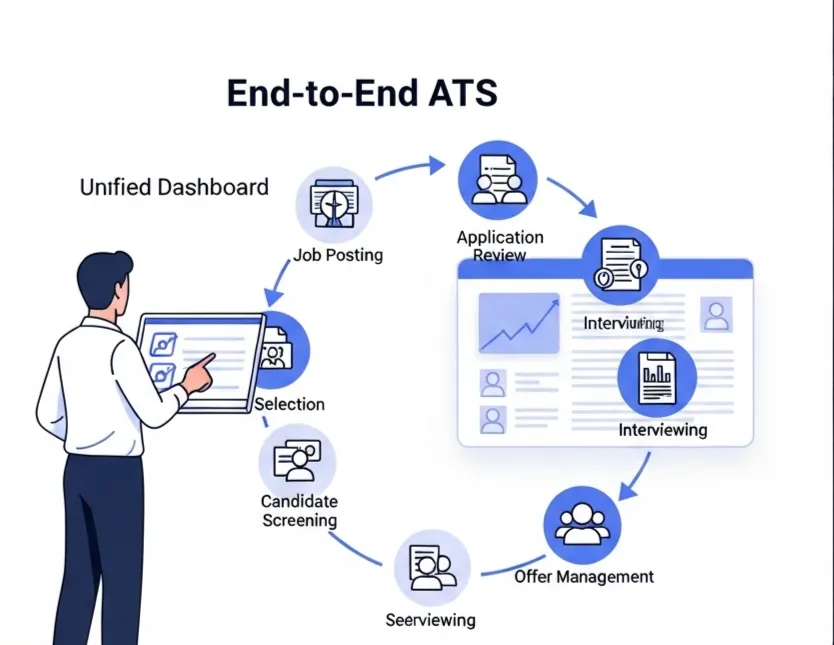
Create and save skills tests or question sets directly within the platform, then send them to candidates with a single click. - Automated ATS Pipeline
Embed your templates into a visual hiring pipeline, with automated follow-ups at each stage to keep candidates engaged. - Branded Communications
Ensure every candidate email, from confirmation to offer, automatically uses your company branding for a professional touch.
Common Traps That Keep Teams Stuck in Manual Mode
Even with templates, some teams fail to see improvements. Avoid these common mistakes:
- Creating overly rigid templates that leave no room for customization.
- Forgetting to review and update templates based on which ones attract the best candidates.
- Storing templates in scattered local documents where no one can find them.
- Building long, complicated application forms that cause good candidates to drop off.
- Neglecting to get feedback from the hiring team on what makes a template effective.
What Templates Alone Cannot Solve
A well-organized process is powerful, but it is not a silver bullet. Templates will not fix underlying strategic problems, including:
- A weak or undefined employer brand.
- An uncompetitive salary and benefits package.
- A broken interview process that fails to properly assess skills.
- A fundamental lack of qualified talent in your market.
The Bottom Line: Consistency is Speed
The goal of using templates is not to remove the human element from hiring. It is about removing repetitive, low-value work so you can focus on what matters: connecting with great people. By creating a standardized hiring process, you build momentum, make fairer decisions, and ultimately, hire better people faster.
Automate Templates. Hire Faster.
Transform your hiring workflow. HireZapp's AI instantly generates and refines all essential templates for ultimate efficiency.
Frequently Asked Questions
1) What are HR templates?
HR templates are standardized, pre-written documents used to streamline common human resources tasks. This includes materials for hiring, onboarding, performance reviews, and more, ensuring consistency and compliance.
2) How do job description templates improve recruitment efficiency?
Well-designed job description templates save significant time by providing a pre-built structure. They also improve consistency in branding and messaging across all open roles, which helps attract the right type of candidates more effectively.
3) Can I use AI to create hiring templates?
Yes. Modern tools like HireZapp use AI to generate high-quality job descriptions, application forms, and even screening questions in seconds. AI helps refine content to be inclusive, clear, and optimized for search.
4) What should be included in candidate screening forms?
Effective candidate screening forms should be brief and capture only essential information: contact details, a resume, and answers to 2-3 critical screening questions related to experience, qualifications, or logistics like work authorization.
5) How do ATS templates work?
ATS templates are reusable assets stored within an Applicant Tracking System. This can include job descriptions, email responses, and entire hiring workflows. They allow you to launch new jobs and manage candidates with just a few clicks.
6) Why is a standardized hiring process important?
A standardized process ensures every candidate is evaluated against the same criteria, reducing bias and improving the quality of hire. It also creates a predictable, professional experience for applicants and boosts your employer brand.
7) Are reusable templates good for small businesses?
Absolutely. Templates are especially valuable for small businesses and startups where founders or small teams handle hiring. They provide structure and professionalism without needing a large HR department, helping them compete for top talent.