How to Design an End-to-End Hiring Pipeline That Doesn’t Break as You Scale
Are you juggling applicants in spreadsheets, Google Forms, and LinkedIn DMs? If you’re seeing great candidates go silent or drop off, it’s not you—it’s your system. A manual, disconnected process feels manageable at first, but it breaks quickly under pressure. The good news is you don’t need a massive team to fix it.

How to Build a Scalable Hiring Pipeline That Grows With Your Company
Are you juggling applicants in spreadsheets, Google Forms, and LinkedIn DMs? If you’re seeing great candidates go silent or drop off, it’s not you—it’s your system. A manual, disconnected process feels manageable at first, but it breaks quickly under pressure. The good news is you don’t need a massive team to fix it.
This guide provides a clear framework for a resilient, end-to-end hiring pipeline. It’s about creating a repeatable system that delivers a great experience for candidates and frees you up to focus on finding the best fit, which is essential for any successful hiring process for scaling companies.
Why Manual Hiring Systems Hit a Wall
As you grow, the cracks in a manual process start to show. Many founders and recruiters notice the same issues appearing again and again as they try to scale their efforts:
- Scattered Information
Candidate details are lost across emails, DMs, and forms, with no single source of truth. - Inconsistent Communication
Some candidates get ghosted while others get multiple messages, damaging your employer brand. - Recruiter Burnout
Manually tracking every applicant across multiple roles is exhausting and prone to error. - Poor Candidate Experience
A slow, confusing process makes your company seem disorganized and causes top talent to withdraw. - No Data for Improvement
You can't fix what you can't measure. Without data, you’re just guessing what works.
Your Step-by-Step Playbook for a Scalable Hiring Pipeline
Building a system that lasts doesn't have to be complicated. Follow these steps to create a structured process that supports your company’s growth and ensures you have a solid foundation for your recruitment pipeline stages.
- Define Your Stages Clearly
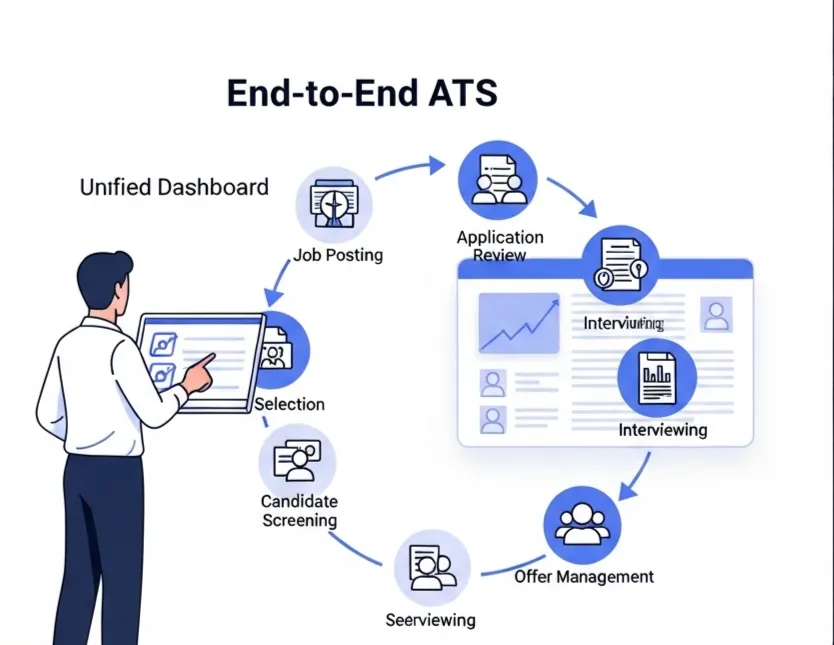
Map out every step from Application to Offer. A common flow is: Applied → Screening → First Interview → Technical/Skill Assessment → Final Interview → Offer. - Create a Job Description Engine
Develop a core template for your job descriptions. This ensures consistency in tone, branding, and the information you provide to candidates. - Centralize All Applications
Stop collecting resumes from different channels. Use a single system, like an Applicant Tracking System (ATS), to house every application in one place. - Standardize Your First Screening
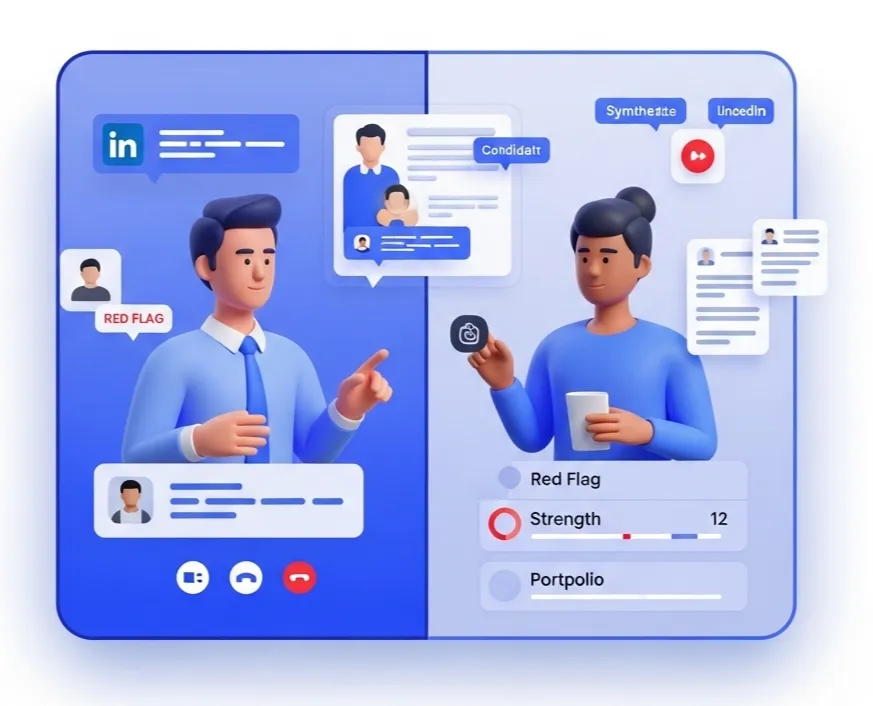
Create a simple scorecard or checklist for every application. This removes bias and helps you quickly identify the most qualified candidates. - Build Interview Kits
Equip your interviewers with the same set of core questions, a role scorecard, and candidate information to ensure fairness and consistency. - Automate Your Communications
Set up automated emails for application confirmations and rejection notices. This guarantees every single candidate hears back from you. - Measure What Matters
Track a few key metrics to understand your pipeline's health. Focus on Time to Fill, Cost per Hire, and Offer Acceptance Rate.
Practical Templates to Standardize Your Process
Use these templates as a starting point. The goal is to create a predictable and fair process for every candidate.
Screening Scorecard Checklist
- Demonstrates required skills in resume/portfolio
- Has relevant industry experience
- Shows clear career progression
- Compensation expectations align with budget
- Cover letter (if required) is tailored to the role
- LinkedIn/GitHub profile is professional and complete
Candidate Follow-Up Message Template
Hi [Candidate Name],
Thank you again for your interest in the [Job Title] role at [Company Name]. The team is currently reviewing all applications and we expect to provide an update on your status within the next 5-7 business days.
Best,
[Your Name]
How to Automate Your Hiring Process Without Losing the Human Touch
Automation is the key to scaling, but it should support your process, not replace it. The right tools handle the repetitive tasks so you can focus on building relationships with candidates. Here’s how a platform like HireZapp helps you build a more efficient pipeline.
- AI Job Description Generation
Create clear, optimized job posts in minutes, attracting more qualified applicants from the start. - Centralized ATS Pipeline
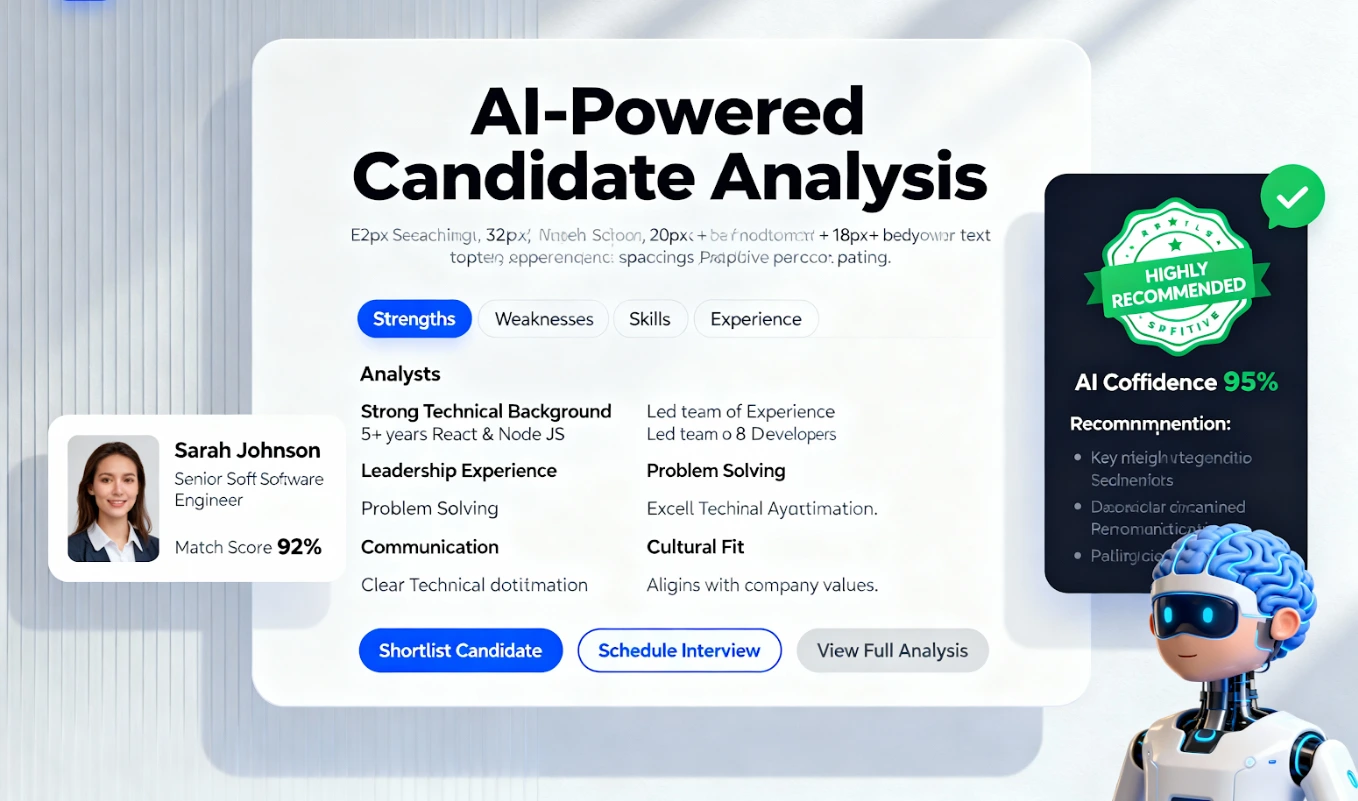
Manage every candidate from every source in one clean, visual pipeline. No more lost resumes. - Job Match and Quality Scores
Instantly see which candidates are the best fit and how your job post stacks up against the market. - Automated Follow-Ups
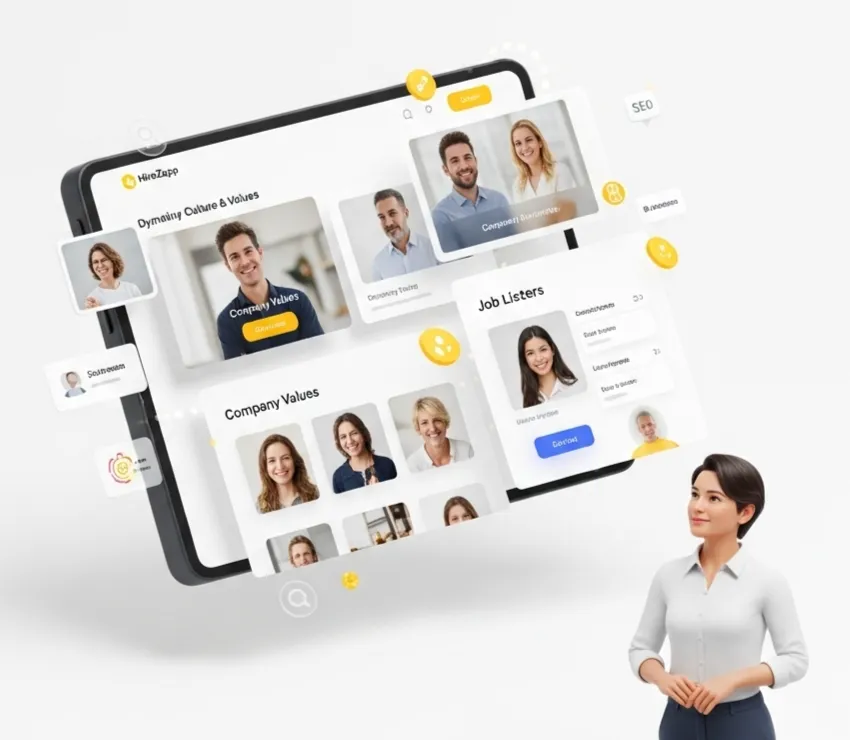
Ensure no candidate is left behind with automated confirmation and rejection emails. This is key to a positive candidate experience at scale. - Branded Careers Page
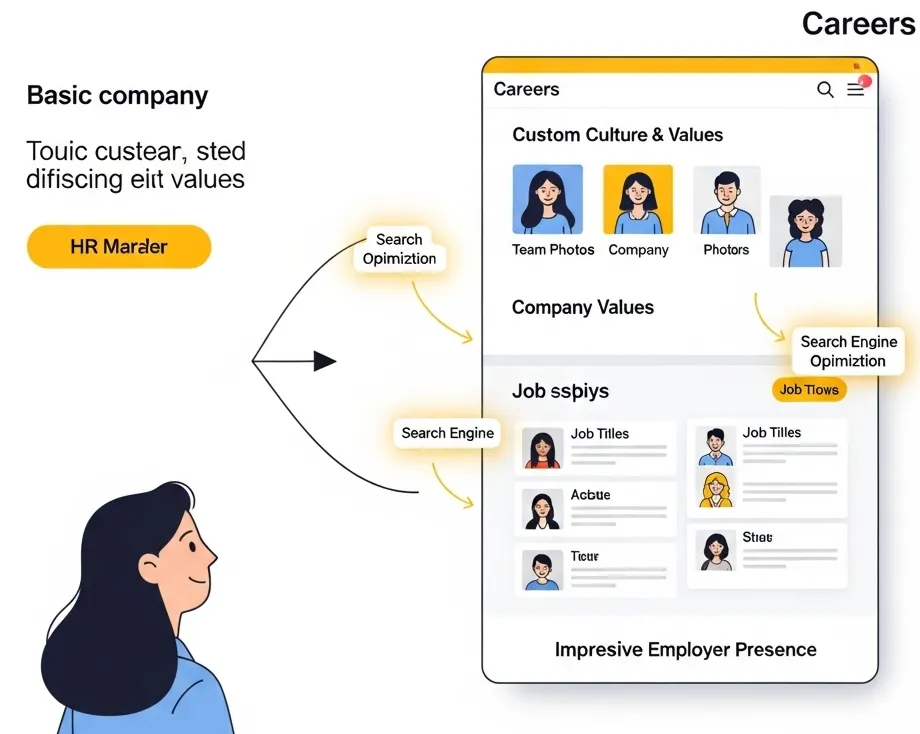
Build a professional careers page in minutes to showcase your brand and create a seamless application experience.
Common Pitfalls That Break a Growing Hiring Funnel
Even with a great system, small mistakes can create big problems. Watch out for these common issues as you scale your team:
- Ignoring your employer brand on job posts and social media.
- Failing to train new hiring managers on the standardized process.
- Relying on a single channel to source all your candidates.
- Moving too slowly between interview stages.
- Not defining who owns each step of the process.
- Forgetting to ask candidates for feedback on their experience.
A Great Pipeline Is Only Half the Battle
A streamlined process is powerful, but it’s not a magic wand. An efficient hiring pipeline won't fix foundational business problems. Be aware that this system will not solve:
- A non-competitive compensation and benefits package.
- A toxic or poorly defined company culture.
- An unclear vision for the role or its impact on the company.
- A lack of interesting work or growth opportunities.
Build Your Process, Then Your Team
Designing an effective hiring pipeline is an investment that pays off with every hire. By standardizing your steps, automating repetitive work, and focusing on a great candidate experience, you build a hiring engine that doesn’t just fill roles—it fuels growth. You can finally stop chasing paperwork and start building meaningful connections with your future team members.
Stop Broken Pipelines. Scale Smarter.
Automate your end-to-end hiring pipeline with HireZapp's AI-ATS and scale your team with confidence.
Frequently Asked Questions
1) What are the key stages of an end-to-end recruitment process?
A typical end-to-end recruitment process includes Sourcing (finding candidates), Screening (reviewing applications), Interviewing (multiple rounds), Assessment (if applicable), Offer (extending the job offer), and Onboarding. Each stage should have clear goals and owners.
2) How can startups reduce hiring drop-offs?
To reduce hiring drop-offs, focus on speed, communication, and transparency. Acknowledge every application, keep candidates informed about timelines, provide feedback after interviews, and make the process from final interview to offer as quick as possible.
3) What's the most important metric for a hiring pipeline?
While Time to Fill is popular, the Pass-Through Rate is arguably more insightful. It shows the percentage of candidates who advance from one stage to the next. A sudden drop at a specific stage tells you exactly where your process might be broken.
4) When should a company invest in an ATS for growing businesses?
You should consider an ATS for growing businesses when you can no longer manage your applicant pool in a spreadsheet or email inbox. If you are hiring for more than 2-3 roles at once or receiving over 20 applications per role, an ATS will save you significant time and prevent errors.
5) Can a small team really build a hiring pipeline?
Absolutely. A hiring pipeline is simply a defined process. Even a founder hiring their first employee benefits from a structured approach. Using a free or low-cost tool can help you establish good habits from day one.
6) What is a recruiting playbook for startups?
A recruiting playbook for startups is a central document that outlines your company’s entire hiring process. It includes job description templates, interview questions, evaluation criteria, and communication guidelines to ensure everyone involved in hiring is on the same page.