12 Best AI Recruiting Tools: Staffing Agencies vs In-House Teams
If you spend your days manually sifting through applications, you know how quickly hiring can turn into a battle against time. Between unqualified candidates, slow communication, and juggling spreadsheets, it is easy to lose great talent. The right AI recruiting tools are designed to solve this by automating the repetitive tasks that slow you down.
Modern AI hiring software isn't about replacing recruiters. It's about giving them the power to focus on what matters: building relationships with the best candidates. By handling the initial screening and scheduling, these platforms help you convert applicants to hires faster.
Why Manual Hiring Is Holding You Back
Many recruiting teams notice the same challenges cropping up again and again. Without the right systems, these small problems can lead to missed hiring goals and frustrated managers. The core issues often include:
- Inconsistent Screening
When different team members review resumes, bias and varied criteria can lead to good candidates being overlooked. - Poor Candidate Experience
Long delays and generic communication make applicants feel like just a number, causing them to drop out of the process. - Wasted Time on Admin Work
Hours spent manually scheduling interviews and sending follow-up emails could be spent sourcing and engaging top talent. - Lack of Data
Without clear metrics, it is impossible to know which sourcing channels are working or where bottlenecks are in your pipeline. - Difficulty Scaling
As your company grows, a manual process that worked for one role will break when you need to fill ten roles at once.
Comparing Top AI Recruiting Tools: A Closer Look
The market is filled with options, but the best tool depends entirely on your team's structure. Staffing agencies have different needs than in-house corporate recruiters. Here is a look at four popular platforms to understand the difference.
Recruit CRM
- Best for
Small to mid-sized staffing and recruitment agencies. - Key Feature
Combines an Applicant Tracking System (ATS) with a Customer Relationship Management (CRM) tool for managing both candidates and clients. - Agency Fit
Excellent for firms that need to track client interactions alongside candidate pipelines. - In-House Fit
The client management features may be unnecessary for corporate HR teams.
Ceipal
- Best for
Larger staffing firms, especially those in the IT and healthcare sectors. - Key Feature
Advanced AI-powered sourcing and candidate matching, often integrated with Vendor Management Systems (VMS). This is a strong example of dedicated AI staffing software. - Agency Fit
Powerful for high-volume recruiting and managing a large database of contingent workers. - In-House Fit
Can be too complex and expensive for a company hiring for its own internal roles.
Atlas
- Best for
Global enterprises with complex, multi-country hiring and HR needs. - Key Feature
Often focuses on being an Employer of Record (EOR) platform, handling compliance, payroll, and benefits across different countries. - Agency Fit
Not typically used by staffing agencies, as its focus is on corporate HR infrastructure. - In-House Fit
A fit for large, multinational corporations that need to centralize global hiring and employment management.
HireZapp
- Best for
Founders, startups, and scaling companies building their in-house hiring process. - Key Feature
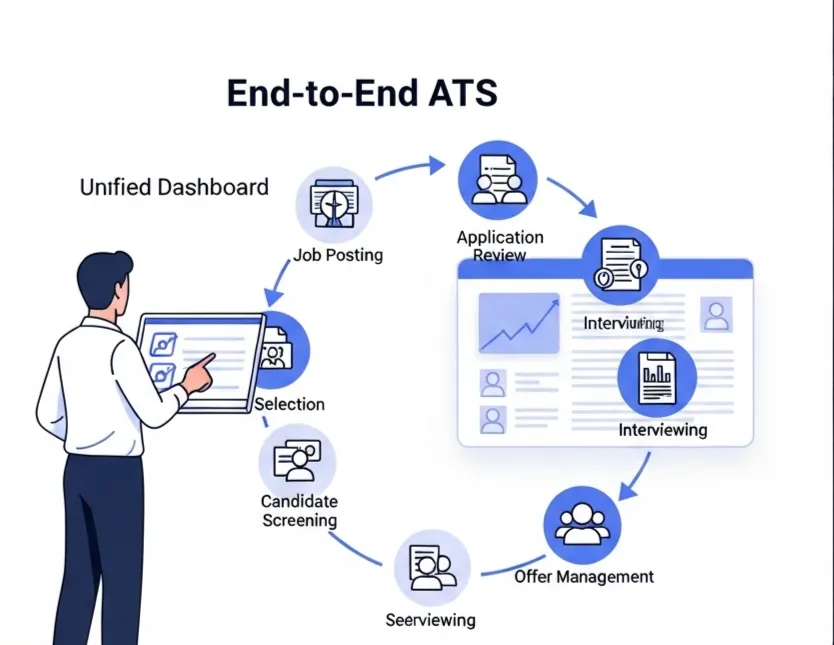
An all-in-one platform that simplifies everything from AI job description writing to candidate screening and employer branding. - Agency Fit
While usable, it is specifically designed to solve the pain points of building an internal recruiting function. - In-House Fit
Ideal for teams that need to move fast, create a strong employer brand, and convert applicants efficiently without a huge budget.
Stop Comparing. Hire Smarter with AI.
Unlike others, HireZapp uniquely empowers in-house teams to scale hiring, automate screening, and maximize recruitment ad ROI.
Trusted by 200+ recruiters
|Backed by AWS & NVIDIA
Your Checklist for Choosing the Right Tool
Before you commit to a platform, use this simple scorecard to make sure it aligns with your actual needs. A great tool on paper is only useful if your team can and will use it every day.
- Core Problem
Does it solve your single biggest recruiting problem, like candidate screening or interview scheduling? - Ease of Use
Can your team learn to use it in a day, or does it require weeks of training? - Key Integrations
Does it connect with the tools you already use, like your calendar and email? - Candidate Experience
Does it create a simple, professional, and branded experience for applicants? - Pricing Model
Is the cost predictable and tied to your usage, or are there expensive upfront fees? - Support and Onboarding
Will you have access to help when you get stuck?
Recruiter reality: “We bought a powerful tool, but it didn't talk to our calendar or email, so nobody used it. It became expensive shelfware.”
Where HireZapp Fits for In-House Teams
For founders and HR leaders moving away from manual methods, HireZapp is built to be the fastest path from applicant to hire. It directly addresses the most common growth pains:
- AI Job Descriptions
Go from a blank page to a quality job post in minutes, attracting the right talent from the start. - Multi-Channel Screening
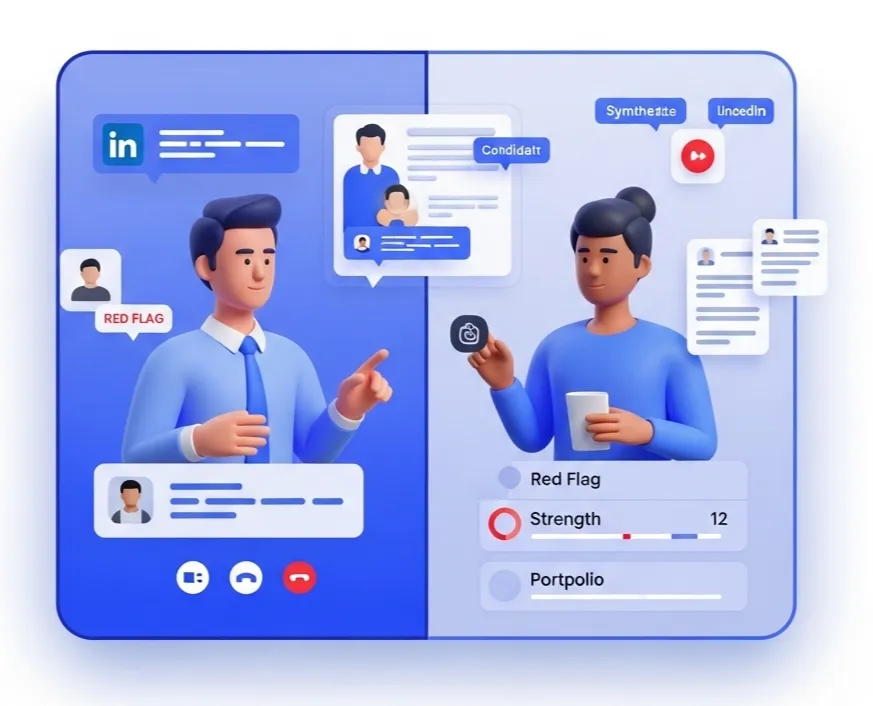
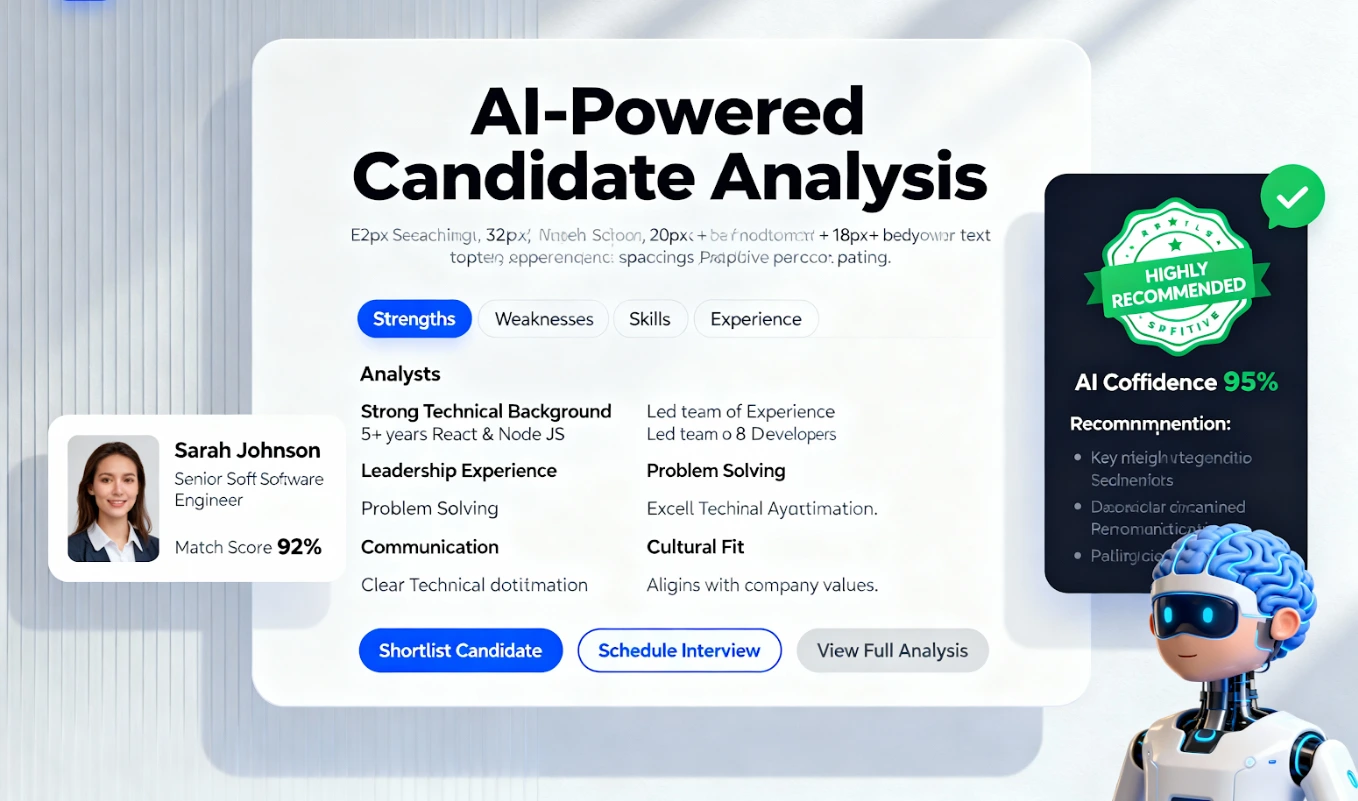
Review a candidate's LinkedIn, GitHub, and resume all in one place without switching tabs. - Job Match Score
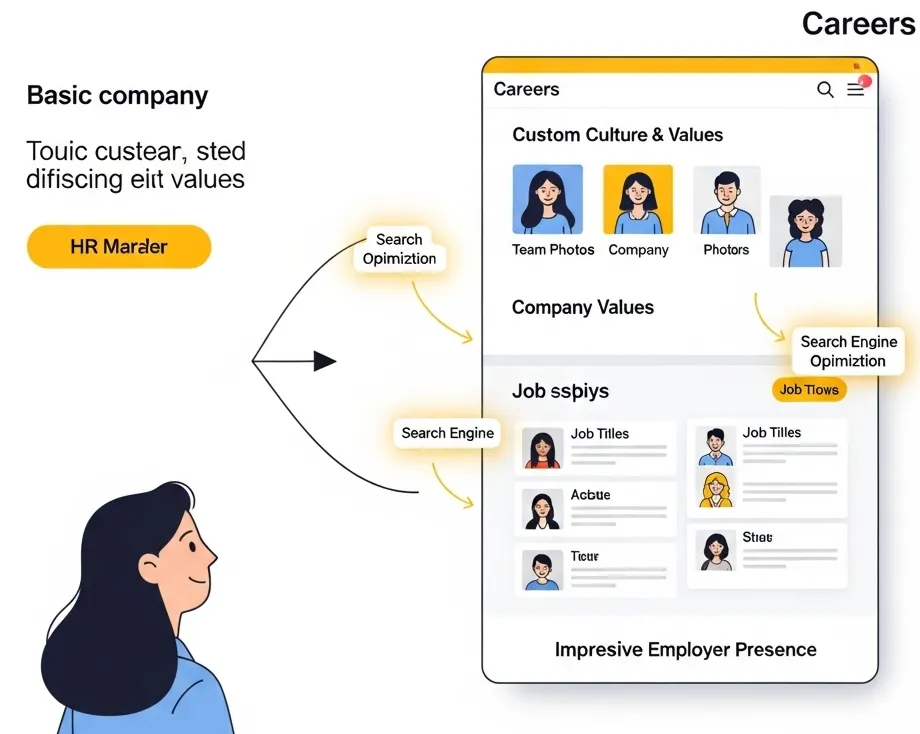
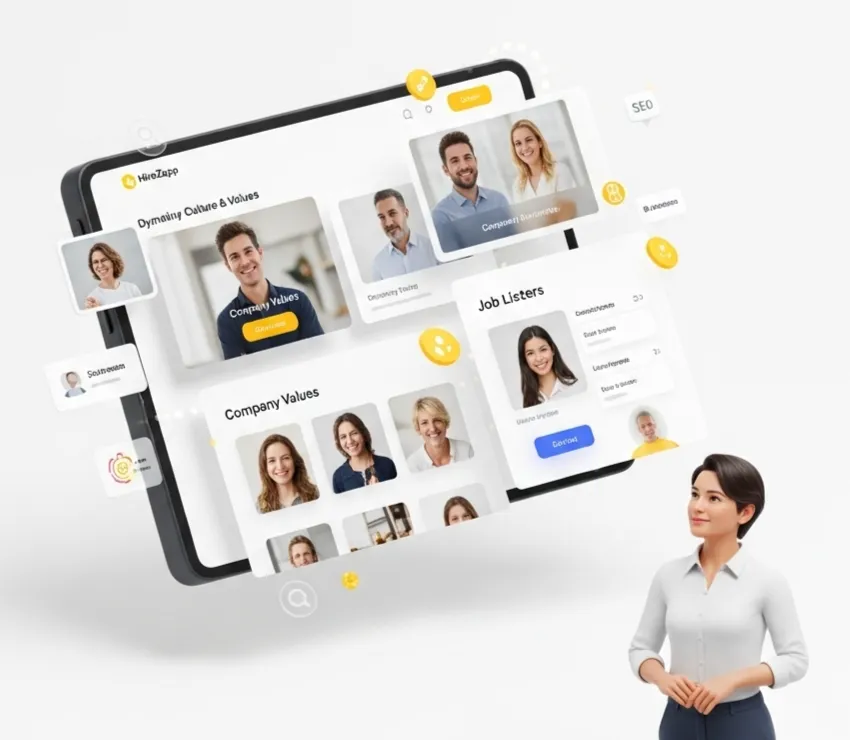
Instantly see which applicants are the best fit without manually reading hundreds of resumes. - Branded Careers Page
Build a professional employer brand that attracts top talent, even if you are an early-stage company. - Automated Follow-ups
Keep every candidate informed and engaged, protecting your brand and ensuring a great experience.
Common Mistakes That Keep Teams Stuck
Adopting a new tool is about more than just technology. Avoid these common pitfalls to ensure your team succeeds.
- Buying a tool before defining your hiring process.
- Focusing on features you do not need instead of solving your main problem.
- Ignoring team training and adoption.
- Forgetting to measure the impact on time-to-hire or quality-of-hire.
- Choosing a complex system when a simple one will do.
What AI Recruiting Won't Fix
AI tools are powerful, but they are not a magic wand. Be realistic about what they can and cannot do. Technology will not fix underlying strategic problems, including:
- A negative company culture.
- A slow or disorganized interview process.
- Non-competitive salary and benefits.
- Unclear role definitions or expectations from hiring managers.
By pairing powerful AI with a solid hiring strategy, you create a system that helps you hire better people, faster. The goal is to let technology handle the noise so you can focus on the human connections that lead to great hires.
Frequently Asked Questions
1) What is the main difference between staffing agency AI tools and in-house ones?
Staffing agency AI tools often include CRM features for managing clients and VMS integrations for handling contractors. In-house tools focus more on employer branding, collaboration with hiring managers, and building a direct pipeline of talent.
2) Can AI hiring software completely replace human recruiters?
No. AI is best at handling repetitive, data-driven tasks like resume screening and scheduling. Human recruiters are essential for building relationships, assessing cultural fit, and closing candidates. The two work together.
3) How do I measure the ROI of AI tools for recruiters?
Track key metrics before and after implementation. Look for improvements in time-to-fill, cost-per-hire, quality-of-hire (e.g., first-year performance), and candidate satisfaction scores.
4) What are some good HireZapp alternatives for large enterprises?
Large enterprises with complex global needs might look at platforms like Greenhouse, Lever, or Workday Recruiting. These systems are built for scale and corporate compliance but come with higher complexity and cost than tools like HireZapp.
5) How does an AI ATS in recruiting AI platforms work?
It uses natural language processing (NLP) to parse and understand resumes, job descriptions, and other documents. It then matches candidates to roles based on skills, experience, and other criteria, saving recruiters from manual review.
6) Is it difficult to integrate in-house recruiting tools AI with my existing HR systems?
It depends on the tool. Modern platforms are built with integrations in mind and often have simple connections to calendars, email, and popular HRIS systems. Always check a tool's integration capabilities before buying.
7) What is the first step in implementing a recruitment automation AI strategy?
The first step is to map out your current hiring process. Identify the biggest bottlenecks and most time-consuming manual tasks. This will show you exactly where automation can have the most impact.