Ashby vs HireZapp: Which One Actually Fits Your Hiring Stage?
A factual look at how Ashby and HireZapp handle structured interviews, candidate decisions, and pre-offer document verification, the stages where most hiring tools quietly fall short.

Most ATS comparisons stop at the parts that are easy to screenshot. Pipelines, kanban boards, a pretty careers page. That's the 20% of hiring that already works fine almost everywhere.
The parts that actually break a hiring process happen later. It's the third interview round where nobody remembers what the first two already covered. It's the offer that gets delayed two weeks because someone realized, after the fact, that the candidate's salary slip doesn't match what they said on the call. Those are the moments that decide whether a good candidate sticks around or quietly takes another offer.
This is a look at how Ashby and HireZapp actually handle those moments, not just the parts everyone already gets right.
Where Both Platforms Are Genuinely Strong
Worth saying upfront: Ashby has real depth here. It has a mature offer system with templates, conditional fields that only show up when relevant, multi-step approval workflows, and native e-signature. Approvers can even sign off on offers directly inside Slack without logging into Ashby at all. It also has structured interview plans, scorecards, and analytics that are genuinely well regarded across independent reviews.
HireZapp covers this same ground too, structured feedback forms per round, scorecards, recordings, and notes attached to every candidate. Neither platform is weak on the fundamentals. The difference shows up in how each one handles continuity and verification.
Ashby vs HireZapp: Pricing Side by Side
| Ashby | HireZapp | |
| Entry price | $400/month flat (up to 100 employees) | Free forever plan |
| Pricing beyond entry | Custom quoted (Plus and Enterprise) | Platform fee plus credits, scales with hiring activity |
| What it scales with | Total company headcount | Hiring activity and credit usage |
| Free trial | None, demo and proof of concept only | 14-day full feature trial |
The Interview Round Memory Problem
Here's a scenario every recruiter has lived through. Round one tests technical depth and culture fit. Round two, run by someone else, asks half the same questions because nobody told them what round one already covered. The candidate notices. It feels disorganized even when the company isn't.
HireZapp's hiring process is built around a generated playbook per role, with each round mapped to specific skills and a justification for why that structure makes sense for that job. Round two is told explicitly what round one already validated and what still needs checking, so the same ground doesn't get covered twice. Feedback forms are auto-generated from the job description, the candidate's resume, and what prior rounds already found, not a generic template repeated every time.
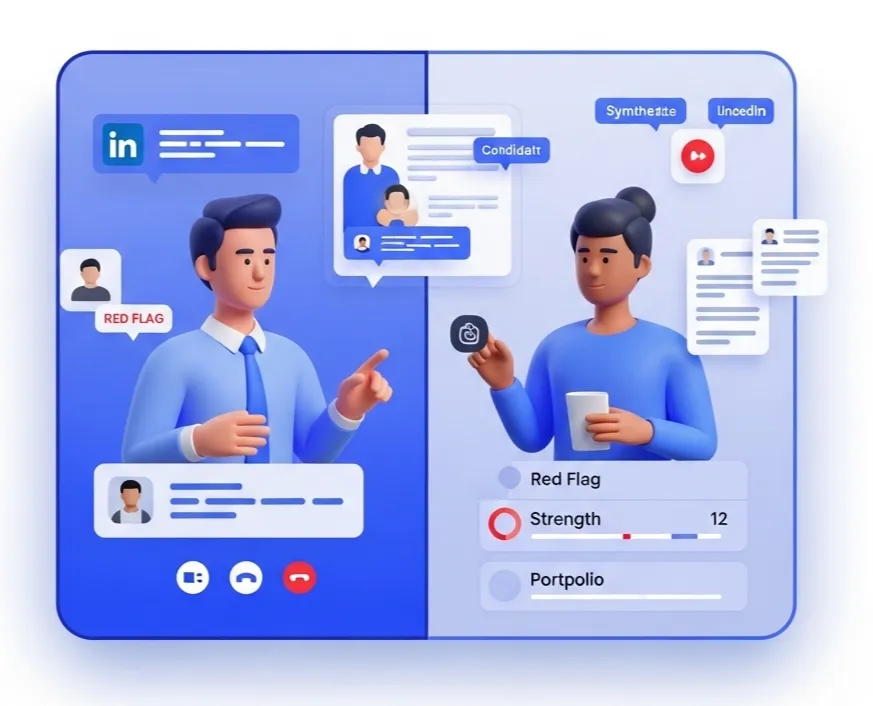
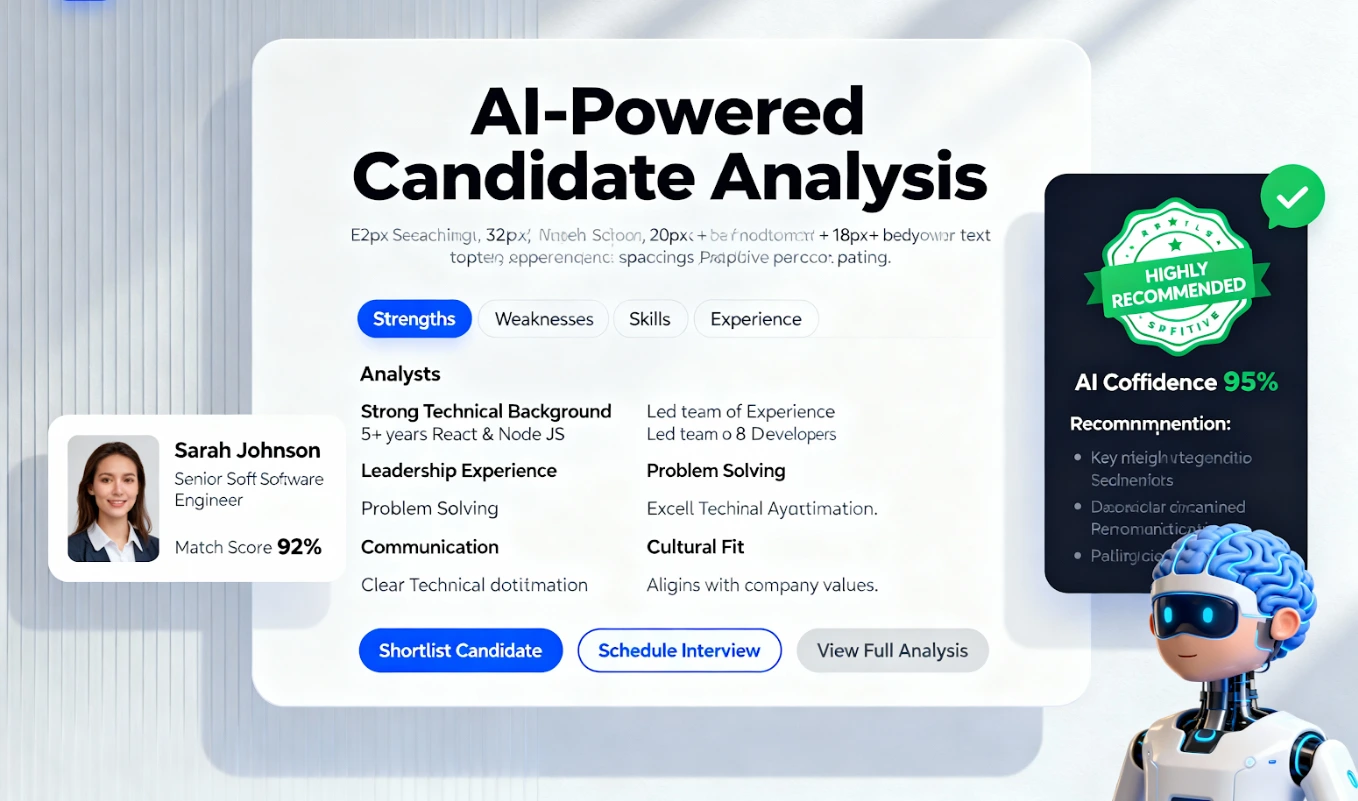
Every candidate also has a Decision Center, one place with recordings, notes, resumes, pending actions, and a summarized verdict, instead of digging through round-by-round tabs to reconstruct what happened.
The question isn't whether your interview process has structure. It's whether round two knows what round one already found out.
What Happens After "Selected" Is the Quiet Failure Point
This is the stage almost nobody talks about, but it's where good candidates are lost in slow motion. A candidate gets marked as selected. Then someone manually emails them asking for documents. The fresher uploads random files because the checklist asks for a previous offer letter they've never had. The recruiter calls and says "don't worry, just upload anything, we'll sort it out," which somehow becomes the actual process at a lot of companies.
HireZapp treats this as its own structured stage, not an afterthought tacked onto offer generation. The moment a candidate is marked selected, they're not auto-sent an offer. They enter a pre-offer stage with a document checklist that automatically adjusts based on candidate type. A fresher is asked for ID proof, education certificates, and a resume. An experienced hire is asked for an experience letter, relieving letter, and salary slips. The system doesn't ask a fresher for documents that don't exist for them.
Each document has its own individual status, not submitted, under review, approved, rejected, or waived, with a remark attached if something needs to be resubmitted. Before an offer is even drafted, the system flags real mismatches: a candidate's name on their PAN not matching what they entered, a proposed CTC exceeding the approved budget, a joining date that lands before their notice period ends, or the same candidate already being in process for a different role.
This isn't a minor add-on bolted onto offer generation. It's a dedicated stage with its own checklist logic, automated approval states, and verification layers. While flexible enterprise platforms like Ashby excel at letting you build custom pipeline boxes, they lack the native, rule-based automation needed to actually enforce and verify these documents out of the box, thus leaving recruiters to manually chase down files over messy, un-tracked email threads
Most ATS platforms get you from interview to offer letter. Very few of them catch a CTC mismatch or a missing document before the offer is even drafted.
Why This Stage Gets Skipped Almost Everywhere Else
Ashby's offer system, once you reach it, is genuinely strong. Template controls filter out irrelevant templates, approvals route correctly, e-signature works, and Slack-based sign-off is a real time saver. That part of the platform is mature and well reviewed.
But that's the point. It starts at the offer. The step before it, deciding what documents a fresher actually needs versus an experienced hire, checking that a CTC doesn't exceed budget, catching a name mismatch before it becomes a legal headache later, is usually left to whatever the recruiter manages over email and memory. HireZapp built that step into the product itself, with its own rules engine, instead of leaving it as the part everyone quietly does by hand before the "real" ATS work begins.
The Same Logic Applies to Interviews
The interview round problem works the same way. Ashby's scorecards and structured interview plans are well built and well regarded. What they don't automatically do is tell round two what round one already found out. HireZapp's playbook does that by design, mapping each round to specific skills and explicitly carrying forward what's already been validated, so the candidate isn't answering the same question twice while two interviewers compare notes after the fact.
The Honest Take
Ashby earns its reputation in the areas it focuses on, structured interviews, analytics, and a mature offer and approval system once a candidate reaches that point. None of that is in question.
What HireZapp does differently is build the two stages most platforms treat as manual gaps, interview continuity and pre-offer verification, directly into the product as dedicated, rules-based stages. That's not a minor convenience feature. It's the difference between a tool that tracks your hiring process and one that actually prevents the specific mistakes that slow good candidates down or create problems after they've already accepted.
A polished offer letter template doesn't help if the offer it generates was built on a CTC mismatch nobody caught, or sent to a candidate whose round two interview asked the same questions as round one.
See the Full Process in Action
Try HireZapp free and see how interview continuity and pre-offer verification actually work, no credit card needed.
Frequently Asked Questions
Q1) Why does HireZapp catch document mismatches before an offer is drafted, when most ATS platforms don't?
HireZapp's pre-offer stage was built as its own dedicated rules engine specifically to close this gap. Document checklists adjust automatically by candidate type, each document gets its own approval status, and mismatches like a PAN name mismatch, a CTC exceeding approved budget, or a duplicate candidate are flagged before the offer is even generated. This level of pre-offer verification is not something we found documented as a built-in feature on Ashby or most comparable ATS platforms.
Q2) How does HireZapp make sure interview rounds build on each other instead of repeating questions?
HireZapp generates a hiring process playbook per role that maps each round to specific skills and explicitly carries forward what prior rounds already validated. Feedback forms are generated from the job description, resume, and previous round results, so round two is never starting from zero or re-testing what round one already covered.
Q3) What does Ashby's offer process look like once a candidate reaches that stage?
Ashby has a mature offer system at that point in the pipeline, with customizable templates, conditional fields, multi-step approvals, native e-signature, and Slack-based sign-off. That part of the platform is genuinely well built. The distinction is that it starts at the offer stage, after the verification work has already happened somewhere else, usually manually.
Q4) Does Ashby have anything equivalent to HireZapp's pre-offer verification stage?
Based on Ashby's published documentation, its offer process covers template selection, approvals, and e-signature, but does not show a dedicated pre-offer verification layer with candidate-type-aware checklists or automated mismatch detection. That stage in most hiring processes, including on Ashby, tends to be handled manually before the offer is created.
Q5) Is Ashby's structured interview system worth using?
Yes, Ashby's scorecards and structured interview plans are well built and consistently well reviewed. What's different with HireZapp is that round-to-round continuity is automated by design, so interviewers aren't relying on memory or notes to know what's already been tested.
Q6) What's the single biggest practical difference between the two platforms?
HireZapp builds two stages most ATS platforms, including Ashby, leave as manual gaps directly into the product: interview rounds that explicitly build on each other, and a pre-offer document and verification stage with its own rules and approval logic. Ashby is good at managing the pipeline and the offer itself once a candidate gets there.