AI vs Manual Screening: Cost, Speed, and Quality Compared for SMBs
Are you spending more time reading resumes than talking to qualified candidates? For many small and medium-sized businesses (SMBs), manual screening has become a bottleneck. You post a job and get buried in applications, while the best people get hired by <strong>faster competitors</strong>.

AI vs Manual Screening: The Definitive 2026 Guide for SMBs
Are you spending more time reading resumes than talking to qualified candidates? For many small and medium-sized businesses (SMBs), manual screening has become a bottleneck. You post a job and get buried in applications, while the best people get hired by faster competitors.
This scattershot approach leads to slow hiring, inconsistent results, and a frustrating experience for everyone involved. But there is a more structured, effective way to find your next great hire without working nights and weekends.
The Real Reasons Manual Screening Slows You Down
Before comparing solutions, it's crucial to understand the challenges of the traditional process. Many teams accept these issues as the cost of hiring, but they add up. These are the most common manual screening drawbacks:
- Lost Productivity
Every hour a founder or manager spends sifting through resumes is an hour not spent on growing the business or leading the team. - Inconsistent Evaluations
The same resume reviewed by two different people, or by the same person on a different day, can get two different ratings. - Poor Candidate Experience
When you're overwhelmed, responses are slow. Top candidates interpret silence as a lack of interest and move on. - Unconscious Bias
Humans naturally have biases that can unintentionally influence decisions based on names, schools, or other non-essential factors. - Qualified Applicants Get Missed
In a pile of 200 resumes, it's easy to overlook a great candidate whose experience is formatted unconventionally.
AI vs Manual Screening: A Decision Framework for SMBs
Choosing the right approach isn't about ditching human judgment. It's about using technology to handle the repetitive work so you can focus on the human connection. Here is a simple framework to guide your decision.
- Assess Your Application Volume
If you receive more than 20-30 applications per role, manual review becomes time-consuming and inefficient. - Calculate Your Time-to-Fill
Measure how long it takes from posting a job to making an offer. If it's consistently longer than you'd like, your screening process is a likely cause. - Review Your Hiring Quality
Are new hires consistently performing well after six months? If not, your screening criteria might not be identifying the right skills. - Define Your Budget
Factor in the hidden labor costs of manual review, not just software fees. Understanding SMB hiring costs is key. - Identify Repetitive Tasks
List the screening steps you do for every single candidate. These are often prime candidates for automation. - Choose a Tool That Grows With You
Look for flexible solutions that can support you as you grow from hiring one person a quarter to five a month.
At a Glance: AI vs. Manual Screening Breakdown
Here is a direct comparison across the four areas that matter most to growing businesses. We'll use a hypothetical scenario: screening 100 applicants for a Marketing Manager role.
Cost
- Manual Screening
Assuming 5 minutes per resume, that's over 8 hours of a manager's time. This hidden labor cost can be significant. - AI Screening
The cost is a predictable software fee. It handles the initial pass in minutes, freeing up those 8 hours for high-value tasks.
Speed
- Manual Screening
Shortlisting could take several days as a manager fits it around their core duties. The delay can cause you to lose top talent. - AI Screening
An AI-powered system can score and rank all 100 applicants against your job criteria almost instantly, helping to reduce time to hire.
Quality
- Manual Screening
Quality is subjective and prone to bias. Key details can be missed when a reviewer is tired or rushed. - AI Screening
Quality is based on objective, consistent data. The system applies the same criteria to every single applicant, ensuring fairness and accuracy.
Scalability
- Manual Screening
Screening 200 applicants takes twice as long as screening 100. The process doesn't scale without adding more human hours. - AI Screening
Screening 200 applicants takes the same amount of time as screening 100. The system scales effortlessly with your needs.
Example Screening Scorecard Checklist
Use a simple checklist to keep your manual reviews (or your final-stage reviews) consistent. This helps you track important hiring quality metrics.
- Must-have skill: SEO strategy
- Must-have skill: Content marketing
- Relevant experience: Managed a team or direct reports
- Relevant experience: Worked in a B2B SaaS environment
- Company value alignment: Shows evidence of proactive problem-solving
- Communication: Resume is clear, concise, and error-free
How HireZapp Makes Smart Screening Simple
Instead of wrestling with spreadsheets and overflowing inboxes, HireZapp provides the structure you need. Our platform acts as a central hub, using smart automation to do the heavy lifting. We believe in the power of AI in recruiting for small business.
Here’s how our features connect to a better screening process:
- AI Job Description Generator
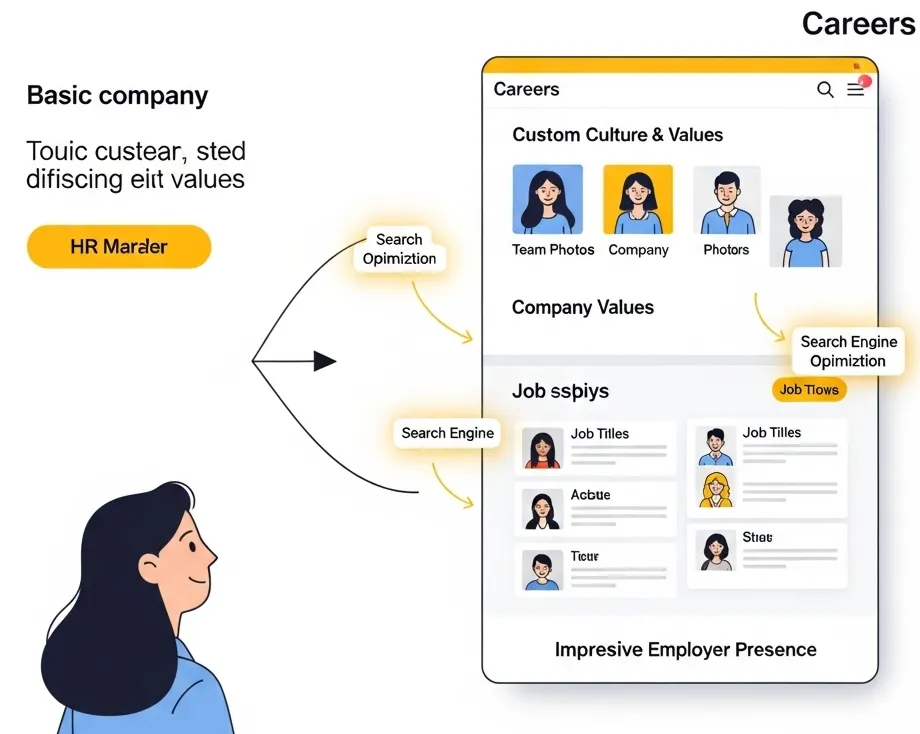
Ensures you attract the right applicants from the very beginning with clear, optimized job posts. - Job Match Score
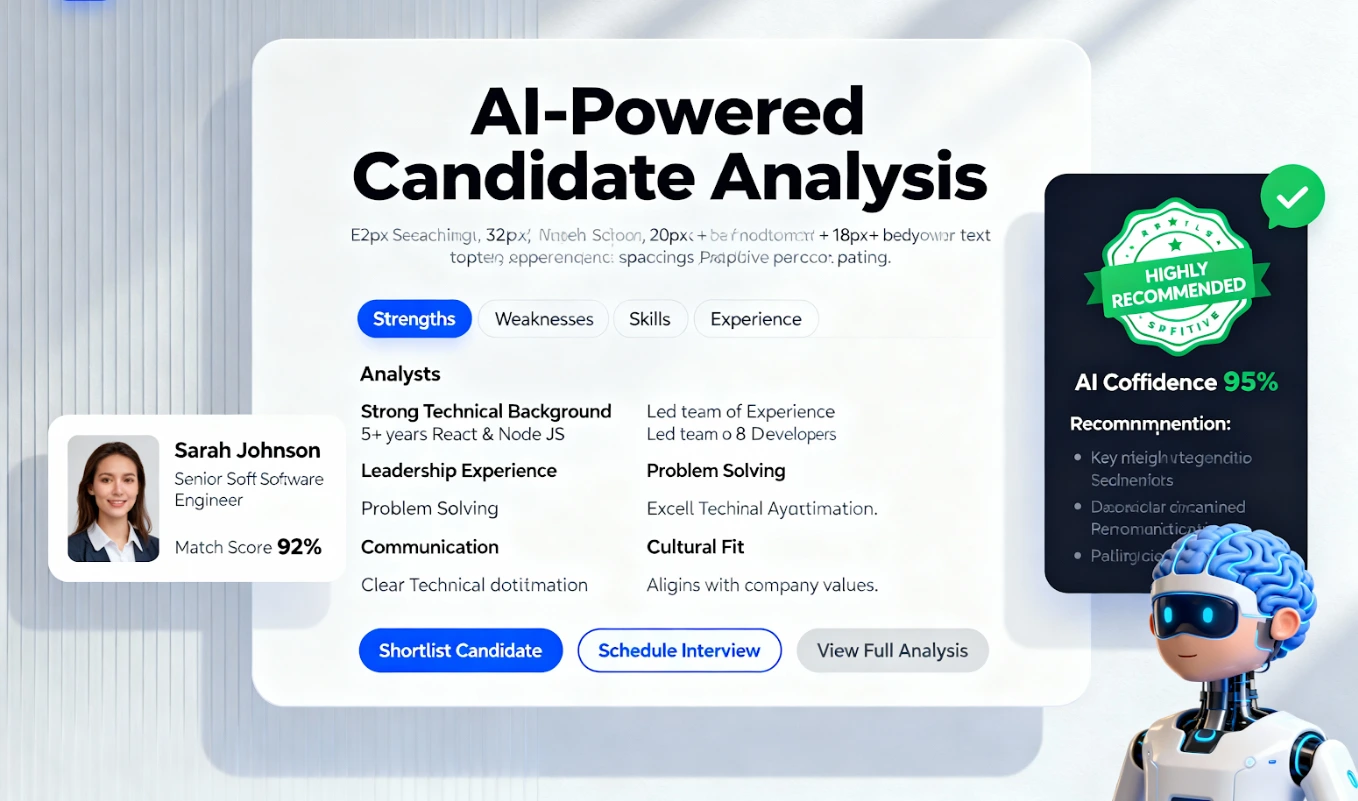
Automatically scores and ranks every applicant against your requirements, so you instantly see who to focus on. - Multi-Channel Profile Screening
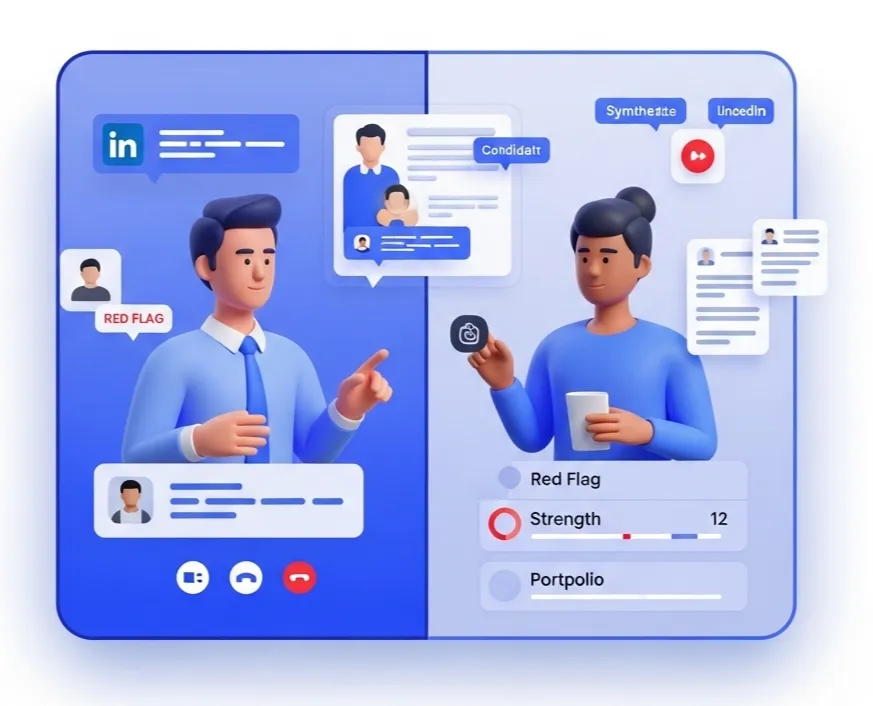
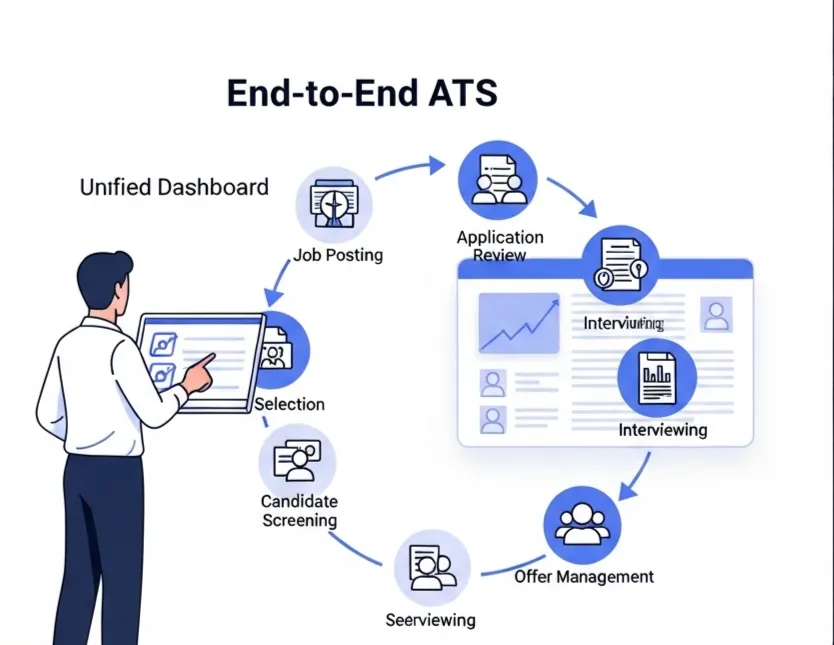
Pulls in public data from sites like LinkedIn and GitHub to give you a more complete picture than a resume alone. - Integrated ATS Pipeline
Lets you move top candidates from screening to interview stages with one click, keeping the process moving forward.
Recruiter reality: "I used to have 10 browser tabs open for every candidate. Now, everything I need to make a decision is in one place. It’s a huge time-saver."
Common Screening Pitfalls to Avoid
Adopting new tools is only half the battle. To truly improve your hiring, avoid these common mistakes that keep teams stuck in slow, ineffective cycles.
- Relying only on resumes and ignoring other signals of skill.
- Forgetting that a slow process damages your employer brand.
- Using inconsistent questions and criteria for different candidates.
- Waiting days to contact promising applicants after they apply.
- Failing to define what a "quality hire" actually looks like for the role.
- Assuming all automated screening tools are too expensive or complicated for an SMB.
Where AI Screening Stops and You Begin
Technology is a powerful assistant, not a replacement for human connection. Even the best screening software can't do everything. Your expertise is still essential for:
- Building genuine rapport with your top candidates during interviews.
- Assessing complex soft skills and culture contribution in conversation.
- Making the final, nuanced decision between two excellent finalists.
- Personally extending an offer and welcoming a new member to your team.
A Smarter Way to Build Your Team
Choosing between AI and manual screening is about choosing how to spend your most valuable resource: time. By letting technology handle the repetitive, data-heavy tasks, you free yourself up to do what humans do best - connect, evaluate, and build relationships.
Ready to see how you can convert more applicants into hires, faster? Explore how HireZapp's applicant screening software can transform your hiring process.
Automate Screening, Boost Hiring Quality.
Cut costs, accelerate speed, and improve candidate quality with HireZapp's AI-powered screening.
Frequently Asked Questions
1) What is the main difference between AI and manual screening?
Manual screening relies entirely on a person reading and interpreting every resume. AI screening uses technology to automate the initial review, scoring candidates against predefined criteria to quickly identify the most relevant applicants.
2) How does AI screening improve candidate screening efficiency?
It dramatically speeds up the process by handling the high-volume, repetitive task of initial review. This allows recruiters to focus their time on the most qualified candidates, improving overall candidate screening efficiency and shortening the hiring timeline.
3) Are AI screening tools biased?
Modern, well-designed AI tools are built to reduce human bias. By focusing on objective data points related to skills and experience, they can help create a more fair and consistent evaluation process for all applicants.
4) Can a small business afford applicant screening software?
Yes. Many modern platforms, like HireZapp, offer flexible, credit-based pricing and even free plans. This makes powerful applicant screening software accessible without a large upfront investment, which is ideal for SMBs.
5) What are the key AI screening benefits for founders?
The main AI screening benefits for founders are saving massive amounts of time, making more data-driven and less biased decisions, and improving the candidate experience, which strengthens their employer brand from day one.
6) Is AI screening better for certain types of roles?
AI screening is especially effective for high-volume roles or technical positions where specific, measurable skills are critical. However, it provides efficiency benefits for almost any role by handling the initial pass on all applications.
7) How do I measure the success of a new screening process?
Track key metrics like time-to-fill, cost-per-hire, offer acceptance rate, and new hire performance after 90 days. A successful process will show improvements in one or more of these areas.