Manual Resume Screening: The Hidden Cost to Your Business
Your company is growing. You’re running ads, posting on job boards, and getting a flood of applicants. But instead of feeling successful, you’re drowning in resumes from Google Forms, disorganized DMs, and a packed inbox. Good candidates are getting lost in the noise, and roles are staying open for weeks too long.

The True Manual Resume Screening Costs Your Business Can't Ignore
Your company is growing. You’re running ads, posting on job boards, and getting a flood of applicants. But instead of feeling successful, you’re drowning in resumes from Google Forms, disorganized DMs, and a packed inbox. Good candidates are getting lost in the noise, and roles are staying open for weeks too long.
This is more than just an inconvenience. These delays and disorganized processes create significant hidden hiring costs that silently drain your resources and slow your growth. It's time to look beyond the salary of your hiring manager and see where the real expenses are hiding.
Beyond the Timesheet: Where Screening Costs Hide
The time spent reading resumes is just the beginning. The real damage from inefficient screening comes from a series of compounding problems that affect your entire business. Many founders and recruiters notice these issues pile up quickly.
Recruiter reality: “I spend the first two hours of every day just sorting through unqualified applicants from last night's ad spend. By the time I find someone good, my energy is gone, and I'm already behind on everything else.”
Here are the most common sources of these hidden costs:
- Lost Team Productivity
When your engineers, sales leads, or department heads have to stop their work to screen resumes, their primary projects suffer. This ripple effect slows down innovation and revenue-generating activities across the company. - Delayed Project Kickoffs
Every day a critical role remains unfilled is a day a key project is stalled. This opportunity cost can be immense, leading to missed deadlines, delayed product launches, and unhappy clients. - Inconsistent Evaluations
Without a system, every screener uses their own gut feeling. This leads to inconsistent shortlists, introduces bias, and increases the chance of a cost of bad hire, which is one of the most expensive mistakes a company can make. - Poor Candidate Experience
Slow response times and a confusing application process make your company look disorganized. Top candidates have options, and they will quickly move on to a company that respects their time. - Wasted Ad Spend
Pouring money into job ads that attract hundreds of unqualified applicants is like trying to fill a bucket with a hole in it. You’re paying for volume, not for quality, and your ROI plummets.
A 6-Step Playbook to Calculate and Cut Screening Costs
To fix the problem, you first need to understand its size. This simple, repeatable process will help you get a clear picture of your current state and build a case for a better system.
- Map Your Current Process
Write down every single step, from when an application arrives to when a first interview is scheduled. Note who is involved at each stage. - Track Resume Review Time
For your next open role, use a timer to measure the active hours spent by everyone involved in just screening resumes. Be honest and include everyone’s time. - Assign a Dollar Value to Time
Calculate the hourly cost of each person involved in screening. Multiply their time spent by their hourly rate to get a baseline cost per role. - Factor in Opportunity Costs
Estimate the value of the revenue or project work that was delayed because your team was screening instead of doing their main jobs. This is often the biggest cost of all. - Identify Inefficiency Hotspots
Look at your map and your data. Where are the bottlenecks? Is it the initial sort? Is it getting feedback from managers? Pinpoint the exact moments of delay. - Systematize with a Central Hub
Implement a single system to receive, score, and track all candidates. Moving away from spreadsheets and email is the first step to creating a repeatable, efficient process.
Tools to Spot Inefficiencies Today
You can start improving your process immediately. Use this simple screening scorecard checklist for your next hire to create more consistency and focus your review on what truly matters.
Screening Scorecard Checklist
- Demonstrated experience with Core Skill #1
- Minimum years of relevant professional experience met
- Shows alignment with company value of [Insert Value]
- Portfolio or work sample quality meets standard
- Communication style in application is clear and professional
- Answers to screening questions show genuine interest
- Located within required geographic area (if applicable)
How to Automate Screening and Boost Recruiting Efficiency
Once you understand your costs, the next step is to use technology to eliminate the manual work that creates them. A modern hiring platform like HireZapp is designed to automate the most time-consuming parts of screening, giving you back hours of productive time.
Here is how a dedicated system helps you achieve higher recruiting efficiency:
- AI JD + Job Form Generation
Attracts better-fit applicants from the very beginning by creating clear, targeted job descriptions and application forms that ask the right questions. - Job Match Score
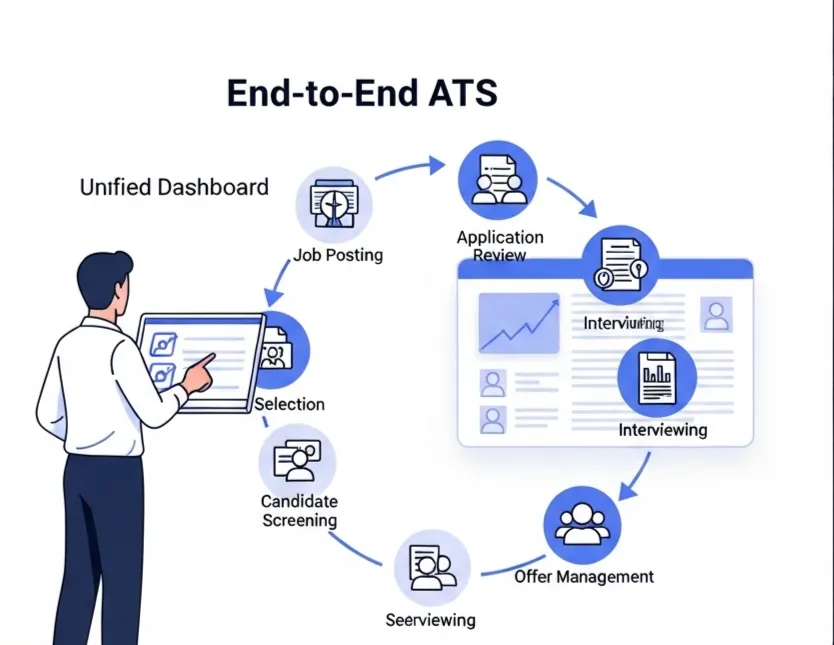
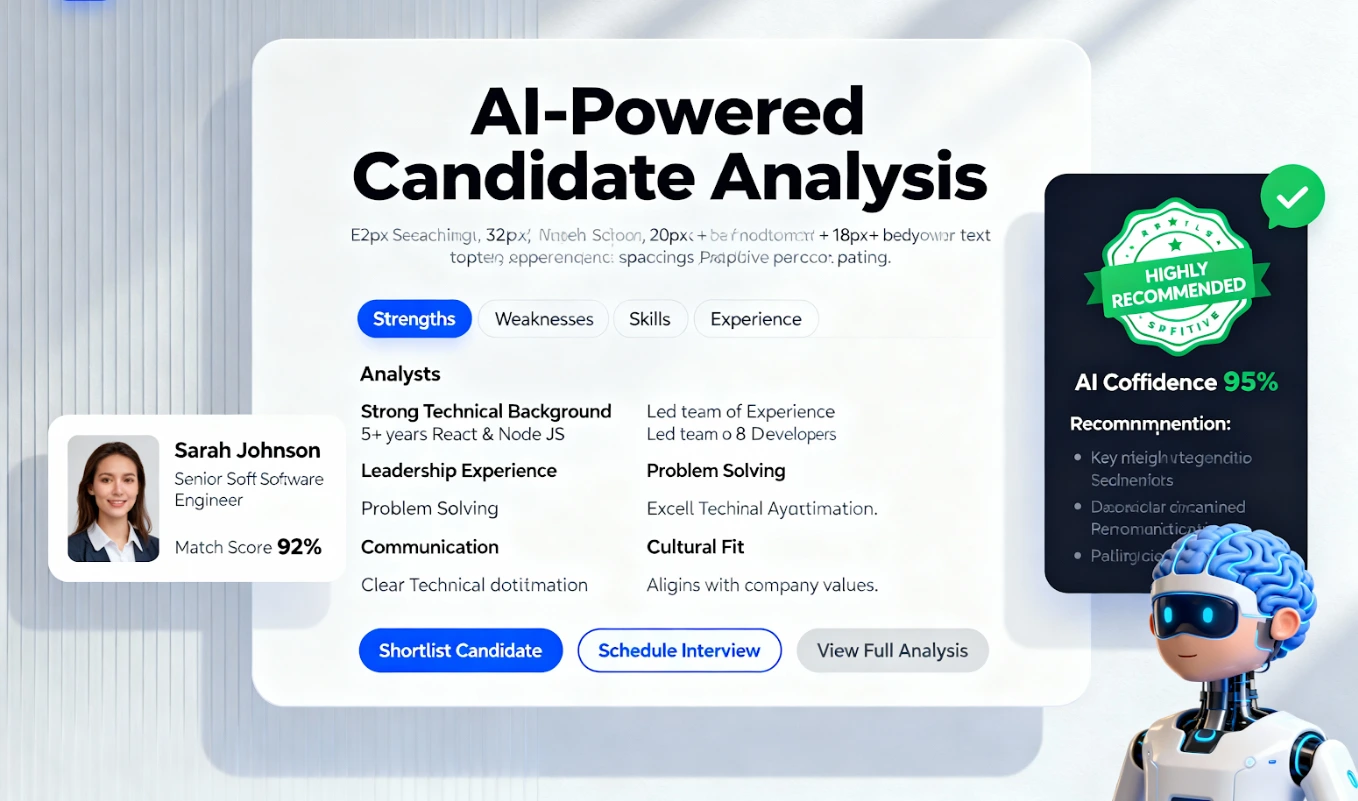
Automatically scores and ranks every applicant based on your ideal criteria, so you can instantly focus on the top 10% instead of manually sorting through the bottom 90%. - Assessments and ATS Pipeline
Standardizes your evaluation process with skills tests and moves candidates through a visual pipeline, ensuring no one falls through the cracks. - Employer Branding Suite
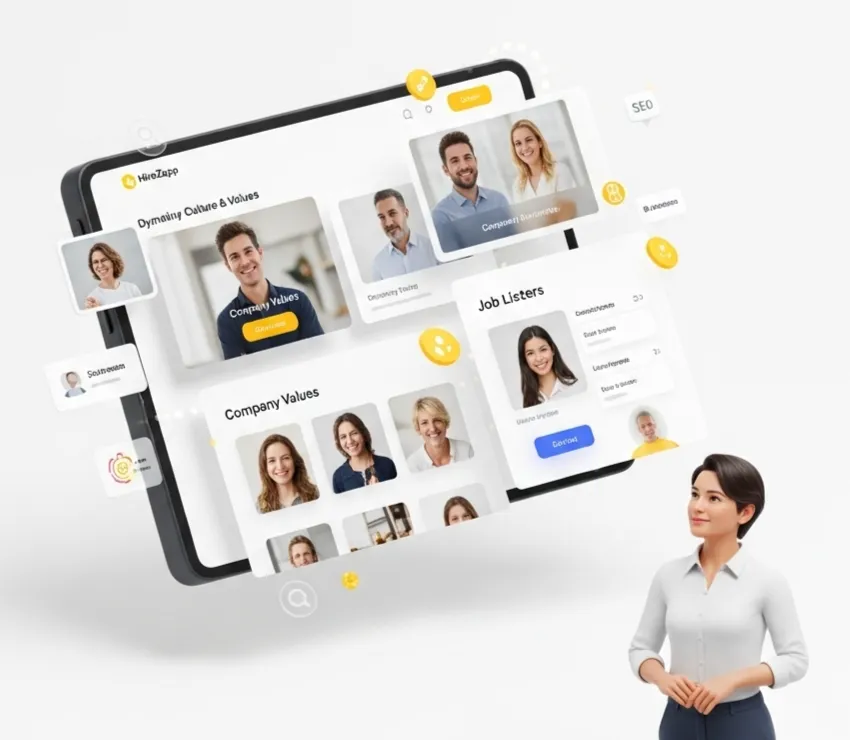
Creates a professional careers page and automated communications that deliver a great candidate experience, protecting your brand reputation.
Avoid These Common Screening Traps
Many teams stay stuck in old habits that they don't realize are hurting them. Watch out for these common mistakes:
- Relying only on basic keyword matching.
- Ignoring clear signs of soft skills in the application materials.
- Letting unconscious bias influence shortlisting decisions.
- Failing to communicate with candidates in a timely manner.
- Using a messy combination of spreadsheets, forms, and email to track applicants.
- Asking hiring managers for feedback without providing clear criteria.
A Quick Reality Check: What Automation Won't Fix
Technology is a powerful tool, but it's not a magic wand. Being honest about its limitations is key to your success. An automated screening system will not:
- Fix a toxic or undefined company culture.
- Create a compelling compensation and benefits package for you.
- Replace the final human judgment needed to make a great hire.
- Write a perfect, nuanced job description without your expert input.
Your First Step to Smarter Hiring
Understanding your manual screening costs is the first step toward reclaiming lost time and money. By identifying where the leaks are, you can implement a streamlined system that not only helps you hire faster but also builds a stronger, more productive team. The right tools can help you reduce time to hire and focus on what matters most: connecting with great people.
Frequently Asked Questions
Stop Wasting Time & Money on Resumes.
HireZapp's AI screens candidates 10x faster, eliminating hidden costs and boosting your hiring ROI.
1) How do I calculate the cost of manual resume screening?
Start by tracking the total hours spent by everyone involved in reviewing resumes for a single role. Multiply those hours by each person's estimated hourly wage. Then, add the opportunity cost of delayed projects and the ad spend for that role to get a more complete picture.
2) What are the biggest applicant screening challenges for small businesses?
The biggest challenges are typically a lack of time, no dedicated HR person, inconsistent evaluation criteria between reviewers, and using disconnected tools like email and spreadsheets, which leads to a poor candidate experience and lost applicants.
3) Can AI resume screening completely replace human recruiters?
No, AI resume screening is a tool to augment, not replace, human recruiters. It handles the repetitive, high-volume task of initial sorting so recruiters can spend their valuable time on human-centric tasks like interviewing, building relationships, and closing candidates.
4) What is a good benchmark for time-to-hire?
This varies widely by industry and role complexity. However, a healthy goal for many tech and business roles is between 30 and 45 days. If your process consistently takes longer, it's a sign that there are inefficiencies to address, often starting with screening.
5) How does inefficient screening affect the candidate experience?
Inefficient screening leads to slow or non-existent communication, which makes candidates feel disrespected and that their application went into a black hole. Top talent has multiple opportunities and will quickly lose interest in a company that appears disorganized.
6) What is the first step to improve our hiring process?
The first and most impactful step is to centralize your process. Stop using a mix of forms, emails, and DMs. Implementing a simple Applicant Tracking System (ATS) creates a single source of truth for all candidates and communications.
7) How do you measure HR tech ROI?
You can measure HR tech ROI by calculating the time saved in manual tasks (and its associated salary cost), the reduction in ad spend on unqualified leads, the decrease in time-to-hire (which accelerates revenue), and the reduced risk of making a costly bad hire.