“How to shortlist faster without missing great candidates”
Are you drowning in applications? It's a common story for recruiters and founders. You spend hours sifting through resumes, juggling spreadsheets and DMs, only to find a few good fits. By the time you reach out, the best candidates have already accepted other offers.

How to Shortlist Faster Without Missing Great Candidates
Are you drowning in applications? It's a common story for recruiters and founders. You spend hours sifting through resumes, juggling spreadsheets and DMs, only to find a few good fits. By the time you reach out, the best candidates have already accepted other offers.
This guide explains how to shortlist candidates faster and build a system that surfaces top talent without the manual work. The goal is to spend less time sorting and more time connecting with qualified people who can help grow your business.
Why Your Current Shortlisting Process Feels Broken
If shortlisting feels like a major bottleneck, you are not alone. Many teams struggle with the same challenges that slow down hiring and lead to missed opportunities. These issues often stem from a lack of a clear system.
- Relying on manual resume reviews for every single applicant.
- Using scattered tools like spreadsheets, WhatsApp forms, and email inboxes.
- Lacking clear, consistent criteria for what a “good” candidate looks like.
- Having different team members ask inconsistent screening questions.
- Suffering from communication delays that cause top candidates to drop off.
- The founder or a single hiring manager becoming the sole decision-maker.
Recruiter reality: “I feel like I spend my whole day just opening resumes and attachments. By the time I find someone great and get approval, they’re gone.”
A Step-by-Step Guide to Shortlist Candidates Faster
Creating a repeatable system is the key to both speed and quality. This hybrid approach combines smart planning with helpful automation to streamline your workflow and ensure fairness.
- Define “Must-Haves” vs. “Nice-to-Haves”
Before you post the job, your team must agree on the few absolute essential skills versus the skills that are bonuses. - Create a Smart Job Application Form
Ask two to three knockout questions upfront to filter out clearly unqualified applicants automatically. - Set Up Automated Screening
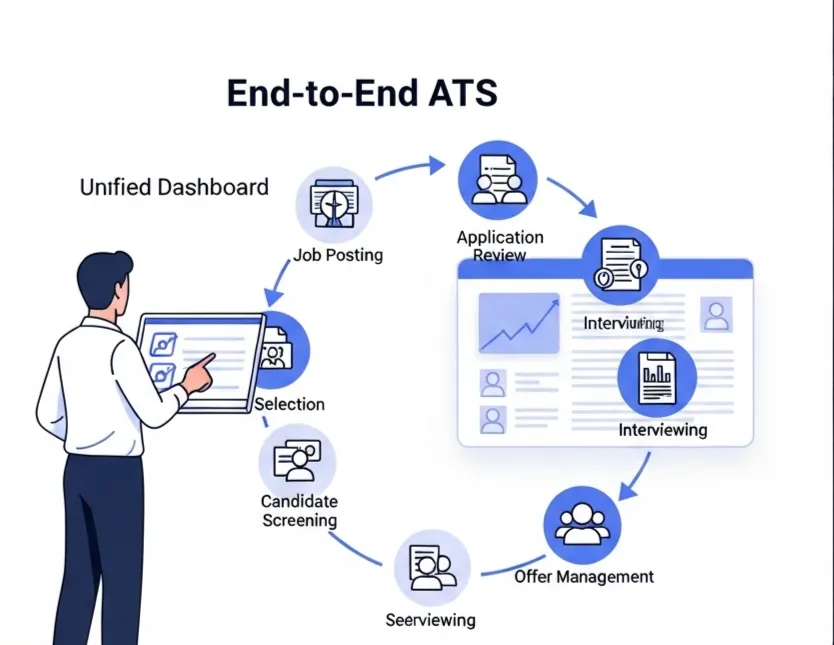
Use modern tools to scan for keywords, required skills, and years of experience across resumes and online profiles. - Use a Centralized Dashboard
Stop juggling different platforms. A single pipeline view shows you exactly where every candidate stands in the process. - Score Candidates Consistently
Apply a simple scoring system to every application based on your defined “must-have” criteria. - Send Automated First-Touch Emails
Immediately acknowledge applications and let qualified candidates know the next steps in your candidate shortlisting process. - Batch Your Review Sessions
Instead of checking applications as they arrive, set aside two 30-minute blocks each day to review the pre-screened list.
Templates to Standardize Your Screening
Consistency is your best defense against bias and wasted time. Use these simple templates to make sure every candidate is evaluated on the same terms.
Candidate Evaluation Matrix Checklist
Use a simple candidate evaluation matrix like this to score applicants quickly.
- Meets all “must-have” technical skills.
- Has relevant industry or company-stage experience.
- Answered knockout questions correctly.
- Shows clear and logical career progression.
- Resume and cover letter are tailored to the role.
- LinkedIn or GitHub profile is professional and consistent.
Core Screening Questions
- What is your direct experience with [Key Skill #1]?
- Can you describe a project where you had to [solve a relevant business problem]?
- What are your general salary expectations for this type of role?
- What is your earliest availability to start a new position?
- Why are you interested in working at our company specifically?
How HireZapp Automates the Heavy Lifting
Using the right AI shortlisting tools can transform your hiring without breaking your budget. Here’s how HireZapp supports an efficient candidate screening workflow.
- AI Job Description and Form Generation
Creates clear job descriptions and application forms with built-in screening criteria to attract the right people from the start. - Multi-Channel Screening
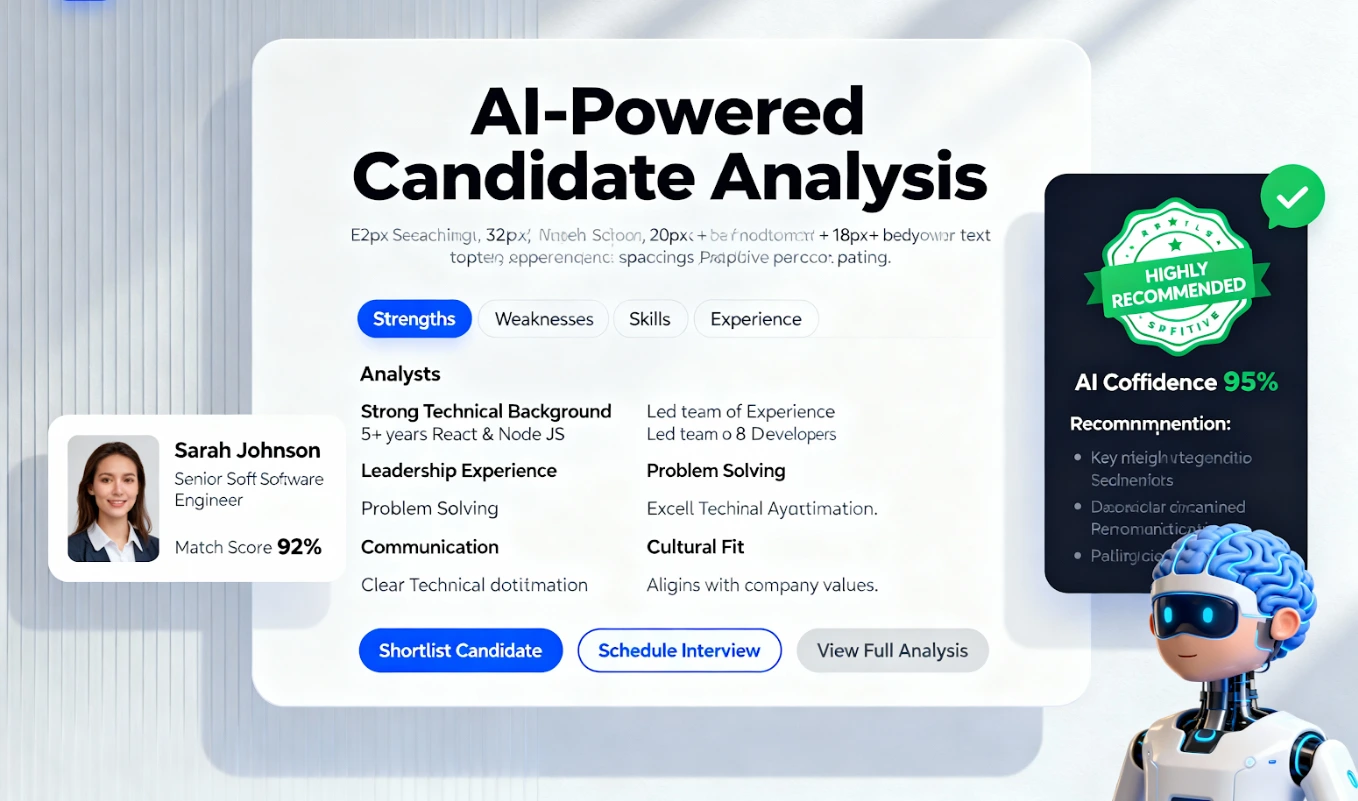
Pulls data from resumes, LinkedIn, and GitHub to create a single, complete candidate profile. - Job Match Score
Instantly scores and ranks every applicant against your job requirements so you can focus on the best fits first. - Automated ATS Pipeline
Moves candidates through stages and sends branded follow-up communications without any manual work from you.
Shortlist Smarter. Hire Faster.
HireZapp's AI automates screening, guaranteeing you find top talent quickly, without missing anyone.
Common Mistakes That Keep Hiring Teams Stuck
Even with the right tools, certain habits can undermine your progress. Avoiding these common pitfalls is crucial for improving your overall hiring efficiency.
- Chasing a “perfect” candidate instead of a qualified one.
- Allowing personal bias to influence screening decisions.
- Forgetting to communicate with candidates who are not selected.
- Ignoring data on where your best applicants come from.
- Making the application process too long or complicated.
- Failing to ask for feedback to improve your process over time.
What a Faster Process Won’t Fix on Its Own
A streamlined shortlisting system is a powerful tool, but it is not a magic wand. Be aware that it cannot solve deeper underlying issues with your role or company.
- A poorly written or unrealistic job description.
- A non-competitive salary or benefits package.
- A weak employer brand or negative company reputation online.
- A slow and disorganized interview process *after* the shortlist is made.
A faster shortlisting process is not about cutting corners. It is about building a smart, repeatable system that gives you back time and helps you achieve quality candidate selection.
By combining clear criteria, simple automation, and consistent communication, you can confidently connect with top talent before your competitors do. Learn more about how HireZapp can help.
Frequently Asked Questions
1) What is the main goal of candidate shortlisting?
The goal is to efficiently identify a small group of the most qualified candidates from a larger applicant pool to move forward to interviews. This saves time and focuses team resources on the best potential hires.
2) How can I reduce time to hire with better shortlisting?
Better shortlisting helps reduce time to hire by automating the initial screening, using consistent criteria to make decisions faster, and engaging top candidates quickly before they accept other offers.
3) What are the best shortlisting practices for a small team?
For small teams, the best shortlisting practices include using a simple ATS like HireZapp, defining three to five “must-have” criteria per role, using a standard scorecard, and time-blocking for review sessions to stay focused.
4) Is automated screening fair to candidates?
Yes, when it is set up correctly. Automated screening applies the same objective criteria to every single applicant, which can help reduce the unconscious human bias that often occurs in the initial review stage.
5) How many candidates should be on a shortlist?
A typical shortlist for a single role includes five to ten candidates for the first round of interviews. The exact number depends on the role's complexity, urgency, and the overall strength of the applicant pool.
6) What is the difference between screening and shortlisting?
Screening is the broad, initial act of filtering out unqualified applicants based on basic requirements. Shortlisting is the next step, where you select the very best candidates from that screened pool to invite for an interview.
7) How can I measure the success of my shortlisting process?
Key metrics include your time-to-shortlist (how long it takes from application to shortlist), the shortlist-to-interview ratio, and ultimately, the quality of hire and their performance in the role.