Pre-Screening Questions That Filter Low-Intent Candidates (Before Wasting Time)
Does your inbox feel like a black hole of applications? You spend money on job ads or hours on LinkedIn, only to get candidates who ghost you, are completely unqualified, or just clicked “apply” out of curiosity. The time wasted manually sifting through these applications is a huge drain on your resources.

Pre-Screening Questions That Filter Low-Intent Candidates
Does your inbox feel like a black hole of applications? You spend money on job ads or hours on LinkedIn, only to get candidates who ghost you, are completely unqualified, or just clicked “apply” out of curiosity. The time wasted manually sifting through these applications is a huge drain on your resources.
The solution is not to work harder, but to work smarter with strategic pre-screening questions. By asking the right questions upfront, you can automatically filter out low-intent applicants and focus your energy only on those who are genuinely interested and qualified for the role.
Why Your Inbox is Full of Unqualified Applicants
If you're drowning in applications, it's usually not bad luck. It's often a sign that the front end of your hiring process is broken. Many recruiters and founders see the same patterns causing this problem, making it hard to filter low-intent applicants.
- One-Click Apply Buttons
Platforms that make it too easy to apply often attract candidates who are not seriously invested in your specific role. - Vague Job Descriptions
If your job description is unclear about key requirements or responsibilities, you will attract people who are not a good fit. - No Initial Filtering
Using a simple Google Form, email inbox, or WhatsApp DMs for applications offers no way to automatically weed out mismatched candidates. - Generic Application Forms
Asking only for a name, email, and resume tells you nothing about a candidate's motivation or specific skills for the job. - Forgetting Deal-Breakers
Failing to ask about non-negotiable requirements like work authorization, specific certifications, or salary expectations wastes everyone's time later.
A Step-by-Step Guide to Effective Screening
Building a system to surface the best candidates is simple when you follow a clear process. This approach helps you move from chaos to clarity, ensuring you only spend time on people who are a potential match.
- Define “High-Intent” for the Role
Before writing any questions, decide what a motivated, qualified candidate looks like. List 3-5 non-negotiable skills or attributes. - Draft Knockout Questions First
Create simple yes/no or multiple-choice questions based on your non-negotiables. These are your first line of defense. - Add Skill and Experience Questions
Ask 2-3 questions that require a short text answer about a specific tool or past experience relevant to the job. - Include a Situational Question
Present a brief, hypothetical work scenario and ask how the candidate would handle it. This tests critical thinking. - Ask About Motivation
Include one question that probes their interest, such as “What about this role caught your attention?” Their answer reveals their level of research and intent. - Set Up an Automated System
Use a tool like an Applicant Tracking System (ATS) to automatically collect and score responses, so you can see top candidates at a glance. - Review and Calibrate
After the first dozen applications, review the results. Are your questions working? Adjust them to improve the quality of your shortlist.
Screening Question Templates You Can Use Today
Here are some examples of effective screening questions you can adapt for your roles. The goal is to get a mix of question types to build a complete picture of each applicant.
Knockout Questions (Yes/No)
- Are you authorized to work in the United States without sponsorship?
- This role requires a certification in XYZ. Do you currently hold this certification?
- This is a hybrid role requiring 3 days per week in our Austin office. Are you able to commit to this schedule?
Skill-Based Questions (Short Answer)
- Describe your experience using HubSpot CRM to manage a sales pipeline.
- How many years of professional experience do you have with Python for data analysis?
Situational Questions (Short Answer)
- Imagine a key project deadline was suddenly moved up by one week. How would you re-prioritize your tasks?
- A customer is upset about a product bug. Walk me through the first three steps you would take.
Recruiter reality: “The answers to situational questions tell me more than a resume ever could. It shows me how someone thinks on their feet, not just what they’ve done in the past.”
How HireZapp Automates Your Hiring Pre-Screening
Manually creating questions, sending forms, and tracking responses for every role is unsustainable. HireZapp is built to handle the entire front-end of your hiring process, so you can get straight to interviewing qualified candidates.
- AI Job Form Generation
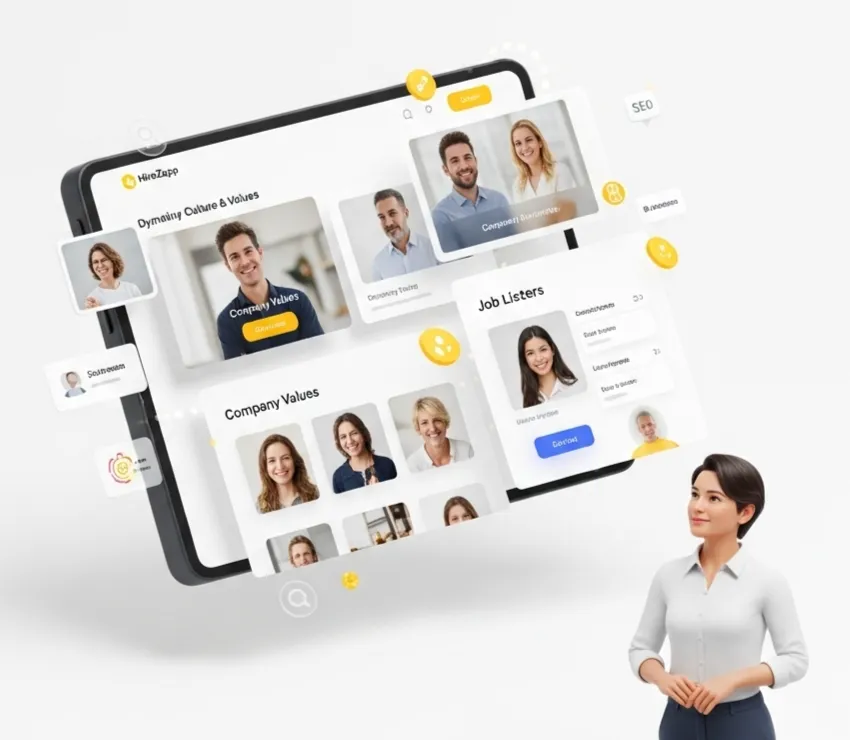
HireZapp automatically creates a branded job post and application form with relevant ATS screening questions based on your job description. - Job Match Score
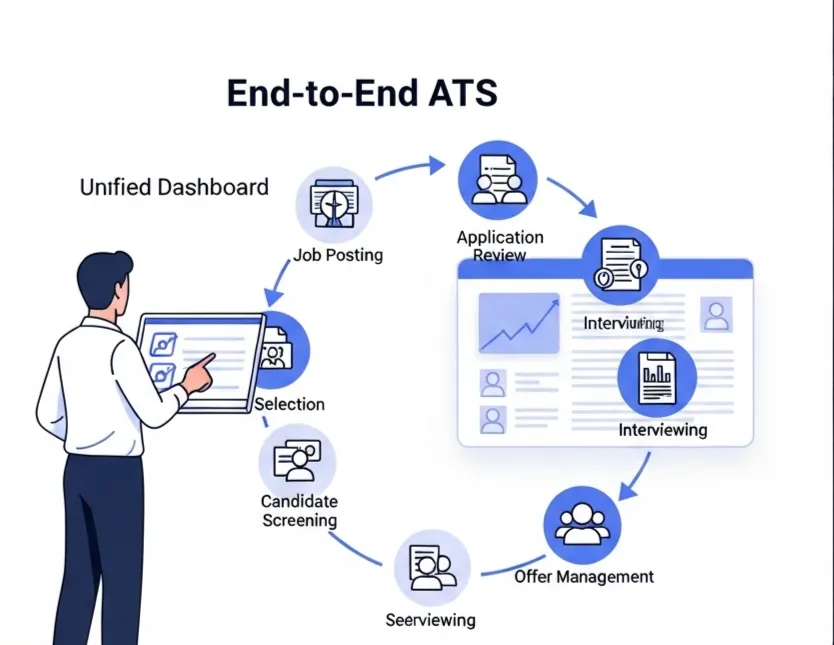
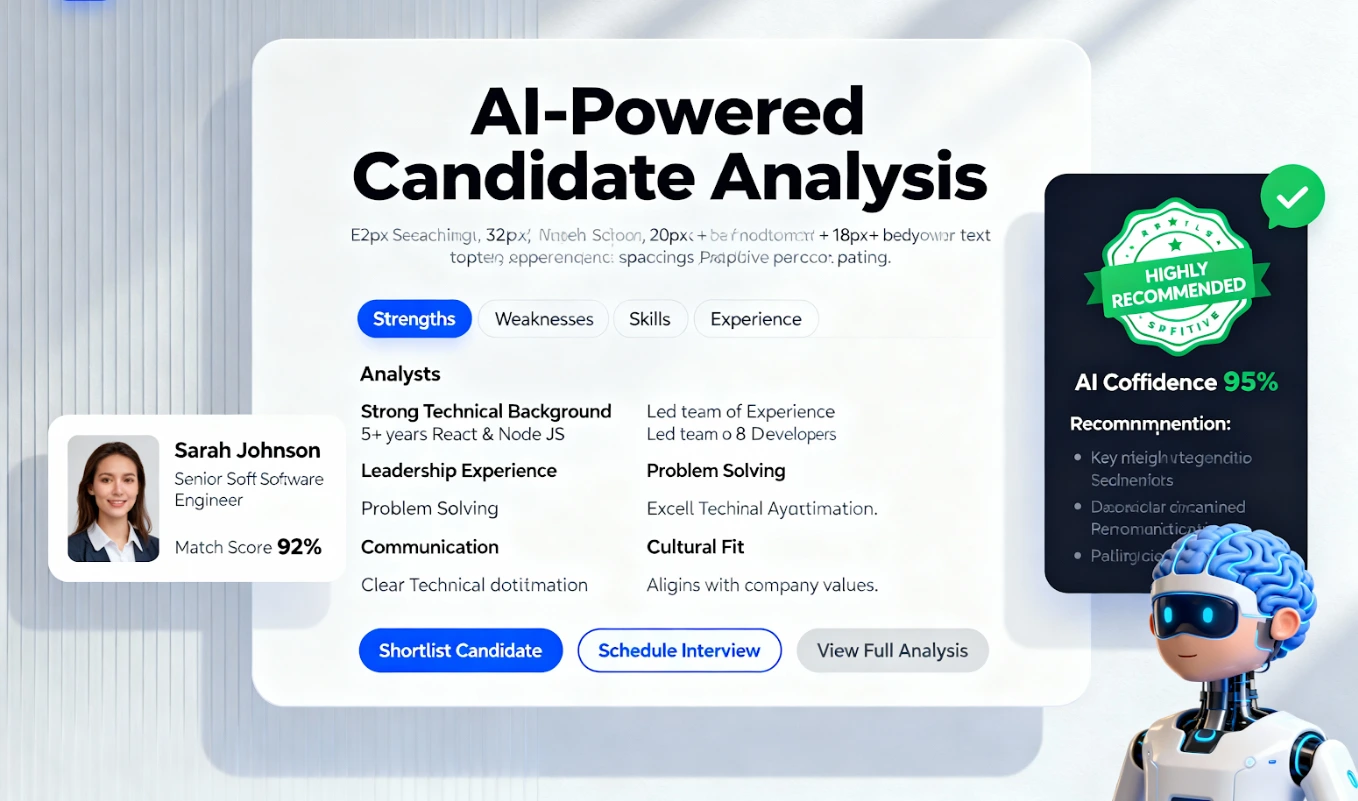
Instantly see how well a candidate's skills and screening answers match your requirements, without reading every single resume. - Centralized ATS Pipeline
All applicants and their answers are organized in one simple pipeline, ending the chaos of managing candidates through DMs and spreadsheets. - Automated Follow-Ups
Keep every candidate informed with automated status updates, improving your employer brand and candidate experience.
Eliminate Low-Intent Applicants. Instantly.
Leverage AI to automate pre-screening. HireZapp filters low-intent candidates, scaling your hiring and boosting ROI.
Avoid These Common Screening Mistakes
A poorly designed screening process can hurt more than it helps. Watch out for these common errors that can cause great candidates to drop off or leave you with a weak shortlist.
- Asking too many questions upfront, which can significantly increase your applicant drop-off rate.
- Using generic questions that don't relate directly to the core functions of the job.
- Ignoring questions about motivation and genuine interest in your company.
- Failing to communicate the next steps to applicants after they submit their answers.
- Creating a process that is not mobile-friendly, alienating a large portion of the candidate pool.
- Relying only on resumes without using any candidate qualification questions to get more context.
What Stronger Screening Won't Solve
While a powerful screening process is critical, it is not a magic bullet. Be honest with yourself about other factors that could be impacting your hiring success. Better screening will not fix:
- A non-competitive salary or benefits package.
- A negative employer brand or poor company reputation.
- An unclear or constantly changing role definition.
- A slow and indecisive interview process that causes top talent to accept other offers.
Your Next Step to a Better Candidate Pool
By replacing manual, inconsistent screening with a thoughtful, automated system, you reclaim your time and dramatically improve the quality of your interviews. Start by defining what you need, crafting targeted questions, and using the right tools to bring it all together. The result is a faster, more effective hiring process that connects you with the right people for your team.
Frequently Asked Questions
1) What is the main purpose of pre-screening questions?
The primary purpose is to quickly and efficiently determine if an applicant meets the minimum, non-negotiable requirements for a job. This allows recruiters to filter low-intent applicants and focus their time on the most promising candidates from the start.
2) How many applicant screening questions should you ask?
A good rule of thumb is 5-7 questions. This is enough to gather critical information without overwhelming the candidate and causing them to abandon the application. The goal is to balance data collection with the need to reduce application drop-off.
3) What are the different types of candidate screening questions?
Key types include knockout questions (yes/no), skill-based questions (evaluating technical ability), behavioral questions (about past experiences), and situational questions (hypothetical scenarios). A good mix provides a well-rounded view of a candidate.
4) Can an ATS help with the screening process?
Absolutely. An Applicant Tracking System (ATS) can automate the entire process by hosting the questions, collecting responses, and even scoring or ranking candidates based on their answers, making your hiring pre-screening much more efficient.
5) What's the difference between screening questions and interview questions?
Screening questions are used at the very beginning of the process, often in the application form itself, to verify basic qualifications. Interview questions are used later in live conversations to dive deeper into a candidate's experience, personality, and problem-solving skills.
6) How do you identify red flags in screening answers?
Red flags include one-word, low-effort answers to open-ended questions; responses that completely ignore the prompt; answers that contradict information on their resume; and failure to answer knockout questions correctly.
7) Should I ask about salary expectations in a pre-screen?
Yes, it can be very effective. Asking for a desired salary range is a type of knockout question that ensures you and the candidate are aligned on compensation before investing time in interviews.