Application Completion Rate: Why Candidates Drop Off Your Form
You spend time and money getting your job post in front of the right people, only to see qualified candidates disappear before they even finish applying. It’s a common frustration that drains your budget and slows down hiring. A high rate of candidate drop off is often a sign that your application form itself is the problem.

Boost Your Application Completion Rate: Why Candidates Drop Off Your Form
You spend time and money getting your job post in front of the right people, only to see qualified candidates disappear before they even finish applying. It’s a common frustration that drains your budget and slows down hiring. A high rate of candidate drop off is often a sign that your application form itself is the problem.
Fixing this leak in your hiring funnel is about more than just filling a role. It’s about creating a smooth, respectful process that attracts top talent and directly impacts your recruitment conversion rate. Let’s look at the real reasons candidates leave and how to fix them.
Pinpointing the Sources of Job Application Abandonment
Before you can fix the problem, you need to know what’s causing it. Many recruiters notice that candidates abandon applications for a handful of preventable reasons. Your form might be asking for too much, too soon, or just not working correctly on their devices.
- It’s Too LongForms with dozens of questions or multiple pages create fatigue. Top candidates are busy and will move on to an easier application process.
- It’s Not Mobile-FriendlyMany candidates apply from their phones. If your form is difficult to navigate on a small screen, they will give up.
- It Forces Account CreationRequiring an applicant to create a username and password before they can even apply is a major barrier.
- It Asks for Repetitive InformationNothing is more frustrating than uploading a resume and then having to manually type in your entire work history again.
- It Gives Vague Error MessagesFields that turn red with no explanation of what’s wrong create a dead end for applicants.
- It Lacks a Progress BarWithout knowing how much is left, a five-minute application can feel endless, causing people to leave.
A Step-by-Step Playbook to Optimize Job Forms
Creating a better experience doesn’t require a total overhaul. A few strategic changes can dramatically reduce application drop off. Follow these steps to build a process that converts applicants into candidates.
- Audit Your Current ProcessGo through your own application form as if you were a candidate. Time yourself and note every point of friction.
- Cut Every Non-Essential QuestionChallenge every field on your form. Do you really need to know their full address or references at this stage?
- Prioritize a Mobile-First DesignEnsure your form is responsive and easy to use on a smartphone, with large tap targets and readable text.
- Enable Social Profile ApplicationsAllow candidates to apply using their LinkedIn or GitHub profile with a single click. This saves them significant time.
- Use Resume Parsing to Auto-Fill FieldsLet your system pull key information like work experience and education from an uploaded resume into the correct fields.
- Add a Progress IndicatorShow candidates where they are in the process (e.g., “Step 2 of 3”). This manages expectations and encourages completion.
- Send an Immediate Confirmation EmailAutomate an email that confirms you received their application and tells them what to expect next. This builds trust.
Templates You Can Use Today
To shorten your application form, replace open-ended questions with simple, focused screening questions. These help you qualify candidates without creating a burden.
5 Quick Screening Questions
- Are you authorized to work in the location for this role? (Yes/No)
- Do you meet the minimum years of experience in [Core Skill] listed in the job description? (Yes/No)
- What is your desired salary range? (Open field or multiple choice)
- How did you hear about this role? (Dropdown)
- Are you comfortable with a [Hybrid/Remote/On-site] work model? (Yes/No)
Where HireZapp Fits In
Manually building and managing an optimized application process is time-consuming. HireZapp provides the tools to automate best practices and improve the candidate experience from the very first click.
Recruiter reality : “I used to get half-finished applications from Google Forms and then have to chase people down in DMs. It was a mess. I had no idea who was qualified or where they were in the process.”
- AI Job Form GenerationAutomatically create short, relevant, and mobile-friendly application forms based on your job description, asking only what’s necessary.
- Multi-Channel ScreeningAllow candidates to apply with their LinkedIn, GitHub, or other professional profiles, reducing manual data entry and friction.
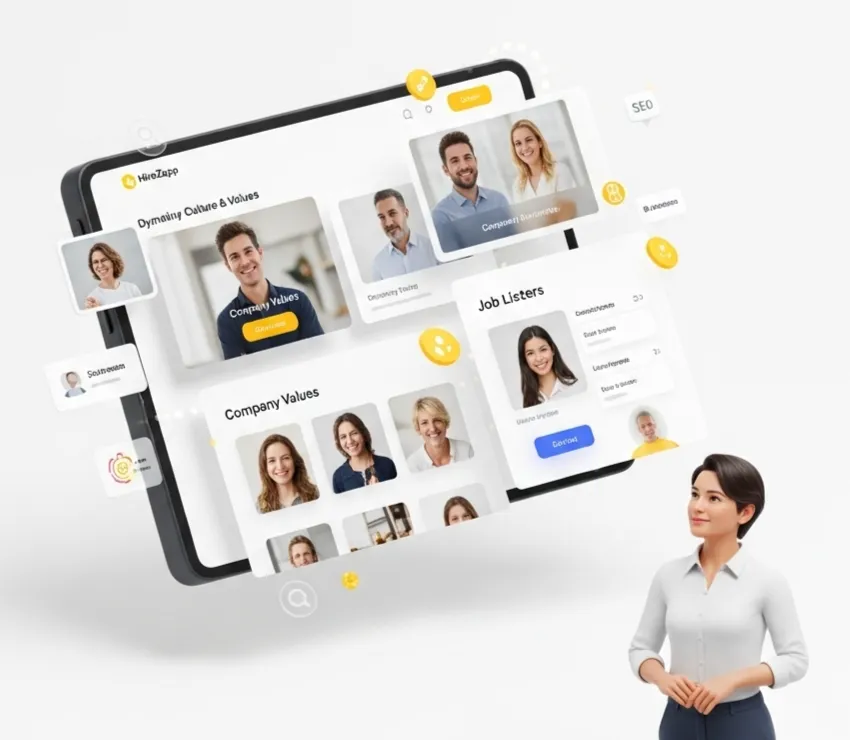
- Branded Careers Page and Job PostsPresent a professional, trustworthy image on any device, ensuring your application process feels secure and legitimate.
- Automated Follow-upsInstantly send confirmation emails and pipeline updates, keeping candidates informed and engaged without any manual work.
End Candidate Drop-Off.
HireZapp's AI-powered forms eliminate friction, boost completion rates, and secure your best candidates.
Common Mistakes in Hiring Funnel Optimization
Even with good intentions, it’s easy to fall into traps that hurt your application rates. Watch out for these common errors:
- Ignoring mobile users completely.
- Asking for sensitive information like salary history on the initial form.
- Failing to test the application link to make sure it works.
- Using the same long, generic form for every single role.
- Neglecting to add your company logo or branding to the application page.
- Forgetting to thank the candidate for their time after they submit.
What a Better Form Can’t Solve on Its Own
Optimizing your application form is a critical step, but it’s not a magic bullet. It’s important to be honest about what it won’t fix. A great form cannot overcome:
- A non-competitive salary or benefits package.
- A negative employer brand or poor online reviews.
- A vague or uninspiring job description.
- A slow, disorganized, or unresponsive recruiting team.
Start Building a Better Funnel
Your application form is the front door to your company. By making it simple, respectful, and efficient, you not only increase your application completion rate but also set the stage for a positive relationship with your future hires. Taking the time to remove friction is one of the highest-impact changes you can make to your hiring process.
Frequently Asked Questions
1) What is a good application completion rate?
While benchmarks vary by industry, many teams aim for a rate of 30% or higher. The most important thing is to measure your own baseline and focus on continuous improvement rather than a single number.
2) How do I measure job application abandonment?
You can calculate this by dividing the number of submitted applications by the number of people who started an application, then subtracting the result from 1. An ATS like HireZapp can track these analytics automatically.
3) What are the most important online application best practices?
The key practices are to keep it short (under 5 minutes), make it mobile-friendly, avoid forced account creation, and use resume parsing to prevent applicants from entering the same information twice.
4) How can I reduce application drop off on mobile devices?
Focus on a responsive design with large buttons, single-column layouts, and minimal text input. Allow candidates to apply with their LinkedIn profile, which is already optimized for mobile use.
5) Does requiring a cover letter hurt my application rate?
Yes, making a cover letter mandatory can significantly increase drop-off rates, especially for roles where it is not essential. Consider making it an optional field instead.
6) How does ATS form optimization work?
ATS form optimization involves using the features within your Applicant Tracking System to create a better experience. This includes using AI to generate concise forms, enabling one-click applications, and automating confirmation messages.
7) Why is it important to improve candidate experience during the application?
A positive initial experience sets a professional tone for your company. It respects the candidate's time, reduces frustration, and prevents you from losing qualified talent to competitors with an easier process.