What Is a Job Quality Score and How to Use It to Attract Better Talent
Are your job posts attracting a flood of unqualified applicants, or worse, getting total silence? You spend time and money on ads, but great candidates seem to drop off, leaving you sorting through resumes that don’t fit. The problem often starts at the very beginning: the quality of your job post.


What Is a Job Quality Score and How to Use It to Attract Better Talent
Are your job posts attracting a flood of unqualified applicants, or worse, getting total silence? You spend time and money on ads, but great candidates seem to drop off, leaving you sorting through resumes that don’t fit. The problem often starts at the very beginning: the quality of your job post.
Instead of guessing what works, you can use a simple metric to guide you. A high job quality score helps you write clearer, more compelling job descriptions that convert the right people from applicants into hires, faster.
Why Your Best Candidates Aren't Applying
Many recruiters find that small details in a job post can make a big difference. When an ad feels rushed or incomplete, it signals to top talent that the company might be disorganized. This is a major factor that hurts your ability to attract better talent.
Here are the common reasons great people scroll right past your job opening:
- Vague Titles and Duties: Job titles like “Ninja” or “Rockstar” are confusing. If the responsibilities are not clear, candidates cannot tell if they are a good fit.
- Missing Salary Information: Not including a salary range is the fastest way to lose a candidate's interest. It suggests a lack of transparency.
- A Wall of Text: Long, dense paragraphs without clear sections are hard to read, especially on a mobile phone.
- Unrealistic Demands: A list of 20 “must-have” skills for an entry-level role discourages qualified people from even trying.
- A Confusing Application Process: Asking candidates to apply via WhatsApp, Google Forms, or complicated email instructions creates friction and causes drop-offs.
A Step-by-Step Guide to Job Post Optimization
Improving your job posts is a repeatable process. Following these steps helps create clarity and consistency, which are key parts of any strong talent acquisition strategy. Think of this as your manual checklist before you hit “publish.”
- Write a Clear, Searchable Title. Use standard titles like “Senior Product Manager” or “Human Resources Generalist” that candidates are actually searching for.
- Open with a Strong Summary. In two or three sentences, describe the role’s main purpose and the impact the person will have on the team or company.
- List 3-5 Core Responsibilities. Focus only on the most critical tasks the person will perform daily. Use bullet points for easy reading.
- Separate “Must-Haves” from “Nice-to-Haves.” Clearly define the essential skills required to do the job versus the skills that are bonuses.
- Be Transparent About Compensation. Always include the salary range and mention key benefits like health insurance, remote work options, or professional development.
- Showcase Your Company and Team. Add a short paragraph about your company's mission or what it's like to work on your team. This helps candidates connect with your brand.
- Review for Inclusive Language. Use tools or a manual review to ensure your language is welcoming to people from all backgrounds.
- Provide Clear Next Steps. End the post by explaining exactly how to apply and what to expect next in the process.
A Checklist for Assessing Job Description Quality
Before you publish your next role, run through this quick scorecard. Each “yes” brings you closer to a perfect job post that attracts the right candidates.
Recruiter reality: “I used to just copy-paste old descriptions. Once I started treating each one like a marketing page, the quality of my applicant pool changed overnight. It’s all about clarity.”
- Is the job title clear and standard?
- Is the salary range included?
- Are there 3-5 clear, bulleted responsibilities?
- Are the key benefits mentioned?
- Is the language free of corporate jargon?
- Is there a single, obvious “Apply” button or link?
- Does the post briefly describe the company culture or mission?
How to Automate and Improve Your Job Quality Score
Manually checking every job post can be time-consuming, especially when you’re managing multiple roles. A system that guides you is more efficient. This is where you can improve job quality with a dedicated tool.
HireZapp builds these best practices directly into your workflow:
- AI Job Description Generation
Instantly create structured, well-written job posts and application forms based on a simple title, removing the guesswork. - Built-in Job Quality Score
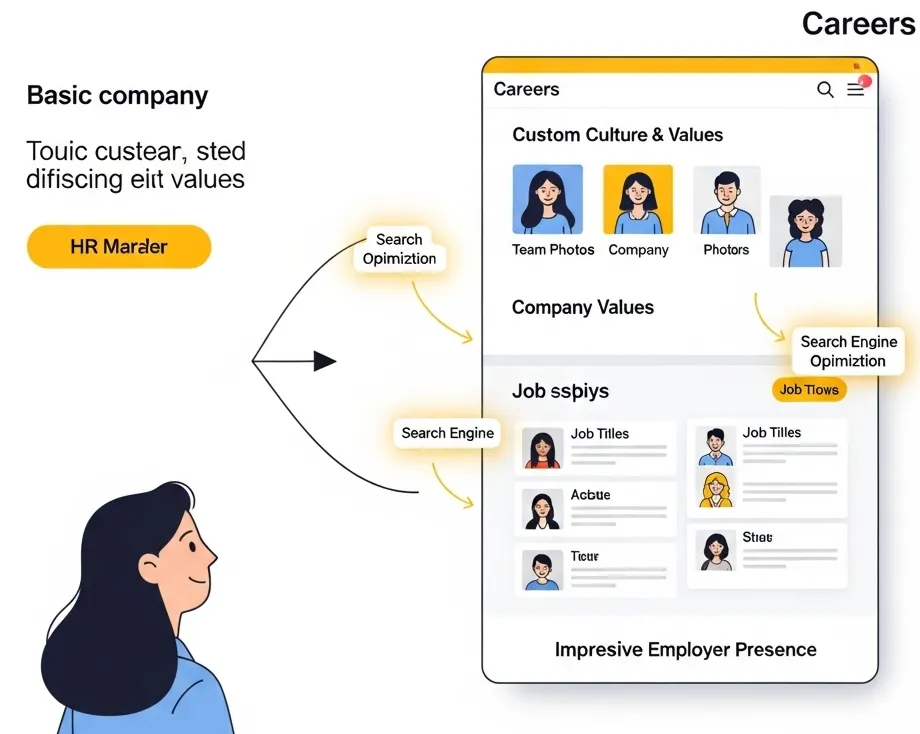
Get a real-time score on every job post you create, with actionable suggestions on how to improve it before it goes live. - Branded Careers Page and Posts
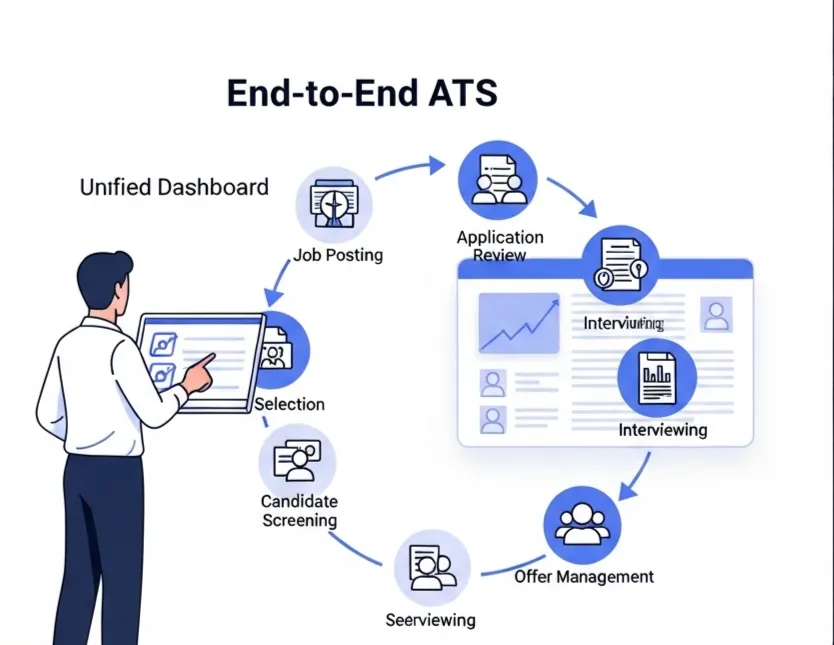
Ensure every candidate touchpoint is professional and consistent with your employer brand, building trust from the first click. - Integrated ATS Pipeline
Connect your high-quality job post to a seamless application experience, reducing drop-offs and keeping candidates engaged.
Common Mistakes That Keep Teams Stuck
Even with good intentions, it's easy to fall back into old habits. Avoiding these common traps is crucial for maintaining high-quality job posts.
- Forgetting to update the location for remote or hybrid roles.
- Focusing entirely on what you need, not on what you offer the candidate.
- Using language that is overly formal or full of internal acronyms.
- Linking to a broken or non-mobile-friendly application page.
- Failing to sell the opportunity and the excitement of the role.
What a High JQS Won't Fix
A great job post is the front door to your hiring process, but it is not the entire house. A high score is powerful, but it cannot solve deeper organizational issues. A great job post will not fix:
- A slow or disorganized interview process.
- A company culture that doesn't retain employees.
- A compensation package that is below market rates.
- Poor communication with candidates after they apply.
Fixing your job posts is the first and most important step. It ensures you are attracting the right people to experience the rest of your hiring process.
Attract Top Talent. Optimize JQS.
HireZapp's AI instantly scores and perfects your Job Quality Score for superior candidate attraction.
Frequently Asked Questions
1) What is a job quality score?
A job quality score is a metric that measures how clear, complete, and appealing your job posting is to potential candidates. It analyzes elements like title clarity, salary transparency, and readability to predict how well it will attract qualified applicants.
2) How does a good job post help with employer branding for hiring?
A professional, transparent, and well-written job post is often a candidate's first interaction with your company. It sets a positive tone and reflects a company that is organized and values its people, which is a core part of strong employer branding.
3) Is JQS one of the most important hiring success metrics?
Yes, because it's a leading indicator. While metrics like “time-to-hire” and “cost-per-hire” measure what happened, your job quality score helps predict the quality of applicants you will get. Improving it has a direct impact on all other hiring success metrics.
4) Can I improve my job post quality without an expensive tool?
Absolutely. You can use a manual checklist, like the one provided in this article, to review your job posts for clarity, transparency, and completeness before publishing them. The key is consistency.
5) What are the key elements of a high-quality job description?
The most important elements are a clear title, a specific salary range, 3-5 core responsibilities, a list of key benefits, and a simple, clearly defined application process.
6) How does JQS relate to other recruitment metrics?
A higher JQS directly impacts other recruitment metrics. It can lower your cost-per-hire by attracting more qualified organic candidates, reduce your time-to-fill by creating a better applicant pool, and improve your offer acceptance rate by setting clear expectations early.
7) Why do I get so many unqualified applicants?
A high volume of unqualified applicants is often a sign of a vague or poorly defined job description. If the responsibilities and “must-have” skills are not crystal clear, you will attract people who are guessing if they are a good fit.
8) How can I measure the impact of improving my job quality?
Track the ratio of qualified to unqualified applicants before and after you make changes. You can also monitor applicant drop-off rates on your careers page and see if your time-to-shortlist decreases for roles with higher-quality posts.