Recruitment Funnel: How to Optimize Each Stage
Are you spending money on job ads but struggling to hire the right people? Many founders and recruiters face the same challenge: great applicants seem to disappear. They drop off after applying, ignore follow-ups, or accept other offers. This happens when you don't have a clear system, turning your hiring into a chaotic mix of DMs, emails, and spreadsheets.
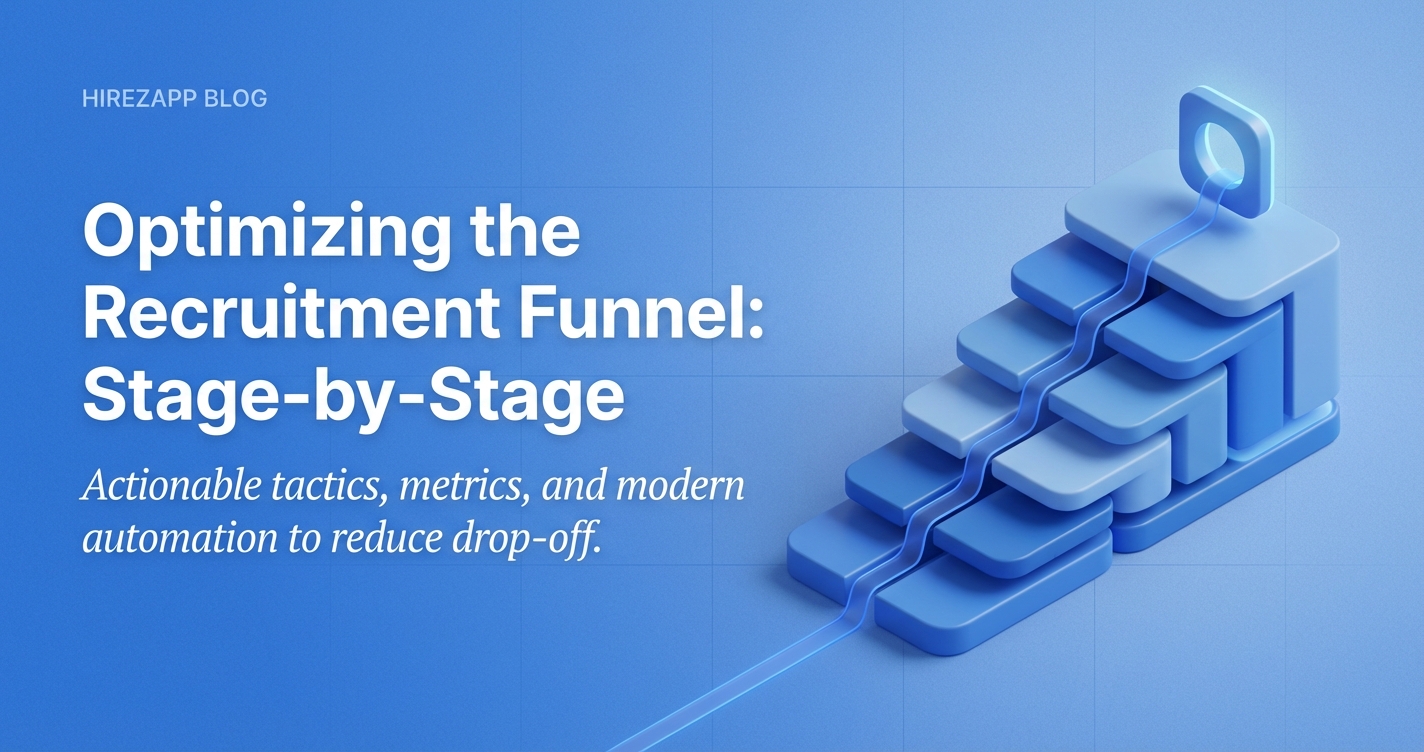

Recruitment Funnel: How to Optimize Each Stage
Are you spending money on job ads but struggling to hire the right people? Many founders and recruiters face the same challenge: great applicants seem to disappear. They drop off after applying, ignore follow-ups, or accept other offers. This happens when you don't have a clear system, turning your hiring into a chaotic mix of DMs, emails, and spreadsheets.
A well-structured hiring process fixes this. By focusing on recruitment funnel optimization, you can turn a leaky, frustrating system into a predictable pipeline that converts applicants into hires, faster. This guide will show you how to do it, with a focus on practical steps and modern tools for AI recruitment optimization.
Why Your Hiring Funnel Is Leaking Candidates
Before you can fix the leaks, you need to find them. Often, the problems are small, simple things that add up to a poor candidate experience. Many recruiters find that candidates drop out for a few common reasons:
- Confusing Job Descriptions
When roles and responsibilities are not clear, the best candidates don't apply, and you get a flood of unqualified ones. - Long and Complicated Applications
Asking for a full work history on the first step, especially on a non-mobile-friendly form, causes top talent to quit. - Slow or No Communication
Candidates who don't hear back quickly assume the role is filled or the company is disorganized. - Inconsistent Screening Process
When every candidate is evaluated differently, it's easy to make biased decisions and miss great people. - A Weak Employer Brand
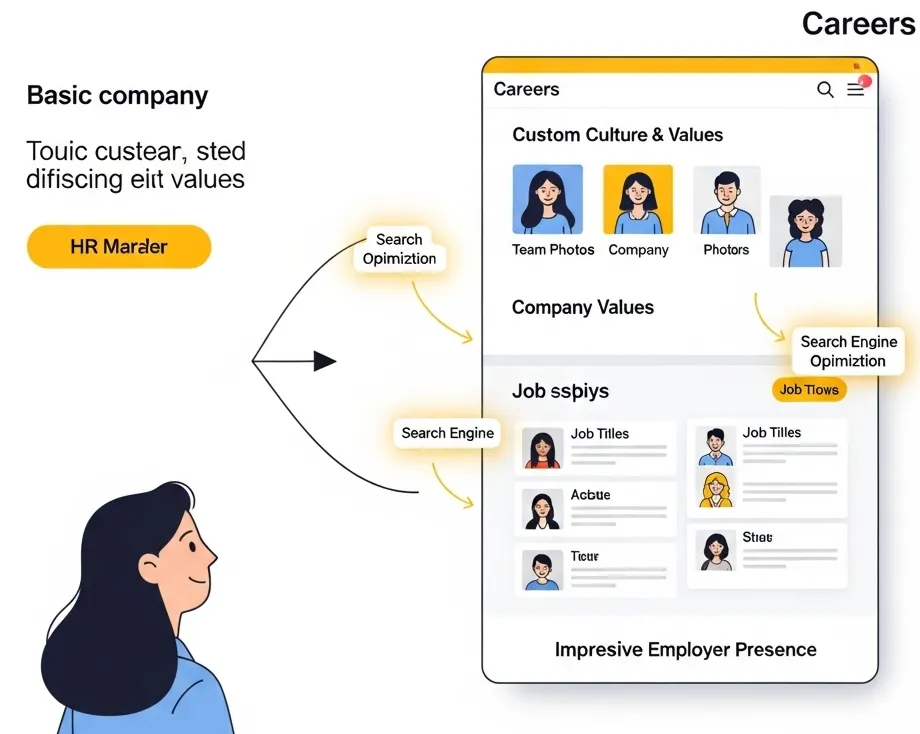
If your career page, job posts, and emails look unprofessional, candidates lose trust and interest.
A Modern Approach to Recruitment Funnel Optimization
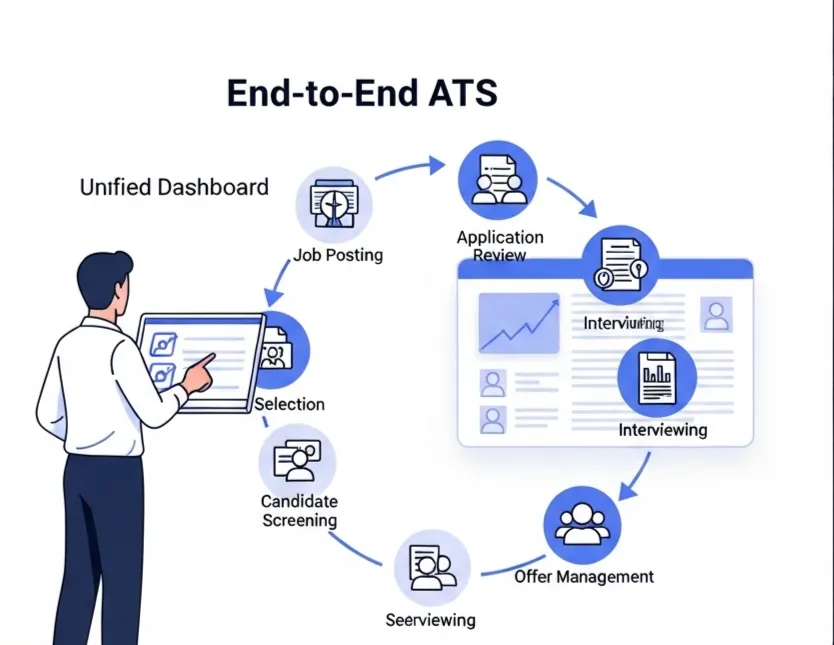
Building a strong funnel is about creating a clear, repeatable path from applicant to employee. Here is a step-by-step playbook to structure and optimize your process, covering all key hiring funnel stages.
- Define Your Sourcing Strategy
Decide where you will find candidates, from job boards to direct outreach. A clear plan ensures you spend your time on the most effective channels. - Craft a Compelling Job Post
Use an AI-powered generator to create a clear, inclusive, and SEO-friendly job description. This attracts the right people from the start. - Simplify the Application
Design a short, simple job form that only asks for essential information. This is key to reduce candidate drop-off at the first hurdle. - Screen Applicants Centrally
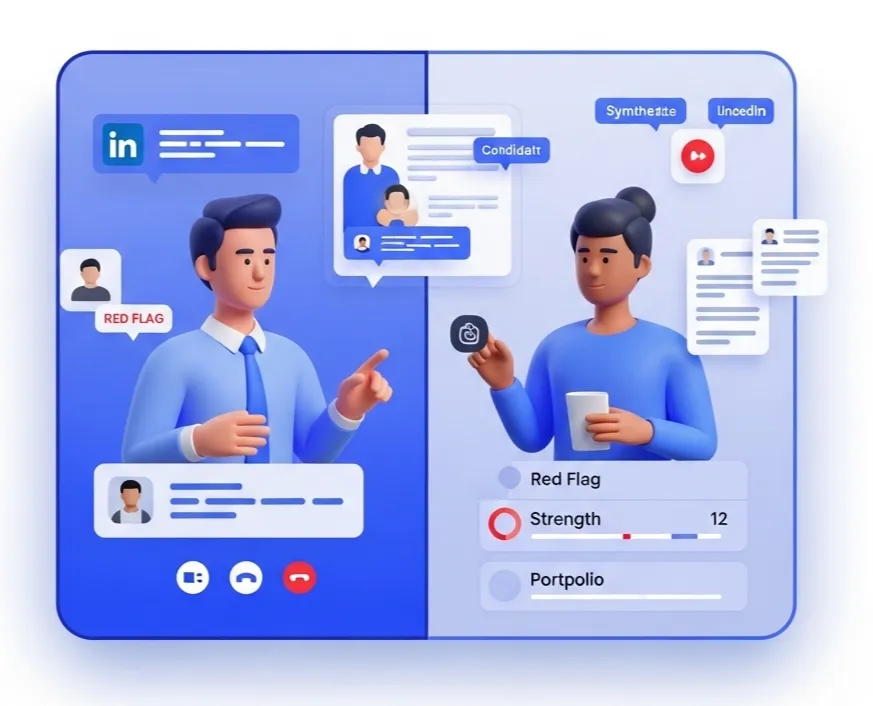
Review every candidate from one dashboard, not scattered inboxes. Use tools to see their LinkedIn or GitHub profiles alongside their application. - Use Skills-Based Assessments
Move beyond resumes with short, relevant skills tests. This helps you identify top performers based on ability, not just keywords. - Conduct Structured Interviews
Ask every candidate for a role the same core questions. This makes your evaluation fair and helps you compare people accurately. - Send an Offer Quickly
Once you decide, don't wait. A fast, professional offer shows you are serious and respects the candidate's time. - Track Your Performance
Monitor key data points at each stage. Knowing your numbers is the only way to find and fix bottlenecks over time.
Recruiter reality: "I used to live in my email and a messy spreadsheet. Moving to a real funnel felt like going from chaos to calm. I finally knew exactly where every candidate was and what I needed to do next."
Practical Templates to Plug Into Your Funnel
Here are a few simple templates you can adapt to improve your process today. They help create a consistent and professional candidate experience.
Screening Scorecard Checklist
- Do they meet the must-have skill requirements?
- Is their experience relevant to the role's core duties?
- Did they provide a portfolio or work sample if requested?
- Are their salary expectations within our stated range?
- Does their application show genuine interest in our company?
- Is their communication clear and professional?
Quick Follow-Up Message
Subject: Update on your application for [Job Title] at [Company Name]
Hi [Candidate Name],
Thank you again for applying. Our team is currently reviewing all applications, and we plan to provide an update to all candidates by [Date]. We appreciate your patience and interest.
Best,
The [Company Name] Team
Where HireZapp Fits Into Your ATS Funnel
Optimizing your funnel doesn't have to be manual. HireZapp provides the tools to automate and streamline each stage, giving you a complete ATS funnel in one platform.
- AI JD + Job Form Generation
Builds your attraction and application stages with optimized, branded assets in minutes. - Multi-Channel Screening
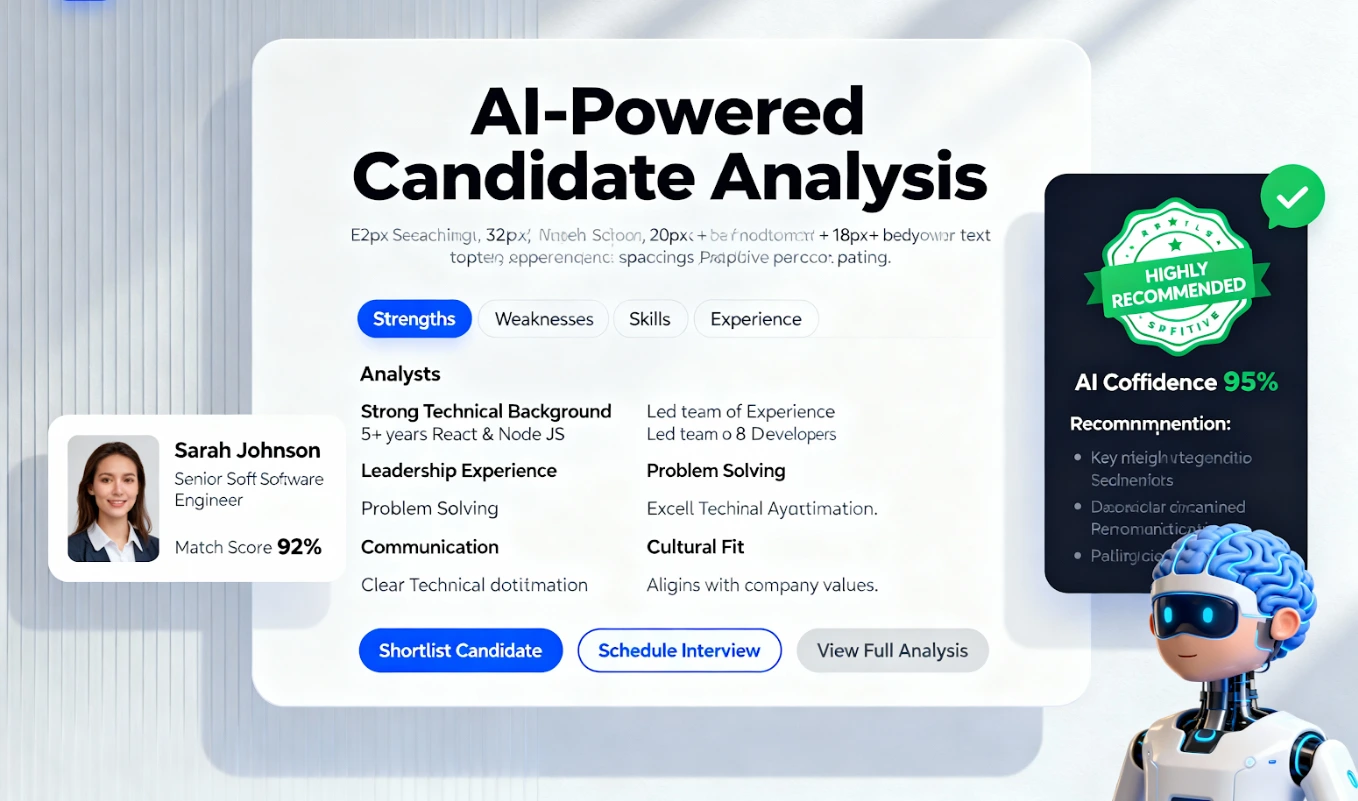
Pulls in social profiles like LinkedIn and GitHub so you can screen candidates holistically from one place. - Job Match and Quality Scores
Uses AI to automatically surface the most relevant candidates, saving you hours of manual review. - Assessments and Pipeline Management
Lets you test skills and move candidates through a visual pipeline, so nothing falls through the cracks. - Employer Branding Suite
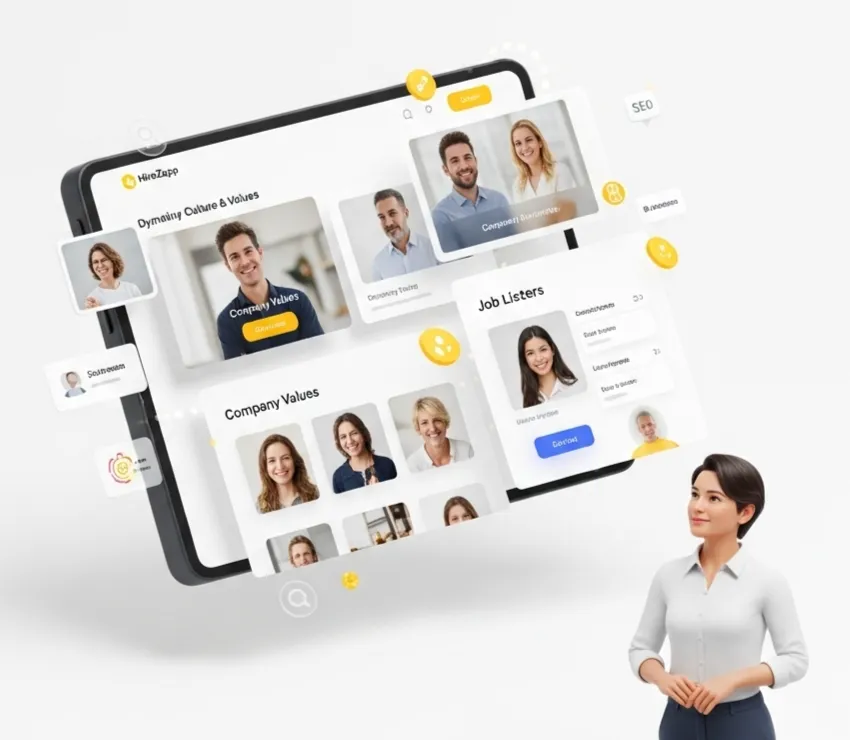
Creates a professional careers page and branded communications to build trust, creating a strong employer branding funnel. - Automated Follow-Ups
Ensures every candidate gets a timely, professional response without you lifting a finger.
Avoid These Common Funnel-Blocking Mistakes
Even with the right tools, a few bad habits can stall your hiring. Watch out for these common missteps:
- Forgetting to sell the company and the role.
- Using a one-size-fits-all process for every position.
- Relying only on resumes to make shortlisting decisions.
- Letting days pass between communication touchpoints.
- Failing to collect feedback from candidates who drop out.
- Not having a clear owner for each stage of the process.
What This Won't Fix
A highly optimized hiring funnel is powerful, but it's not a magic wand. It is a tool for efficiency and better decision-making. It cannot solve foundational business problems, such as:
- A non-competitive salary or benefits package.
- A toxic or poorly defined company culture.
- An unclear strategy for the role you are hiring for.
Start Building a Funnel That Hires
Stop letting great candidates slip away. By thinking of your hiring process as a funnel, you can start to measure, manage, and optimize it. Each improvement you make, from a simpler application to faster communication, builds a better experience and helps you convert the right applicants into hires.
Optimize Your Funnel. Hire Smarter.
Seamlessly optimize every recruitment stage with AI, reduce drop-offs, and accelerate your best hires.
Frequently Asked Questions
1) What are the main hiring funnel stages?
The main stages are typically Awareness (how candidates find you), Application (when they apply), Screening (your initial review), Interview (conversations), Offer (the job proposal), and Hire (when they accept and join).
2) How does an ATS improve the recruitment funnel?
An Applicant Tracking System (ATS) centralizes all candidate information and activity. It automates communication, tracks progress, and provides data, turning a messy manual process into an organized and efficient funnel.
3) What are the most important recruitment metrics to track?
Key recruitment metrics include time-to-fill, cost-per-hire, source-of-hire, offer acceptance rate, and application completion rate. Tracking these helps you understand your funnel's health and identify areas for improvement.
4) How can AI help optimize the hiring process?
AI can optimize the hiring process by automating repetitive tasks like writing job descriptions, screening resumes for key qualifications, and scoring skills assessments. This frees up recruiter time for more human-centric activities like interviewing and building relationships.
5) What's the best way to reduce candidate drop-off during applications?
The best way is to simplify your application form. Only ask for essential information, ensure it is mobile-friendly, and clearly state how long it will take to complete. A process that takes less than five minutes is ideal.
6) How is a sourcing funnel different from a hiring funnel?
A sourcing funnel is the "top" of the hiring funnel. It focuses specifically on the activities used to find and attract potential candidates (outreach, job ads, referrals) before they formally apply and enter the main hiring funnel.
7) What role does employer branding play in the funnel?
Employer branding impacts the entire funnel. A strong brand attracts more qualified candidates at the top, keeps them engaged during the process with professional communication, and makes them more likely to accept an offer at the end.
8) How do you start with candidate journey mapping?
To start with candidate journey mapping, walk through your own hiring process as if you were an applicant. Apply for one of your jobs, note every interaction and waiting period, and identify points of friction or confusion. This exercise will reveal clear opportunities for improvement.