Automated Pre-Screening vs Manual Screening: ROI Comparison
If you've ever stared at a spreadsheet with 200 applicant names, knowing only a handful are qualified, you understand the drain of manual screening. It’s slow, repetitive, and pulls you away from what matters: connecting with great candidates. The good news is that there’s a better way.

Automated Pre-Screening vs. Manual: A Clear ROI Comparison
If you've ever stared at a spreadsheet with 200 applicant names, knowing only a handful are qualified, you understand the drain of manual screening. It’s slow, repetitive, and pulls you away from what matters: connecting with great candidates. The good news is that there’s a better way.
Calculating your automated pre-screening ROI isn't just about saving time. It’s about reinvesting that time into building relationships, improving your employer brand, and making hires that truly move your business forward. This guide breaks down the real-world comparison.
Before you can see the benefits of automation, you have to get honest about the real cost of manual screening. It goes far beyond a recruiter's salary. Many teams don't realize how these small tasks add up to a major business expense.
Recruiter reality: “I used to spend the first two days of every week just filtering resumes. I was an inbox manager, not a recruiter. I knew great people were slipping through the cracks because I just couldn't get to them fast enough.”
Here’s where the budget is really going:
- Time spent on unqualified applicants.
Every minute reading a resume that doesn't meet basic criteria is a minute you can't get back. - Inconsistent candidate evaluation.
When different team members screen manually, bias and varying standards lead to missed talent. - Delayed projects and team burnout.
Open roles mean overworked teams. Slow hiring processes directly impact company goals. - Poor candidate experience.
Long response times and black-hole applications damage your reputation and deter top talent. - High cost per hire.
More recruiter hours, extended job ad spending, and lost productivity all inflate this key metric.
A Step-by-Step Guide to Maximize Your Automated Pre-Screening ROI
Switching to an automated workflow is easier than you think. The key is to be methodical. Follow these steps to build a system that saves time and improves the quality of your shortlist. This is the foundation of the manual vs automated screening debate.
- Define your non-negotiables.
Identify 3-5 absolute must-have qualifications for the role. These will become your first filter. - Create knockout questions.
Turn your non-negotiables into simple yes/no or multiple-choice questions in your job application form. - Assign a weight to key skills.
Decide which skills or experiences are more valuable than others and assign points to them for automatic scoring. - Set up a Job Match Score threshold.
Establish a minimum score a candidate must achieve to move forward to a human review. - Automate the first response.
Instantly acknowledge every application. Let rejected candidates know respectfully and qualified ones know the next steps. - Integrate a simple assessment.
Use a short, role-specific skills test to validate the experience listed on a candidate’s resume. - Review your top-scoring candidates.
Now, your team spends time only on the best-fit applicants who have passed all initial checks.
A Screening Scorecard You Can Use Today
To keep evaluations consistent, use a simple scorecard for your human review stage. This ensures everyone is looking for the same things and helps remove bias from the process. Customize the skills for each role.
- Core Experience Match (5+ years in X)
- Proficiency in Key Software (e.g., Figma, HubSpot)
- Project Management Approach
- Communication Style (from application answers)
- Portfolio/Work Sample Quality
- Alignment with Team Values
Pro Tip: Download our free ROI calculator template to plug in your own numbers and see your potential savings.
How HireZapp Turns Process into Profit
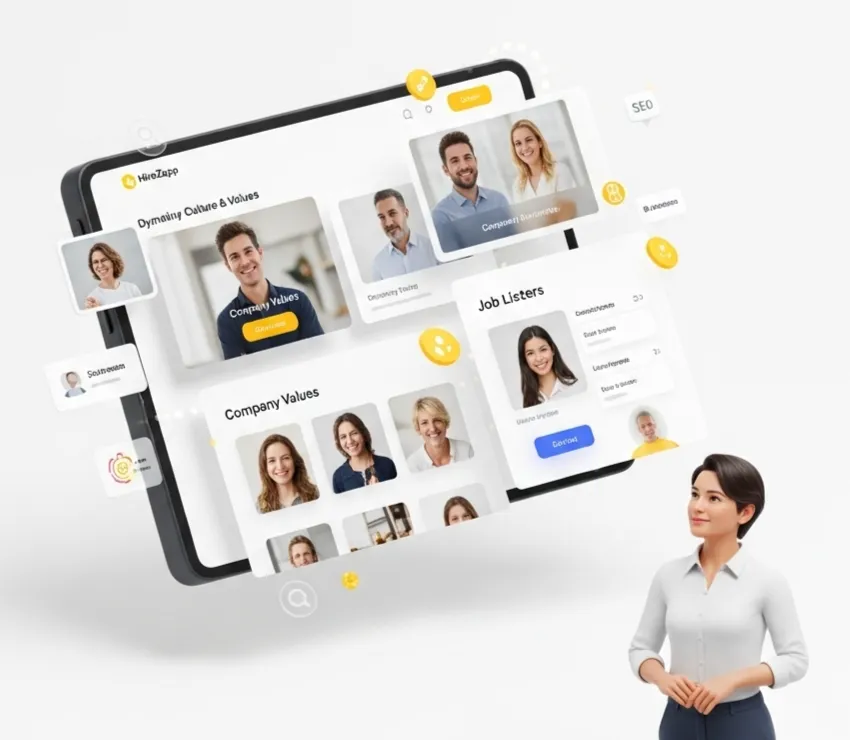
HireZapp is designed to make the playbook above simple and repeatable. Our platform directly addresses the manual tasks that slow you down, which is central to delivering strong hiring automation benefits.
- AI Job Form Generation
Creates applications with built-in knockout questions to filter candidates automatically. - Job Match Score
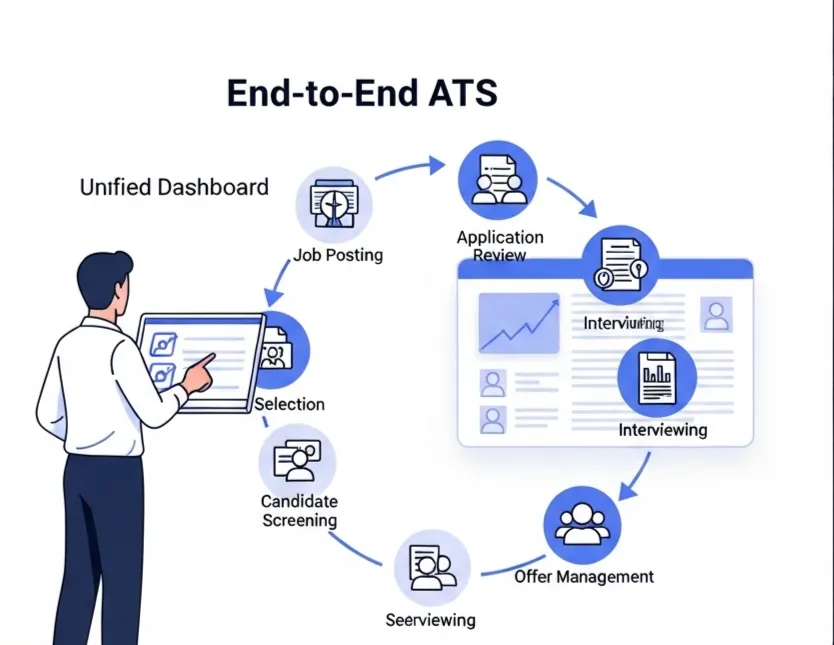
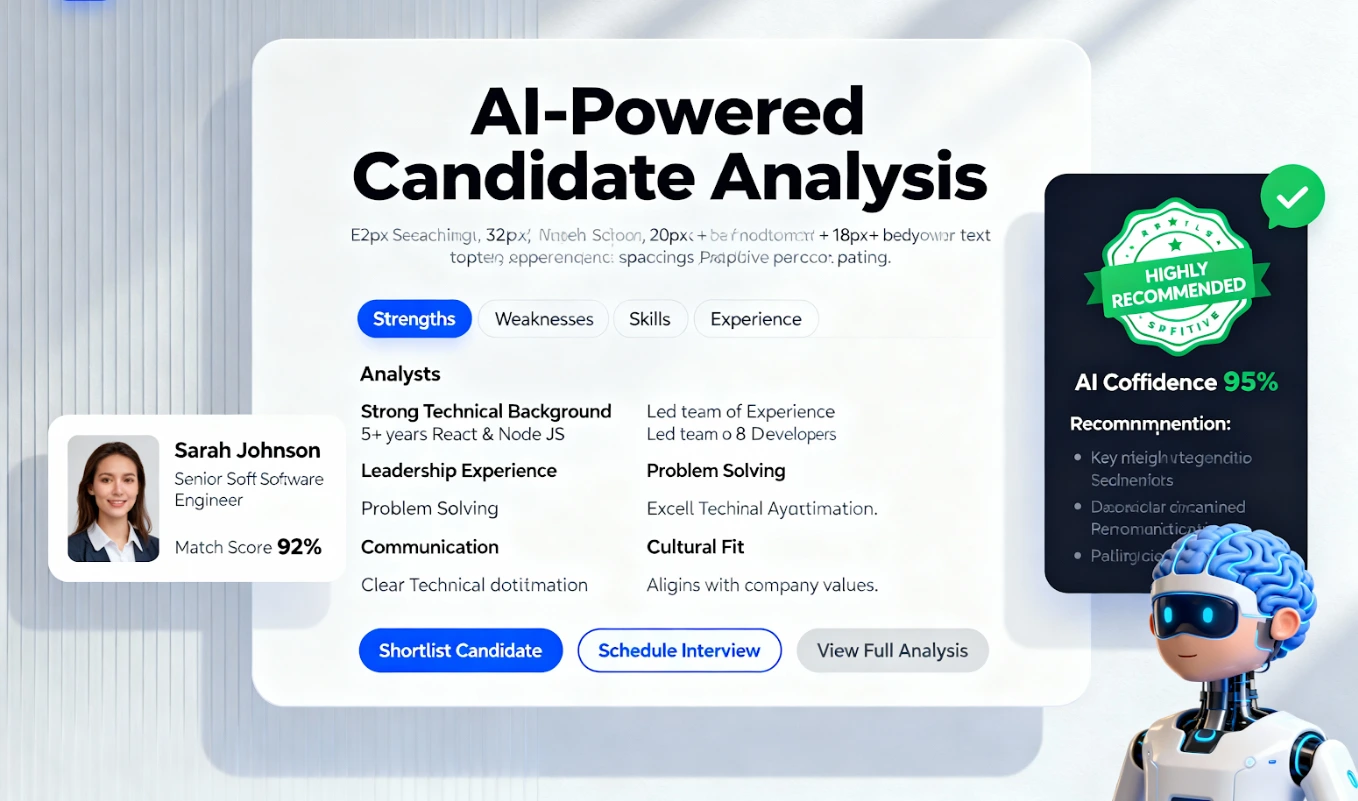
Instantly scores and ranks every applicant based on your custom criteria so you focus on the top 10%. - Assessments & ATS Pipeline
Seamlessly send skills tests and move top candidates through your hiring stages in one place. - Automated Follow-ups
Keep every candidate informed without lifting a finger, protecting your employer brand. - Employer Branding Suite
Ensure your careers page, job posts, and messages are professional and consistent.
Automate Screening. Boost Hiring ROI.
Ready to ditch manual screening? HireZapp's AI automates pre-screening, boosting ROI and hiring efficiency.
Common Mistakes That Erode Hiring ROI
Just buying a tool isn't enough. Avoid these common missteps when you start automating your pre-screening process:
- Setting criteria that is too rigid.
Filtering out potentially great candidates who have transferable skills. - Forgetting the human touch.
Automation should handle logistics, not relationships. Personalize messages for shortlisted candidates. - Never reviewing the data.
Failing to analyze which screening questions are effective and which are not. - Creating a long, complex application.
Adding too many questions increases drop-off rates, even among good candidates. - Ignoring candidate feedback.
Not asking candidates about their application experience to find areas for improvement.
A Quick Reality Check: What Automation Can't Fix
Automation is a powerful tool, but it's not magic. Being honest about its limits helps you focus it where it has the most impact. An automated system will not:
- Fix a poorly written job description.
If the core role is confusing, you will still attract the wrong applicants. - Make the final hiring decision for you.
It provides a high-quality shortlist; your team's judgment is still essential. - Solve a bad company culture.
No screening tool can overcome a reputation for being a poor place to work.
From Overload to Advantage
Switching from manual to automated pre-screening is more than an efficiency upgrade. It’s a strategic decision that gives you a competitive edge. You reduce time to hire, improve the candidate experience, and empower your team to focus on building meaningful connections.
Frequently Asked Questions
1) How do you measure HR tech ROI for screening?
You measure it by calculating the hours saved per hire, the reduction in cost per hire (less time, fewer ad dollars), and improvements in quality of hire, such as lower first-year turnover.
2) Can small businesses afford applicant screening software?
Yes. Modern tools like HireZapp use credit-based pricing, allowing small businesses to pay only for what they use without expensive annual contracts, making it highly accessible.
3) What are the most important recruiter efficiency metrics to track?
Focus on time-to-fill (how long a role is open), time-to-shortlist (how long it takes to find qualified candidates), and offer acceptance rate. Automation positively impacts all three.
4) How does automation help reduce time to hire?
It eliminates the initial manual review bottleneck. Instead of spending days sifting through resumes, you get a qualified shortlist in hours, allowing you to start interviews much sooner.
5) What's the biggest difference in manual vs automated screening?
The biggest difference is scale and consistency. Manual screening is slow and prone to human bias, while automated screening is instant, consistent, and handles unlimited volume without extra effort.
6) Do pre-employment screening tools hurt the candidate experience?
When implemented poorly, yes. But a good system improves it by providing instant application confirmation, faster responses, and a clear, professional process that respects the candidate's time.
7) Is there a difference between AI screening ROI and basic automation?
Yes. Basic automation follows simple rules (e.g., filter if keyword is missing). AI can understand context, score based on multiple complex factors, and provide deeper insights, typically leading to a higher ROI through better-qualified shortlists.