Gmail, Google Sheets, and WhatsApp: Why Your Hiring Is Broken
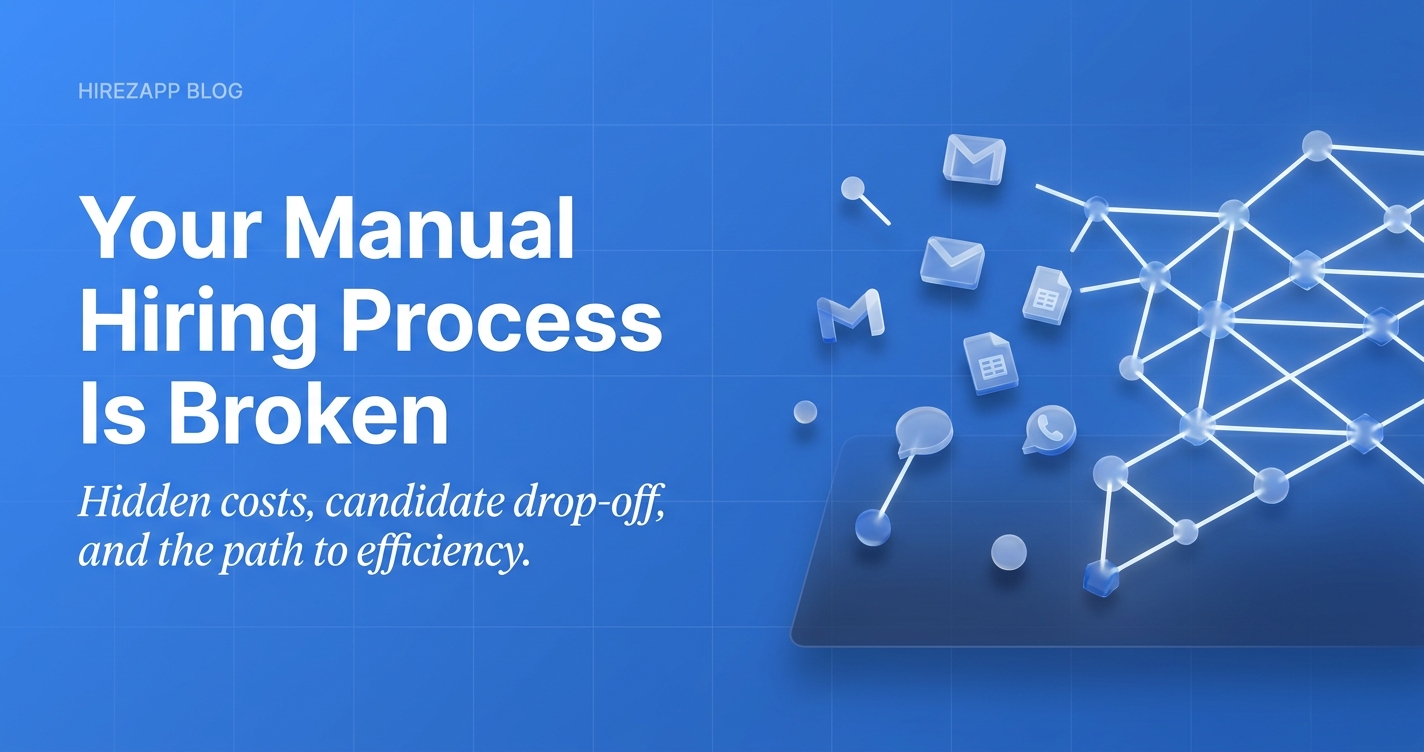
Your inbox is overflowing with resumes, a Google Sheet tracks candidates across a dozen columns, and your WhatsApp is pinging with follow-ups. If this sounds familiar, you already understand the core of <b>why your hiring is broken</b>. It’s not about a lack of good candidates; it’s about a disconnected process that costs you time and top talent.

Gmail, Google Sheets, and WhatsApp: Why Your Hiring Is Broken
Your inbox is overflowing with resumes, a Google Sheet tracks candidates across a dozen columns, and your WhatsApp is pinging with follow-ups. If this sounds familiar, you already understand the core of why your hiring is broken. It’s not about a lack of good candidates; it’s about a disconnected process that costs you time and top talent.
This manual chaos leads to slow decisions, frustrated applicants, and roles that stay open for too long. But there is a simpler, more effective way to turn interested applicants into new hires without adding more work to your day.
Is Your Hiring System Held Together with Tape?
Many founders and recruiters experience the same challenges. These aren't just minor annoyances; they are significant manual hiring problems that silently damage your company's growth. Here are the clear signs that your current process is failing you.
- Your inbox is the black hole.
Resumes get lost, important conversations are buried, and you have no single view of a candidate's history. - The spreadsheet is always out of date.
Someone forgets to update a candidate's status, formulas break, and collaboration becomes a source of errors, not clarity. - Candidate communication is inconsistent.
Some applicants get quick replies on WhatsApp, while others wait days for an email, creating a poor and unprofessional experience. - You have no real data on what works.
You can't easily tell which job board brings the best applicants or how long it takes to hire for a role. - Screening feels like guesswork.
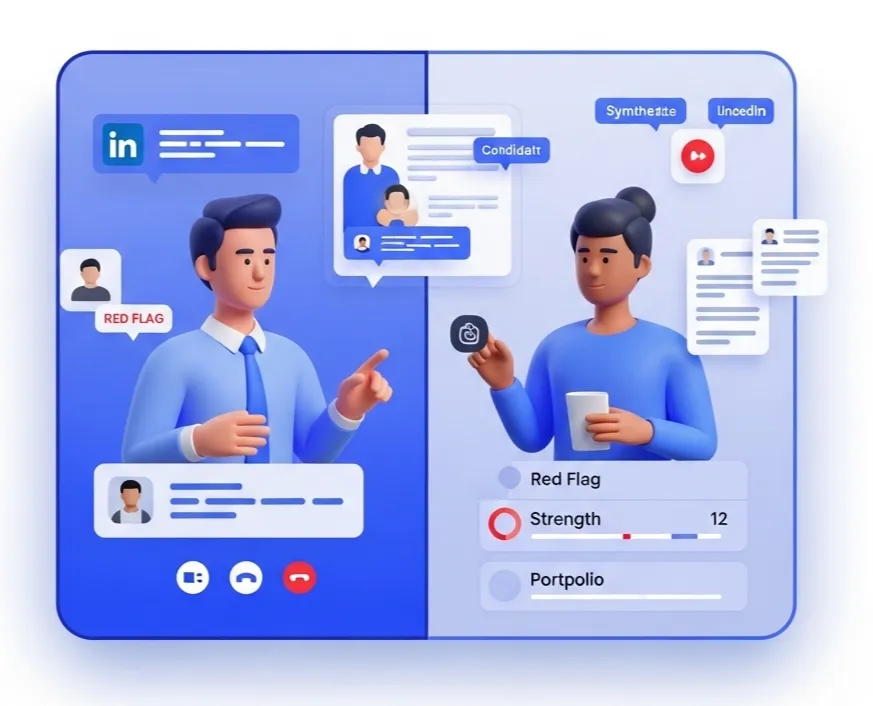
Comparing candidates from LinkedIn, email, and forms side-by-side is nearly impossible, making shortlisting slow and subjective. - Candidates are dropping out.
If applicants don't hear back or find the process confusing, they will accept other offers.
The Real Reasons Why Your Hiring Is Broken
Switching from manual tools to an automated system is easier than you think. This structured approach helps you build a hiring machine that works for you, not against you. It's the foundation for effective recruitment process improvement.
- Map your current process.
Write down every single step, from posting a job to making an offer. Be honest about where the delays and frustrations happen. - Identify the biggest bottleneck.
Find the one stage that causes the most pain. Is it initial screening? Scheduling interviews? This is your first target for improvement. - Centralize all applications.
Choose one place where every single applicant will live, whether they come from LinkedIn, your website, or an ad. This ends the chaos. - Standardize your screening criteria.
Create a simple scorecard or checklist of must-have skills and qualifications for the role. Apply it to every candidate consistently. - Automate initial communication.
Set up an automatic email to confirm receipt of an application. This small step dramatically improves the candidate experience. - Build a simple interview pipeline.
Create clear stages like "New Applicant," "Screening," "Interview," and "Offer." Move every candidate through these stages so nothing gets lost.
Practical Templates to Start Using Today
You can start improving your process right now. Use these simple templates to bring more structure to your manual hiring while you plan your transition to a better system.
<b>Screening Questions for Any Role</b>
- What about this role specifically caught your interest?
- Can you describe a past project you are particularly proud of?
- How do you prefer to receive feedback from your manager?
- What kind of work environment helps you do your best work?
- Based on the job description, which part of the job excites you the most?
<b>A Quick Candidate Follow-up Message</b>
Recruiter reality: “Hi [Candidate Name], Thanks again for your time today. We enjoyed our conversation and learning more about your background. Our team is finalizing next steps, and we will be in touch with an update by [Date/Day]. Best, [Your Name]”
How a Small Business ATS Unlocks Growth
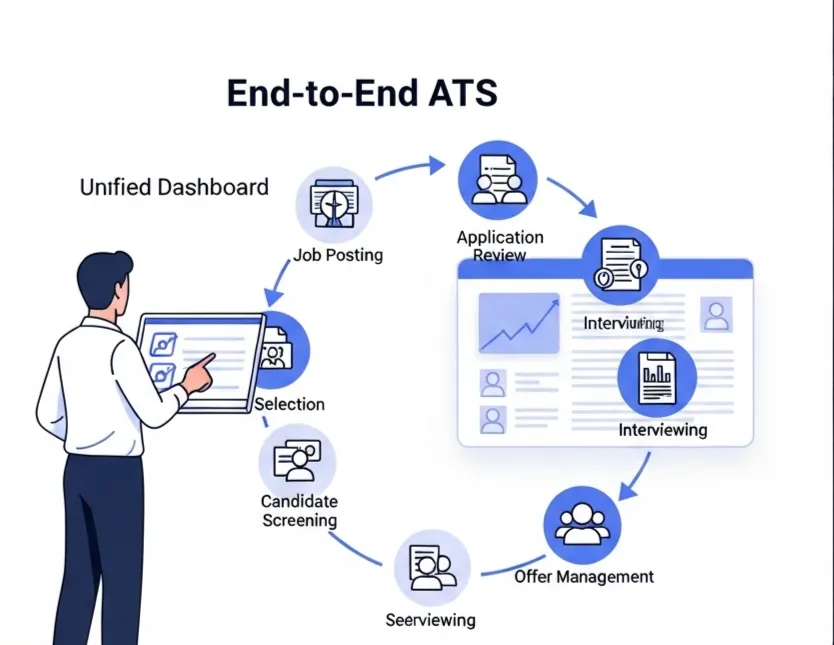
The final step is moving all these improved processes into a single tool built for hiring. An Applicant Tracking System (ATS) isn't just for big corporations anymore. A modern small business ATS like HireZapp connects every step of your hiring, from job post to job offer.
- AI-Powered Job Descriptions
Stop guessing what attracts candidates and generate optimized job descriptions and application forms in seconds. - Centralized Candidate Pipeline
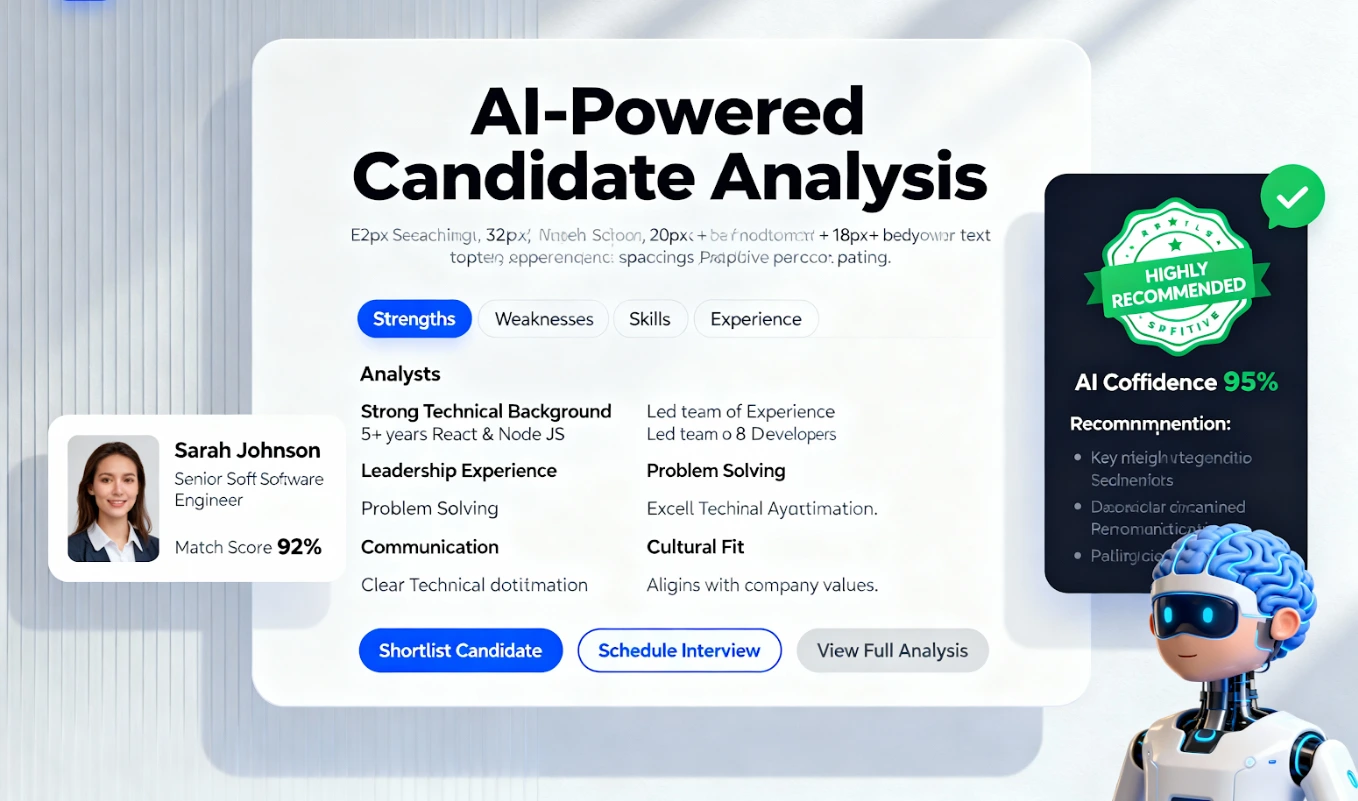
See every applicant for every role in one clean dashboard, ending the need for google sheets applicant tracking. - Job Match & Quality Scores
Instantly see which candidates are the best fit and how your job post stacks up against the market. - Automated Candidate Follow-ups
Ensure no candidate is ever left in the dark, building a strong employer brand with every interaction. This is one of the best candidate drop-off solutions. - Branded Careers Page
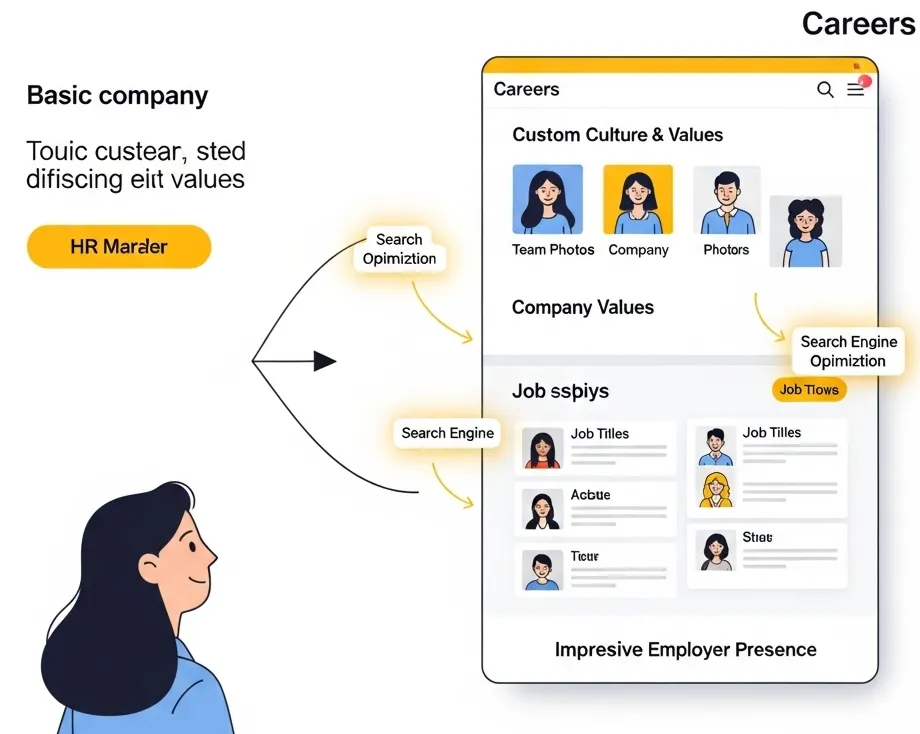
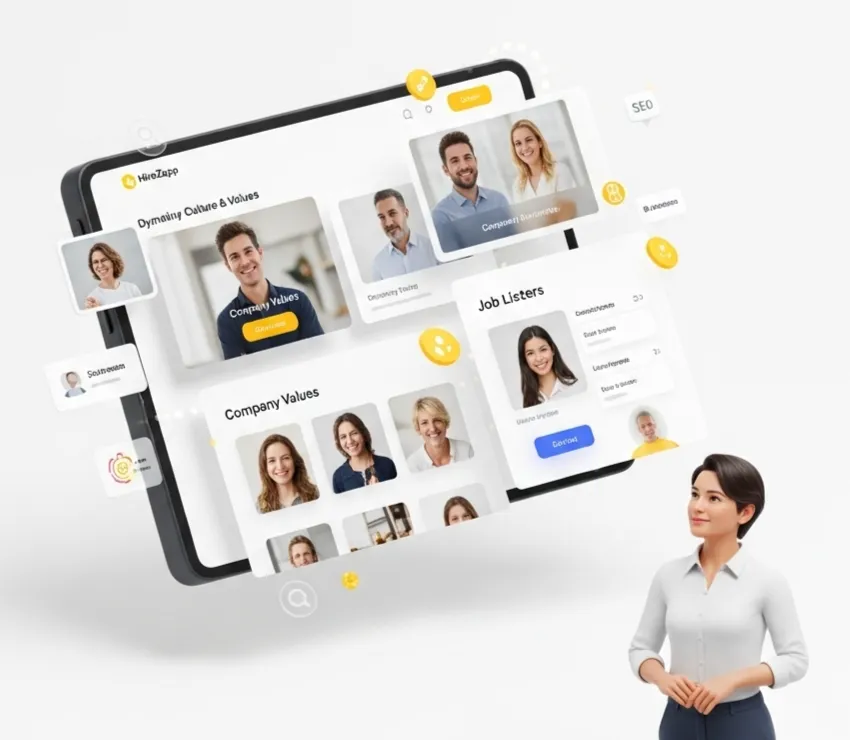
Create a professional and compelling careers page to attract top talent without needing a developer.
Common Mistakes That Keep Teams Stuck
As you move toward a better system, be mindful of these common traps that can slow down your progress and lead to frustration.
- Waiting for the "perfect" system instead of starting with a good one.
- Trying to automate a broken process without fixing the core problems first.
- Ignoring the candidate experience in favor of internal convenience.
- Failing to get buy-in from everyone involved in the hiring process.
- Choosing a complex tool with features you will never use.
- Underestimating the hidden costs of your "free" manual tools in terms of lost time.
An Honest Look: What an ATS Can't Fix
A great system is a powerful tool, but it is not a magic wand. To build trust, it's important to know what an ATS will not solve on its own.
- A non-competitive salary or benefits package.
- A negative or poorly defined company culture.
- A job description that does not accurately reflect the role.
- A slow or disorganized interview team.
From Chaos to Conversion
By moving away from scattered inboxes, spreadsheets, and chat apps, you do more than just get organized. You build a fast, fair, and repeatable hiring process that helps you attract the right people and convince them to join your team.
Fix Your Broken Hiring Now.
Upgrade from scattered tools to AI-powered ATS. Automate screening, scale hiring, and boost your ROI.
Frequently Asked Questions
1) What are the main gmail recruiting issues?
The primary gmail recruiting issues are the lack of organization, the difficulty in tracking candidate stages, and the high risk of missing important emails. It offers no collaboration features, making it hard for a team to work together on hiring.
2) Why is using google sheets applicant tracking a bad idea for scaling?
While it seems simple at first, google sheets applicant tracking quickly becomes unmanageable. It's prone to human error, lacks automation for communication, provides no real analytics, and offers a poor, disjointed experience for both recruiters and candidates as you grow.
3) What are the top applicant tracking system benefits?
The main applicant tracking system benefits include saving significant time through automation, improving the candidate experience, centralizing all applicant data for better decision-making, and providing analytics to optimize your hiring strategy over time.
4) How can I reduce recruiting inefficiencies?
You can reduce recruiting inefficiencies by centralizing applications into one system, automating repetitive communications like application confirmations, using templates for job descriptions and emails, and creating a standard interview process for everyone to follow.
5) What are some simple candidate drop-off solutions?
Effective candidate drop-off solutions include acknowledging every application automatically, communicating a clear timeline for the hiring process, providing timely feedback after interviews, and ensuring a simple, mobile-friendly application form.
6) How does an ATS improve employer branding?
An ATS improves your brand by ensuring every candidate receives professional and timely communication. It powers branded careers pages and emails, showing applicants that your company is organized, modern, and values their time.
7) Is an ATS too expensive for a small business?
Not anymore. Many modern systems are designed for small teams. For example, HireZapp offers a free plan and credit-based pricing, so you only pay for what you actually use, making it an affordable and scalable solution.