From Generic to High-Intent: How Smart JD Questions Reduce Spam Applications
Your inbox is full, but your interview calendar is empty. You've spent money on job ads or hours posting on LinkedIn, only to get a flood of applications that are clearly not a fit. This endless cycle of sifting through unqualified candidates is more than just frustrating; it's a major bottleneck that slows down hiring and burns out your team.


From Generic to High-Intent: How Smart JD Questions Reduce Spam Applications
Your inbox is full, but your interview calendar is empty. You've spent money on job ads or hours posting on LinkedIn, only to get a flood of applications that are clearly not a fit. This endless cycle of sifting through unqualified candidates is more than just frustrating; it's a major bottleneck that slows down hiring and burns out your team.
The good news is that you can fix this without more ad spend or longer hours. The solution is to get strategic at the very first step: the job application. By asking smart job description questions, you can filter out the noise and attract high-intent candidates who are genuinely invested in the role. This simple shift leads to better interviews and faster hires.
Why Your Application Process Attracts the Wrong Candidates
Before we build a better system, it's important to understand what causes the problem. Many recruiters find that the flood of spam applications comes from a few common issues. These are often small details in the job post or application form that accidentally invite low-effort responses.
- Vague “Must-Haves”
Listing generic skills like “strong communication” without asking for proof invites everyone to apply. - Frictionless “One-Click” Applications
When it's too easy to apply, candidates can send out dozens of applications without even reading the job description. - Asking Only for a Resume
A resume alone doesn't tell you about a candidate's intent, problem-solving approach, or specific experience related to your core needs. - No Company-Specific Context
If your questions could be for any company, it shows you haven't thought about what makes a candidate successful on your team. - Focusing on Years vs. Experience
Asking for “5+ years of experience” is less revealing than asking for a specific example of a project they led.
A Framework for Crafting High-Intent Job Application Questions
Ready to build a better filter? This step-by-step process helps you create questions that reveal genuine interest and skill, paving the way for applicant quality improvement. It’s a repeatable playbook you can use for any role.
- Identify Your Top 3 Dealbreakers
Before writing anything, decide on the absolute non-negotiable skills or experiences. This is the foundation of your filter. - Turn Requirements into Questions
Instead of listing “Proficiency in HubSpot,” ask “On a scale of 1-5, how would you rate your proficiency with HubSpot automations?” - Ask “How” and “What,” Not Just “Do You Have”
A yes/no question is easy to fake. A question that asks for a brief example requires thought and proves experience. - Include a Role-Specific Micro-Task
For a content role, ask for a headline suggestion. For a sales role, ask how they’d approach a specific type of lead. - Add a Motivation Question
Ask a simple question like, “What specifically about this role at our company caught your attention?” This weeds out mass-appliers. - Review for Clarity and Brevity
Ensure your questions are easy to understand on a mobile device and don't require an essay to answer. Aim for 3-5 powerful questions in total. - Test and Measure Your Results
Track the percentage of qualified applicants before and after implementing your new questions. The goal is a higher quality, not necessarily a smaller quantity.
Question Templates You Can Use Today
Here are some examples to help you move from generic to specific. These are powerful screening questions to filter candidates and can be adapted for almost any industry.
Example 1: From Generic to Smart for a Sales Role
- Generic Question
“Do you have experience with B2B sales?” - Smart Question
“Describe a time you successfully closed a B2B deal over $10k. What was the key challenge and how did you overcome it? (2-3 sentences)”
Example 2: From Generic to Smart for a Customer Support Role
- Generic Question
“Are you a team player?” - Smart Question
“Imagine a customer is frustrated with a bug you don't know how to fix. What are the first three steps you would take?”
Checklist for Optimizing Your Job Application Filters
Use this simple checklist before you post your next job opening.
- Does at least one question test a non-negotiable skill?
- Is there a question that gauges genuine interest in our company?
- Are all questions open-ended (not just yes/no)?
- Is there a micro-task that simulates a part of the job?
- Can all questions be answered in under five minutes?
How HireZapp Automates and Improves This Process
Manually creating and reviewing these questions for every role can be time-consuming. HireZapp is built to integrate this quality-first approach directly into your hiring workflow, helping you focus only on top candidates.
Recruiter reality: “I used to spend my entire Monday just deleting applications from people who clearly never even read the job description. It was soul-crushing.”
Here’s how HireZapp helps you solve this problem and reduce unqualified applicants.
- AI JD and Job Form Generation
Our tools generate job descriptions and application forms with smart, role-specific questions built-in, saving you time and giving you a great starting point. This is key for creating effective AI job description questions. - Job Match Score
HireZapp automatically analyzes candidate responses against your requirements, instantly showing you who is the best fit without you reading every word. - Custom Assessments
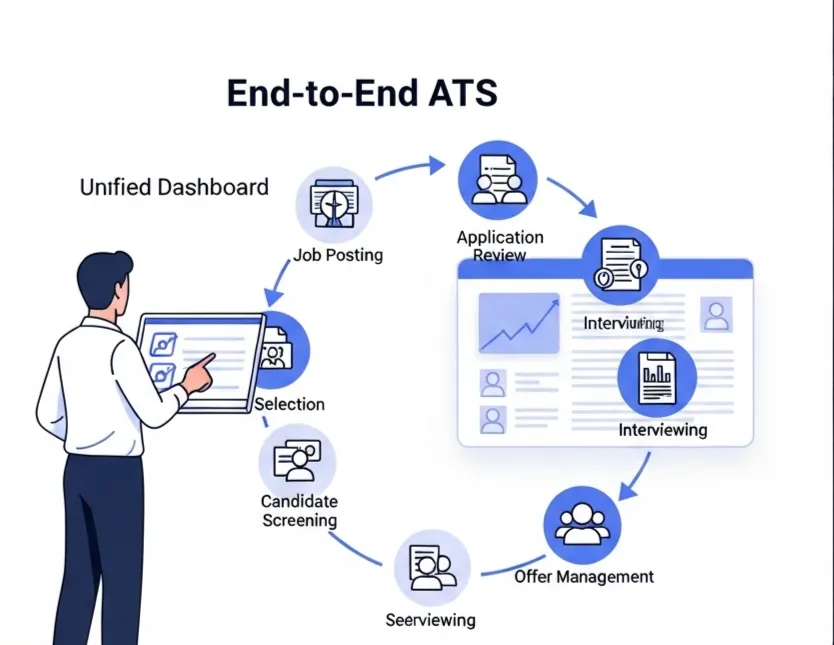
For your top candidates, you can send targeted assessments to go deeper into the skills that matter most, confirming what their application suggested. - Centralized ATS Pipeline
All qualified applicants land in one clean pipeline, so you can stop managing candidates in spreadsheets, emails, or DMs.
Filter Out Spam, Hire Top Talent.
Let HireZapp's AI generate smart questions and automate screening, filtering unqualified candidates to find your perfect hire.
Common Mistakes That Keep Teams Stuck
Even with the right strategy, a few common mistakes can undermine your efforts. Watch out for these pitfalls that can keep you buried in low-quality resumes.
- Asking too many questions and causing qualified people to drop off.
- Using confusing internal jargon that candidates won't understand.
- Forgetting to explain why you are asking for specific information.
- Making the application impossible to complete on a mobile device.
- Never looking at the data to see which questions are working.
What Smart Questions Won’t Fix
Improving your application questions is a powerful lever for change, but it's not a silver bullet. Being honest about its limits helps you focus on the whole picture of hiring.
- A Non-Competitive Salary
If your compensation is well below the market rate, even the best questions won't attract top talent. - A Negative Employer Brand
If your company has a poor reputation, highly-skilled candidates may not apply, regardless of the application process. - A Disorganized Interview Process
Getting great applicants is only the first step. A slow or confusing interview process will cause them to drop out.
Your Path to a Cleaner Pipeline
Frequently Asked Questions
1) What are good pre-screening questions?
Good pre-screening questions are specific, open-ended, and tied to a critical job requirement. Instead of asking “Are you organized?” ask, “What tool or system do you use to keep your work organized?” This asks for evidence, not just a simple 'yes'.
2) How do ATS screening questions work?
ATS screening questions are questions you build into your application form within an Applicant Tracking System. You can often assign “correct” answers or keywords, allowing the system to automatically score or filter candidates, saving you from manually reviewing every single application.
3) How many screening questions should I ask?
We recommend asking between 3 to 5 targeted questions. This is enough to filter out low-intent applicants without creating so much friction that good candidates abandon the application. Quality is more important than quantity.
4) Can smart questions really reduce spam applications?
Yes. The simple act of requiring a few thoughtful, non-generic answers is often enough to deter bots and mass-appliers who rely on one-click apply functions. It creates a small amount of positive friction that engages serious candidates.
5) What is the difference between screening and interview questions?
Screening questions are broad questions asked at the application stage to confirm basic qualifications and intent. Interview questions are much deeper, designed to explore a candidate's experience, behavior, and problem-solving skills in a conversational format.
6) How can I measure the success of my new questions?
Track the ratio of applications to qualified interviews. If you previously needed 100 applications to get 5 qualified interviews, and now you only need 30 applications to get the same 5 interviews, your questions are successfully improving quality.
7) Do I need different questions for every single role?
While some questions can be reused (like one about motivation), your most powerful questions will be tailored to the core function of the specific role. For example, a question for an engineer should be very different from a question for a marketer." }