ATS Scoring: How Applicant Tracking Systems Rank Candidates
Wasting hours sifting through hundreds of resumes is a huge drain on any hiring team. You get a flood of applicants, but many are unqualified, leaving you to manually search for the hidden gems. This manual process is slow, inconsistent, and often leads to great candidates slipping through the cracks.

ATS Scoring: A Simple Guide to How Applicant Tracking Systems Rank Candidates
Wasting hours sifting through hundreds of resumes is a huge drain on any hiring team. You get a flood of applicants, but many are unqualified, leaving you to manually search for the hidden gems. This manual process is slow, inconsistent, and often leads to great candidates slipping through the cracks.
A modern Applicant Tracking System (ATS) solves this by automatically analyzing and ranking candidates. This allows you to focus your energy on the most promising people, speeding up your time-to-hire and improving the quality of your interviews.
Why Manual Screening Fails at Scale
Relying on spreadsheets, forms, or your inbox for hiring creates bottlenecks that are hard to escape. Many recruiters notice that the core problem is not a lack of applicants, but a lack of tools to manage them effectively. This leads to several predictable issues.
- Keyword Guesswork: Manually scanning for keywords is prone to human error and bias. You might miss a great candidate because they used a synonym you were not looking for.
- Inconsistent Formatting: Resumes come in all shapes and sizes. Columns, images, and creative layouts can make it impossible to compare candidates fairly without a standardized system.
- Time-Consuming Process: Reading every single resume for multiple open roles is not a scalable strategy. It pulls you away from engaging with top talent and closing roles.
- Poor Candidate Experience: When you are overwhelmed, communication suffers. Applicants get left in the dark, which can damage your employer brand.
- Lack of Data: Without a system, you have no way to track what is working. You cannot measure which sources provide the best candidates or how long it takes to fill a role.
A 6-Step Playbook for Better Applicant Tracking System ranking
Implementing an effective system for ranking candidates does not have to be complicated. Following a clear process ensures you get the most out of your tools and find the right people faster. This is how you can set up a repeatable workflow for success.
- Optimize Your Job Description: Start with a clear job description that lists essential skills and responsibilities. Use common industry terms instead of internal jargon.
- Define “Must-Have” vs. “Nice-to-Have”: Clearly separate your core requirements from bonus skills. This helps the system weigh criteria appropriately.
- Configure Your ATS Scoring Rules: Set up your ATS to score resumes based on the must-have skills you defined. This is where you tell the software what to look for.
- Review Top-Scored Candidates First: Focus your attention on the applicants who meet your baseline criteria. This is the primary benefit of automation.
- Calibrate Scores with Human Insight: After reviewing the top candidates, adjust your scoring criteria if needed. The system gets smarter with your feedback.
- Automate Communication: Use your ATS to send automated updates to all applicants. This ensures everyone has a positive experience, even those not moving forward.
Practical Tools to Improve Your Screening
To make this process even easier, you can use simple templates to guide your ATS setup and evaluation. These tools help create consistency and ensure you are looking for the right signals in every application.
Candidate Scorecard Checklist
- Core Skill Match (e.g., Python, Java)
- Years of Relevant Experience (e.g., 3-5 years)
- Key Tool Proficiency (e.g., Salesforce, Figma)
- Specific Qualification (e.g., PMP Certification)
- Location or Time Zone Alignment
- Portfolio or Work Sample Provided
Resume Formatting for Better Parsing
How a candidate formats their resume can impact how an ATS reads it. Advise candidates to stick to simple, clean formats for the best results in resume parsing.
Good Example: A single-column document using standard fonts (like Arial or Times New Roman) with clear headings like “Work Experience” and “Skills.”
Bad Example: A resume with multiple columns, text boxes, images, or graphics that can confuse the parsing software and cause key information to be missed.
How HireZapp Automates and Improves Your Ranking
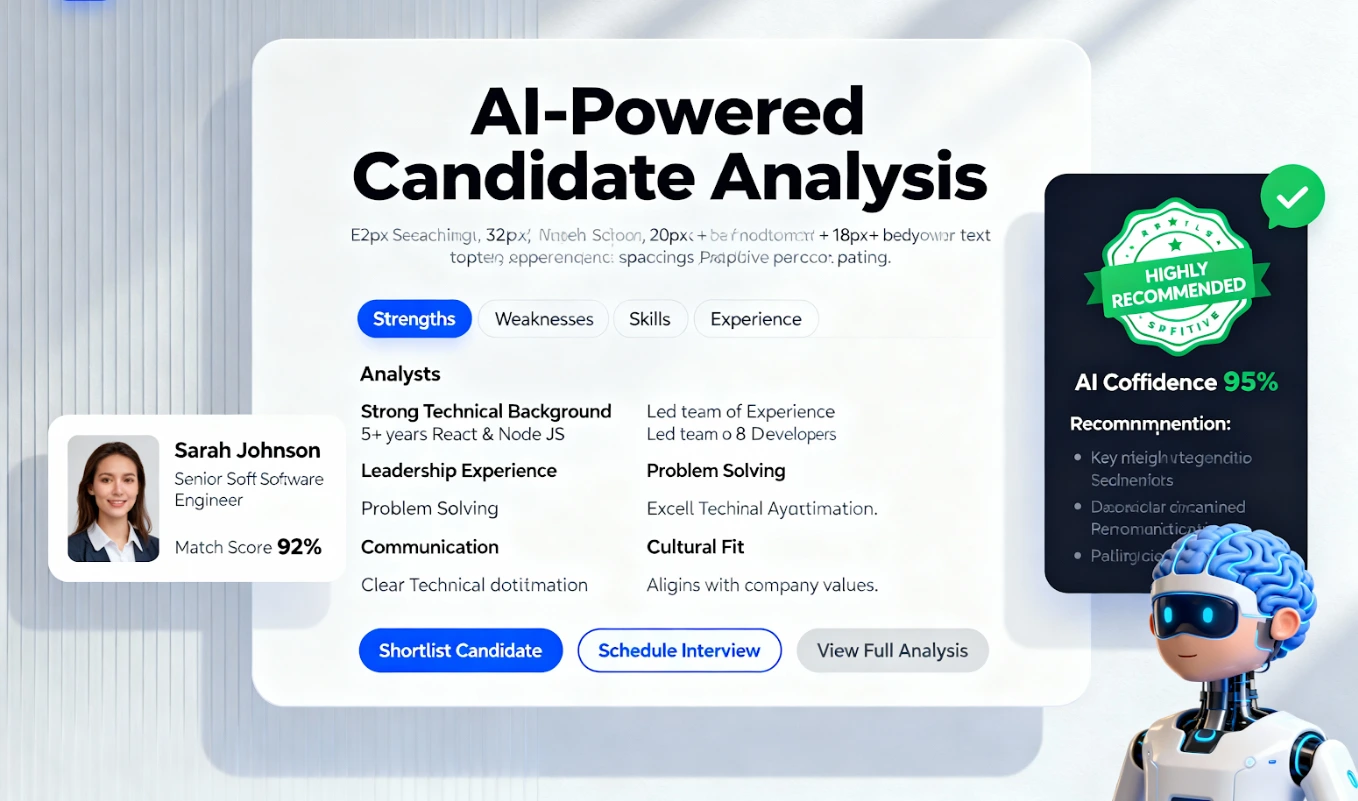
HireZapp is designed to make powerful candidate screening simple and accessible. Our platform directly supports the playbook above, helping you move from application to offer with more confidence and speed. We focus on providing a clear job match score for every applicant.
- AI Job Description Generator
Creates optimized, keyword-rich job descriptions to attract the right applicants from the start. - Job Match Score
Goes beyond basic keywords to give you a holistic score based on skills, experience, and custom criteria. - Multi-Channel Screening
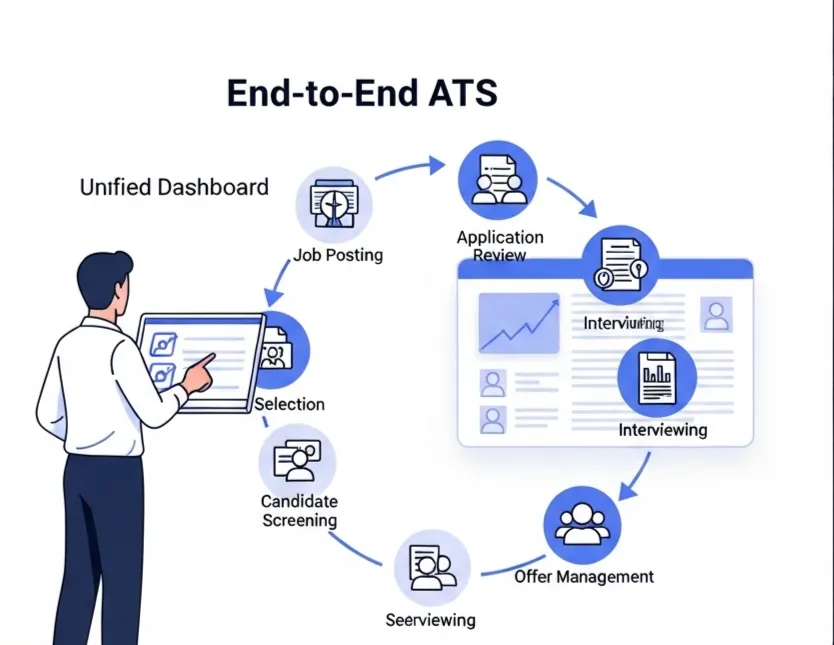
Pulls in data from sources like LinkedIn and GitHub to build a more complete candidate profile automatically. - ATS Pipeline Management
Lets you track, manage, and communicate with candidates from one simple dashboard. - Automated Follow-ups
Ensures no candidate is left behind, protecting your brand and improving the applicant experience.
Avoid These Common Traps in Candidate Screening
Even with the right tools, it is easy to fall into bad habits. Here are a few common mistakes that can undermine your hiring process and cause you to miss out on great talent.
- Relying solely on an ATS score without human review.
- Using vague or overly broad keywords in your job description.
- Immediately disqualifying candidates who are not a 100% match.
- Forgetting to update scoring criteria as the role’s needs evolve.
- Failing to create a process for reviewing manually sourced candidates.
- Ignoring the potential of AI in ATS to identify patterns you might miss.
What an ATS Score Can't Tell You
An ATS is a powerful tool for efficiency, but it is not a replacement for human judgment. To build a great team, remember what the score does not measure.
- A candidate’s soft skills, like communication and teamwork.
- Their passion for your company's mission and values.
- Cultural fit and their potential to thrive in your work environment.
- Their long-term growth potential and ambition.
Ultimately, the goal of candidate screening automation is to clear away the noise. It handles the repetitive, data-driven tasks so you can focus on the human side of hiring. By combining smart technology with your intuition, you build a process that is both efficient and effective.
Start hiring better today
AI-powered screening so your team spends time on the right people.
Frequently Asked Questions
1) What is ATS scoring?
ATS scoring is the process where an Applicant Tracking System automatically analyzes a candidate's resume and application against a job description. It assigns a score based on how well the candidate's skills, experience, and other qualifications match the role's requirements.
2) How do you beat an ATS score?
To get a high ATS score, candidates should tailor their resume for each job by including specific keywords from the job description. They should also use a simple, clean format without columns or graphics and use standard section headings like “Experience” and “Education.”
3) What is a good job match score in an ATS?
A “good” score varies by system and company. Generally, a score above 80% or 85% indicates a very strong match worth reviewing immediately. However, it is wise to also review candidates in the 70-80% range, as they may have relevant experience that the system did not weigh as heavily.
4) Does AI in ATS replace recruiters?
No, AI in ATS is a tool designed to assist recruiters, not replace them. It automates repetitive tasks like initial screening and ranking, freeing up recruiters to focus on strategic activities like interviewing, building relationships with candidates, and making final hiring decisions.
5) How does keyword matching ATS work?
Basic keyword matching ATS systems scan resumes for exact words and phrases found in the job description. More advanced systems can understand context, synonyms (like “project management” vs. “project oversight”), and the relationship between different skills to provide a more accurate match.
6) What is the difference between ATS scoring and Applicant Tracking System ranking?
ATS scoring refers to the numerical value assigned to a single candidate based on their fit. Applicant Tracking System ranking is the result of that process, where the entire applicant pool is sorted and displayed in a list from the highest-scoring candidate to the lowest.
7) Can candidate screening automation introduce bias?
Yes, if not configured properly. Bias can be introduced if the initial job description or scoring criteria contain biased language or favor certain backgrounds. Modern systems are being designed to mitigate this, but human oversight is crucial to ensure a fair and equitable process.
8) What are the key ATS algorithms based on?
Most ATS algorithms are based on a combination of keyword matching, semantic analysis (understanding the meaning and context of words), and machine learning. They evaluate factors like skills, years of experience, job titles, and education against the predefined requirements of the job.