Asynchronous Hiring Processes: Design and Execution
Tired of endless scheduling conflicts and candidates dropping off because your hiring process is too slow? For busy founders and recruiters, coordinating live interviews across different time zones can feel like a full-time job. An asynchronous hiring process allows you to evaluate candidates on your own time, giving them the flexibility to showcase their skills without the pressure of a live call.

Your Guide to Designing an Effective Asynchronous Hiring Process
Tired of endless scheduling conflicts and candidates dropping off because your hiring process is too slow? For busy founders and recruiters, coordinating live interviews across different time zones can feel like a full-time job. An asynchronous hiring process allows you to evaluate candidates on your own time, giving them the flexibility to showcase their skills without the pressure of a live call.
This approach isn't just about convenience. It helps you build a more thoughtful, fair, and efficient system that can dramatically reduce your time-to-hire and attract top talent who value modern work practices.
Why Your Current Hiring Feels So Slow
If you're stuck in the old way of hiring, you probably recognize these bottlenecks. Many teams struggle with the same challenges before they make a change. The problem isn't a lack of good candidates; it's often a broken, manual process.
- Constant Scheduling Delays: The back-and-forth emails to find a time that works for three different people on your team and the candidate.
- Time Zone Conflicts: Trying to connect with talent globally means someone is always taking a call too early or too late.
- Reliance on Live Calls for Screening: Using valuable live interview slots for basic qualification questions that could be answered in a form.
- Inconsistent Interviewer Feedback: Different interviewers ask different questions, making it hard to compare candidates fairly.
- Manual Follow-ups and Rejections: Candidates are left waiting for weeks, damaging your employer brand because no one has time to send updates.
A Step-by-Step Guide to Your Asynchronous Hiring Process
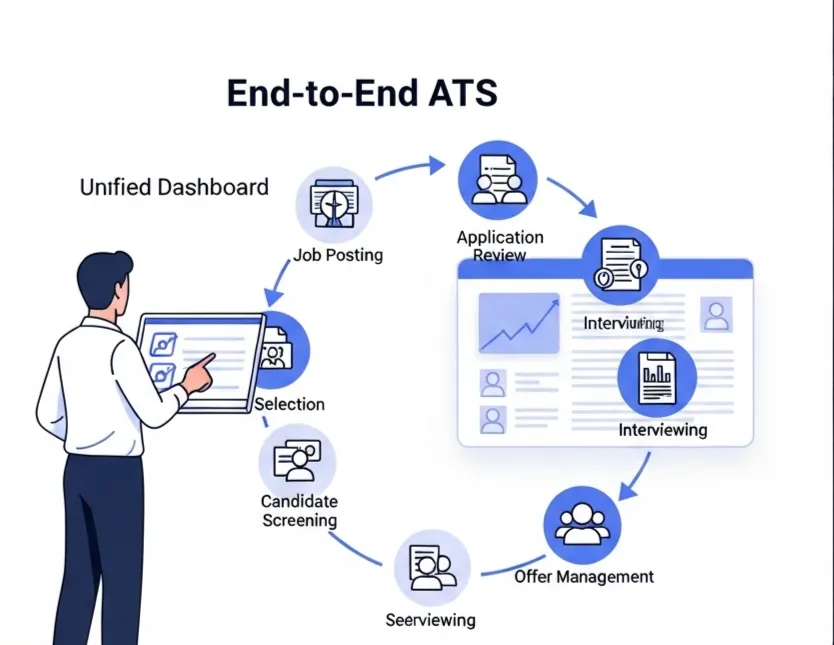
Moving to an async model is about designing a system that works for you 24/7. This playbook breaks down how to structure your workflow from the initial job post to the final offer, creating a seamless experience for both your team and your candidates.
- Define the Role and Scorecard First
Before you write a single word of a job description, define the top 3-5 outcomes this role must achieve and the core skills needed. This creates your hiring scorecard. - Generate an AI-Powered Job Description
Use your scorecard to create a clear, concise, and inclusive job description. Focus on what the person will do and achieve, not just a long list of qualifications. - Design a Smart Application Form
Go beyond just asking for a resume. Include 3-5 specific screening questions that test for core competencies right from the start. - Set Up an Automated First-Touch Message
As soon as a candidate applies, send an automated email confirming their application and outlining the next steps and timelines in your hiring process. - Send a One-Way Project or Video Task
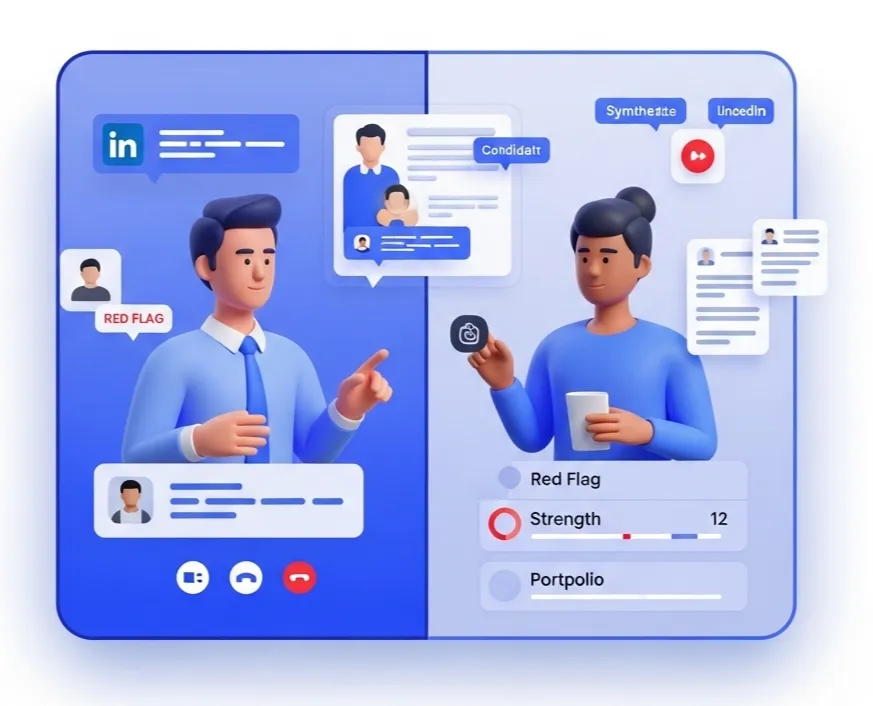
Instead of a live screening call, invite qualified applicants to complete a short, relevant task. This could be a written response, a code sample, or a brief video answering 2-3 questions. - Review Submissions on Your Own Schedule
Collaborate with your team to review the submissions using your predefined scorecard. This eliminates bias and ensures everyone is evaluating candidates on the same criteria. - Invite Top Candidates to a Final Live Interview
The async process filters for the best-fit talent. Save your valuable live interaction time for the final 2-3 candidates to discuss culture fit, role specifics, and answer their questions. - Automate Rejection and Offer Communication
Use templates to send respectful rejection letters to candidates who weren't a fit and to move finalists forward to the offer stage quickly.
Recruiter Reality: “I used to spend half my day just trying to schedule screening calls. Now, I review project submissions with my morning coffee. I can vet twice as many candidates in half the time.”
Copy-and-Paste Templates for Your Async Workflow
Use these templates as a starting point. Adapt them to fit your company voice and the specific role you are hiring for. Clear communication is key to a great candidate experience.
Asynchronous Interview Questions (For a Marketing Role)
- Question 1
Briefly describe a marketing campaign you worked on that you are proud of. What was your specific contribution and what was the outcome? - Question 2
Our primary customers are HR leaders at fast-growing tech companies. How would you approach creating content that resonates with this audience? - Question 3
This role requires managing multiple projects at once. How do you prioritize your tasks when everything feels urgent?
Candidate Update Email Template
Subject: Update on your application for the [Job Title] role at [Company Name]
Hi [Candidate Name],
Thank you again for applying and taking the time to complete the initial task. Our team is currently reviewing all submissions and we expect to have an update for you within [Number] business days. We appreciate your patience as we give each application the attention it deserves.
Best,
The [Company Name] Team
How HireZapp Powers Your Remote Hiring Strategy
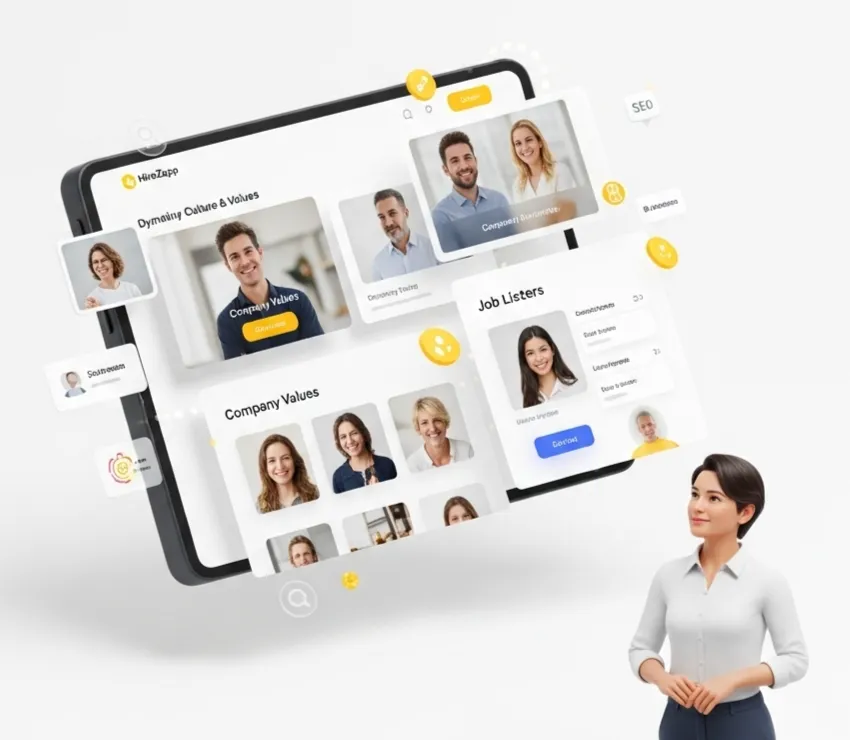
An asynchronous process runs best on a platform built for automation and great candidate experiences. HireZapp provides the tools to manage your entire workflow in one place, replacing scattered forms, emails, and spreadsheets. This is where a dedicated ATS for async hiring makes a difference.
- AI Job Description Generator
Create optimized and inclusive job descriptions in minutes based on the core skills and outcomes you define. - Job Match and Quality Scores
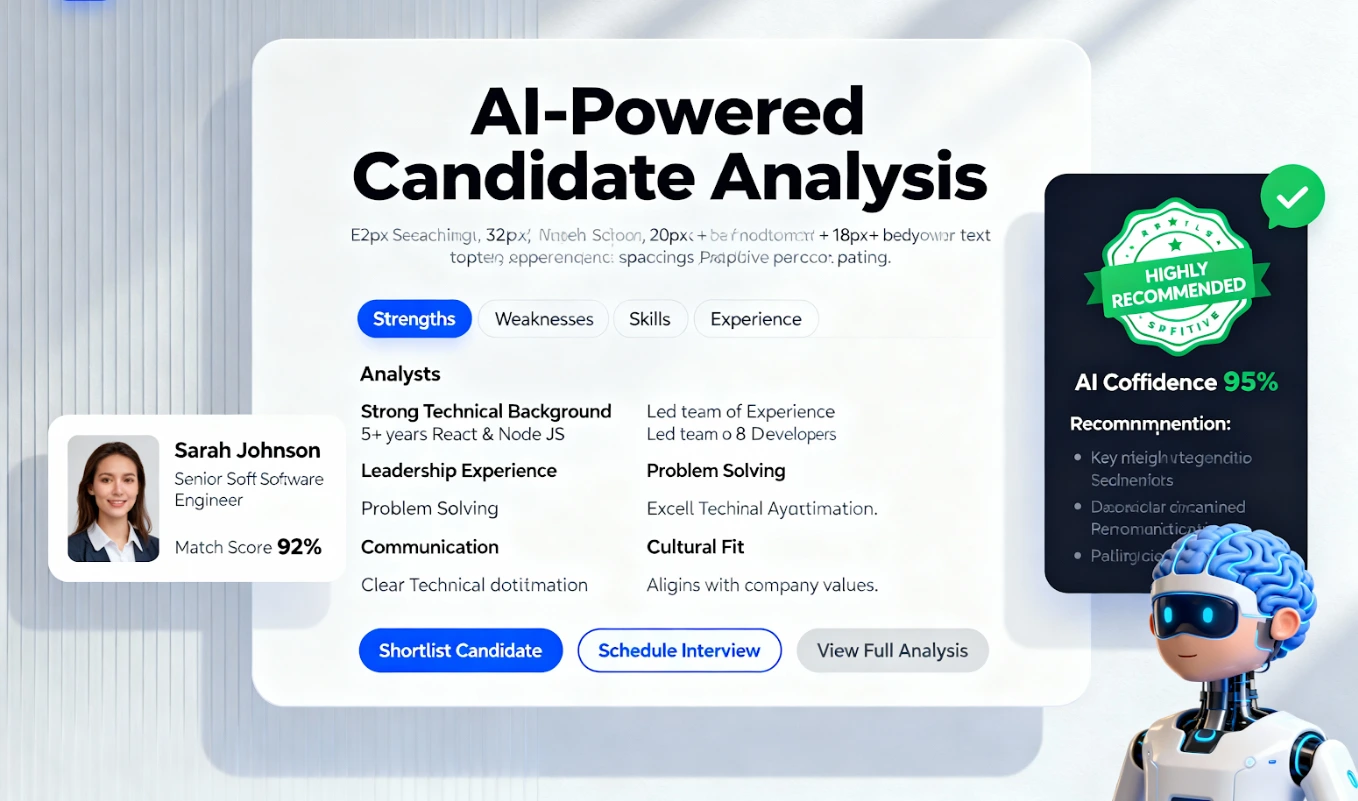
Our AI automatically scores applicants against your job requirements, letting you instantly see the most qualified candidates without manual review. - Custom Assessments and Pipelines
Build your unique async stages, from application forms to video submissions and project tasks, all within a single automated pipeline. - Automated Candidate Follow-ups
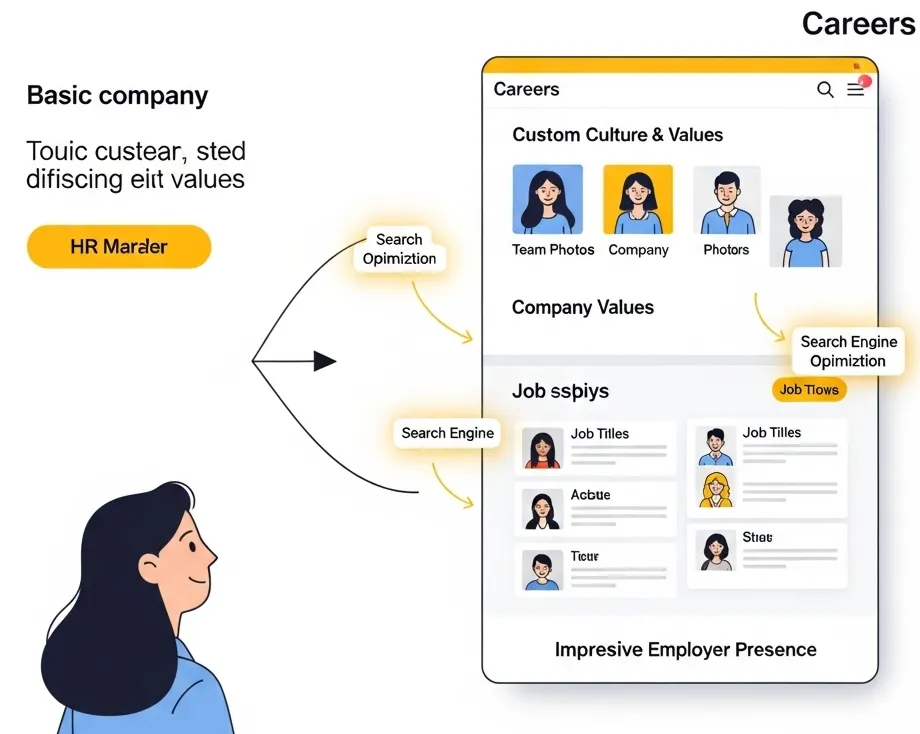
Set up triggers to automatically send confirmation emails, interview invites, and rejection notices so no candidate is ever left in the dark. - Branded Careers Page
Ensure a consistent and professional employer brand from the first click on your job post to the final offer letter.
Transform Async Hiring: Automate & Scale
Implement truly efficient asynchronous hiring. HireZapp's AI automates screening, communication, and scales your remote team.
Common Mistakes That Stall Hiring Efficiency
Switching to an async model can be transformative, but a few common missteps can prevent you from seeing the full benefits. Watch out for these pitfalls as you design your new process.
- Forgetting the human touch entirely. Automation should handle logistics, not relationships.
- Writing unclear instructions for tasks. If candidates are confused, you'll get poor-quality submissions.
- Creating a long and complicated application. A high-friction process leads to high drop-off rates.
- Not setting clear deadlines for submissions. Both your team and the candidates need structure.
- Ignoring candidate feedback about the process. Use their input to continuously improve the experience.
- Trying to manage it all with spreadsheets and email. This creates chaos and manual work, defeating the purpose of automation.
What an Async Process Won't Fix on Its Own
While a well-designed async workflow is powerful, it is not a magic solution for all hiring challenges. It's important to have realistic expectations and understand what it cannot solve.
- A Weak Employer Brand: If your company has a poor reputation, a great process won't be enough to attract top talent.
- Non-Competitive Compensation: You can't automate your way around paying people what they are worth in the market.
- A Poorly Defined Role: If you don't know what you're hiring for, no process can find the right person.
An asynchronous hiring process is designed to find the best person for a well-defined role at a competitive company. It makes a good system great by adding speed, fairness, and structure. If you are ready to build a hiring machine that converts applicants into hires faster, check out how HireZapp can help.
Frequently Asked Questions
1) What is an asynchronous hiring process?
An asynchronous hiring process is a recruitment method where interviews and assessments do not happen in real-time. It allows candidates and hiring teams to participate in the process on their own schedules, using tools like video submissions, online forms, and collaborative review platforms.
2) Are async interviews effective for all roles?
Async interviews are highly effective for screening and early-stage evaluation for most roles, especially in tech, marketing, and operations. For roles that require significant real-time interaction, like high-level sales, they are best used to supplement, not completely replace, a final live interview.
3) How does automated recruitment help with async hiring?
Automated recruitment handles the logistical tasks of an async process, such as sending confirmation emails, moving candidates between stages, requesting assessments, and providing status updates. This frees up recruiters to focus on evaluating candidate quality rather than on administrative work.
4) What is the main benefit of a virtual hiring process?
The main benefit of a virtual hiring process, particularly an asynchronous one, is the ability to access a global talent pool without the constraints of location or time zones. It also significantly speeds up the hiring timeline by removing scheduling bottlenecks.
5) How can I improve candidate experience automation?
You can improve candidate experience automation by ensuring every automated message is clear, helpful, and sets expectations. Personalize templates where possible, provide clear timelines, and always confirm that an application or submission has been received successfully.
6) Can an ATS for async hiring really reduce time-to-hire?
Yes, an ATS for async hiring is specifically designed to reduce time-to-hire by eliminating manual scheduling, enabling parallel reviews by the hiring team, and automating communication. This collapses a multi-week timeline into a matter of days.
7) What are the first steps in adopting modern hiring practices?
The first steps are to map out your current hiring process and identify the biggest bottlenecks. Then, focus on fixing one area at a time, such as by implementing smarter application forms or automating initial candidate communication, before building out a fully asynchronous workflow.