How to Use Automation Without Losing Human Judgment in Hiring
If your hiring process involves messy spreadsheets, endless LinkedIn DMs, and candidates dropping off, you know something is broken. You spend more time organizing information than connecting with people. The good news is that technology can solve this coordination overload without turning your recruiting into a robot.

Balancing Automation and Human Interaction in Hiring: A Practical Guide
If your hiring process involves messy spreadsheets, endless LinkedIn DMs, and candidates dropping off, you know something is broken. You spend more time organizing information than connecting with people. The good news is that technology can solve this coordination overload without turning your recruiting into a robot.
Smart automation is about getting your time back. It handles the repetitive work so you can focus on what humans do best: building relationships, judging character, and making thoughtful hiring decisions. It’s the key to converting more great applicants into hires, faster.
Why Getting Automation Right Is So Hard
Many founders and recruiters struggle to strike the right balance. The challenge usually comes down to a few common issues that create friction for both your team and your candidates.
- Fear of losing personalization. Teams worry that automation will make their company seem cold or robotic, damaging their employer brand.
- Automating the wrong tasks. Applying automation to high-stakes, nuanced tasks like final interviews or offer negotiations can backfire badly.
- Lack of a clear strategy. Without a plan, teams often buy tools they don’t need or implement them in ways that create more work.
- Using “black box” AI. Some tools make decisions without explaining their logic, making it impossible for humans to review or override their work.
- Ignoring the candidate experience. Poorly configured automation can lead to confusing application forms, irrelevant messages, and a frustrating process for applicants.
The Playbook for Balancing Automation and Human Interaction in Hiring
A successful recruitment process automation strategy does not require you to be a tech expert. It just requires a clear plan. Follow these steps to build a system that works for you, not against you.
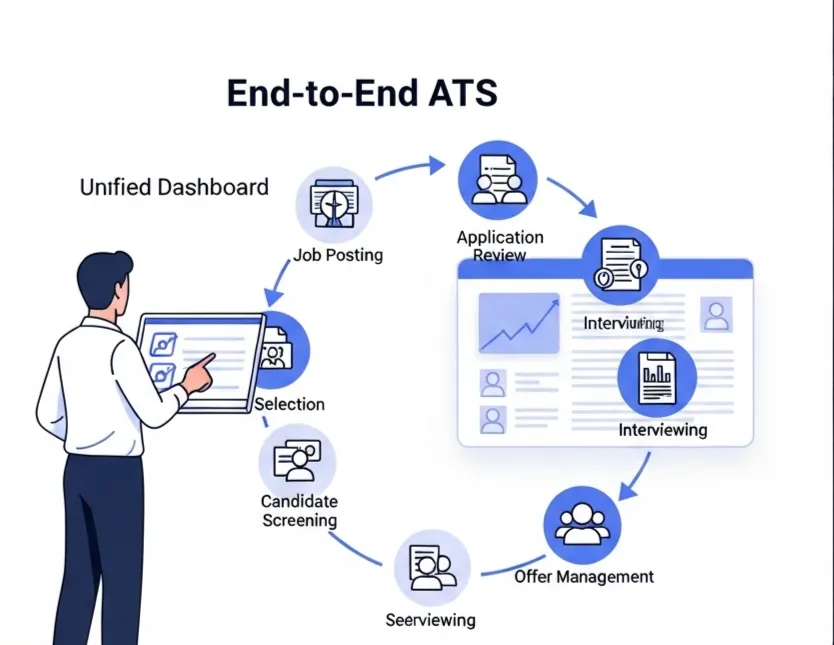
- Map your current hiring process.
List every single step, from posting a job to making an offer. Identify who is responsible and how long each stage takes. - Label tasks as ‘Repetitive’ or ‘Relational’.
Go through your map. Is the task high-volume and data-driven (Repetitive)? Or does it require empathy and judgment (Relational)? - Automate the repetitive tasks first.
Start with easy wins. This includes things like sending application confirmations, screening for basic qualifications, and scheduling initial calls. - Protect the relational touchpoints.
Tasks like conducting in-depth interviews, checking cultural fit, negotiating offers, and giving personalized feedback should always involve a human. - Build in human review points.
Never let a system make a final decision. Create checkpoints where a recruiter must review a shortlist or approve a message before it goes out. This is the core of human-in-the-loop hiring. - Choose tools that provide clarity.
Select platforms that show you why a candidate received a certain score or ranking. You need tools that assist, not replace, your judgment. - Train your team on the ‘why’.
Make sure everyone understands that the goal is to enhance their work, not eliminate it. Teach them how to use the data from tools to make better decisions.
A Checklist for Evaluating Automation Tools
Not all tools are created equal. When considering new software, use this checklist to ensure it supports a healthy balance of automation and human oversight. It's a key part of implementing ethical AI in recruitment.
- Human Override Feature
Can a recruiter easily override any automated decision or action? - Transparent Scoring
Does the tool explain how it calculates a match score or ranks a candidate? - Customization Options
Can you easily modify workflows, templates, and screening criteria to fit your roles? - Candidate Experience Focus
Is the application process simple, mobile-friendly, and respectful of the candidate's time? - Integration Capabilities
Does it connect smoothly with the other tools you already use, like your calendar and email? - Clear Data Privacy Policy
Does the provider clearly state how they handle and protect candidate data?
Recruiter reality: “I don’t need a robot to tell me who to hire. I need a system that surfaces the top 10 applicants who meet our core needs so I can spend my day talking to them, not sifting through 200 unqualified resumes.”
How HireZapp Gives You Control and Clarity
HireZapp was designed to amplify a recruiter’s judgment, not replace it. Our platform automates the right things so you can focus on hiring the right people. Here is how our features support a balanced approach to automation in hiring human judgment.
- AI JD + Job Form Generation
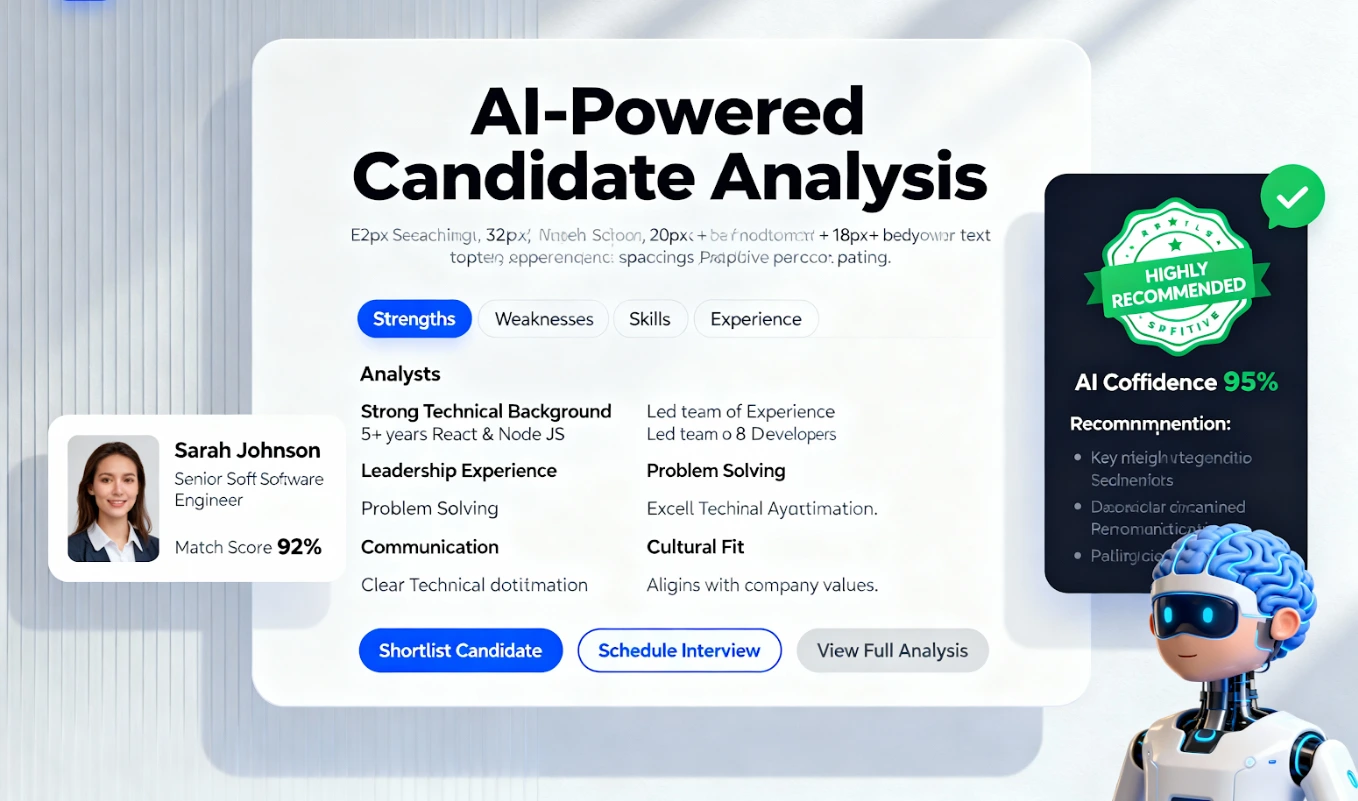
This creates a strong foundation for your search in seconds, freeing you up to strategize on outreach and interviews. - Job Match Score + Job Quality Score
These scores give you an instant data snapshot to guide your attention, but you always have the final say on who moves forward. - Assessments + ATS Pipeline
We organize all candidate information and assessment results in one clean pipeline, making it easy for you to review and apply your expertise. - Automated Follow-ups
Keep every candidate informed and engaged without lifting a finger, ensuring a great experience while you focus on high-priority conversations.
Balance AI & Human Judgment in Hiring.
Scale hiring with AI, keep your human touch. HireZapp automates screening, empowering better decisions.
Common Mistakes That Keep Hiring Teams Stuck
Even with the right tools, it’s easy to fall into bad habits. Avoid these common mistakes to keep your hiring process human-centered and effective.
- Forgetting to personalize automated messages.
- Relying 100% on a match score without reviewing the resume.
- Failing to tell candidates which parts of the process are automated.
- Automating the final rejection notice for interviewed candidates.
- Ignoring the data and insights the system provides.
- Choosing a tool that is too complex for your team to manage.
What Automation Won’t Fix
Technology is a powerful amplifier, but it cannot solve foundational business problems. A smart hiring platform won't fix:
- A weak employer brand or poor company reputation.
- A non-competitive salary and benefits package.
- A disorganized interview process with untrained interviewers.
- A role that has not been clearly defined by the hiring manager.
Smart automation paired with strong human judgment creates an efficient and respectful hiring process. By automating the repetitive tasks, you free your team to do the irreplaceable work of building connections and making wise decisions. This is how you achieve an effective AI recruiting human touch.
Frequently Asked Questions
1) What is the first step in creating a recruitment process automation strategy?
The first step is to thoroughly map out your existing hiring funnel. Document every stage from job posting to offer acceptance to identify which tasks are repetitive and administrative versus which ones require strategic human interaction.
2) How can AI improve hiring without losing the human touch?
AI can handle high-volume, data-driven tasks like resume screening for basic qualifications, scheduling, and sending status updates. This frees up human recruiters to spend more quality time on personal interactions, in-depth interviews, and building relationships with top candidates.
3) What are some recruitment automation best practices for small businesses?
Start small by automating one or two key pain points, like application confirmation emails or initial screening questions. Choose user-friendly tools with transparent pricing, and always ensure a human is responsible for reviewing shortlists and making final decisions.
4) Which hiring tasks should never be fully automated?
Tasks that require deep nuance, empathy, and strategic judgment should never be fully automated. This includes conducting final-round interviews, assessing culture fit, extending offers, negotiating salary, and providing personalized feedback to candidates you’ve interviewed.
5) How does human-in-the-loop hiring work?
It means that while technology can suggest, rank, or organize candidates based on data, a human being is always in place to make the critical decisions. The system provides insights, but the recruiter or hiring manager provides the final judgment and approval at key stages.
6) What should I look for in AI tools for hiring human oversight?
Look for tools that offer explainable AI, meaning they show you why a candidate was scored a certain way. They should also feature dashboards that are easy to understand, allow for manual overrides, and provide customization to fit your specific criteria.
7) Can automation help reduce hiring bias?
When implemented correctly, it can. Automation can standardize the initial screening process by focusing on objective skills and qualifications defined beforehand. However, it's critical to regularly audit the tools and the data they use to ensure they aren't perpetuating existing biases.