How Recruiters Actually Use AI Day-to-Day: Patterns From Platform Usage
If you feel like you spend more time on admin than actual recruiting, you are not alone. Juggling dozens of unqualified applicants, manually updating spreadsheets, and chasing candidates for interviews can burn out even the most dedicated hiring teams. The goal is simple: hire the best person, faster. But the process is often slow and disconnected.

Beyond the Hype: How Recruiters Actually Use AI Day-to-Day
If you feel like you spend more time on admin than actual recruiting, you are not alone. Juggling dozens of unqualified applicants, manually updating spreadsheets, and chasing candidates for interviews can burn out even the most dedicated hiring teams. The goal is simple: hire the best person, faster. But the process is often slow and disconnected.
This is where smart automation comes in. We analyzed platform data and user habits to understand how recruiters use AI day-to-day to get real results. It is less about futuristic robots and more about practical tools that handle the repetitive work, freeing you up to connect with great people.
Why Manual Recruiting Creates Bottlenecks
Many recruiters find their days are consumed by tasks that are necessary but not high-value. This manual overload is often the root cause of slow hiring and losing top talent to competitors. The core issues are surprisingly consistent across teams.
- Repetitive Content Creation
Writing and rewriting job descriptions and outreach emails for every open role. - High Volume, Low Quality Applications
Sifting through hundreds of resumes from job boards that do not match the core requirements. - Inconsistent Screening
Different team members use different criteria to evaluate candidates, leading to bias and missed opportunities. - Communication Gaps
Candidates get left in the dark for weeks, which damages your employer brand and leads to drop-offs. - No Central Source of Truth
Using a mix of email, spreadsheets, and DMs for applicant tracking makes it impossible to see the big picture.
Unpacking How Recruiters Use AI Day-to-Day: A 7-Step Playbook
Successful teams build simple, repeatable systems. An AI-powered workflow helps you move with speed and precision from job post to job offer. Here is a proven process you can adopt.
- Generate a Targeted Job Description
Use an AI generator to create a clear, inclusive, and optimized job description that attracts the right candidates from the start. - Create an Intelligent Job Form
Build a short application form with essential screening questions to automatically filter for non-negotiable skills. - Automate First-Pass Screening
Set up rules to instantly score applicants based on their answers, resume keywords, and public profiles. - Rank and Shortlist Top Talent
Focus your attention on the top 10% of candidates identified by the system’s Job Match Score. - Trigger Automated Follow-ups
Ensure every applicant receives a timely acknowledgment, and send personalized updates to your top candidates. - Streamline Interview Scheduling
Integrate with calendar tools to let qualified candidates book a time without the back-and-forth emails. - Analyze Pipeline Performance
Use data to see where candidates are dropping off and how long it takes to fill roles, then adjust your strategy.
A Checklist to Measure AI's Impact
To justify any new tool, you need to see a return on investment. Use this checklist to evaluate how AI is improving your hiring efficiency and quality.
- Time-to-Shortlist
Is the time from posting a job to identifying interview-ready candidates decreasing? - Application Completion Rate
Are more candidates finishing the application process? - Cost-Per-Hire
Are you spending less on job boards or ads to find qualified talent? - Candidate Quality
Is the quality of candidates who make it to the final interview stage improving? - Team Productivity
Is your team spending less time on administrative tasks and more time engaging with candidates? - Candidate Satisfaction
Are you receiving positive feedback on the speed and clarity of your communication?
Recruiter reality: “I used to spend the first two days of any search just reading resumes. Now, the system gives me a qualified shortlist in under an hour. It completely changed my workflow.”
How HireZapp Powers Your Recruitment AI Workflows
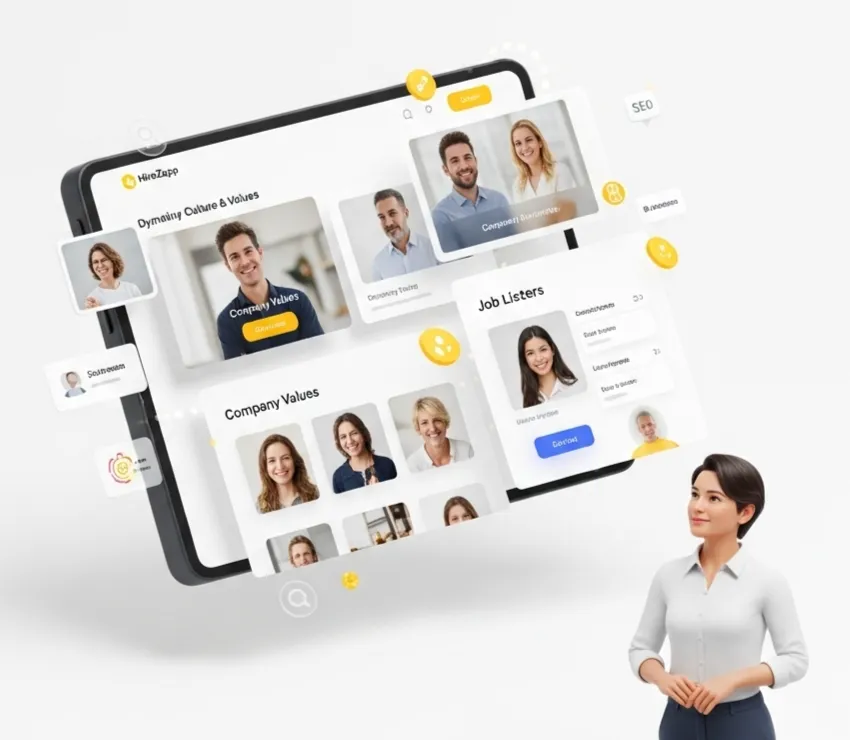
HireZapp was built to make this playbook a reality for busy teams. Our platform provides the essential tools for a smarter AI hiring process without the complexity of enterprise software.
- AI Job Description Generator
Instantly create compelling and optimized job posts and application forms. - Multi-Channel Screening
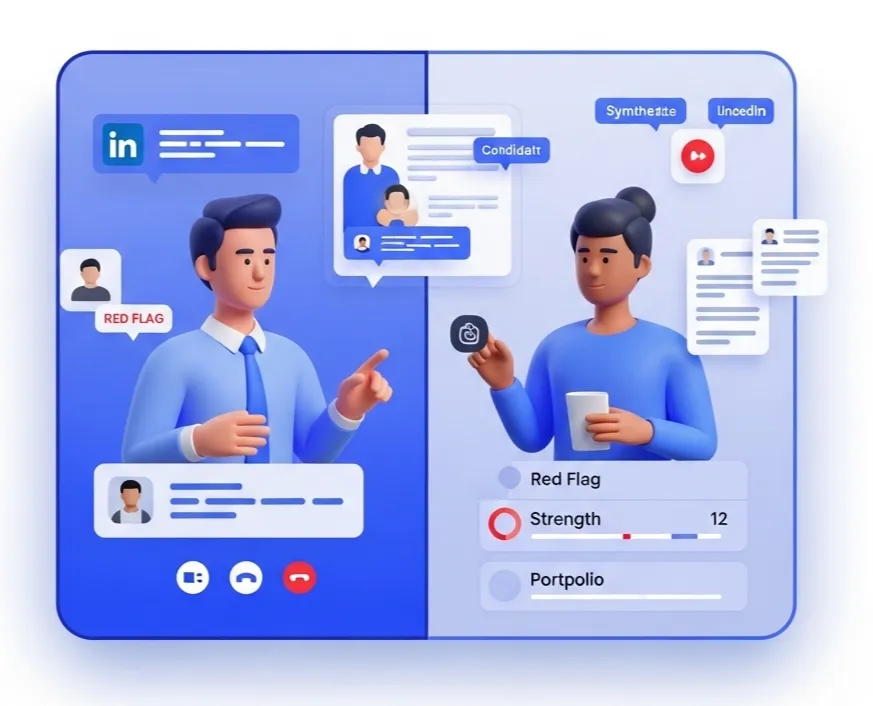
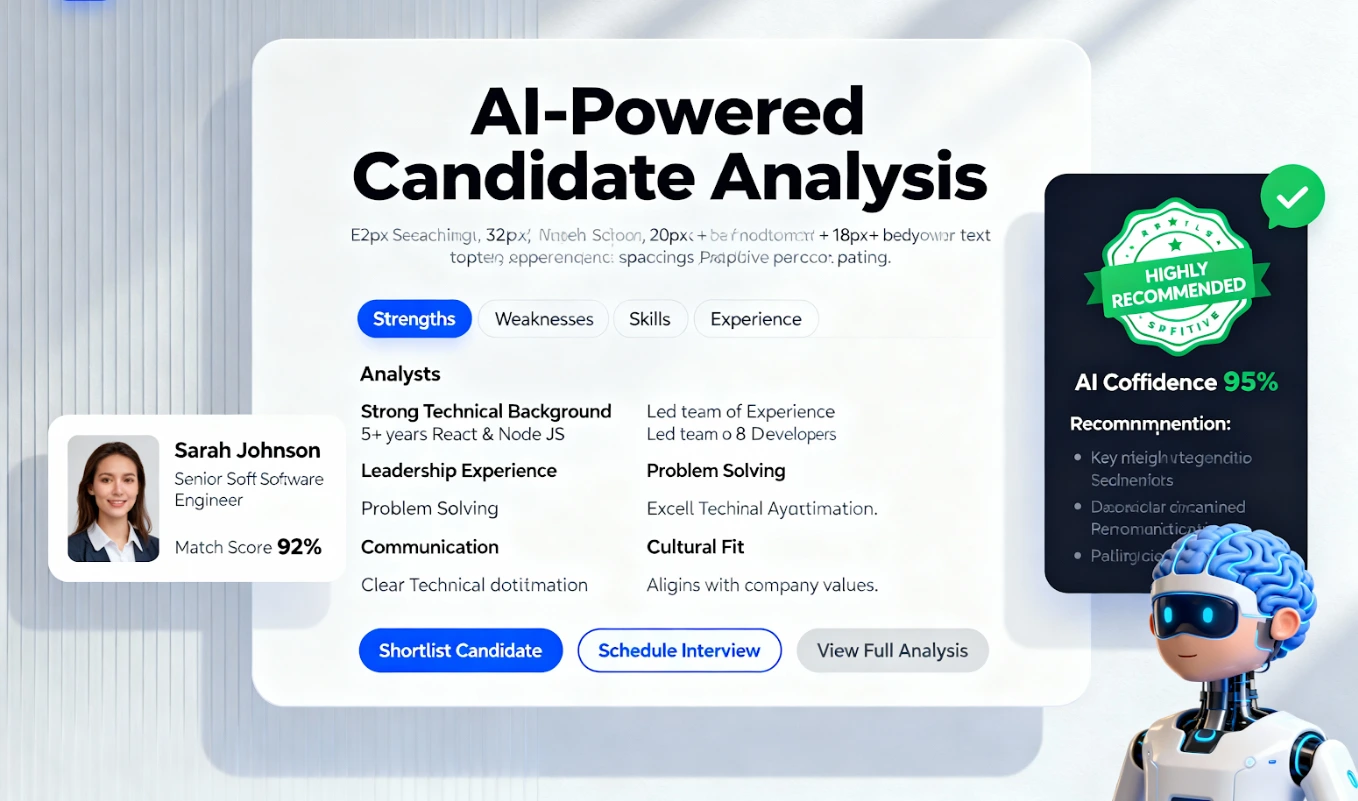
Automatically review candidate profiles from sources like LinkedIn and GitHub. - Job Match Score
Get a data-backed score for every applicant so you can focus on the best fits. - Automated Follow-ups
Keep every candidate informed with branded, personalized email sequences. - Sourcing Playbooks
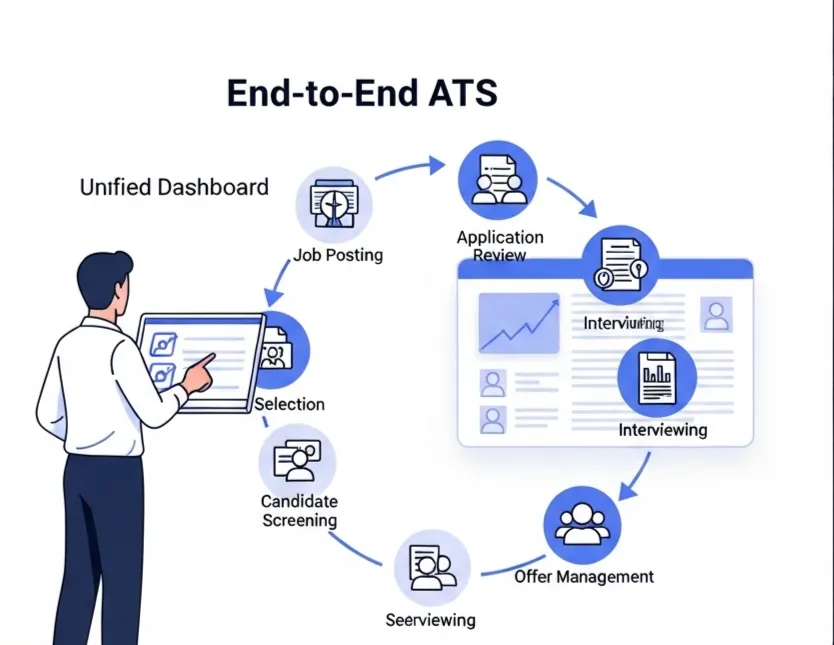
Access expert guidance on finding passive talent for hard-to-fill roles. - All-in-One ATS Pipeline
Manage your entire process, from application to offer, in one organized place.
Common Stumbles in Recruiter AI Adoption
Switching to a new system can be challenging. Many teams make the same mistakes that limit their success. Avoiding these common pitfalls will help ensure a smooth transition and better results.
- Starting without a clear problem
Adopting AI for its own sake instead of targeting a specific bottleneck like screening speed or candidate drop-off. - Ignoring team training
Failing to show your team how the tool fits into their daily habits and saves them time. - Forgetting the human element
Relying too heavily on AI-generated text without personalizing it to reflect your company voice. - Neglecting to customize rules
Using default settings instead of tailoring screening questions and scoring to the specific role. - Overlooking the candidate experience
Implementing automation that feels cold or impersonal to applicants.
What AI Won't Fix for You
AI is a powerful assistant, not a replacement for a great recruiter. It is important to have realistic expectations and understand where human expertise remains essential for success.
- Building genuine relationships with candidates.
- Understanding the deep nuances of company culture.
- Making the final, intuition-driven hiring decision.
- Negotiating complex offers and closing top talent.
Screen smarter, hire faster
Reduce manual work and focus on candidates who actually fit.
Frequently Asked Questions
1) What are the most common AI recruiting patterns?
The most common patterns involve using AI for top-of-funnel tasks. This includes generating job descriptions, automating the screening of inbound applicants, scoring resumes against job requirements, and sending initial follow-up communications to manage candidate expectations.
2) How does AI improve the AI hiring process?
AI improves the hiring process by increasing speed, consistency, and efficiency. It automates repetitive tasks, provides data-driven insights to reduce bias in screening, and ensures every candidate receives timely communication, which enhances the overall candidate experience.
3) What are the best AI tools for recruiters?
The best tools are typically all-in-one platforms that combine an Applicant Tracking System (ATS) with AI features. Look for solutions like HireZapp that offer AI-powered job description generation, automated candidate scoring, and integrated communication workflows in one place.
4) Can AI help with AI candidate management?
Absolutely. AI excels at AI candidate management by automating communication, tracking applicant stages, and sending reminders. This ensures no candidate gets lost in the process and frees up recruiters to focus on building relationships with their top prospects.
5) How do you measure the ROI of recruiter AI adoption?
Measure ROI by tracking key metrics before and after implementation. Focus on improvements in time-to-fill, cost-per-hire, quality of candidates reaching the final interview, and the amount of time recruiters save on administrative tasks each week.
6) Is AI going to replace recruiters?
No, AI is designed to augment recruiters, not replace them. It handles the high-volume, repetitive work, allowing recruiters to dedicate their time to strategic tasks like candidate engagement, negotiation, and building talent pipelines that require a human touch.
7) What is the first step to implementing AI in recruiting?
The first step is to identify your biggest bottleneck. Are you spending too much time screening resumes? Are candidates dropping off due to slow communication? Start with a tool that solves your most significant and immediate problem.