Startup Hiring: From Founder to 50 Employees
As a founder, you wear every hat. But the recruiter hat often feels the heaviest. You are juggling investor updates, product development, and now, a messy inbox of applicants. This guide provides a simple, repeatable <strong>startup hiring process</strong> to help you move from chaos to clarity. It is the founder hiring guide for scaling your vision, one great hire at a time.

Startup Hiring: A Founder’s Guide to Your First 50 Employees
As a founder, you wear every hat. But the recruiter hat often feels the heaviest. You are juggling investor updates, product development, and now, a messy inbox of applicants. This guide provides a simple, repeatable startup hiring process to help you move from chaos to clarity. It is the founder hiring guide for scaling your vision, one great hire at a time.
The goal is to build a system that finds the right people without slowing you down. Effective recruiting for early stage companies is not about copying big corporate playbooks; it is about being intentional, fast, and human.
Why Early-Stage Hiring Feels So Chaotic
If your current hiring feels like a constant fire drill, you are not alone. Many founders and early-stage HR leaders face the same blockers when trying to grow their teams. The problem usually is not a lack of candidates, but a lack of a clear system.
- Relying only on gut feeling instead of defined criteria.
- Writing vague job descriptions that attract unqualified applicants.
- Losing great candidates in messy spreadsheets, DMs, and email threads.
- Having no consistent interview process, leading to biased decisions.
- Providing a poor candidate experience that hurts your company’s reputation.
- Failing to define what culture-add means for your specific team.
A Repeatable Playbook for Scaling Your Team
Hiring needs change as your company grows. Here is how to adapt your strategy at each key stage, from your first hire to your 50th team member.
Stage 1: The First 10 Hires (The Generalist Era)
At this stage, you are hiring for potential, passion, and adaptability. These first team members will define your culture. Your focus is on finding versatile people who can grow with the company.
Recruiter reality: “At the start, you're not hiring for a role; you're hiring a partner who believes in the mission as much as you do.”
- Define the Mission-Critical Role.
Focus on the one hire that will unlock the most growth right now. - Write an Outcome-Focused Job Description.
Describe what the person will achieve in their first 90 days, not just list required skills. - Use Your Personal Network.
Your strongest early hires often come from trusted referrals. - Create a Simple 3-Step Interview.
Keep it to a screening call, a practical skills chat, and a final founder conversation.
Stage 2: Building Functions (Scaling to 25 Employees)
Now, you need to hire for specific functions like sales, marketing, and engineering. The challenge is moving from hiring generalists to specialists without losing the culture you have built. Process becomes your friend.
- Create Simple Role Scorecards.
Define the top 3-5 skills and traits for each role to standardize evaluations. - Expand Sourcing Channels.
Look beyond your network to niche job boards and communities. - Standardize Key Interview Questions.
Ask every candidate for a role the same core questions to compare them fairly. - Assign Interview Roles.
Have one person focus on technical skills and another on team dynamics. - Communicate Proactively.
Even a simple automated message telling candidates their status makes a huge difference.
Stage 3: Laying the Foundation (The Road to 50 Employees)
At this size, you can no longer manage hiring from a spreadsheet. You need a scalable system, a clear employer brand, and a dedicated startup HR strategy. This is where you build the foundation for future growth.
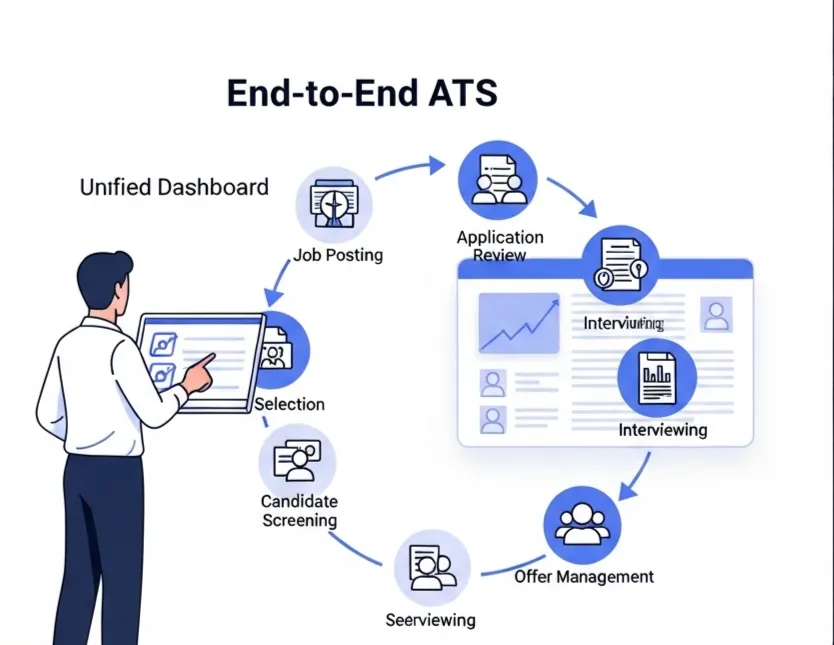
- Implement a Lightweight ATS.
Centralize all candidate information to track progress and collaborate with your team. - Define Your Employer Value Proposition (EVP).
Clearly state why someone should join your company over any other. - Delegate Hiring Responsibilities.
Empower team leads to own the hiring process for their departments. - Track Key Hiring Metrics.
Measure time-to-hire, source-of-hire, and offer acceptance rate to find bottlenecks.
Hiring Templates You Can Use Today
You do not need to start from scratch. Use these simple templates as a starting point for building your hiring process.
Job Description Snippet: Founding Engineer
As our Founding Engineer, you will do more than write code. You will be a key partner in shaping our product, culture, and technical foundation from the ground up. In your first six months, you will help us launch our core platform, define our engineering standards, and build a system that can scale to thousands of users.
Screening Questions for Culture Add
- Tell me about a time you had to learn a new skill quickly to solve a problem.
- How do you prefer to receive feedback on your work?
- Describe a project where you had to work with a small team and limited resources.
- What kind of work environment helps you do your best work?
- When you get stuck on a difficult problem, what is your first step?
Candidate Follow-Up Message
Hi [Candidate Name],
Thanks again for your time today. The team enjoyed our conversation and learning more about your background. We are finalizing our next steps and will be in touch with an update by [Date].
Best,
[Your Name]
Where HireZapp Fits In
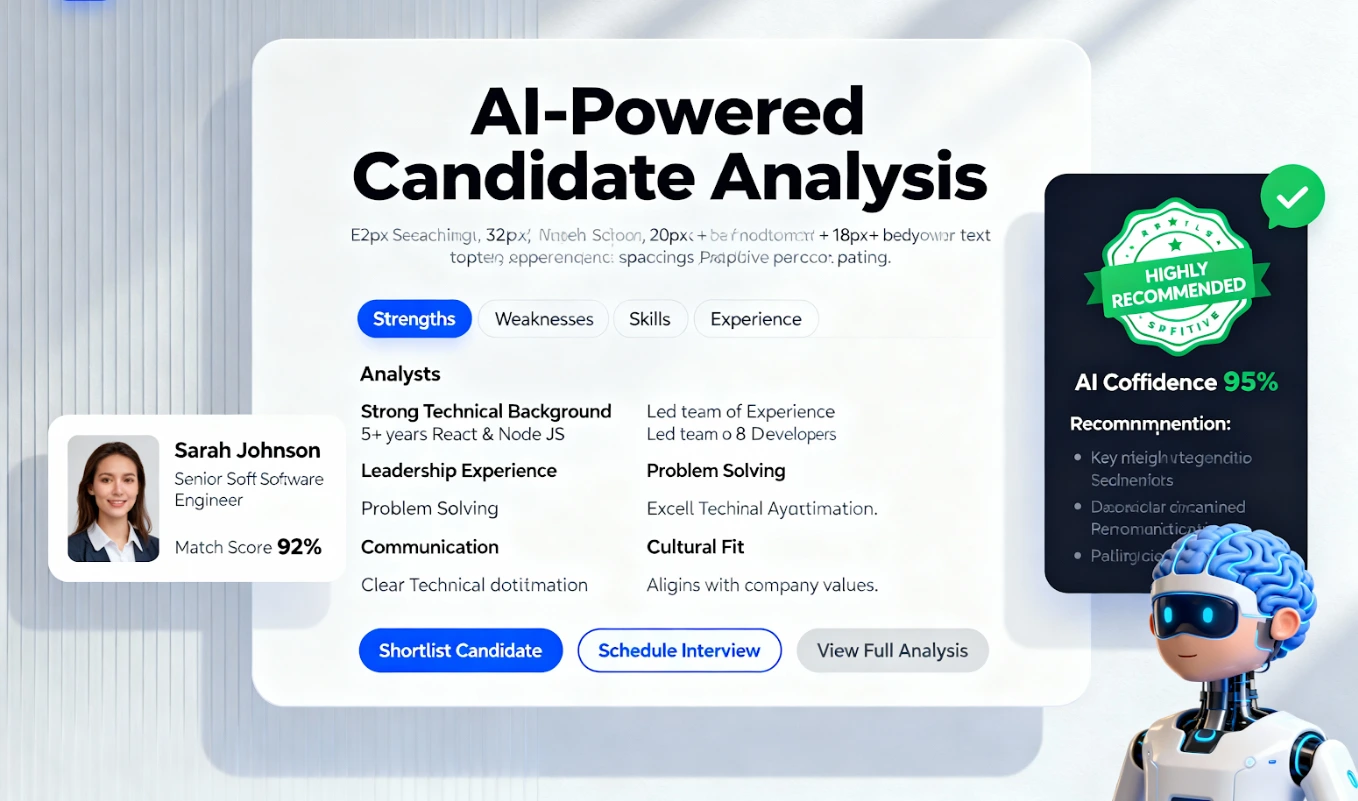
As you scale, manual tasks become major bottlenecks. HireZapp helps you automate the repetitive work so you can focus on what matters: connecting with great people. It is a system built for the speed and budget of a growing startup.
- AI JD + Job Form Generation
Create compelling, optimized job descriptions and application forms in seconds. - Multi-channel Screening
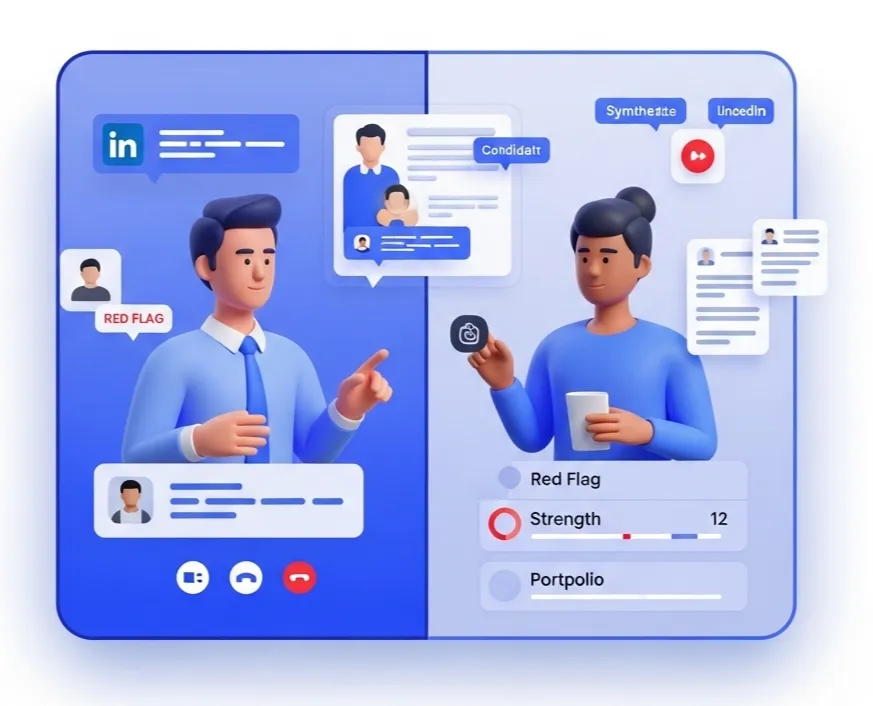
Pull in candidate profiles from places like LinkedIn and GitHub into one unified view. - Job Match Score + Job Quality Score
Instantly see which candidates are the best fit and how well your job post is written. - ATS Pipeline + Automated Follow-ups
Move candidates through stages and keep them informed without manual emails. - Employer Branding Tools
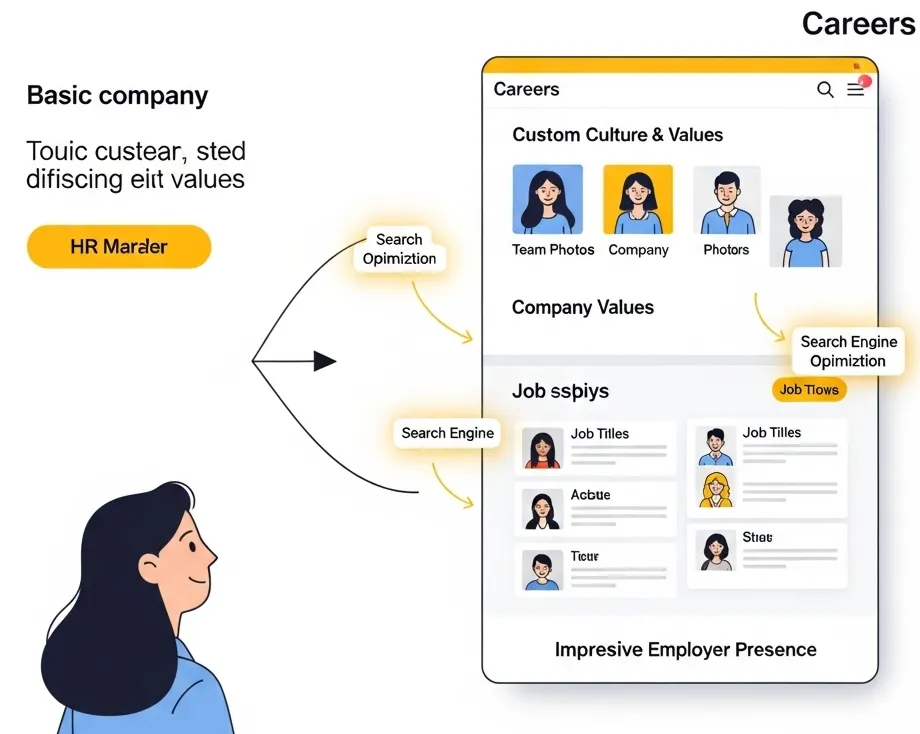
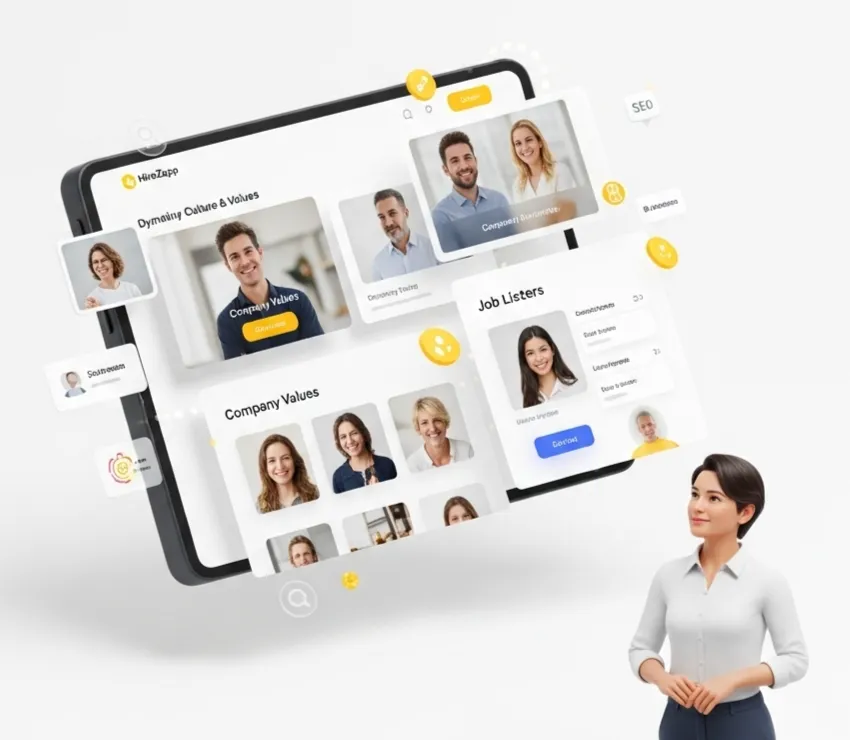
Build a beautiful careers page and send branded communications to create a great experience.
Common Mistakes That Keep Teams Stuck
Even with a good process, small missteps can slow down your hiring momentum. Watch out for these common hurdles.
- Hiring people who are just like you instead of those who complement your skills.
- Forgetting to sell your company’s vision during every interview.
- Moving too slowly and losing top candidates to faster-moving companies.
- Making a candidate talk to too many people in the interview process.
- Failing to check references before making an offer.
- Neglecting your employer branding startup presence until it is too late.
What a Hiring System Won’t Fix
An organized process is powerful, but it is not a silver bullet. Be honest about these foundational issues that no tool can solve.
- An unclear company mission or vision.
- A toxic or unsupportive internal team culture.
- An uncompetitive compensation and benefits package.
- A product that does not have a clear market fit.
Ready to build your hiring engine? HireZapp gives you the tools to go from founder-led hiring to a scalable, repeatable process. Sign up for a free plan today.
Scale Your Startup Hiring, Effortlessly.
Automate screening and scale hiring from founder to 50 employees with HireZapp's AI.
Frequently Asked Questions
1) What is the best startup hiring process?
The best process is simple, consistent, and respects the candidate's time. It typically includes a clear job description, a brief screening call, one or two focused interviews with the team, and a final conversation with a founder. The key is to standardize it for each role.
2) How does hiring for startups differ from corporate recruiting?
Hiring for startups focuses more on adaptability, potential, and culture-add, while corporate recruiting often prioritizes specific experience and existing skills. Startups need people who can thrive in ambiguity and build things from scratch.
3) What is the biggest challenge when scaling hiring startup teams?
The biggest challenge is maintaining quality and culture as you increase hiring speed. Without a defined process, founders become bottlenecks, and hiring decisions become inconsistent, which can quickly dilute the company culture.
4) What should I look for when hiring the first 50 employees?
For your first 50 employees, look for a mix of builders, specialists, and potential leaders. You need people who are not just skilled in their function but are also resilient, take ownership, and are passionate about solving the problem your startup addresses.
5) When do I need an ATS for startups?
You likely need an ATS for startups once you are hiring for more than two or three roles at a time, or when you can no longer manage your candidate pipeline in a spreadsheet. It helps you stay organized, collaborate with your team, and provide a better candidate experience.
6) How can I improve the candidate experience startup founders offer?
Improve the candidate experience startup founders provide by communicating clearly and quickly. Acknowledge applications, provide a timeline for the process, give feedback when possible, and make sure every interaction is professional and respectful of their time.
7) Why is employer branding startup success so important?
Strong employer branding helps your startup attract top talent without competing on salary alone. It communicates your mission, culture, and the unique opportunity of working with you, making people want to join your team over more established companies.