The Best Recruiting Tools for Ad Campaigns That Actually Convert Applicants
You are spending good money on job ads across platforms like Meta, LinkedIn, and Google. The clicks are coming in, but your pipeline is filled with unqualified leads, ghosted applicants, and a messy spreadsheet that makes tracking impossible. The cost adds up, but the hires do not. This is a common story for companies trying to scale hiring with paid advertising.
The problem is often not the ads themselves, but the broken process that happens after a candidate clicks. A clunky application, slow follow-ups, and manual screening cause your best applicants to drop off. The right tools fix this leak, turning your ad spend into a predictable hiring funnel.
Why Your Ad Spend Delivers Clicks, Not Candidates
Many recruiters find that their ad budget disappears without a corresponding increase in hires. The disconnect between a click and a quality application is often due to a few common friction points in the hiring process.
- Complicated Application Forms: Long, multi-page forms on sites that are not mobile-friendly cause high drop-off rates.
- Lack of Instant Follow-up: Candidates expect immediate confirmation, but manual processes mean they wait days for a response.
- No Centralized System: Managing applicants from different ad sources in email or spreadsheets leads to missed candidates and chaos.
- Inefficient Screening: Manually reviewing every application from a high-volume ad campaign is slow and prone to errors.
- Poor Candidate Experience: A confusing process and slow communication damage your employer brand and deter top talent.
Comparing Top Recruiting Tools for Ad Campaigns
Choosing the right platform is key to fixing your ad-to-hire funnel. Here is a look at how four popular tools approach the challenge, each with different strengths for different teams.
Joveo
Joveo is a leader among programmatic recruiting platforms. It focuses on optimizing where and when your job ads are shown across a vast network of job boards to get the most applications for your budget. It is an enterprise-level tool for managing ad distribution at scale.
- Ideal Use Case:
Large companies with significant, multi-channel ad budgets that need to automate ad placement and bidding. - Pros:
Powerful analytics for tracking ad performance and cost-per-application across channels. - Cons:
Can be complex and expensive for smaller teams. It focuses more on the top of the funnel (getting applicants) than the middle (converting them).
SmartRecruiters
SmartRecruiters is a full talent acquisition suite that includes a robust Applicant Tracking System (ATS), CRM capabilities, and recruitment marketing features. It is designed to be an all-in-one system for established recruiting teams.
- Ideal Use Case:
Mid-size to enterprise companies needing a single platform to manage the entire hiring lifecycle, from sourcing to onboarding. - Pros:
Comprehensive feature set that consolidates many recruiting functions into one place. - Cons:
Can feel bloated and expensive for teams that only need to solve the specific problem of converting ad-generated applicants efficiently.
Paradox (Olivia)
Paradox uses a conversational AI assistant named Olivia to engage candidates through chat. It automates tasks like screening, scheduling interviews, and answering candidate questions, aiming to create a fast, 24/7 conversational experience.
- Ideal Use Case:
High-volume hiring environments (like retail or hospitality) where speed and automated scheduling are critical. - Pros:
Excellent for reducing recruiter time spent on administrative tasks and providing instant candidate engagement. - Cons:
The primary focus is on chat automation, so it may not have the deep pipeline management or employer branding tools some teams need.
HireZapp
HireZapp is built specifically for founders and recruiters who need to convert applicants into hires faster, especially from paid ad campaigns. It combines a lightweight ATS with powerful candidate conversion tools, focusing on speed, branding, and efficiency from the first click to the final offer.
- Ideal Use Case:
Ad-spending companies struggling with drop-offs, manual screening, and a lack of a professional hiring system. - Pros:
Affordable, credit-based pricing means you pay for what you use. Its AI-powered tools for job descriptions, scoring, and follow-ups are designed to maximize conversion. - Cons:
As a more focused tool, it does not have the broad, enterprise-level features of a full talent acquisition suite like SmartRecruiters.
A 7-Step Playbook to Turn Ad Clicks into Hires
To truly optimize recruiting ad spend, you need a repeatable process. A well-structured funnel ensures that every dollar you spend has the best chance of resulting in a great hire.
- Create a Conversion-Focused Job Post.
Use an AI generator to write a clear, compelling job description and post it with your company branding. - Build a Simple, One-Page Job Form.
Ask only the essential questions to reduce friction and make it easy for candidates to apply on any device. - Automate the First Touchpoint.
Send an instant, branded confirmation email the moment a candidate applies to let them know their application was received. - Screen and Score Candidates Instantly.
Use a Job Match Score to automatically surface the most qualified applicants from a high volume of leads. - Engage Top Candidates Quickly.
Move the best applicants into your ATS pipeline and send personalized follow-ups to keep them engaged. - Run Simple Assessments.
Use short, relevant skills tests to validate qualifications before scheduling time-consuming interviews. - Track Your Funnel Metrics.
Monitor your cost-per-applicant and conversion rates to see what is working and where you can improve.
Where HireZapp Streamlines Your Ad-to-Hire Funnel
HireZapp is designed to execute the playbook above. It provides the essential tools to stop leaking applicants and start making hires from your ad campaigns. It's one of the most effective hiring tools for high volume applicants.
- AI Job Description and Form Generation
Creates compelling, branded job posts and simple application forms in minutes. - Job Match and Job Quality Scores
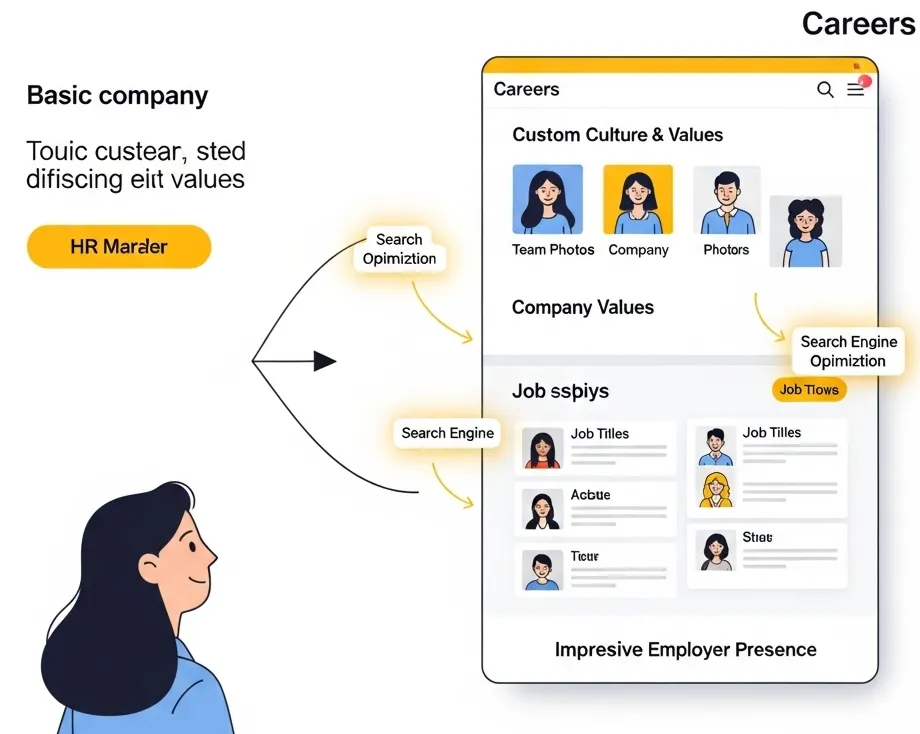
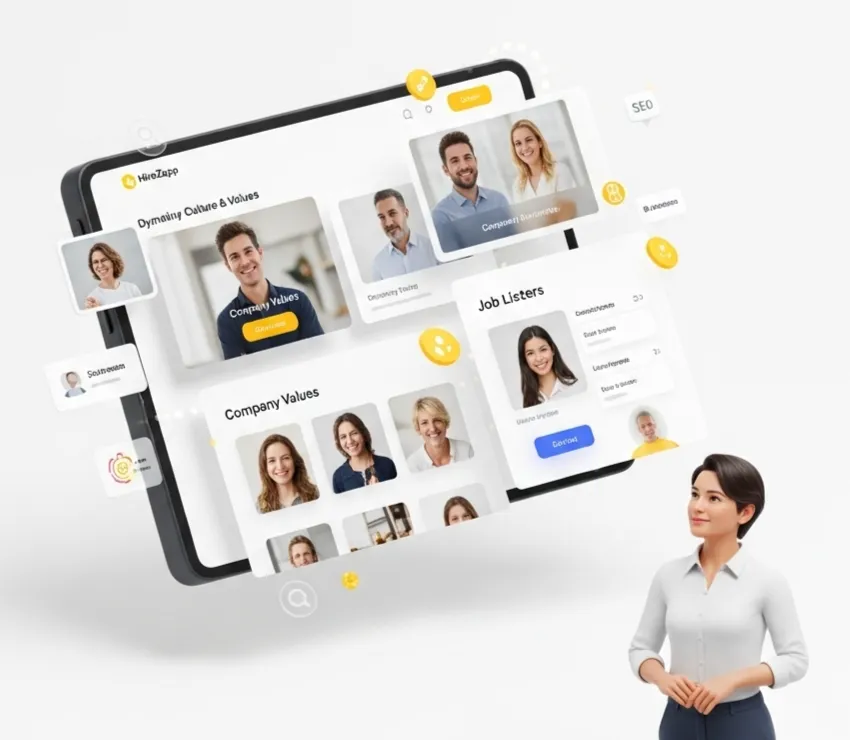
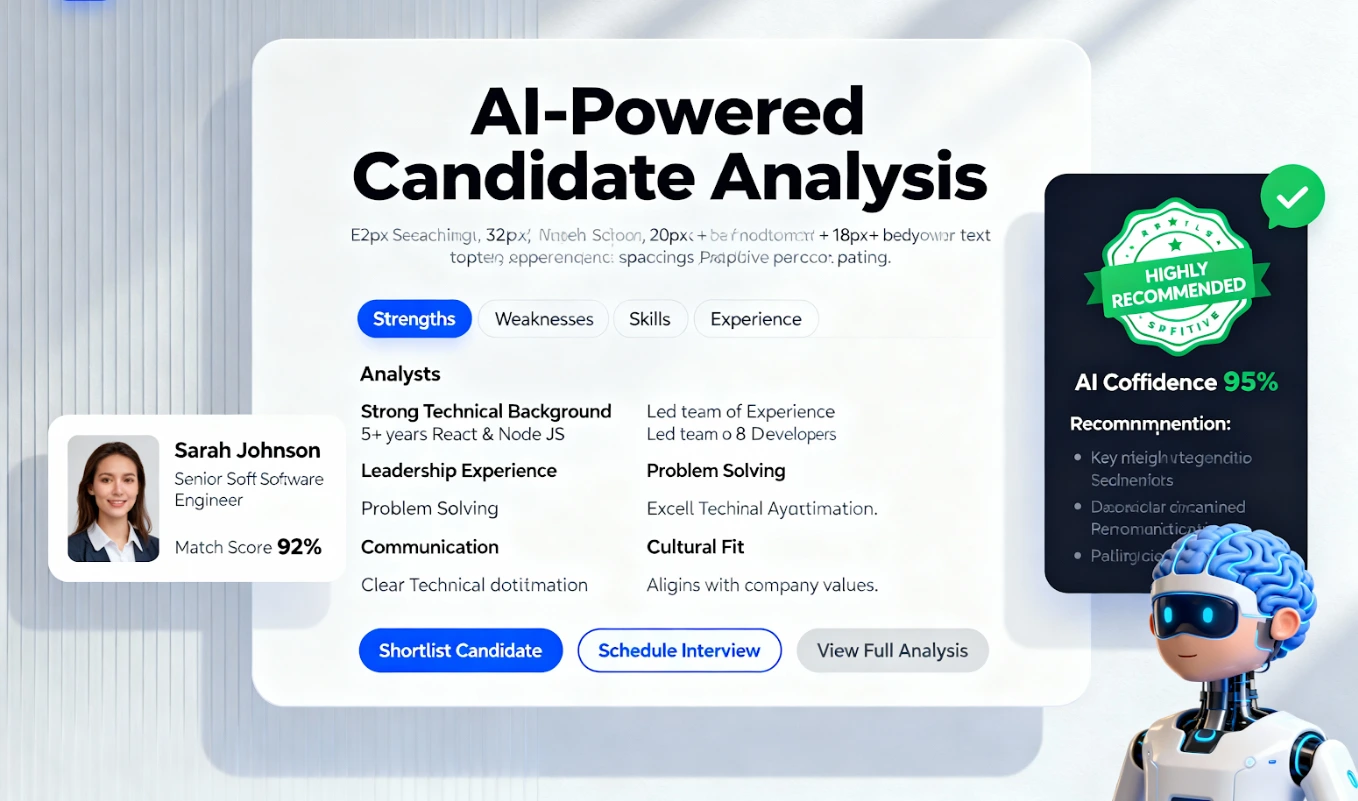
Automatically surfaces the best candidates so you can focus your time on the right people. - Branded Careers Page and Comms
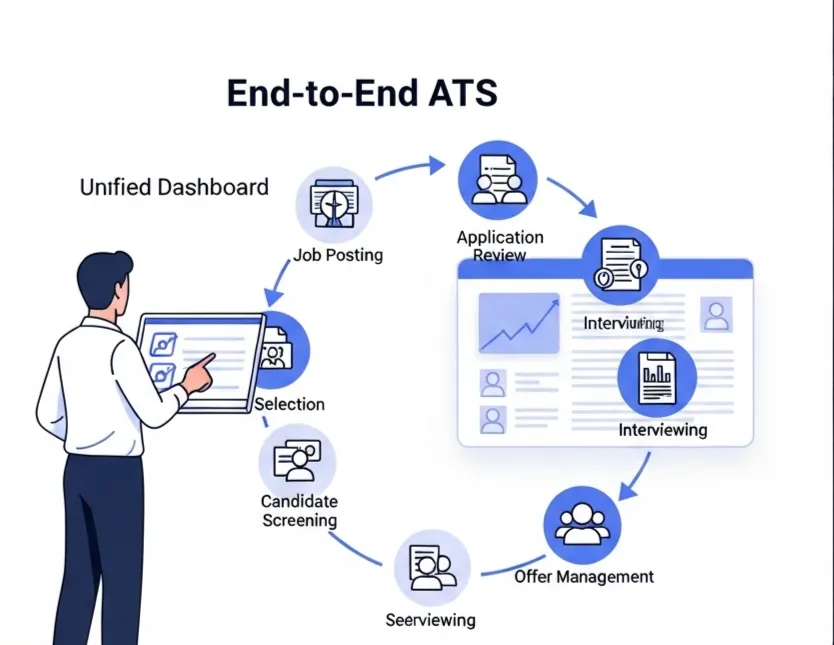
Ensures a professional and consistent candidate experience from the first click. - Integrated ATS and Automated Follow-ups
Manages your pipeline and keeps candidates warm without manual effort. - Credit-Based Pricing
Offers a flexible, affordable model that scales with your actual hiring needs, including a free plan to get started.
Common Mistakes That Waste Recruiting Ad Budgets
Even with the right tools, process mistakes can sabotage your results. Avoid these common pitfalls that keep teams stuck spending money without making hires.
- Forgetting about the mobile experience.
- Writing job descriptions that are too long or full of jargon.
- Failing to communicate with every applicant.
- Using a generic email address (like a Gmail account) for applications.
- Taking more than 48 hours to respond to qualified candidates.
- Neglecting to measure conversion rates at each stage of the funnel.
Recruiter reality: "I was getting hundreds of applicants from Facebook ads, but they were all going into a Google Form. It was impossible to tell who was good, and by the time I reached out, the best ones had already accepted other offers."
What a Tool Alone Won't Fix
Technology is a powerful enabler, but it cannot solve foundational issues. Be honest about whether these challenges are impacting your hiring success.
- An uncompetitive salary or benefits package.
- A negative reputation or poor employer brand in the market.
- A slow, multi-stage interview process that frustrates candidates.
- Unclear role requirements or a lack of alignment among the hiring team.
Ultimately, a tool is only as good as the strategy behind it. Fixing these core business issues is essential for any hiring technology to deliver its full value.
The goal is not just to get more applicants; it is to get the right hires. By fixing the leaky bucket between your ad click and your ATS, you can turn your ad spend into a powerful and predictable engine for growth.
Turn Ad Clicks Into Hires, Not Costs.
Maximize ad ROI. HireZapp’s AI automates screening, converting clicks into quality hires effortlessly.
Trusted by 200+ recruiters
|Backed by AWS & NVIDIA
Frequently Asked Questions
1) What is the best ATS for paid ads?
The best ATS for paid ads is one that focuses on conversion speed and candidate experience. Look for features like simple, mobile-friendly application forms, automated email follow-ups, and instant candidate scoring to handle high volumes of applicants effectively.
2) How can I reduce my cost-per-hire from ad campaigns?
Reduce your cost-per-hire by improving your conversion rate. Ensure the journey from ad click to application is seamless. Use screening questions and scoring to quickly identify top talent, reducing the time and resources spent on unqualified candidates.
3) What metrics should I track for recruitment advertising?
Key metrics include Cost-Per-Click (CPC), Cost-Per-Applicant (CPA), application completion rate, and the conversion rate from applicant to qualified lead. Ultimately, you want to track the final Cost-Per-Hire (CPH) for each ad source.
4) Is programmatic advertising necessary for recruiting?
Programmatic advertising is most effective for large enterprises that need to manage complex, high-spend campaigns across dozens of job boards. For most small to mid-size companies, direct advertising on platforms like LinkedIn or Meta combined with an efficient conversion tool is more practical.
5) How does recruitment automation for ads help?
Recruitment automation for ads handles the repetitive tasks that slow you down. It can automatically send confirmation emails, screen applicants based on keywords, score their qualifications, and send follow-ups, allowing you to focus on interviewing the best candidates.
6) Why are so many ad-generated applicants unresponsive?
Applicants often go quiet due to a slow response time from employers or a clunky application process that makes them lose interest. If they apply to multiple jobs, the first company to respond with a professional and engaging process usually wins.
7) How does applicant tracking for ad-generated leads work?
Effective applicant tracking for ad-generated leads involves a centralized system that captures every applicant from every ad source. It then provides tools to quickly filter, screen, score, and move candidates through a defined pipeline, ensuring no one gets lost.