Cost Per Hire: How to Calculate and Reduce It
Are you spending money on job ads only to get a flood of unqualified applicants? Many founders and recruiters feel trapped in a cycle of paying for posts, manually sifting through resumes, and losing great candidates because the process is too slow. This quiet, creeping expense is your cost per hire, and it can drain your budget without you even noticing.

Cost Per Hire: A Practical Guide to Calculate and Reduce It
Are you spending money on job ads only to get a flood of unqualified applicants? Many founders and recruiters feel trapped in a cycle of paying for posts, manually sifting through resumes, and losing great candidates because the process is too slow. This quiet, creeping expense is your cost per hire, and it can drain your budget without you even noticing.
Getting this number under control is not about spending less; it is about investing smarter. By understanding and lowering this metric, you can hire better talent faster and reinvest those savings into growing your team and your business.
Why Hiring Costs Quietly Spiral Out of Control
Before you can fix the problem, you need to know what is causing it. High hiring costs are rarely the result of one single issue. Instead, they are often caused by a combination of small inefficiencies that add up over time. Many recruiters find their budget disappears due to these common factors.
- Paying for the wrong audience.
Running generic job ads on crowded platforms often attracts quantity over quality, wasting your ad spend. - Wasting valuable team hours.
Manual screening, scheduling, and follow-ups consume dozens of hours from your recruiters and hiring managers that could be used for high-value tasks. - Using scattered, disconnected tools.
Juggling applicants from email, spreadsheets, and social media DMs leads to confusion, missed candidates, and duplicated work. - A slow and clunky hiring process.
Top candidates are often interviewing for multiple roles. If your process takes weeks, they will accept another offer before you can even schedule a final interview. - Lack of clear hiring data.
Without a system to track which sources bring you the best applicants, you are just guessing where to invest your budget.
Your Step-by-Step Plan to Lower Hiring Costs
Gaining control over your hiring spend is a systematic process. By following these steps, you can create a repeatable system that not only saves money but also improves the quality of your hires and boosts your recruitment ROI.
- First, calculate cost per hire.
Use this simple formula: Total Recruitment Costs / Total Number of Hires in a specific period. This gives you a baseline to improve upon. - Audit all your recruitment costs.
List every expense, both internal (salaries for time spent on hiring) and external (job board fees, software, agency fees). Knowing where the money goes is critical. - Automate job description and form creation.
Use AI-powered tools to create compelling, targeted job descriptions that attract better-fit candidates from the very beginning. - Centralize every applicant in one place.
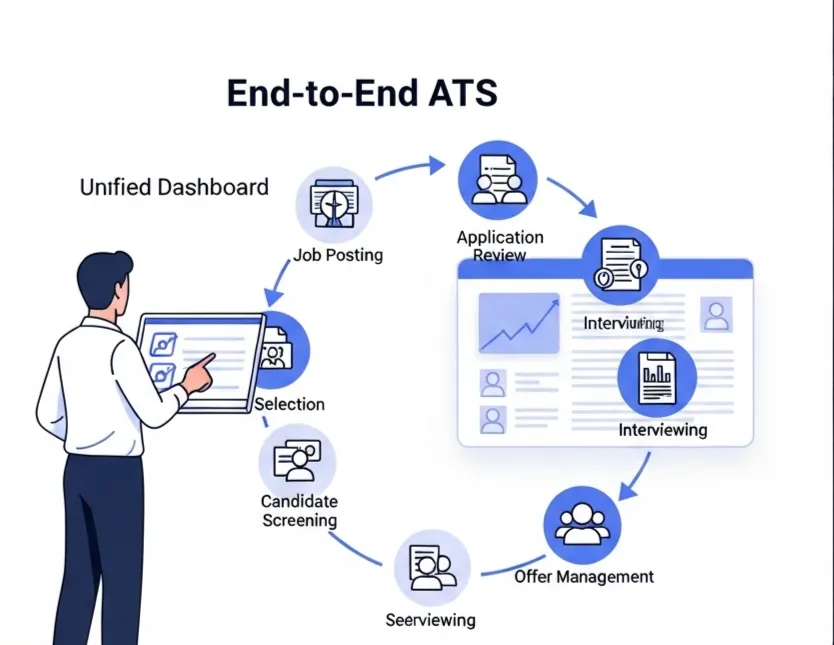
An Applicant Tracking System (ATS) eliminates the chaos of multiple inboxes and spreadsheets, saving countless hours of administrative work. - Use scoring to screen candidates instantly.
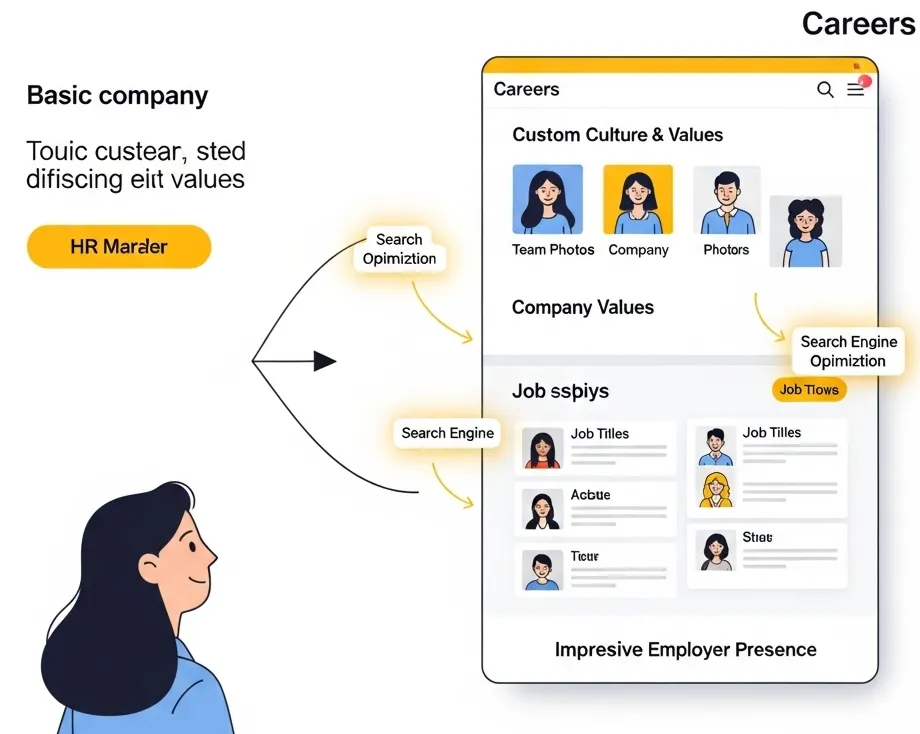
Automatically score applicants based on their skills and experience so your team can focus its time on the most promising individuals. - Build a branded careers page.
Attract high-quality, inbound candidates for free by showcasing your company culture and open roles on your own website. - Track your most important hiring metrics.
Identify which sourcing channels deliver the best candidates and double down on what works, which is key to how you can optimize hiring budget decisions.
A Simple Calculator for Your Hiring Budget
You do not need complex software to get a starting number. Use this simple checklist to add up your total hiring expenses for a given period (like a quarter or a year). This is the first step to understanding your real talent acquisition costs.
Cost Calculator Checklist
External Costs:
Job board advertising fees: $____
Recruitment agency fees: $____
Software and ATS subscriptions: $____
Background check services: $____
Assessment tool fees: $____
Internal Costs:
Recruiter and hiring manager salaries (pro-rated time spent): $____
Employee referral bonuses paid out: $____
B) Total Hires in Period: _________
How to Drastically Reduce Your Cost Per Hire with HireZapp
A modern hiring platform like HireZapp is designed to target the exact inefficiencies that drive up costs. By automating manual work and providing clear data, it helps you make smarter investments in your talent strategy.
- AI Job Description Generator
Attract more qualified applicants from the start, reducing ad spend on poor-fit candidates who clog your pipeline. - Centralized ATS Pipeline
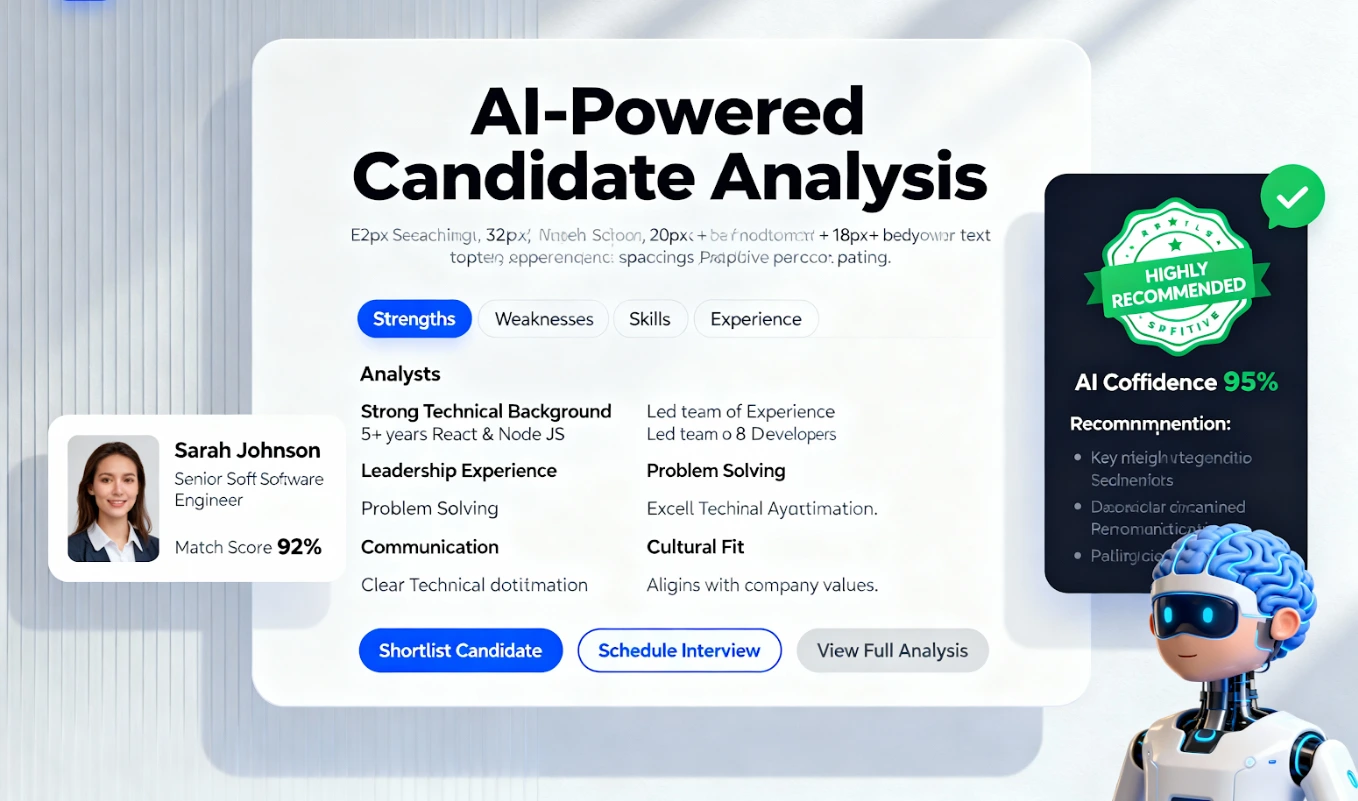
Stop wasting paid team hours tracking candidates in messy spreadsheets and disconnected DMs. - Job Match and Quality Scores
Instantly see your top candidates so your team spends its valuable time on interviews, not manual screening. - Branded Careers Page
Build your organic talent pool and reduce your long-term reliance on expensive, paid job boards. - Sourcing Playbooks
Find great candidates across different channels without paying expensive agency fees for every role.
Cut Hiring Costs with AI Automation.
HireZapp's AI automates screening, slashing your CPH and boosting recruitment ROI.
Common Mistakes That Inflate Your Hiring Budget
Many teams stay stuck with high hiring costs because of habits that are hard to break. Avoiding these common mistakes can have a huge impact on your budget and efficiency.
- Relying only on one or two expensive job boards for every role.
- Ignoring the hidden cost of your own team’s time spent on repetitive tasks.
- Using a slow, multi-week hiring process that causes top candidates to drop out.
- Failing to track where your best hires actually come from.
- Providing a poor or unresponsive candidate experience that damages your brand reputation.
- Forgetting to nurture past silver-medalist applicants for future open roles.
What Lowering CPH Won't Solve on Its Own
Optimizing your hiring process is powerful, but it is not a magic bullet. An efficient system can get the right people in the door, but it cannot fix deeper organizational issues. Lowering your CPH will not fix:
- A negative or toxic company culture.
- An uncompetitive salary or benefits package for your industry.
- A disorganized or ineffective new hire onboarding process.
- Poor alignment between what a hiring manager wants and what a recruiter is looking for.
Take Control of Your Hiring Spend
Understanding and lowering your cost per hire is the first step toward building a more strategic, efficient, and sustainable talent acquisition function. It transforms hiring from a costly operational burden into a smart investment in your company’s future. By focusing on automation and data, you can stop wasting money and start hiring the people who will truly drive your business forward.
Frequently Asked Questions
1) What is a good cost per hire?
There is no single "good" number, as it varies widely by industry, role seniority, and location. Instead of comparing to external benchmarks, a better goal is to focus on continuously reducing your own company's CPH over time.
2) How often should I calculate CPH?
It is best practice to calculate your cost per hire on a quarterly and annual basis. This allows you to track trends, measure the impact of new strategies, and make informed adjustments to your HR budget.
3) Does cost per hire include the new hire's salary?
No, the new hire's salary and benefits are not included in the CPH calculation. This metric focuses exclusively on the costs associated with finding, attracting, and bringing that person into the company.
4) What's the difference between cost per hire and cost per application?
Cost per hire measures the total expense to make one successful hire. Cost per application (CPA) is a more granular metric that measures how much you spend on advertising to get one single application, regardless of its quality.
5) How can a small business reduce cost per hire without a big budget?
Small businesses can leverage free or low-cost strategies like building an employee referral program, focusing on their employer brand through social media, and using an affordable, all-in-one ATS like HireZapp to automate manual work.
6) Are internal hiring costs more important than external costs?
Both are important, but internal costs, like the time your team spends on hiring, are often overlooked. This hidden expense can be even larger than external costs like ad spend, making automation and efficiency crucial.
7) How does an ATS help lower recruitment costs?
An Applicant Tracking System (ATS) reduces costs by automating time-consuming tasks like screening resumes, scheduling interviews, and sending follow-up emails. This frees up your team to focus on high-value activities and reduces the need for additional administrative staff.
8) Can improving employer branding really impact my HR budget?
Absolutely. A strong employer brand attracts more inbound, high-quality candidates through your careers page and word-of-mouth. This reduces your dependence on expensive paid advertising and recruitment agencies over the long term.