How to Build a Talent Pool and Nurture It Over 6–12 Months
Starting your search for a new hire from zero every single time is exhausting. You spend money on job ads, get flooded with applicants who aren't a fit, and waste weeks just to find a few good candidates. It feels like you're constantly fighting fires instead of building for the future.

How to Build a Talent Pool That Fills Roles Faster
Starting your search for a new hire from zero every single time is exhausting. You spend money on job ads, get flooded with applicants who aren't a fit, and waste weeks just to find a few good candidates. It feels like you're constantly fighting fires instead of building for the future.
A well-managed talent pool changes that. It's a private, pre-vetted community of people who are already interested in your company. When a role opens up, you have a list of warm leads ready to go, helping you convert applicants to hires much faster.
Why Most Talent Pools Go Stale
Many recruiters have tried to build a talent community, only to see it become a messy spreadsheet that nobody uses. The problem isn't the idea; it's the execution. The process often breaks down due to a few common issues.
Recruiter reality: “I have a folder with hundreds of good resumes, but I have no idea who is still available or what role they'd be good for. It feels easier to just post a new job ad.”
Here’s what typically causes the disconnect:
- Relying on scattered spreadsheets, folders, or email inboxes to track people.
- Having no simple way to tag or segment candidates by skills or interest level.
- Forgetting who you’ve talked to and why they were a good fit in the first place.
- Sending generic, impersonal email blasts that feel like spam.
- Lacking the time for consistent follow-ups to keep candidates engaged.
- Failing to get clear consent from candidates to keep their information on file.
A 6-Step Guide on How to Build a Talent Pool
Creating a strong pipeline doesn't have to be complicated. A systematic approach turns a random collection of contacts into a strategic asset. Follow this simple playbook to create a system that works for your future hiring needs.
- Identify Your Core Roles
Start by defining the 3-5 key positions you hire for most often. This focus prevents your pool from becoming too broad and unmanageable. - Source Past Applicants and Referrals
Your best source is often silver-medalist candidates from previous roles. This is the fastest way to build candidate database with high-quality, pre-vetted talent. - Segment Your Community
Group candidates using simple tags like 'Future Marketing Lead,' 'Senior Java Developer,' or 'Q4 Sales Hire.' This makes it easy to find the right people for the right job. - Create a Simple Nurture Cadence
Plan to connect with your talent pool every 6-8 weeks. A simple, consistent communication plan is the foundation of effective candidate nurturing. - Share Value, Not Just Jobs
Send company news, helpful industry articles, or updates on your team's projects. This builds a relationship so you're not just another recruiter asking for a resume. - Track Your Engagement
Monitor basic metrics like email open rates, replies, and how many people from your pool apply to new roles. This tells you if your communication is working.
Nurture Email Templates You Can Copy
Keeping candidates warm doesn't require long, complicated emails. Use these simple templates as a starting point for your outreach.
Template 1: The Initial “Keep in Touch” Message
Subject: Great speaking with you - {Your Company Name}
Hi {First Name},
Thanks again for your interest in the {Past Role Title} position. While we moved forward with another candidate, your background was impressive, and we'd love to stay in touch for future roles. Would you be open to me reaching out periodically with relevant opportunities or company news?
Template 2: The 3-Month Check-In
Subject: A quick update from {Your Company Name}
Hi {First Name},
Hope you're having a great week. I wanted to share a quick update on what our team has been working on here at {Your Company Name} - we just launched {Link to a blog post or news}. We don't have a specific role for you today, but I'll be sure to reach out when we do.
How to Automate Your Talent Pipeline Management
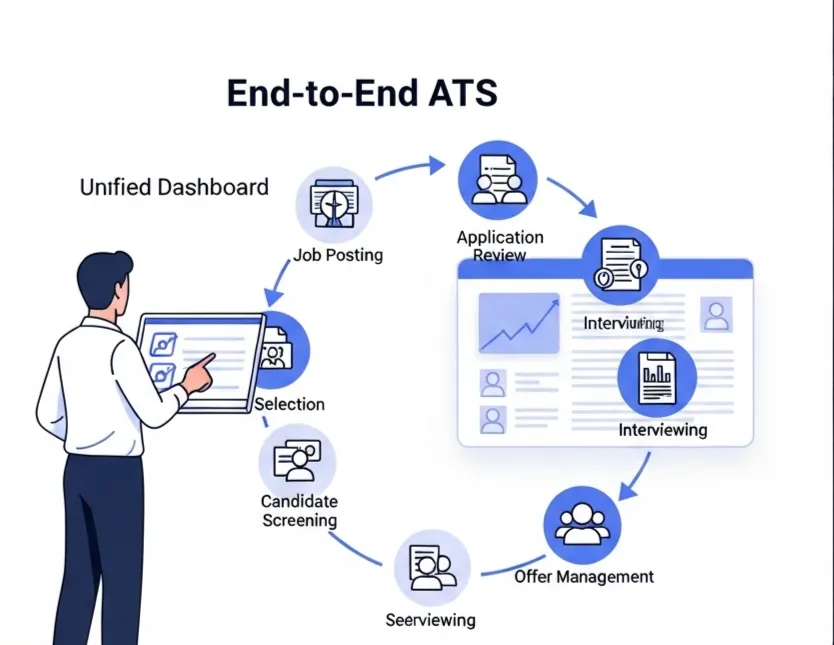
Manually tracking and nurturing hundreds of candidates is nearly impossible as you scale. This is where a simple, modern ATS can handle the heavy lifting and ensure your recruitment talent pool stays active and organized.
- ATS Pipeline
Keeps every candidate from every source organized in one place, so you never lose track of great talent. - Job Match Score
Instantly scans your entire talent pool to surface the best-fit candidates for any new role you create. - Automated Follow-ups
Handles your automated candidate follow-up with simple email sequences, so you can nurture relationships without the manual work. - Candidate Tags and Filters
Lets you segment your pool with custom tags, making it easy to find candidates with specific skills or experience. - Branded Communications
Ensures every email and message is professional and reflects your employer brand, building trust with candidates over time.
Common Mistakes That Weaken Your Talent Pool Strategy
A great talent pool strategy is about more than just collecting resumes. Avoiding these common mistakes will ensure your efforts lead to actual hires.
- Forgetting to get clear consent to keep candidates' information.
- Only adding people who formally applied for a job.
- Never cleaning or updating the database to remove disengaged contacts.
- Sending only “we're hiring” announcements instead of valuable content.
- Failing to add personal notes about why a candidate was a good fit.
- Waiting until you have an urgent role to start engaging your pool.
What a Talent Pool Alone Can’t Fix
While powerful, a talent pool is just one part of a great recruiting process. It's important to be realistic about what it can and cannot solve. Building a database of candidates won't fix foundational issues such as:
- A negative or poorly defined company culture.
- Non-competitive compensation and benefits packages.
- A disorganized or lengthy interview process that frustrates candidates.
- Unclear job descriptions that don't attract the right people.
These core problems must be addressed for any hiring tool or strategy, including passive candidate engagement, to be successful.
Cut time-to-hire in half
Reduce manual work and focus on candidates who actually fit.
Frequently Asked Questions
1) What is a recruitment talent pool?
A recruitment talent pool is a database of candidates who have expressed interest in your company or have been identified as potential future hires. It includes past applicants, sourced candidates, referrals, and others who are not actively applying for a current open role but are a good fit for the organization.
2) How long does it take to see results from a talent pool?
You can see initial results quickly by sourcing from past applicants for your next open role. However, building a robust, engaged pool that consistently generates hires typically takes 3 to 6 months of consistent sourcing and nurturing.
3) What's the difference between a talent pool and a talent pipeline?
A talent pool is a broad database of potential candidates who could be a fit for various future roles. A talent pipeline is a more focused group of candidates who are actively being engaged and qualified for a specific, current, or near-future job opening.
4) How do you measure the success of a talent pool?
Key metrics include the percentage of new hires sourced from the talent pool, the time-to-hire for pool candidates versus external candidates, and candidate engagement rates (email opens, clicks, and replies).
5) What tools do I need to manage a talent pool?
While a spreadsheet can work for a very small list, an Applicant Tracking System (ATS) is essential for effectively managing, segmenting, and communicating with a growing talent pool. An ATS like HireZapp helps automate the entire process.
6) How often should I contact candidates in my talent pool?
A good cadence is every 6-8 weeks. This is frequent enough to stay top-of-mind without overwhelming candidates. The communication should provide value, not just ask if they are looking for a job.
7) How can I engage passive candidates effectively?
Engage passive candidates by sharing content that is relevant to their careers, such as industry insights, company milestones, or professional development resources. Personalize your outreach and focus on building a long-term relationship, not just filling an immediate opening.
8) What are the first steps to build a candidate database?
The first step is to centralize your contacts. Gather promising resumes from past job applications, referrals, and your professional network. Next, import them into a single system, like an ATS, and begin tagging them by skill set and potential role fit.