How to Use AI to Benchmark Your Job Against Market Standards
You spent hours writing the perfect job description, posted it everywhere, and waited. The result? A flood of unqualified applicants, or worse, complete silence. It’s a common frustration for founders and recruiters trying to hire in a competitive market.

How to Use AI to Benchmark Your Job Against Market Standards
You spent hours writing the perfect job description, posted it everywhere, and waited. The result? A flood of unqualified applicants, or worse, complete silence. It’s a common frustration for founders and recruiters trying to hire in a competitive market.
The problem often isn't your company or the role itself; it's a disconnect between your job post and current job description market standards. Using AI to analyze your job description gives you the talent market insights needed to connect with the right candidates from day one.
Why Your Job Posts Get the Wrong Applicants
When a great role fails to attract great people, the job description is often the culprit. Many teams find their posts fall short for a few common reasons:
- They are filled with internal company jargon that confuses external candidates.
- The list of required skills is a 'wishlist' instead of what is truly necessary.
- Compensation and benefits information is either vague or completely missing.
- The company description sounds generic and fails to show your unique culture.
- Key responsibilities are unclear, leaving candidates unsure about the daily work.
- The job title doesn't match what candidates are actually searching for online.
A Step-by-Step Guide to AI Job Benchmarking
Shifting from guesswork to a data-driven approach is simpler than you think. This process helps you perform a quick and effective AI job description analysis to see how your role stacks up.
- Start with your existing job description draft.
Use the JD you would normally post as your baseline. - Choose a tool with built-in benchmarking.
Platforms like HireZapp provide this analysis automatically. - Input your core role details.
This includes the job title, seniority level, and location. - Let the AI compare your JD to market data.
The system analyzes thousands of similar, successful job posts. - Review the AI-generated feedback or score.
Look for a clear summary of strengths and weaknesses. - Identify the most critical gaps.
Pay close attention to salary ranges, required skills, and benefits. - Implement the suggested improvements.
Update your draft with the AI's recommendations. - Check your new score.
Confirm that your changes have improved the job post's quality.
From Vague to Valuable: A JD Makeover
Seeing the difference makes it real. A few small, AI-guided changes can transform a job post from confusing to compelling, helping you create truly competitive job descriptions.
Recruiter reality: “I used to just copy and paste old job descriptions. I had no idea our salary expectations were 20% below the market rate for this city until an AI tool showed me.”
Before AI Benchmarking:
We're looking for a rockstar Marketing Ninja to join our fast-paced team. You will be responsible for a variety of marketing tasks and driving growth. Must be a self-starter with a can-do attitude. Knowledge of marketing software is a plus.
After AI Benchmarking:
We are hiring a Digital Marketing Specialist to manage our paid search and social media campaigns. In this role, you will be responsible for a monthly ad budget of $15,000, creating weekly performance reports, and collaborating with the sales team. Key requirements include 2+ years of experience with Google Ads and Meta Ads. The salary range for this position is $65,000 - $75,000.
Post-Benchmark Review Checklist
After the AI gives you a report, use this checklist for your final human review:
- Is the job title clear and standard?
- Is the salary range listed and competitive for the location?
- Are the top 3-5 responsibilities listed clearly?
- Are the 'must-have' skills separated from 'nice-to-have' skills?
- Does the JD reflect our company's true culture and values?
- Is there a clear call to action on how to apply?
How HireZapp Makes Benchmarking Effortless
Manually gathering market data is slow and often inaccurate. HireZapp builds AI-driven benchmarking directly into your hiring workflow so you can post with confidence every time.
- Job Quality Score
Get an instant, data-backed score on every job description you create, with specific suggestions for improvement. - AI JD Generation
Create a market-ready, optimized job description from just a job title, ensuring you start from a strong baseline. - Sourcing Playbooks
Receive guidance on the best channels to post your newly optimized job description to reach the right audience. - Branded Careers Page
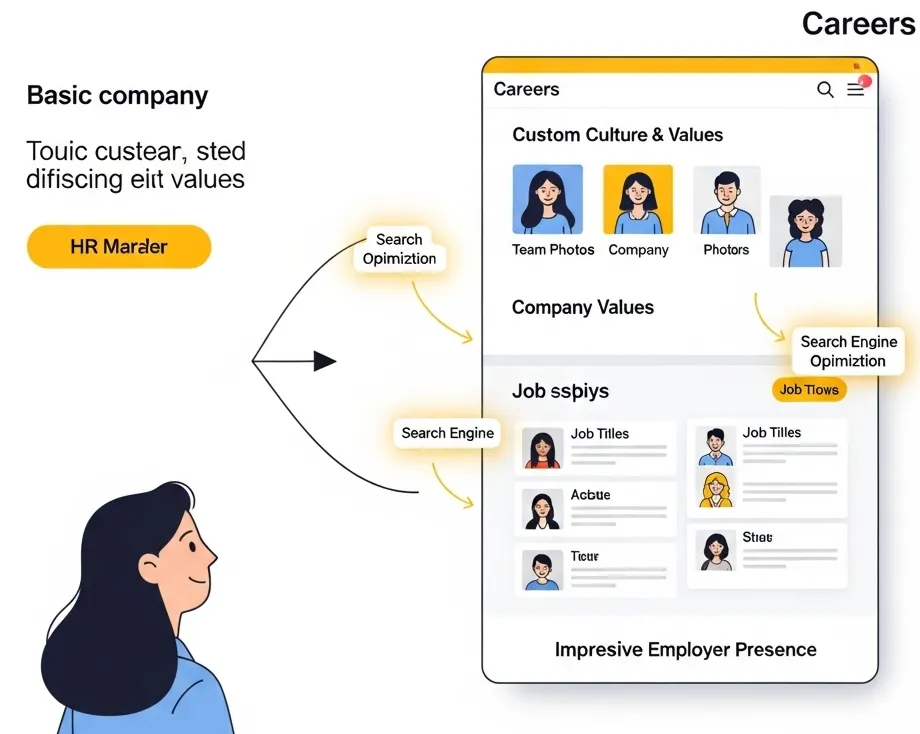
Ensure the quality of your job post is matched by a professional and compelling careers page experience for candidates.
Common Pitfalls That Waste Time and Money
Using AI is a powerful advantage, but only if you avoid these common mistakes:
- Ignoring location-specific data for remote or hybrid roles.
- Accepting every AI suggestion without a final human review.
- Forgetting to re-benchmark important roles every 6-12 months.
- Focusing only on salary and ignoring benefits, flexibility, or growth opportunities.
- Treating benchmarking as a one-time fix instead of a continuous improvement process.
What Benchmarking Alone Won't Fix
An optimized job description is the first step, but it is not a magic bullet. It is important to remember that even the best job description in the world cannot solve deeper organizational issues.
- A slow or disorganized interview process.
- A toxic or unsupportive company culture.
- A lack of clear opportunities for career growth.
- Poor communication with candidates after they apply.
Start Attracting the Right Talent
Stop guessing what candidates want to see. Using AI to benchmark your jobs against the market helps you write clearer, more competitive descriptions that attract qualified applicants. When you optimize job descriptions with real data, you spend less time sifting through resumes and more time talking to future hires.
Ready to see how your jobs stack up? Try HireZapp to get your free Job Quality Score today.
Elevate Your JDs: AI Market Benchmarking
HireZapp's AI instantly benchmarks your job descriptions against market standards, attracting top talent faster.
Frequently Asked Questions
1) What is AI job benchmarking?
AI job benchmarking is the process of using artificial intelligence to analyze your job description and compare it against thousands of similar roles in the market. It provides data-driven feedback on elements like salary, skills, responsibilities, and benefits to help you make your job post more competitive.
2) How does an AI determine 'market standards' for a job?
An AI determines market standards by analyzing vast amounts of public and private recruitment market data. This includes successful job postings, salary surveys, skills trends, and hiring patterns for specific roles, industries, and locations.
3) Can AI help write more inclusive job descriptions?
Yes. Many AI tools are trained to identify and flag biased or non-inclusive language, such as gender-coded words or overly restrictive requirements. They can suggest neutral alternatives to help you attract a more diverse pool of candidates.
4) Is a high job quality score a guarantee for finding good candidates?
A high job quality score significantly increases your chances of attracting the right applicants, but it is not a guarantee. It ensures your job post is clear, competitive, and appealing. The rest of the hiring process, from interviews to your company culture, also plays a critical role.
5) How often should I benchmark my key job descriptions?
For roles you hire for frequently, it is a good practice to review and re-benchmark them at least every six months. For all other roles, an annual review is sufficient to keep up with changes in the talent market.
6) What is the biggest benefit of using AI in recruiting?
The biggest benefit of using AI in recruiting is its ability to replace manual guesswork with data-driven decisions. This saves recruiters time, reduces the cost per hire, and improves the quality of candidates by focusing efforts on what truly matters to them.
7) Does AI job description analysis work for highly specialized or niche roles?
Yes, it can be particularly valuable for niche roles. While the data set may be smaller, an AI can still identify patterns and standards from specialized job boards and communities that a human recruiter might miss, helping you craft a more precise and effective job post.