How to Design Skills-Based Job Descriptions
Are you tired of sifting through hundreds of resumes that look good on paper but don't match the actual needs of the role? Many founders and recruiters face the same challenge: applicant overload, slow screening, and candidates who drop off because the process is confusing. The problem often starts with the job description itself.

How to Write Skills-Based Job Descriptions That Attract Top Talent
Are you tired of sifting through hundreds of resumes that look good on paper but don't match the actual needs of the role? Many founders and recruiters face the same challenge: applicant overload, slow screening, and candidates who drop off because the process is confusing. The problem often starts with the job description itself.
Switching to skills-based hiring is the key to connecting with qualified candidates faster. By focusing on what a person can do, not just their past titles or degrees, you open the door to a wider, more capable talent pool. This guide will show you exactly how to do it.
Why Traditional Job Descriptions Are Holding You Back
The old way of writing job descriptions creates unnecessary roadblocks. Many recruiters notice that these documents are often the source of hiring friction, leading to common problems that slow down the entire process.
- They focus on credentials, not capabilities.
Requiring a specific degree or years of experience can disqualify great candidates who learned through different paths. - They use vague and subjective language.
Phrases like “team player” or “go-getter” mean different things to different people and are hard to measure. - They introduce unconscious bias.
Certain language can unintentionally discourage applicants from diverse backgrounds, limiting your talent pool. - They create a poor candidate experience.
Applicants struggle to understand if they are truly a good fit, leading to unqualified applications or high drop-off rates. - They complicate the skills vs experience job description debate.
Focusing too heavily on a rigid number of years in a role ignores the quality and relevance of that experience.
A Step-by-Step Guide to Crafting Better JDs
Here is a simple, repeatable process for creating job descriptions that focus on the skills that truly matter for success in a role.
- Deconstruct the Role's Core Functions.
Forget the title for a moment and list the 3-5 key outcomes this person must achieve in their first year. - Identify Must-Have vs. Nice-to-Have Skills.
For each outcome, list the specific technical and soft skills required. Separate what is absolutely essential from what can be learned on the job. - Define Clear Proficiency Levels.
Instead of saying “proficient in Excel,” describe what they need to do, like “build pivot tables and use VLOOKUP to analyze sales data.” - Write the Responsibilities as Actions.
Start each bullet point with a strong verb that describes a task, such as “Develop,” “Analyze,” “Manage,” or “Create.” - Structure the Job Description Logically.
Organize the JD with clear sections: Role Summary, Key Responsibilities, Required Skills, and Preferred Skills. - Remove Biased or Unnecessary Jargon.
Review your text to eliminate corporate-speak and gender-coded words to attract a wider range of applicants. This is key to helping you reduce bias job descriptions. - Set Clear Success Metrics.
Briefly mention how performance will be measured. This shows candidates you have a clear vision for the role.
From Vague to Valuable: A JD Makeover
Seeing the difference is the best way to understand the impact. Here is a simple before-and-after example for a Project Manager role.
Recruiter reality: “The ‘before’ version gets us a lot of applicants who managed a calendar. The ‘after’ version gets us people who have actually managed a budget and a team.”
<b>Before: Traditional JD Snippet</b>
Seeking a highly motivated Project Manager with 5+ years of experience in a fast-paced environment. Must be a team player with excellent communication skills and a proven track record of success. Bachelor's Degree required.
<b>After: Skills-Based JD Snippet</b>
We are looking for a Project Manager to guide client-facing projects from kickoff to completion. You will succeed in this role if you have demonstrable skills in:
- Budget Management:
Experience creating, managing, and reporting on project budgets up to $50,000. - Agile Methodologies:
Ability to lead daily stand-ups, manage sprints, and use tools like Jira or Asana. - Stakeholder Communication:
Skills in presenting project updates to both technical and non-technical leaders.
Where HireZapp Fits In
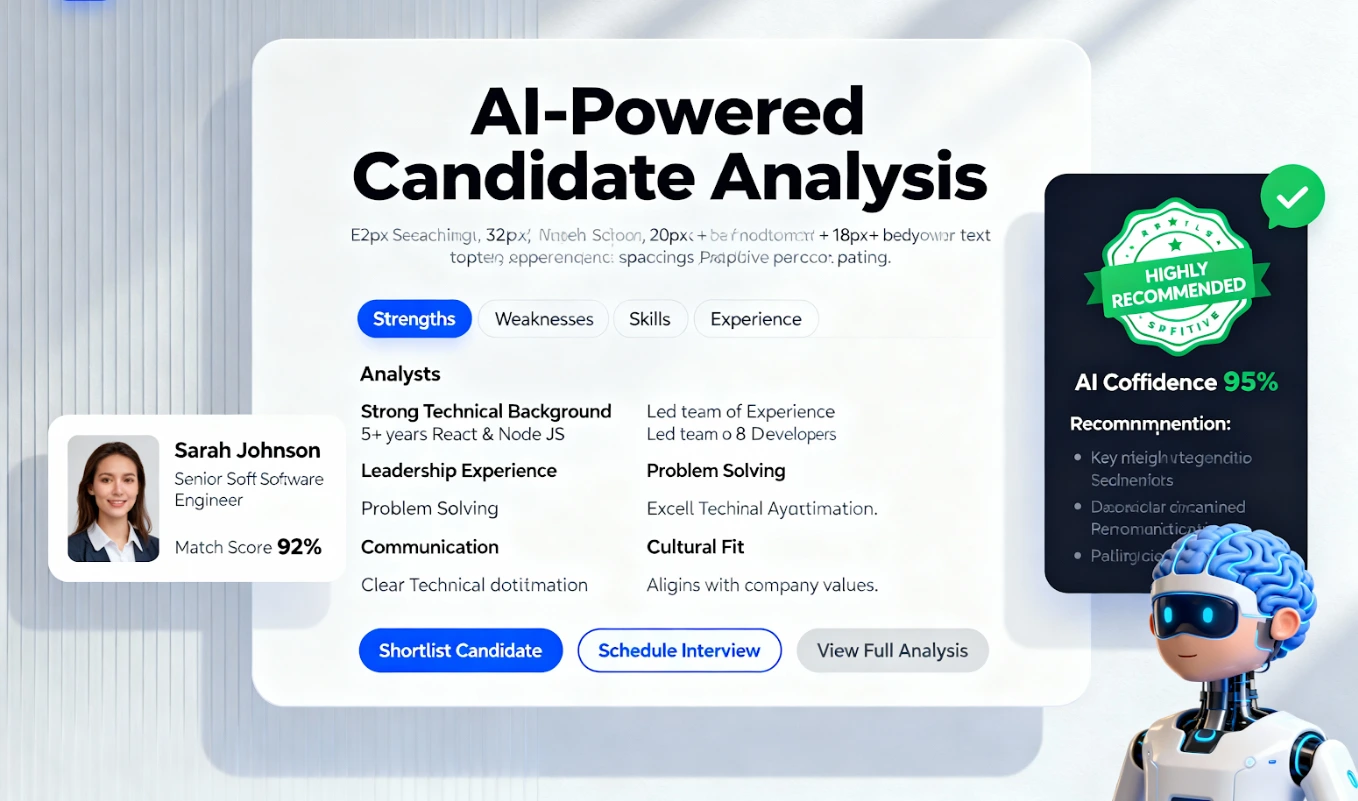
Manually creating perfect skills-based job descriptions for every role is time-consuming. HireZapp automates the heavy lifting and connects your JD directly to your hiring pipeline, ensuring consistency from start to finish. An effective ai job description generator skills and a clear process make all the difference.
- AI Job Description Generation
Instantly create a skills-focused first draft based on a job title, saving you hours of writing time. - Job Quality Score
Get instant feedback on your JD to ensure it’s clear, unbiased, and structured to attract top talent. - Multi-Channel Screening
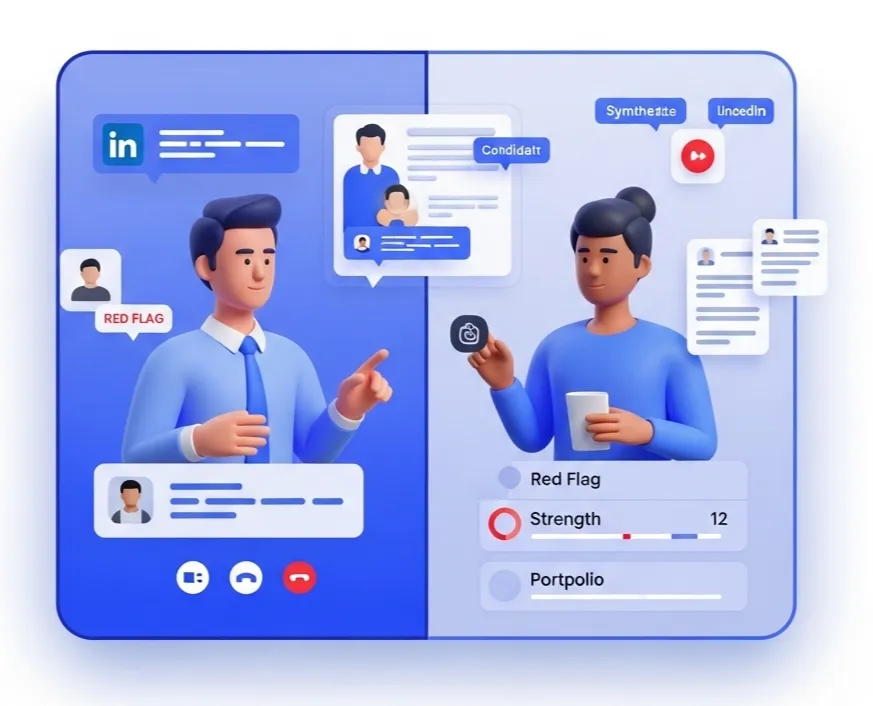
Automatically review applicant profiles on platforms like LinkedIn and GitHub to verify the skills listed on their resume. - Custom Assessments
Build simple skills tests or screening questions directly into your application form to qualify candidates from the start. - Automated Follow-ups
Keep candidates engaged with branded, automated communications at every stage of the pipeline.
Craft Bias-Free JDs, Instantly.
Leverage AI to generate high-quality, skills-based job descriptions, reduce bias, and attract top talent faster.
Common Mistakes That Keep Teams Stuck
Switching to a new process can come with challenges. Avoid these common pitfalls to ensure your transition to skills-based hiring is a success.
- Listing too many “required” skills, making the role seem impossible.
- Forgetting to train the interview team on how to assess for skills, not just talk about experience.
- Using the same generic skills list for every job description.
- Failing to get input from the hiring manager or team members who understand the role best.
- Neglecting to update your interview questions to match the skills outlined in the JD.
- Thinking the job description is the only thing that needs to change.
What This Process Won't Fix
While a skills-based approach dramatically improves hiring outcomes, it is not a magic bullet. This process cannot solve deeper organizational issues. Be aware that it will not fix:
- A non-competitive salary or benefits package.
- A negative company culture or poor employer reputation.
- A broken interview process that is slow, disorganized, or disrespectful to candidates.
- A lack of internal alignment on what the role truly requires.
Frequently Asked Questions
1) What are skills-based job descriptions?
They are job postings that prioritize the specific abilities and competencies a candidate needs to succeed in a role, rather than focusing primarily on their educational background, previous job titles, or years of experience.
2) How is this different from competency-based job descriptions?
The terms are often used interchangeably and are very similar. Both focus on capabilities, but skills-based descriptions tend to emphasize practical, measurable abilities (like “code in Python”), while competency-based job descriptions might also include broader behaviors and knowledge areas (like “strategic thinking”).
3) How do you measure the success of this change?
Key metrics include an increase in qualified applicants, a lower cost-per-hire, a faster time-to-fill, and improved retention rates for new hires. You can also track the diversity of your applicant pool.
4) Can this really reduce hiring bias?
Yes. By removing subjective requirements like specific degrees from elite schools or arbitrary years of experience, you focus evaluators on objective criteria. This helps create a more level playing field for all qualified candidates.
5) What are the main challenges when switching to skills-based hiring?
The biggest challenges are getting buy-in from hiring managers accustomed to old methods, taking the time to properly analyze the role's required skills, and training interviewers to assess for those specific skills effectively.
6) How long does it take to write a good skills-based JD?
Your first one might take an hour as you learn the process. With a tool like HireZapp and a clear template, you can generate and refine a high-quality, skills-based JD in under 15 minutes.
7) Is focusing on skills better than focusing on years of experience?
For most roles, yes. Experience is still valuable context, but focusing on skills is more predictive of future performance. Someone with three years of intense, relevant experience may be far more skilled than someone with ten years in a less demanding role.