Predictive Skills Assessment: Using AI to Identify High Performers
Sorting through hundreds of resumes is slow and often misleading. You spend weeks searching for the right candidate, only to find that their on-paper experience does not match their real-world skills. Many great applicants get lost in the noise of keyword-stuffing or drop off because of slow, confusing processes.

Predictive Skills Assessment: How AI Helps You Identify High Performers
Sorting through hundreds of resumes is slow and often misleading. You spend weeks searching for the right candidate, only to find that their on-paper experience does not match their real-world skills. Many great applicants get lost in the noise of keyword-stuffing or drop off because of slow, confusing processes.
The goal is to move beyond resumes and predict future success. Using a predictive skills assessment AI can help you make objective, data-driven decisions. This approach focuses on what a candidate can do, not just what they have done, making the entire process of AI hiring high performers faster and more accurate.
Why Traditional Hiring Misses the Mark
Many recruiters find themselves stuck in a cycle of screening, interviewing, and still not finding the right fit. The problem often lies in the old methods we use to find people. These outdated habits can make it hard to identify top talent AI could otherwise surface.
Recruiter reality: "I feel like I'm guessing half the time. A great resume can come from a poor performer, and a hidden gem might have a resume that our system just ignores. It's frustrating."
Here are the common issues holding your hiring back:
- Relying on resume keywords. Many qualified candidates are missed because their resume does not use the exact jargon you expect.
- Unconscious bias in screening. It is human nature to favor candidates with familiar backgrounds, names, or schools, which can lead to overlooking diverse talent.
- Inconsistent interview questions. When every interviewer asks different questions, it is impossible to compare candidates fairly.
- Focusing too much on past titles. A fancy job title at one company does not guarantee a candidate has the skills needed for your role.
- Manual overload leads to mistakes. Juggling spreadsheets, emails, and DMs means good candidates fall through the cracks.
Your Guide to Predictive Skills Assessment AI
Implementing a new hiring method does not have to be complicated. By following a clear process, you can build a system that consistently finds and converts the best candidates. This approach helps create a fair and repeatable hiring engine.
- Define what success looks like.
Before you assess anyone, clearly list the top 3-5 skills and outcomes required for the role, not just a list of qualifications. - Choose relevant skills to test.
Select assessments that measure real-world abilities, like problem-solving, coding challenges, or communication style, instead of simple trivia. - Select an unbiased AI platform.
Ensure the tool you choose is designed to reduce bias and focuses purely on skill-based data to make its recommendations. - Integrate assessments into your workflow early.
Use an assessment as a top-of-funnel filter to save time, right after someone applies through your careers page or job form. - Communicate the process to candidates.
Let applicants know why you use assessments and what to expect. Transparency builds trust and improves the candidate experience. - Analyze data with human oversight.
Use assessment scores as a strong signal, but always combine them with other factors like interviews and portfolio reviews. - Track your hiring quality.
Measure how many candidates who scored well in assessments become top performers after 90 days on the job.
Practical Tools to Get Started
You can apply these ideas right away. Here are a couple of templates to help you structure your thinking around skills-based hiring for a hypothetical role.
Hiring Scorecard Checklist: Product Manager
- Problem Definition
Can the candidate clearly explain a user problem and its business impact? - Data Analysis
Are they comfortable interpreting user data to make decisions? - Prioritization Skills
How do they justify choosing one feature over another? - Cross-functional Communication
Can they clearly articulate a plan to both engineers and marketing teams? - User Empathy
Do they show a genuine understanding of the end user's perspective?
Screening Questions for an Automated Form
- Tell us about a time you had to solve a difficult problem with limited information. What was your process?
- How would you explain a complex technical concept to a non-technical team member?
- Describe a project you worked on that failed. What did you learn from the experience?
- What is your preferred way to receive and give feedback to colleagues?
- When you start a new project, what are the first three things you do?
How HireZapp Automates Your Assessment Workflow
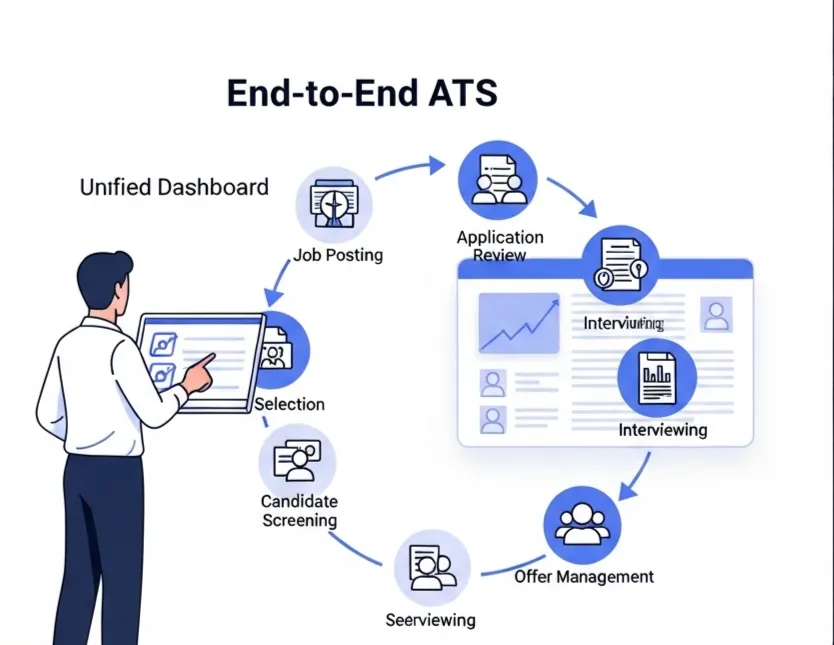
Moving to a skills-first approach requires the right tools to keep things moving smoothly. An integrated platform like HireZapp connects the dots from application to offer, making your data-driven hiring process easy to manage. This is where a modern HR tech predictive assessment system shines.
- AI Job Description Generator
This helps you clearly define the core skills and outcomes for each role, laying the foundation for a great assessment. - Assessments and ATS Pipeline
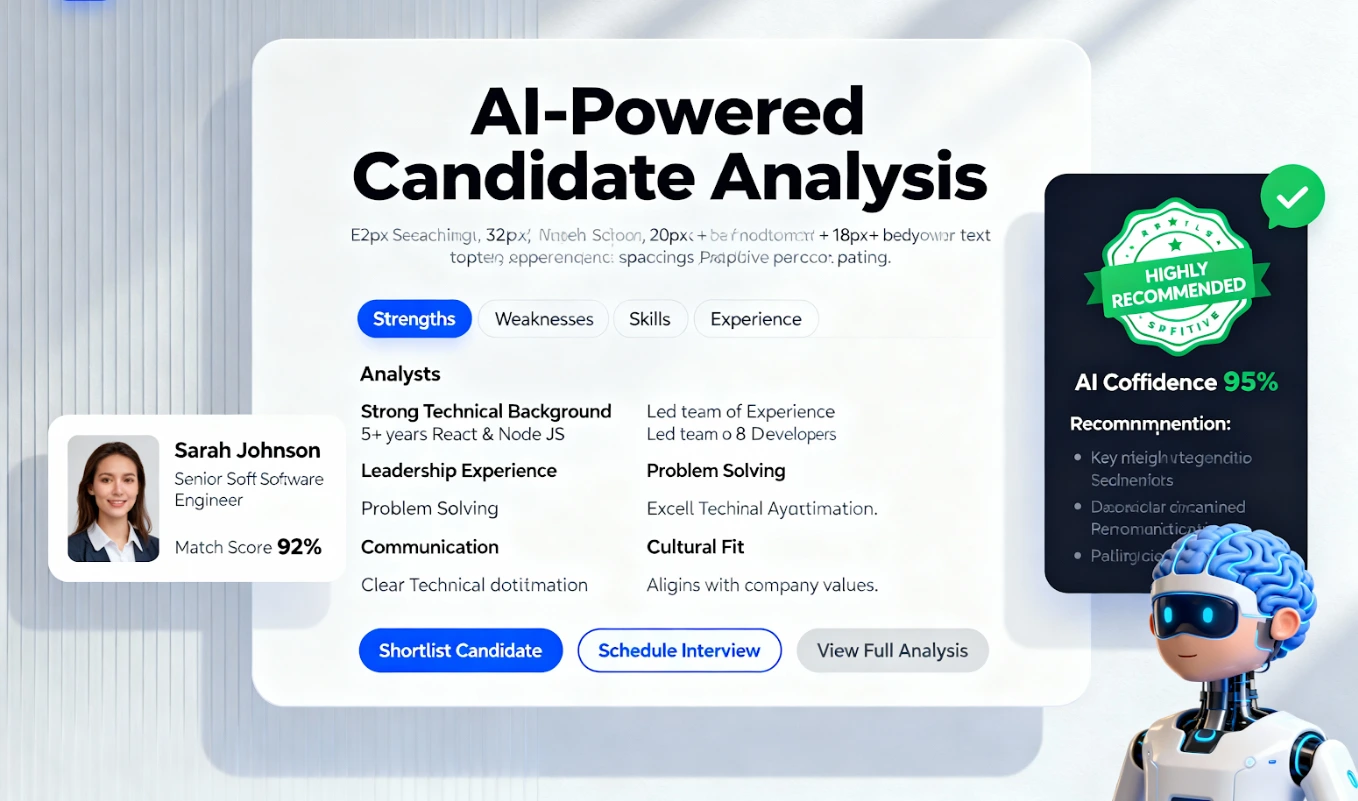
You can build custom assessments directly into your hiring workflow, automatically moving candidates forward based on their performance. - Job Match Score
This feature provides an instant, data-backed view of how a candidate's skills align with your job requirements, removing guesswork. - Automated Candidate Follow-ups
Keep every applicant informed at every stage, improving your employer brand and ensuring no one gets left behind.
Predict Top Talent. Hire Smarter.
Automate AI-powered skills assessments to identify high performers and scale your hiring with HireZapp.
Avoid These Common Assessment Pitfalls
Switching to a new system can come with challenges. Being aware of them can help you avoid simple mistakes that keep your team stuck in old habits.
- Using generic tests that do not relate to the actual job duties.
- Ignoring the candidate experience and making the process too long or confusing.
- Treating an assessment score as the only factor for a hiring decision.
- Failing to check if the AI tool itself has been tested for fairness and bias.
- Not connecting assessment results to actual on-the-job performance later on.
- Forgetting to train the hiring team on how to interpret and use the data properly.
Where AI Assessments Have Limits
AI-powered tools are incredibly helpful, but they are not a magic solution for all your hiring challenges. To build trust in your process, it is important to be honest about what they cannot fix.
- A negative or toxic company culture.
- Poorly defined roles with unclear expectations.
- A broken interview process with unprepared hiring managers.
- Uncompetitive salaries or benefits packages.
- The need for genuine human connection in the final interview stages.
Make Your Next Hire Your Best Hire
Leaving behind outdated resume-based hiring is the first step toward building a team of high performers. By focusing on objective skills and potential, you can create a fair, fast, and effective process that helps you hire the right people with confidence.
Frequently Asked Questions
1) What is a predictive skills assessment?
It is a method of evaluating candidates based on tasks and tests that predict their future job performance. Unlike traditional screening that looks at past experience, this method focuses on a candidate's actual abilities and potential to succeed in a specific role.
2) How does AI identify high performers?
AI analyzes data from skills assessments at a scale humans cannot. It identifies patterns between specific skills, problem-solving approaches, and the core requirements of a job. This allows it to flag candidates who have the underlying traits of top performers, even if their resume does not look traditional.
3) Can AI assessments be biased?
Yes, if they are not designed carefully. The best AI tools are built to reduce human bias by focusing only on objective performance data. It is crucial to choose platforms that are transparent about how they test for and mitigate bias in their algorithms to ensure a fair process.
4) What kind of roles are best for AI candidate assessment?
While useful for many roles, they are especially powerful for technical positions (like engineering or data science), creative roles (requiring a portfolio review), and any job where specific, measurable skills are critical for success, such as sales or customer support.
5) How do you measure the ROI of predictive assessments?
Key metrics include a lower cost-per-hire, a faster time-to-fill open roles, and most importantly, higher retention rates. You can also track the performance reviews of new hires after 3-6 months to see if those who scored well on assessments became top employees.
6) What is skills-based hiring AI?
It is a recruitment strategy that prioritizes a candidate's provable skills and competencies over their background, education, or years of experience. AI helps automate and scale this approach by providing the tools to assess skills objectively and efficiently across a large applicant pool.
7) How does this fit into an existing ATS?
Modern assessment tools are designed to integrate with your Applicant Tracking System (ATS). Platforms like HireZapp include a built-in ATS, creating a seamless experience where a candidate applies, completes an assessment, and moves through the pipeline all in one place.
8) What are the first steps to get started with automated skills evaluation?
Start small with one open role. First, clearly define the essential skills for that job. Second, choose an easy-to-use platform with a free plan to build a short, relevant assessment. Finally, invite a few candidates and measure the results against your traditional process.