Recruitment KPIs: Dashboard-Level Metrics That Matter
Are you spending a small fortune on job ads only to see great applicants drop off? Or maybe you're a recruiter managing multiple roles from your inbox and spreadsheets, struggling to keep track of who is where. When you can't see what's working, you can't fix what's broken.

Recruitment KPIs: The Dashboard-Level Metrics That Matter for Growth
Are you spending a small fortune on job ads only to see great applicants drop off? Or maybe you're a recruiter managing multiple roles from your inbox and spreadsheets, struggling to keep track of who is where. When you can't see what's working, you can't fix what's broken.
Moving from chaotic to confident hiring starts with tracking the right things. Focusing on a few core recruitment KPIs gives you a clear picture of your hiring health, helps you make smarter decisions, and turns your recruiting process into a predictable engine for growth.
Why Your Hiring Data Feels Like Guesswork
If you feel like you're flying blind, you're not alone. Many teams struggle to get clear insights because of a few common problems that hide in plain sight. These issues make it nearly impossible to build an efficient hiring process.
- Scattered information
Candidate details are lost across LinkedIn DMs, different email threads, and Google Forms, with no single source of truth. - No clear funnel view
Without a pipeline, you can't see where candidates are dropping off or which stage is creating a bottleneck. - Manual tracking is a time sink
Spending hours updating a spreadsheet means you have less time to actually connect with candidates and fill roles. - Uncertainty about what works
You don't have clear data on your best source of hire, so you keep spending time and money on channels that don't deliver. - Focusing on vanity metrics
A high number of applicants doesn't matter if none of them are qualified. It just creates more screening work.
Key Hiring Metrics for Your Dashboard
To get control over your process, you don't need dozens of complex charts. You need an actionable HR recruiting dashboard that focuses on the metrics that directly impact speed, cost, and quality. Here are the essential ones to start tracking today.
1. Time to Hire
This is the total time it takes to fill a role, from the day the job is first posted to the day a candidate accepts your offer. A long time to hire can mean losing top candidates to faster-moving competitors.
Formula: (Date of Offer Acceptance) - (Date Job Was Opened) = Time to Hire in Days.
SMB Benchmark: Many small to mid-sized businesses aim for under 30-45 days for most roles.
What to do if this number is high: Identify bottlenecks. Is scheduling interviews taking too long? Are you slow to review applications? Automating initial screening and communication can significantly speed up the process. This is a critical time to hire metric to watch.
2. Cost per Hire
This metric tells you the total amount of money you spend to make one hire. It includes everything from ad spend and recruiter salaries to technology costs. Understanding this helps you build a predictable hiring budget.
The cost per hire formula is: (Total Internal Recruiting Costs + Total External Recruiting Costs) / (Total Number of Hires in a Period) = Cost per Hire.
SMB Benchmark: This varies widely by industry and role, but tracking your own average is the first step to improving it.
What to do if this number is high: Analyze your spending. Are you paying for job boards that don't deliver quality candidates? Optimizing your highest-performing channels can lower costs significantly.
3. Source of Hire
This shows you exactly where your hired candidates are coming from. Is it LinkedIn, employee referrals, a specific job board, or your careers page? Knowing this helps you double down on what works.
How to track: Simply ask every applicant, "How did you hear about this role?" in your job form, or use an ATS that tracks the source link automatically.
What to do if one source is underperforming: If a paid channel isn't resulting in hires, consider reallocating that budget to a source that is. This is the key to optimizing your ad spend.
4. Offer Acceptance Rate
This is the percentage of candidates who accept a formal job offer. It's a powerful indicator of your company's competitiveness and the quality of your candidate experience.
Formula: (Number of Offers Accepted) / (Number of Offers Extended) x 100 = Offer Acceptance Rate.
SMB Benchmark: A healthy rate is often considered to be 90% or higher.
What to do if this number is low: A low offer acceptance rate can signal issues with compensation, benefits, company culture, or a slow offer process. It's also worth reviewing your communication during the final stages to ensure you are setting clear expectations.
5. Recruitment Funnel Metrics
Instead of just looking at the final hire, track the conversion rates between each stage of your process. How many applicants make it to the screening stage? How many of those get an interview? This reveals the health of your entire pipeline.
How to track: You need an Applicant Tracking System (ATS) to visualize this. It calculates the percentage of candidates who move from one stage to the next.
What to do if a stage has low conversion: A big drop-off at the application stage might mean your job form is too long. A drop-off after the first interview could point to a disconnect between the job description and the reality of the role. Tracking the applicant conversion rate at each step is key.
Get Started with a Free Dashboard Template
Ready to start tracking? We've created a simple spreadsheet you can use as your first recruitment dashboard. It includes all the metrics discussed above so you can begin making data-driven decisions right away.
Download Your Free Recruitment KPI Dashboard Template
You can also use a scorecard to keep hiring decisions objective and data-focused. Here is a simple checklist you can adapt.
Sample Interview Scorecard Checklist
- Relevant experience for core job duties
- Demonstrated problem-solving skills
- Communication and collaboration ability
- Alignment with company values
- Enthusiasm for the role and company mission
- Asked thoughtful questions about the team
How HireZapp Automates Your KPI Tracking
Manually updating a spreadsheet is a start, but it's not sustainable as you scale. HireZapp is built to automatically track these metrics for you, giving you back time to focus on what matters: connecting with great people.
Recruiter reality: "I used to spend the first hour of every day just updating my hiring tracker. I was always behind and never really trusted the numbers. It was exhausting."
Here’s how HireZapp directly improves your most important recruitment KPIs.
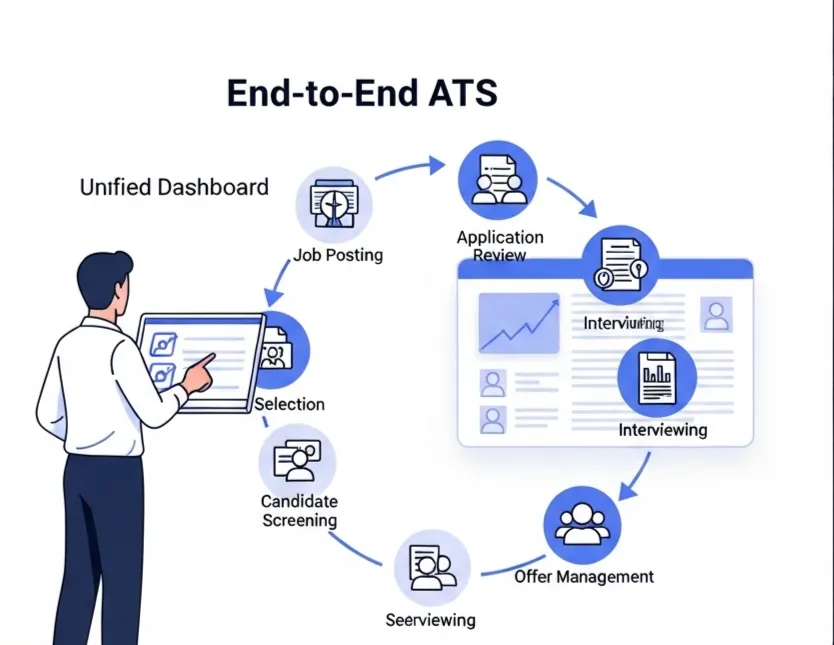
- ATS Pipeline
Automatically tracks your recruitment funnel metrics, showing you conversion rates at every stage so you can spot bottlenecks instantly. - Job Match Score
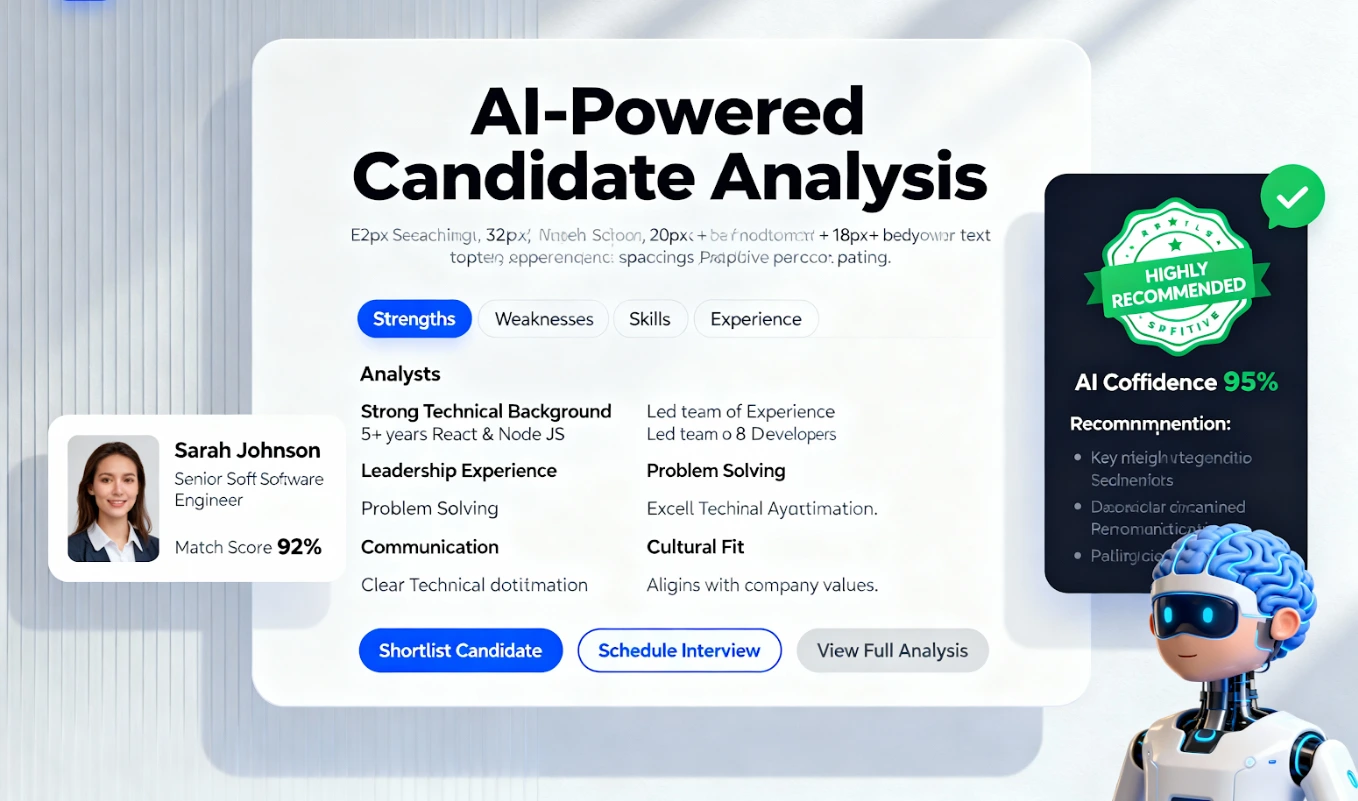
Our AI scores and shortlists candidates for you, improving the quality of your pipeline and reducing time spent on manual screening. - Sourcing Playbooks
Provides data-driven guidance on where to find candidates, helping you optimize your source of hire and lower ad spend. - Automated Follow-ups
Keeps candidates engaged and informed throughout the process, which positively impacts your candidate experience metrics and offer acceptance rate. - Employer Branding Tools
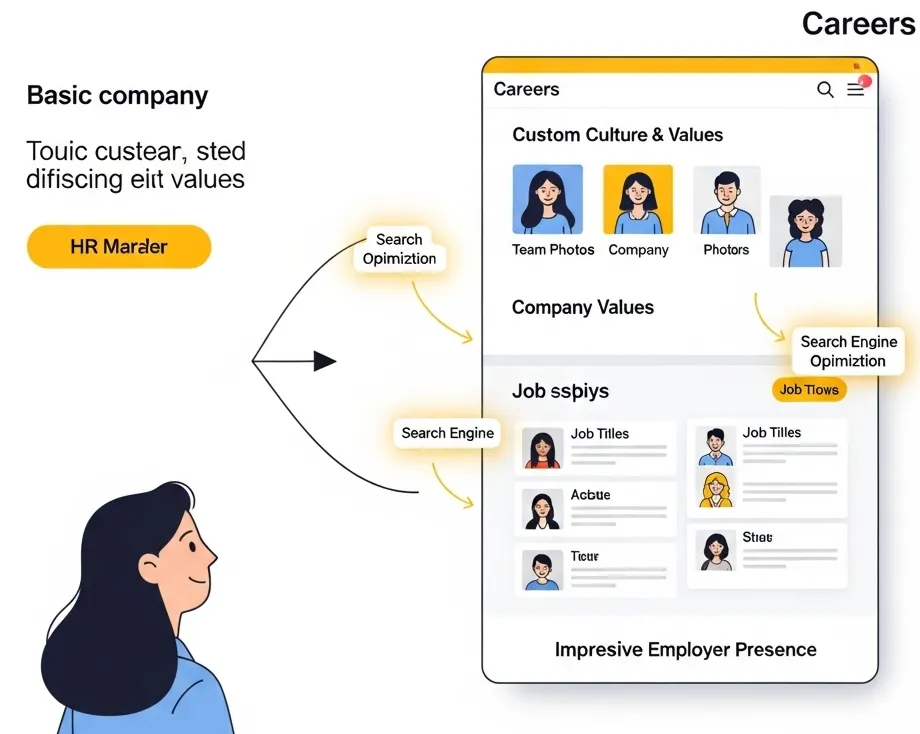
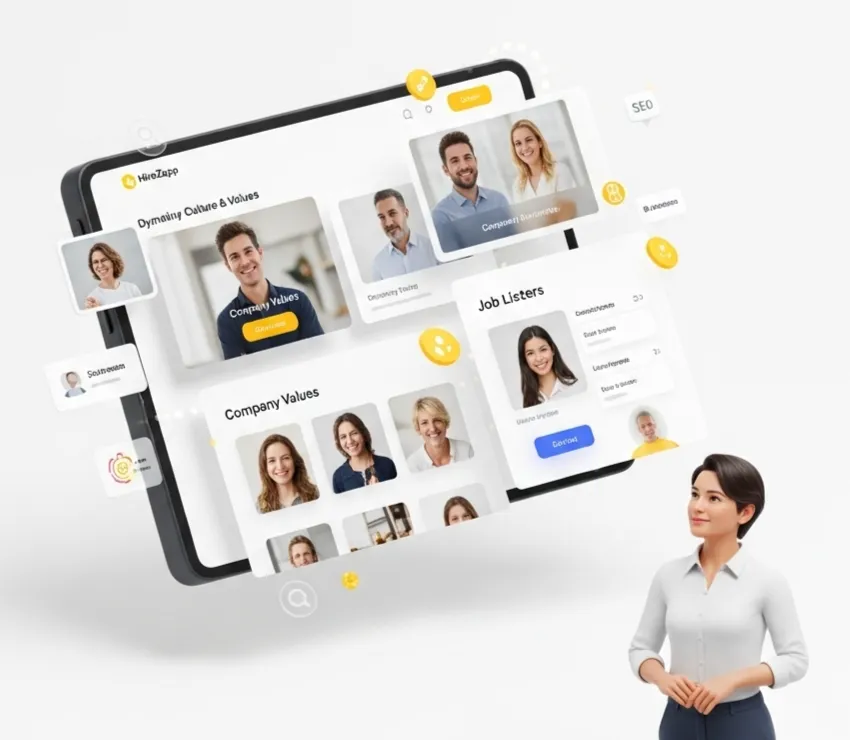
Branded careers pages and communications help you attract better-fit candidates from the start, improving funnel quality.
Avoid These Common Metric Traps
Starting with data is great, but a few common mistakes can lead you down the wrong path. Watch out for these pitfalls as you build your dashboard.
- Tracking too many metrics and creating analysis paralysis.
- Ignoring qualitative feedback from candidates and hiring managers.
- Collecting data but failing to take action on the insights.
- Using inconsistent formulas or definitions for your metrics.
- Forgetting to share the dashboard with the entire hiring team.
- Focusing only on speed while ignoring the quality of hires.
What a Dashboard Can't Do Alone
Metrics provide a map, but they don't drive the car. Being data-driven is powerful, but it's important to remember that a dashboard won't solve underlying strategic problems. For example, tracking KPIs won't fix:
- A non-competitive compensation and benefits package.
- A negative employer reputation or poor company culture.
- A fundamental shortage of available talent in your specific market.
- The need for human connection and judgment in final hiring decisions.
From Data to Done
Stop guessing and start hiring with clarity. By focusing on a few essential recruitment KPIs, you can transform your hiring from a reactive, stressful process into a strategic advantage. You'll not only fill roles faster but also build a stronger, more effective team.
Frequently Asked Questions
Automate KPIs. Scale Hiring Success.
Transform your recruitment KPIs into actionable insights. Automate tracking and boost ROI with HireZapp.
1) What are the most important recruitment KPIs for a small business?
For a small business, the most critical KPIs are Time to Hire, Cost per Hire, and Source of Hire. These three give you a complete picture of your hiring efficiency, cost-effectiveness, and channel performance without overwhelming you with data.
2) How often should I review my hiring metrics?
It's a good practice to review your hiring dashboard weekly to spot immediate issues and monthly to identify broader trends. This allows you to stay agile and make adjustments before small problems become big ones.
3) What is the difference between recruiting metrics and recruiting KPIs?
Recruiting metrics are any data points related to hiring (e.g., number of applicants). Recruiting KPIs (Key Performance Indicators) are the specific metrics you choose to track because they are most critical to achieving your strategic goals, like reducing hiring costs.
4) How can I improve my candidate experience metrics?
Improving candidate experience starts with communication. Acknowledge every application, provide timely updates even if it's a rejection, and make your interview process clear and respectful. Using automated follow-ups can help ensure no candidate is left in the dark.
5) What tool is best for an HR recruiting dashboard?
While a spreadsheet is a good starting point, a modern Applicant Tracking System (ATS) like HireZapp is best. It automates data collection, provides real-time visual dashboards, and integrates all your hiring activities in one place.
6) Why is my offer acceptance rate so low?
A low offer acceptance rate often points to a misalignment in expectations. This could be related to compensation, the role's responsibilities not matching the job description, a negative experience during the interview process, or a slow offer process where candidates accept other roles.
7) How do I know which source of hire is best?
The best source of hire isn't just the one that brings the most applicants; it's the one that brings the most eventual hires. Track applicants from each channel all the way through your recruitment funnel metrics to see which source delivers quality candidates who succeed.