“Hiring funnel metrics recruiters should track (with benchmarks)”
Feeling busy but not making hires? You are not alone. Many recruiters and founders are overwhelmed by too many applicants, confusing spreadsheets, and candidates who disappear. It is hard to know what is working when you are just trying to keep up.


Mastering Your Process: Key Hiring Funnel Metrics Recruiters Should Track
Feeling busy but not making hires? You are not alone. Many recruiters and founders are overwhelmed by too many applicants, confusing spreadsheets, and candidates who disappear. It is hard to know what is working when you are just trying to keep up.
The good news is that you do not need complex tools to get clarity. By focusing on a few key hiring funnel metrics, you can understand your recruiting process, find bottlenecks, and make smarter, data-driven decisions to hire the right people faster.
Why Your Hiring Data Feels Like a Black Box
If tracking your hiring feels difficult, it is usually because of a few common problems. These issues make it nearly impossible to see the big picture and improve your results.
- Using disconnected tools like email, forms, and spreadsheets that do not talk to each other.
- Manually tracking candidate progress, which leads to errors and wasted time.
- Not having clear, simple formulas to calculate your performance.
- Focusing on easy-to-count numbers, like total applications, instead of quality.
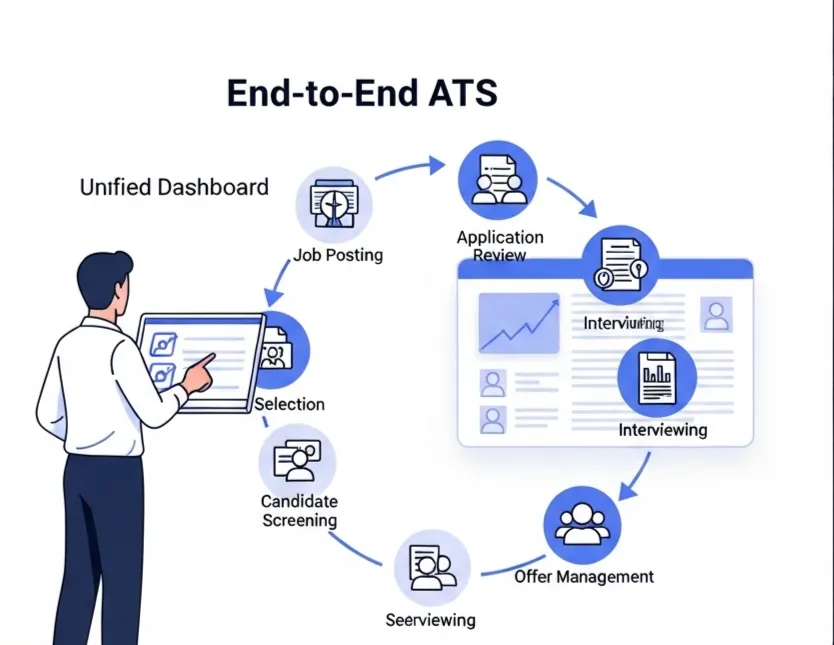
- Lacking a central dashboard to see your entire hiring funnel at a glance.
The Core Hiring Funnel Metrics You Can't Ignore
To improve your hiring, you need to measure what matters. Here are the essential metrics every hiring team should track, explained in simple terms. These form the foundation of effective recruitment analytics.
Time to Hire
This metric tells you how long it takes to fill an open role, from the day the job is posted to the day a candidate accepts your offer. A long time to hire can mean lost productivity and the risk of losing top candidates to faster competitors.
Cost per Hire
This is the total amount of money you spend to make one hire. It includes ad spend, recruiter salaries, and any tool subscriptions. Tracking your cost per hire helps you manage your budget and invest in channels that provide the best return.
Candidate Drop-off Rate
This measures how many candidates leave your hiring process at each stage. A high candidate drop-off rate could signal a problem with your application form, communication, or interview process. Fixing the leak can save you great talent.
Offer Acceptance Rate
This is the percentage of candidates who accept your job offer. A low offer acceptance rate might mean your offers are not competitive, your employer brand is weak, or the candidate experience was poor.
Source of Hire
This metric shows you where your best new hires are coming from, whether it is LinkedIn, referrals, or a specific job board. Knowing your top source of hire allows you to focus your energy and budget on what truly works.
Recruiter reality: “I used to spend hours trying to figure out which job board was worth the money. It felt like guessing. Once I started tracking my source of hire, I realized most of my best people came from employee referrals.”
A Simple Template to Get You Started
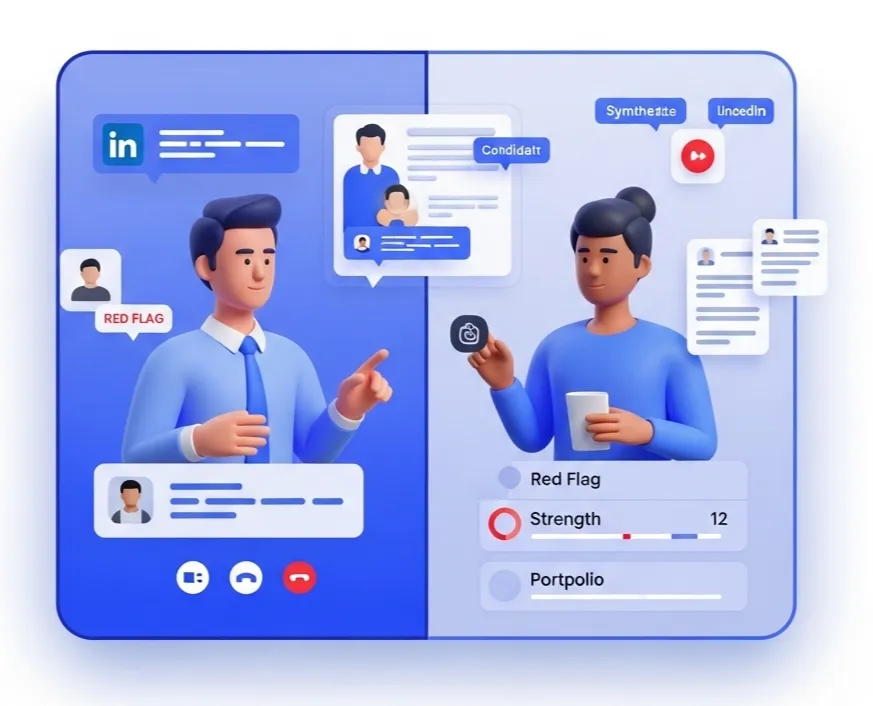
You can improve your hiring decisions by using a consistent scorecard. This helps you evaluate every candidate on the same terms, making your process fairer and more effective.
Candidate Interview Scorecard
- Role-Specific Skills: Did the candidate demonstrate the key technical or practical abilities needed for this job?
- Problem-Solving Ability: When presented with a challenge, did they show a clear and logical thought process?
- Team Collaboration: Does their communication style and attitude fit well with your existing team culture?
- Motivation and Interest: Did they express genuine interest in the company mission and the role itself?
- Communication Skills: Were they able to clearly explain their experience and ideas?
How HireZapp Simplifies Your Metrics
Instead of struggling with spreadsheets, you can use a simple system to track your funnel and improve every metric automatically. HireZapp brings all your hiring data into one place.
- ATS Pipeline Tracking
Automatically tracks every candidate's stage, giving you a real-time view of your funnel without manual data entry. - Job Match and Quality Scores
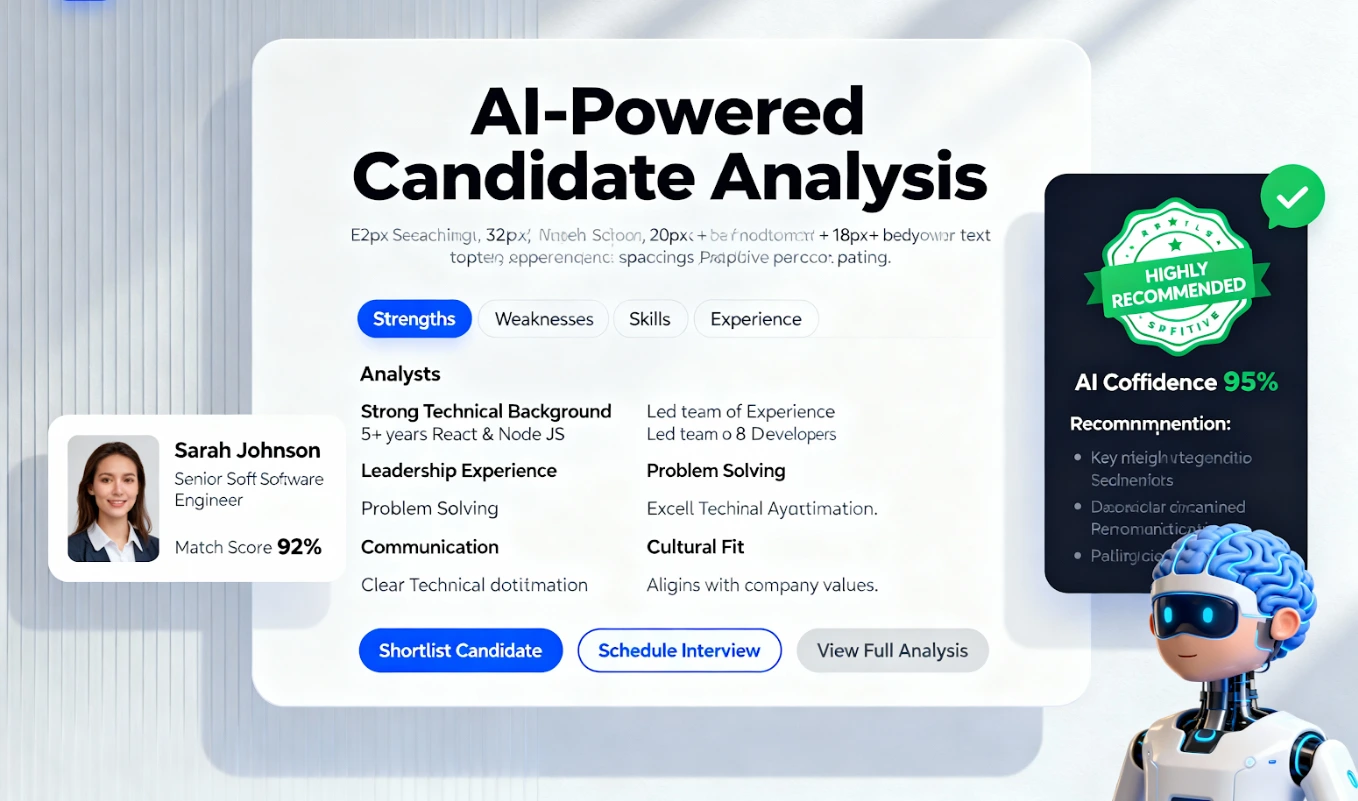
Measures applicant quality from the start, so you can focus on the best candidates and improve who you attract over time. - Automated Follow-ups
Reduces candidate ghosting and improves the overall experience, which helps lower your time to hire. - Sourcing Playbooks
Provides clear guidance on where to find candidates and helps you easily track your most effective source of hire.
Common Mistakes That Keep Teams Stuck
Knowing what not to do is as important as knowing what to do. Avoid these common mistakes when you start tracking your hiring data.
- Tracking too many metrics at once and getting lost in the noise.
- Ignoring the stories and qualitative feedback behind the numbers.
- Failing to connect your hiring metrics to larger business goals.
- Using data to place blame instead of to learn and improve.
- Forgetting to regularly review your metrics with the hiring team.
What Metrics Alone Won't Fix
Data is powerful, but it is not a magic solution. Tracking your funnel metrics is a critical step, but it will not solve deeper organizational issues. Be aware that data cannot fix:
- A broken or toxic company culture.
- A non-competitive salary and benefits package.
- A negative employer reputation in the market.
- A poorly defined role with unclear responsibilities.
Master Your Hiring Funnel Metrics
HireZapp's AI automates metric tracking, identifies bottlenecks, and delivers actionable insights to scale your recruitment success.
Frequently Asked Questions
1) What are good hiring benchmarks to aim for?
There are no universal hiring benchmarks that fit every company. What is good for a tech startup might be different for a large retail company. The best approach is to start by measuring your own performance and aim for gradual improvement month over month.
2) How often should I review my recruiting metrics?
A good cadence is a light weekly check-in to spot any immediate issues and a more detailed monthly or quarterly review with your team to discuss trends and strategy.
3) What is the most important hiring metric to track first?
If you are just starting, focus on Time to Hire. It is simple to measure and has a direct impact on your business. It often reveals bottlenecks in other parts of your funnel.
4) How can I calculate my conversion rates in recruiting?
To calculate conversion rates recruiting teams need, divide the number of candidates who advanced from a stage by the total number of candidates who entered that stage. For example, if 100 people applied and 10 were moved to an interview, your application-to-interview conversion rate is 10%.
5) Can I track these metrics without an ATS?
Yes, you can start with a carefully organized spreadsheet. However, as you grow, an ATS like HireZapp automates this tracking, saving you time and reducing human error.
6) How does tracking source of hire help my budget?
By identifying which channels bring you the most successful hires, you can stop spending money on ineffective job boards or ads and reinvest in the sources that deliver the highest quality candidates.
7) What's the difference between Time to Hire and Time to Fill?
Time to Hire measures the time from when a candidate enters your pipeline to when they accept an offer. Time to Fill is a broader metric, measuring the total time a job is open, from the day it is approved until a candidate starts.