Recruitment Conversion Funnel: What Percentage Should Convert at Each Stage?
Are you spending money on job ads or hours on LinkedIn, only to end up with a pile of applications but no qualified hires? You’re not alone. A leaky hiring funnel, where great candidates drop off at every step, is a silent growth killer for many companies. Understanding your recruitment conversion funnel benchmarks is the first step to fixing the leaks and building a predictable hiring machine.
This guide breaks down each stage, provides simple ways to measure success, and offers actionable tips to help you turn more applicants into team members. Let's make your hiring process faster and more effective.
Why Your Hiring Funnel Is Leaking Candidates
Before you can fix the problem, you need to know what’s causing it. Often, high candidate drop-off rates are a symptom of small, overlooked issues in your process. Many recruiters notice these common problems:
- Vague Job Descriptions
If the role isn't clear, you'll attract unqualified or uninterested applicants, wasting everyone's time. - Complicated Application Forms
Asking for a full work history on page one is a sure way to make top talent close the tab. - Slow or No Communication
Candidates expect updates. Silence makes them feel undervalued and encourages them to accept other offers. - Inconsistent Screening
Without a clear system, bias can creep in, and great candidates might get overlooked by mistake. - Scattered Information
Trying to manage candidates through email, DMs, and spreadsheets leads to chaos and missed opportunities.
Breaking Down the Recruitment Funnel Stages
To improve hiring conversion, you need to track how candidates move from one step to the next. Here are the core recruitment funnel stages and how to think about their performance.
- Application Stage (Viewers to Applicants)
This measures how many people who see your job post actually apply. A low rate here often points to a weak job description or a difficult application process. - Screening Stage (Applicants to Qualified)
This is where you filter out unqualified applicants to create a shortlist. A healthy funnel sees a big drop here, ensuring you only spend time on the best candidates. - Interview Stage (Qualified to Interviewed)
This tracks how many shortlisted candidates you successfully schedule for an interview. A drop-off here might mean your scheduling process is too slow or complicated. - Offer Stage (Interviewed to Offer Extended)
This is the percentage of interviewed candidates who receive a job offer. This metric helps you understand the quality of candidates making it to the final round. - Hiring Stage (Offers to Hires)
This shows how many candidates accept your offer. A low acceptance rate could signal issues with your compensation, benefits, or company culture.
Recruiter reality: “I used to think more applicants was always better. Now I know it’s about the conversion rate. I’d rather have 10 great applicants who are a perfect fit than 100 who aren't.”
A Simple Candidate Scorecard You Can Use
Instead of relying on gut feelings, use a simple checklist to screen candidates consistently. This ensures you're comparing everyone against the same important criteria.
- Relevant Experience Match
Does their work history directly relate to the core duties of this role? - Key Skill Alignment
Do they possess the top 3 must-have technical or soft skills listed in the job description? - Communication Clarity
Was their application clear, professional, and free of major errors? - Growth Potential
Do they show curiosity or a desire to learn and grow with the company? - Alignment with Company Values
Based on their profile and answers, do they seem to align with how your team works?
How HireZapp Helps You Plug the Leaks
Fixing your funnel doesn't have to be a manual process. A system like HireZapp is built to automate the tedious parts and give you the data you need to make smarter decisions. It provides a platform for effective ATS conversion tracking so you always know where you stand.
- AI Job Description Generator
Create clear, optimized job descriptions that attract the right candidates from the start. - One-Click Job Forms
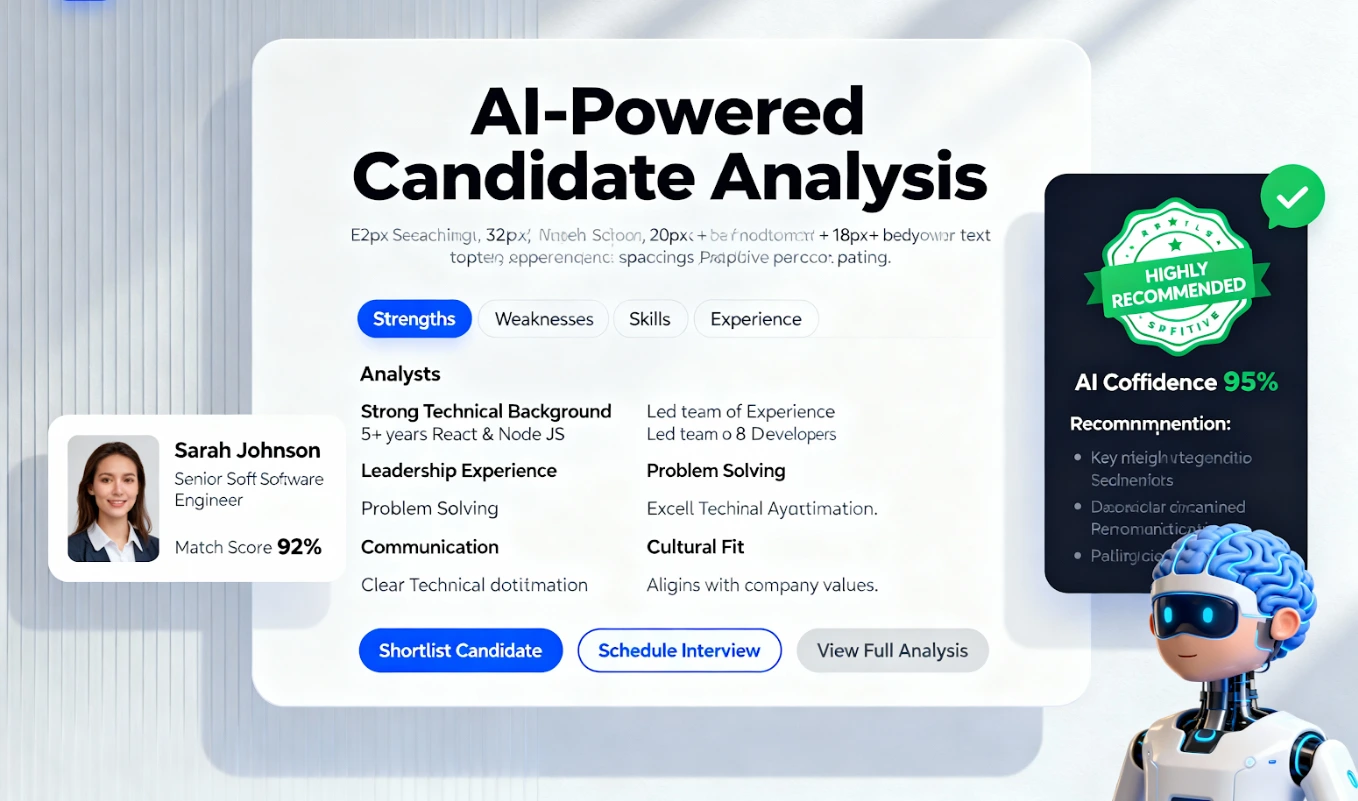
Reduce applicant drop-off with simple, mobile-friendly application forms. - Job Match Score
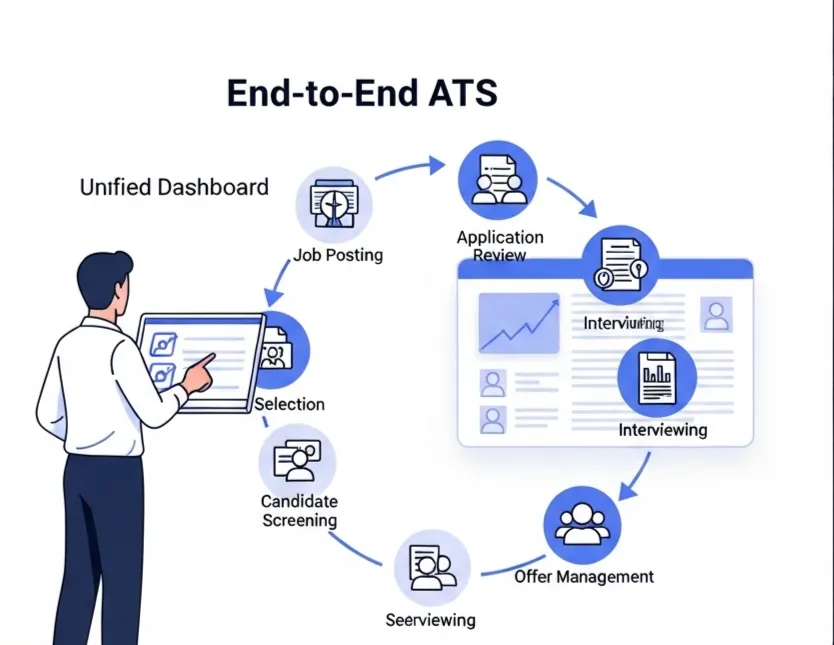
Instantly see which candidates are the best fit without manually reading every resume. - Centralized ATS Pipeline
Track every candidate in one place, so no one ever falls through the cracks. - Automated Follow-ups
Keep candidates engaged with automatic status updates that improve the candidate experience.
Common Mistakes That Hurt Hiring Conversion
Even with the right tools, certain habits can keep your hiring process stuck. Avoid these common mistakes:
- Forgetting about the candidate experience.
- Relying only on gut feelings instead of consistent data.
- Moving too slowly between hiring stages.
- Failing to create a strong employer brand.
- Using spreadsheets and inboxes to manage your pipeline.
- Not communicating clearly with rejected candidates.
What Funnel Metrics Alone Can't Fix
Tracking your conversion rates is powerful, but it's not a magic bullet. Data can show you where the problems are, but it can't fix underlying issues like:
- A non-competitive salary and benefits package.
- A negative company culture or poor online reviews.
- A lack of clear growth opportunities within the company.
Start Building a Better Hiring Funnel Today
Understanding your recruitment funnel is the key to hiring more predictably and efficiently. By tracking each stage and using the right tools, you can stop wasting time on unqualified applicants and focus on building relationships with the best talent. Ready to see how an all-in-one platform can help? Learn more about HireZapp.
Stop losing great candidates
HireZapp helps you screen faster, reduce drop-offs, and close roles with less noise.
Trusted by 200+ recruiters
|Backed by AWS & NVIDIA
Frequently Asked Questions
1) What is a good applicant to hire conversion rate?
While there's no single magic number, many businesses aim for an applicant to hire conversion rate around 2%. This can vary widely based on the industry, role seniority, and job market conditions. The key is to establish your own baseline and work on improving it over time.
2) How do I track my recruitment funnel stages effectively?
The most effective way is to use an Applicant Tracking System (ATS). An ATS like HireZapp automatically organizes candidates into stages (e.g., Applied, Screening, Interview) and provides the data you need to see where candidates are dropping off.
3) What's the best way to improve my job application conversion rate?
To improve your job application conversion rate, make the process as simple as possible. Use a clear job title, write a compelling job description, and ensure your application form is short and mobile-friendly. Avoid asking for information you can get later in the process.
4) Can an ATS really help with hiring funnel conversion rates?
Yes, absolutely. An ATS helps improve hiring funnel conversion rates by speeding up your process, automating communication to keep candidates engaged, and providing a centralized place to ensure no one gets forgotten. This leads to a better candidate experience and fewer drop-offs.
5) What are the most important recruitment metrics to track?
Beyond conversion rates, key recruitment metrics include Time to Hire (how long it takes to fill a role), Cost per Hire (your total recruiting cost divided by new hires), and Source of Hire (where your best candidates are coming from).
6) How can I reduce candidate drop-off rates during the hiring process?
You can reduce candidate drop-off rates by communicating frequently, setting clear expectations about the timeline, making scheduling interviews easy, and moving quickly when you've identified a strong candidate. A slow, confusing process is the main reason great candidates look elsewhere.
7) Why is recruitment pipeline analytics important for my business?
Recruitment pipeline analytics are crucial because they turn hiring from a guessing game into a predictable business function. By understanding your data, you can forecast hiring timelines, allocate resources effectively, and continuously improve your process to hire better talent faster.