Hiring Metrics Framework: What to Measure at Each Stage
Are you spending a fortune on job ads but struggling to make hires? Do you feel like you’re drowning in applicant DMs, Google Forms, and spreadsheets, with no clear idea of what’s actually working? If you can't confidently answer “how is our hiring going?” with data, you’re not alone.

Your Essential Hiring Metrics Framework: A Stage-by-Stage Guide
Are you spending a fortune on job ads but struggling to make hires? Do you feel like you’re drowning in applicant DMs, Google Forms, and spreadsheets, with no clear idea of what’s actually working? If you can't confidently answer “how is our hiring going?” with data, you’re not alone.
The good news is you don’t need a complex system to get clarity. You just need a simple framework to move from guessing to knowing, helping you convert more of the right applicants into hires, faster.
Why Your Hiring Data Feels Like a Black Box
For many founders and recruiters, hiring feels chaotic because the data is scattered. You can’t fix what you can’t see. The problem usually isn't a lack of effort; it's a lack of a clear system. This leads to common frustrations:
- No single source of truth. Candidate information is spread across emails, DMs, and multiple spreadsheets, making it impossible to see the whole picture.
- Focusing on vanity metrics. A high number of applicants doesn't matter if none are qualified.
- Manual data entry errors. Relying on manual tracking inevitably leads to mistakes and outdated information.
- Ignoring the funnel. You can't identify bottlenecks if you aren't tracking how candidates move from one stage to the next.
- Difficulty proving what works. Without data, it’s hard to justify which sourcing channels or strategies are worth investing in.
A Simple, Stage-by-Stage Hiring Metrics Framework
To fix this, you need to track a few key numbers at each stage of your hiring funnel. This approach helps you spot problems early and make smarter decisions. Here’s a repeatable playbook to get started.
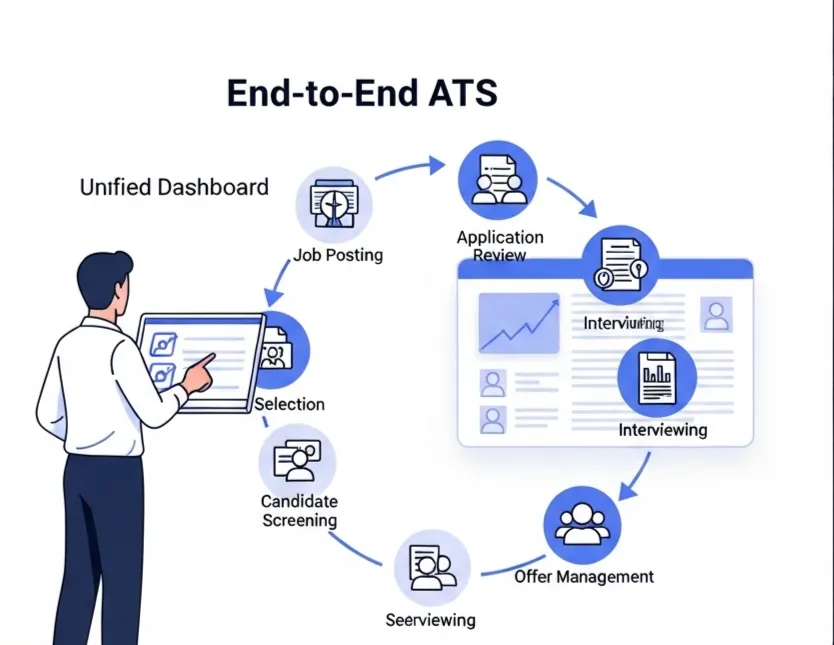
- Define Your Stages. First, map out your hiring process. A typical path is: Sourced/Applied → Screened → First Interview → Final Interview → Offer → Hired.
- Measure Your Attraction Stage. At the top of the funnel, focus on sourcing effectiveness. Track the number of applications you receive from each channel (e.g., LinkedIn, job boards, referrals) to see where your best candidates are coming from.
- Track Screening Efficiency. This is your first quality filter. Measure the percentage of applicants who pass the initial screening and are moved to the interview stage. A low number might indicate a poorly written job description.
- Analyze Interview-to-Offer Rate. Of the candidates who complete the final interview, how many receive an offer? This metric helps you evaluate the effectiveness of your interview process and alignment among the hiring team.
- Monitor Offer Acceptance Rate. This is a critical indicator of your competitiveness. A low acceptance rate could signal issues with compensation, employer brand, or your closing process.
- Calculate Overall Time to Hire. Measure the number of days from when a job is opened to when an offer is accepted. A long time to hire can cause you to lose great candidates to competitors.
- Understand Your Cost Per Hire. Calculate the total internal and external costs (ad spend, recruiter time, fees) divided by the number of hires. This helps you manage your recruiting budget effectively.
- Assess Quality of Hire. This is the ultimate measure of success. After 90 days, survey the hiring manager on the new hire's performance, team fit, and productivity. Strong quality of hire is the goal of all recruitment metrics.
Actionable Templates to Start Tracking Today
You don't need fancy software to begin. You can start with a simple scorecard to track candidates and gather feedback consistently. This helps build a foundation for strong HR analytics.
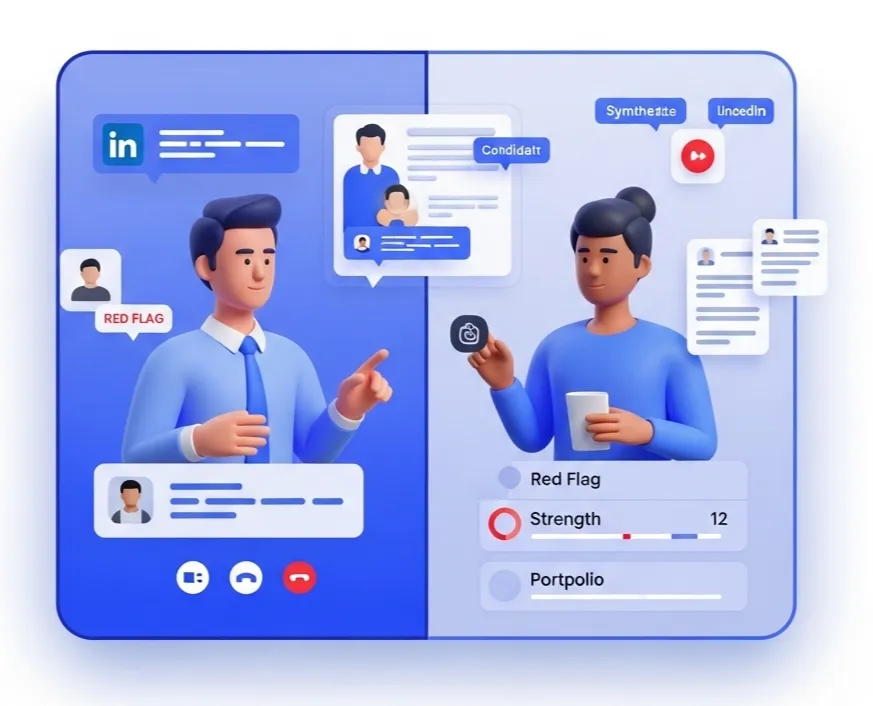
Hiring Metrics Scorecard Example
- Role Alignment
Does the candidate’s experience directly match the core needs of the job description? - Problem-Solving Skills
Did the candidate demonstrate clear, logical thinking when answering situational questions? - Team Contribution
Based on their communication style, would they collaborate well with the current team? - Motivation and Drive
Does the candidate show genuine interest in the company’s mission and the role itself? - Technical Proficiency
Did they pass the required technical assessment or portfolio review?
Recruiter reality: “We used to rely on gut feelings after interviews. Once we started using a simple scorecard, we realized how inconsistent our evaluations were. It immediately improved our decision-making.”
How to Automate Your Metrics with HireZapp
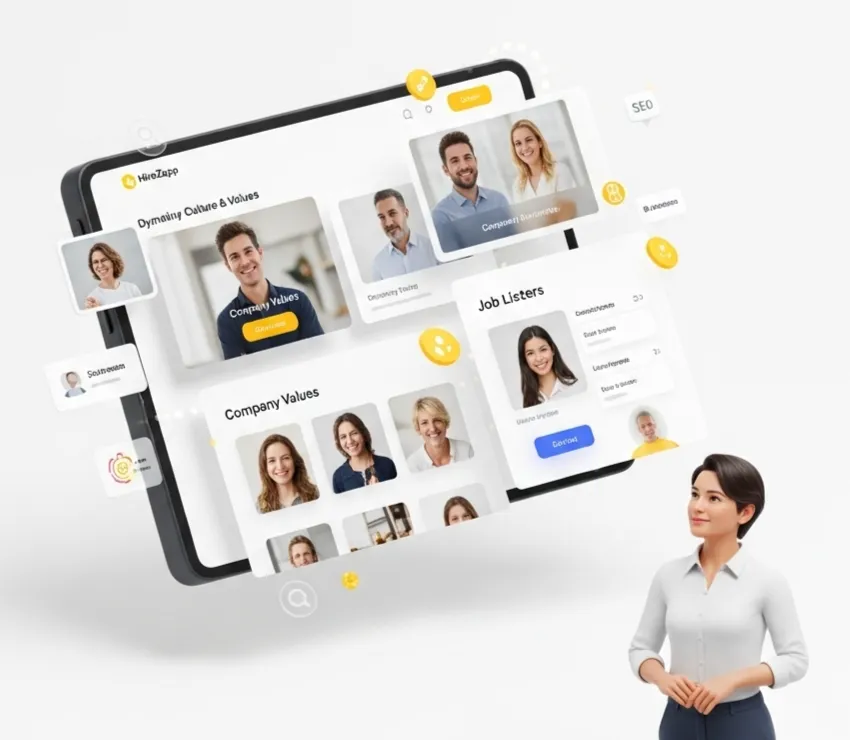
Manually tracking every stage is time-consuming and prone to errors. An Applicant Tracking System (ATS) centralizes your data so you can focus on hiring, not spreadsheets. Here’s how HireZapp helps put your framework on autopilot.
- Unified ATS Pipeline
Automatically tracks every candidate's movement through each stage, giving you a real-time view of your entire hiring funnel. - Job Match Score
Instantly screens and scores applicants against your job requirements, so you can see your applicant-to-qualified ratio without manual review. - Source Tracking
Every applicant's source is automatically logged, showing you which channels deliver the best candidates with zero data entry. - Automated Reporting Dashboard
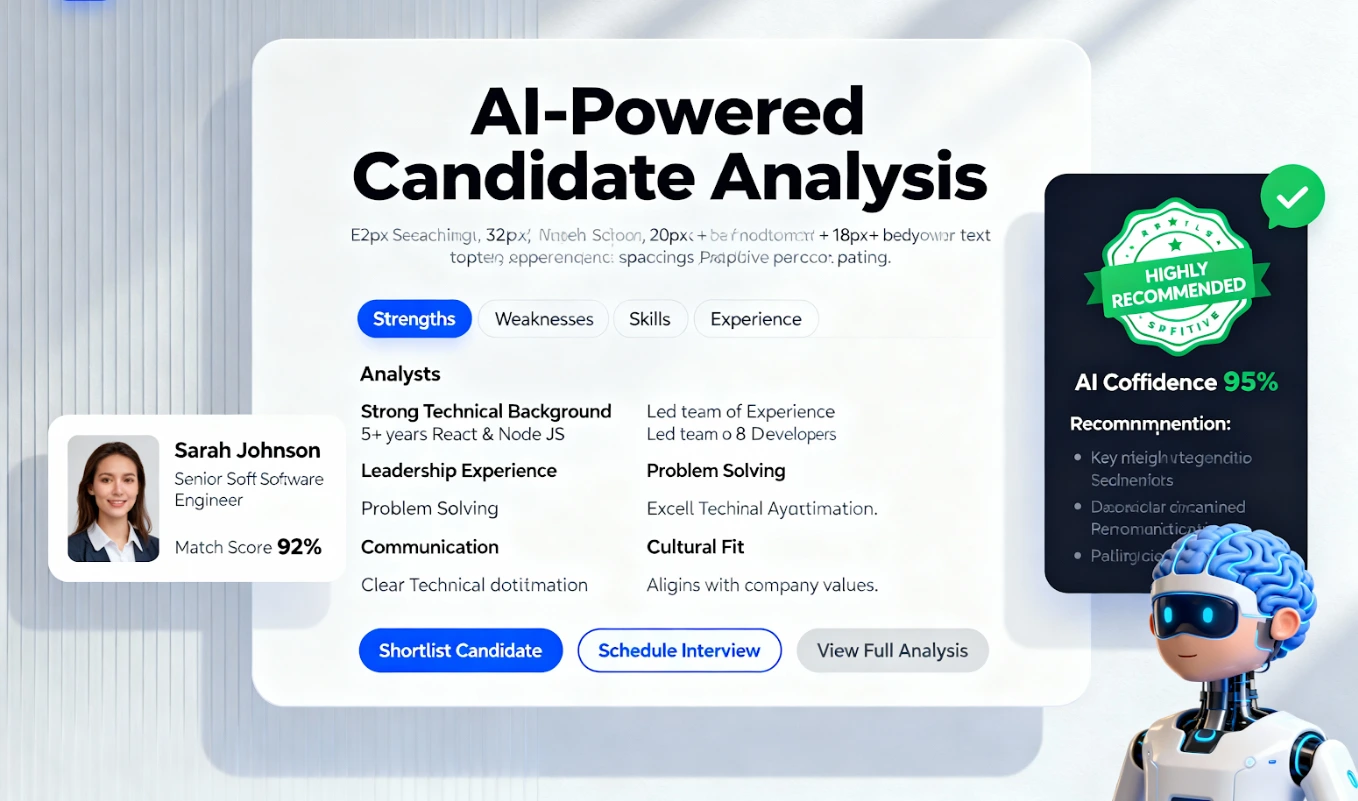
Provides clear visuals on key metrics like funnel conversion rates, helping you build a system for powerful ATS reporting.
Avoid These Common Metrics Traps
As you build your framework, watch out for these mistakes that keep teams stuck in reactive hiring mode.
- Forgetting about qualitative data. Numbers tell you what is happening, but candidate feedback tells you why. Pay attention to your candidate experience metrics.
- Tracking too many metrics at once. Start with the handful of metrics listed above. You can always add more later.
- Measuring inconsistently. Define how you will calculate each metric and stick to it for accurate trend analysis.
- Ignoring funnel drop-off points. A big drop between two stages is a red flag. Investigate why candidates are withdrawing their applications.
- Analyzing data in a vacuum. Your hiring data is most powerful when viewed in the context of your business goals.
A Metrics Framework Is Powerful, But It's Not Magic
Implementing a data-driven approach will transform your hiring process, but it is important to have realistic expectations about what it can and cannot do.
- It won't fix a broken employer brand. If your company has a poor reputation, better tracking alone won't solve it.
- It won't make final decisions for you. Data informs your decisions, but human judgment is still essential.
- It cannot create a larger talent pool. Metrics help you optimize your process, but you still need a strong sourcing strategy to attract candidates.
By implementing a simple hiring metrics framework, you can turn chaos into clarity. You will finally have the data you need to optimize your process, reduce costs, and consistently hire the right people to grow your business. Start small, stay consistent, and let the data guide you.
Frequently Asked Questions
Track Every Metric. Optimize Every Hire.
Effortlessly track every vital hiring metric. HireZapp automates data, so you can optimize your recruitment funnel and boost ROI.
1) What are the most important recruitment metrics for a startup?
For a startup, the most critical metrics are time to hire, cost per hire, and quality of hire. These three give you a complete picture of your hiring efficiency, budget impact, and overall success.
2) How do you measure conversion rates hiring?
You measure conversion rates hiring by calculating the percentage of candidates who move from one stage of your recruitment funnel to the next. For example, if 100 people apply and 10 move to the interview stage, your applicant-to-interview conversion rate is 10%.
3) Can an ATS really improve our HR analytics?
Yes, absolutely. An ATS centralizes all your candidate and job data, automating the collection process. This eliminates manual errors and provides built-in dashboards, giving you instant access to reliable HR analytics without needing spreadsheets.
4) What's a good benchmark for time to hire?
While it varies by industry and role complexity, a general benchmark for small to mid-sized businesses is to aim for a time to hire between 30 and 45 days. Highly specialized or senior roles may naturally take longer.
5) How do you track cost per hire without a big budget?
You can track it simply by adding up all direct recruiting costs (like job board fees) and dividing that sum by the number of hires you made in that period. Even without accounting for internal hours, this gives you a valuable baseline.
6) What's the difference between a metric and a KPI?
A metric is any quantifiable measure (e.g., number of applicants). A Key Performance Indicator (KPI) is a specific metric you've chosen to track progress towards a strategic goal (e.g., reducing time to hire by 15%). All KPIs are metrics, but not all metrics are KPIs.
7) How can a hiring framework improve candidate experience?
A framework helps you identify bottlenecks where candidates are waiting too long for a response or dropping out of the process. By tracking these points, you can streamline your communication and speed up the process, which directly improves the candidate experience.
8) What is the first step to setting up ATS reporting?
The first step is to ensure your hiring stages are clearly defined and customized within your ATS. Accurate reporting depends entirely on having a clean, well-structured pipeline that reflects your actual recruitment process.