Recruitment Funnel Metrics: Essential KPIs to Track
Are you spending money on job ads but struggling to make hires? If your process feels like a black box where great applicants disappear, you are not alone. Many founders and recruiters deal with scattered DMs, messy spreadsheets, and a gut feeling that their hiring could be much faster and cheaper.

Recruitment Funnel Metrics: Your Guide to Smarter Hiring
Are you spending money on job ads but struggling to make hires? If your process feels like a black box where great applicants disappear, you are not alone. Many founders and recruiters deal with scattered DMs, messy spreadsheets, and a gut feeling that their hiring could be much faster and cheaper.
The good news is you don't need a complex system to fix it. By focusing on a few essential recruitment KPIs, you can turn confusion into clarity, spot problems early, and build a hiring machine that consistently brings in top talent.
Why Your Hiring Process Feels Unpredictable
If tracking your hiring feels difficult, it is likely due to a few common issues that happen when systems are not in place. These problems make it nearly impossible to see what is actually working.
- Data is siloed across emails, forms, and direct messages.
- There is no central place to see every candidate for a single role.
- Calculating how long a role has been open is manual guesswork.
- You cannot easily tell which job boards deliver hires versus just clicks.
- It is unclear where in the process your best candidates are losing interest.
- You spend hours coordinating interviews instead of evaluating talent.
Key Recruitment Funnel Metrics to Start Tracking Today
To fix the leaks in your hiring funnel, start by measuring what matters. Here is a step-by-step guide to the core metrics every B2B SaaS company should monitor. This is the foundation for effective recruitment analytics.
- Time to Hire
Measure the number of days from when a job is first posted to when a candidate accepts the offer. A long time to hire can mean losing top candidates to faster competitors and delaying important projects. - Cost per Hire
Calculate the total internal and external recruiting costs divided by the number of hires. This shows the financial impact of your hiring efforts and helps you budget smarter for future growth. - Source of Hire
Track which channel each new hire came from, such as LinkedIn, a referral, or a specific job board. This is crucial for knowing where to invest your time and money for the best results. - Candidate Drop-off Rate
Monitor the percentage of candidates who withdraw from the process at each stage. High drop-off rates, especially after the interview, can signal issues with your process, communication, or candidate experience. - Offer Acceptance Rate
This is the percentage of candidates who accept a formal job offer. A low rate can indicate that your compensation is not competitive or that expectations were not aligned during the interview process.
A Simple Dashboard Template You Can Use
You do not need fancy software to begin. You can create a simple tracking dashboard in a spreadsheet to monitor your progress. This creates a single source of truth for your team.
Recruitment Metrics Dashboard Example
- Metric
Time to Hire (Days) - Metric
Cost per Hire ($) - Metric
Offer Acceptance Rate (%) - Metric
Top Source of Hire (Channel Name) - Metric
Interview to Offer Ratio
Recruiter reality: "I used to think tracking metrics was just for big corporate teams. But once I started watching my offer acceptance rate, I realized our final interview stage was confusing candidates. Fixing that one step made a huge difference."
Where HireZapp Fits In
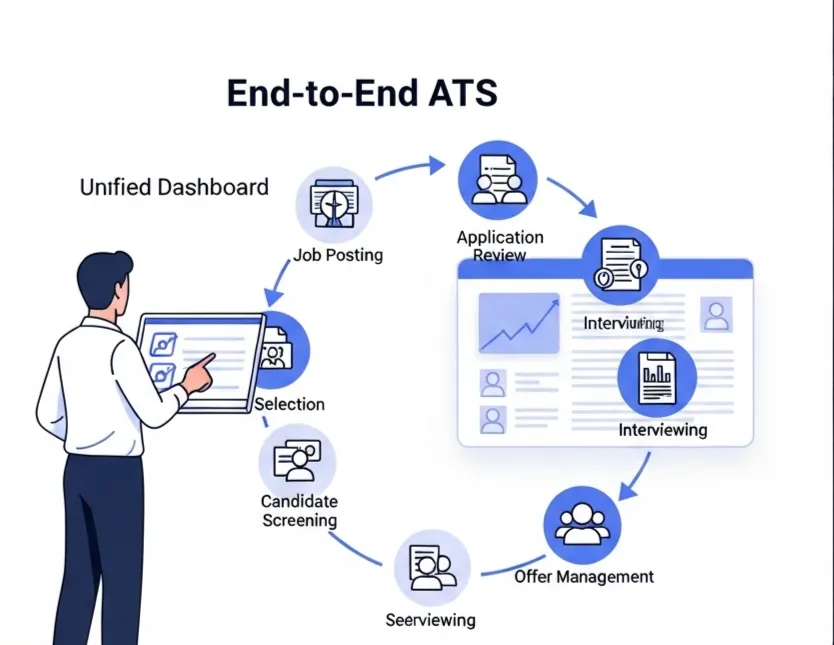
Manually tracking these numbers is a start, but it quickly becomes a job in itself. HireZapp automates this work so you can focus on people, not spreadsheets. It is designed to directly improve your most important hiring metrics.
- ATS Pipeline
Drastically reduces your time to hire by keeping all candidate activity, communication, and scheduling in one organized place. - Sourcing Playbooks
Helps you optimize your source of hire by providing proven strategies and channels to find qualified candidates without guessing. - Branded Communications
Lowers your candidate drop-off rate with automated, professional follow-ups that keep applicants engaged and informed. - Job Match Score
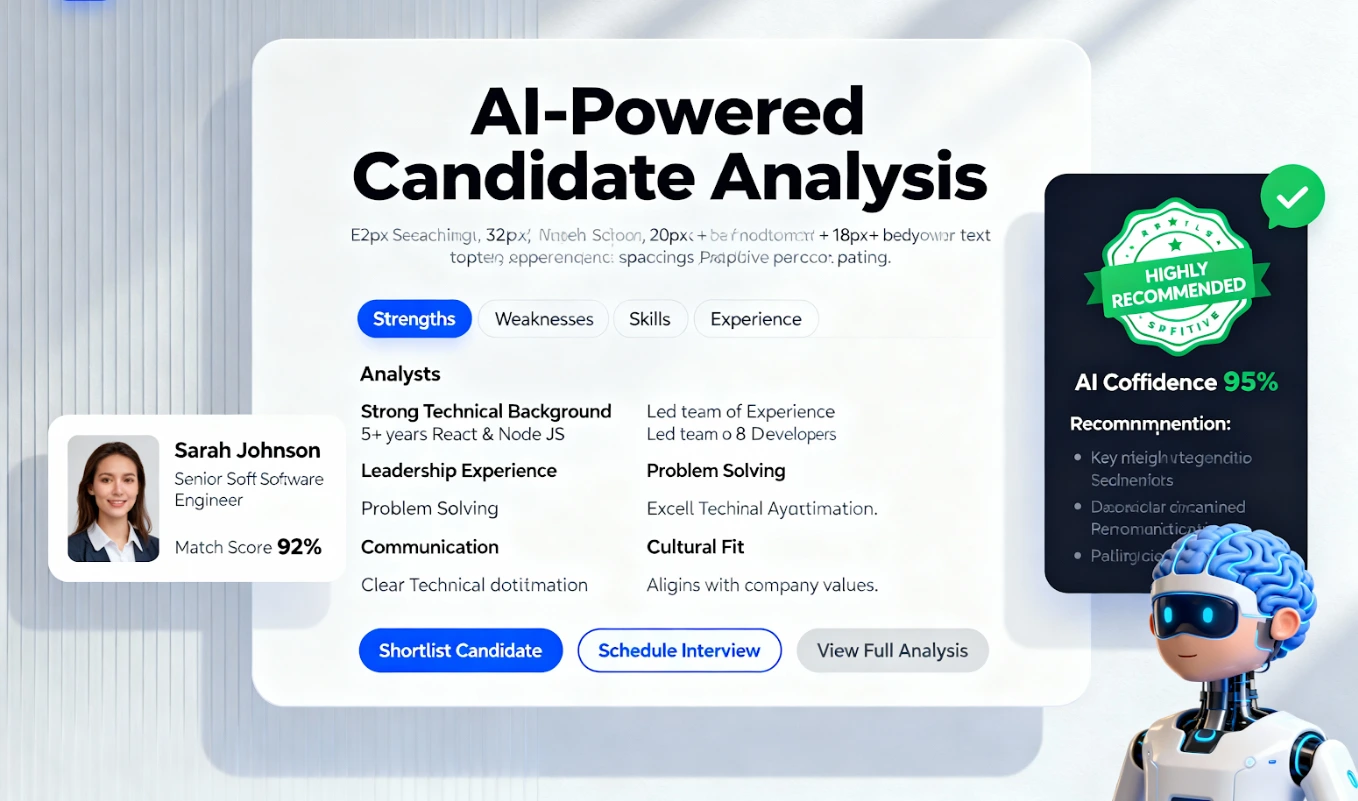
Improves your quality of hire by using AI to instantly surface the most relevant applicants, so you spend time with the best fits.
Common Mistakes That Keep Teams Stuck
Simply tracking data is not enough. Meaningful improvement requires avoiding these common pitfalls.
- Focusing on vanity metrics like clicks or total applications instead of qualified candidates.
- Ignoring the qualitative feedback you get from candidates during interviews.
- Collecting data but never scheduling time to review it and make decisions.
- Trying to match benchmarks from giant companies instead of focusing on your own improvement.
- Assuming a bad metric is just a "market problem" without looking at your own process first.
What Metrics Alone Will Not Fix
Data gives you powerful insights, but it cannot solve foundational business issues. Be aware that even the best tracking system will not fix:
- A non-competitive salary and benefits package.
- An undefined or constantly changing job role.
- A slow and indecisive interview panel.
- A poor reputation as an employer in the market.
Improving your hiring process is a powerful first step. It provides the speed and efficiency needed to close the great candidates you already attract. By tracking the right recruitment funnel metrics, you build a system for predictable, sustainable growth.
Boost Your Hiring KPIs.
HireZapp's AI automates tracking, providing insights to optimize your recruitment funnel.
Frequently Asked Questions
1) What are the most important recruitment funnel metrics?
For most B2B SaaS companies, the most critical metrics are Time to Hire, Cost per Hire, Source of Hire, and Offer Acceptance Rate. These four give you a clear view of your funnel's speed, efficiency, and effectiveness.
2) How do you calculate time to hire?
The standard formula is: The date a candidate accepts the job offer minus the date the job requisition was opened. For example, if you opened a role on May 1 and the candidate accepted on June 15, your time to hire is 45 days.
3) What is a good offer acceptance rate?
While this varies by industry and role, many recruiting teams aim for an offer acceptance rate of 90% or higher. A rate below 85% may suggest an issue with your compensation, benefits, or the final stages of your hiring process.
4) Why is tracking cost per hire important for startups?
For startups, every dollar counts. Tracking cost per hire helps founders understand the real price of acquiring talent, justify their recruiting budget, and make data-driven decisions about which sourcing channels provide the best return on investment.
5) How can I improve my candidate drop-off rate?
Improve communication by setting clear expectations and sending regular updates. Shorten the time between interview stages and make scheduling easy. Ensure every interaction, from the job post to the follow-up email, reflects a positive employer brand.
6) What tools are best for recruitment analytics?
While spreadsheets are a good starting point, a modern Applicant Tracking System (ATS) like HireZapp is built for this. It automates data collection and provides built-in dashboards, saving you time and eliminating manual errors.
7) How do hiring metrics differ from talent acquisition metrics?
Hiring metrics typically focus on the operational efficiency of filling an open role (e.g., time to fill, cost per hire). Talent acquisition metrics are often broader and more strategic, including things like employer brand reach, quality of hire over time, and internal mobility rates.