Recruiter Productivity Metrics: Output Without Burnout
Is your hiring team constantly busy but struggling to close roles? You see a flood of applicants from job ads, but most are unqualified. Your recruiters are stuck in endless email threads and manual screening, and top candidates drop off before you can even make an offer. It's a common cycle that leads to frustration and slow growth.

Recruiter Productivity Metrics: How to Measure Output Without Causing Burnout
Is your hiring team constantly busy but struggling to close roles? You see a flood of applicants from job ads, but most are unqualified. Your recruiters are stuck in endless email threads and manual screening, and top candidates drop off before you can even make an offer. It's a common cycle that leads to frustration and slow growth.
Focusing on the right recruiter productivity metrics is the first step to fixing this. It helps you understand where the real bottlenecks are, so you can build a faster, more predictable hiring process that doesn't exhaust your team.
The Real Reasons Your Team's Hiring Feels Slow
Before you can improve, you need to know what's holding you back. Many recruiting teams struggle with the same underlying issues that metrics can help uncover.
- Chasing vanity metrics: Focusing on the total number of applications instead of the number of qualified candidates.
- No clear "qualified" definition: Recruiters and hiring managers are not aligned on what a good candidate looks like from the start.
- Manual, repetitive work: Hours are lost each day on tasks like screening resumes one by one, scheduling interviews, and sending follow-up emails.
- Scattered information: Using spreadsheets, email inboxes, and direct messages to track candidates creates confusion and delays.
- Inconsistent candidate communication: Slow or non-existent updates cause top talent to lose interest and accept other offers.
- Lack of automation: The top of the hiring funnel is managed by hand, which is the easiest and most impactful place to add automation.
A 6-Step Playbook to Boost Recruiter Efficiency
Getting control over your hiring process is about creating a simple, repeatable system. This playbook helps you implement changes that directly improve your core metrics.
- Define Your Core Metrics First
Start by tracking Time to Fill, Source of Hire, and Quality of Hire. These three numbers give you a clear picture of your speed, channel effectiveness, and hiring success. - Automate Job Descriptions and Posts
Use tools to generate clear, effective job descriptions. Post them to multiple job boards with a single click to save time and attract better applicants. - Standardize Your Initial Screening
Create a simple job application form with knockout questions. This automatically filters out candidates who don't meet the basic requirements. - Use a Match Score for Shortlisting
Instead of reading every resume, use a system that scores applicants against your job description. This lets you focus your attention on the top 10% of candidates first. - Centralize All Candidate Communication
Track every message, email, and follow-up in one place. A central system ensures no candidate gets forgotten and everyone has a professional experience. - Review and Adjust Your Process Monthly
Look at your data once a month to see what's working. Effective recruiter workload management means finding and fixing bottlenecks before they become major problems.
Metrics and Templates You Can Use Today
Here are some practical tools to start tracking and improving your hiring outcomes. These simple checklists help standardize how you measure recruiter performance and quality.
Hiring Manager Scorecard Checklist
Use this simple 1-5 rating system after interviews to gather consistent feedback.
- Core Skill Match: How well do their skills align with the job description? (1-5)
- Relevant Experience: Does their past work prepare them for this role? (1-5)
- Communication Clarity: Did they explain their ideas clearly and concisely? (1-5)
- Problem-Solving Approach: How did they respond to situational questions? (1-5)
- Team Contribution: How do you see them fitting in with the current team? (1-5)
Key Recruiter KPIs and Formulas
- Time to Fill
The total number of calendar days from when a job is opened to when an offer is accepted. - Source of Hire
The percentage of successful hires that came from each recruiting channel, like LinkedIn, referrals, or career pages. - Offer Acceptance Rate
The percentage of candidates who accept a formal job offer. Calculated as (Offers Accepted / Total Offers Extended) x 100. - Quality of Hire
A score based on a new hire's performance review, hiring manager satisfaction, and retention after 6-12 months.
How to Improve Recruiter Productivity Metrics with an ATS
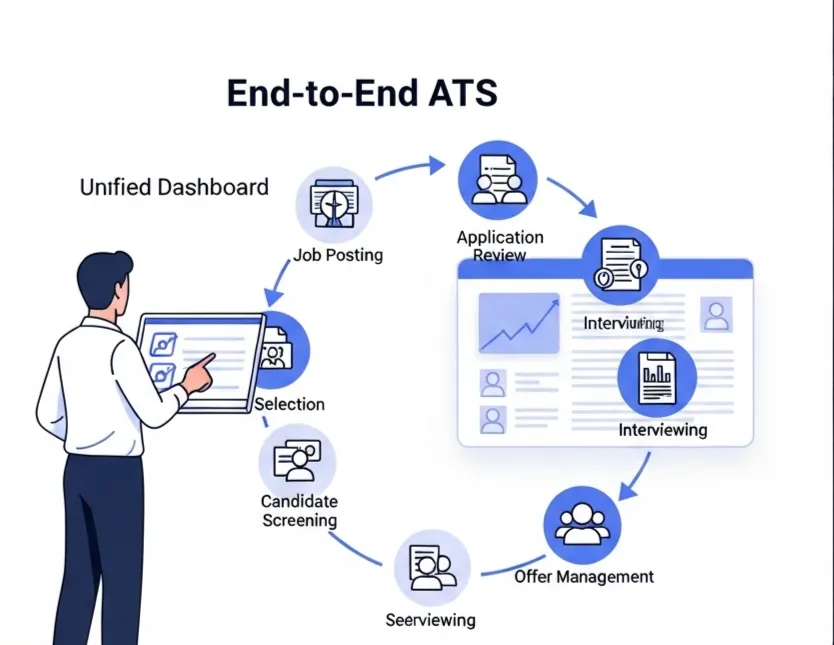
Tracking metrics in a spreadsheet is a good start, but a modern Applicant Tracking System (ATS) is what truly drives improvement. The right platform automates manual work and gives you the data you need to make smarter decisions. HireZapp is built to address these exact challenges.
- AI JD + Job Form Generation
Creates clear, optimized job posts and application forms that attract better-fit candidates from the start. - Multi-channel Screening
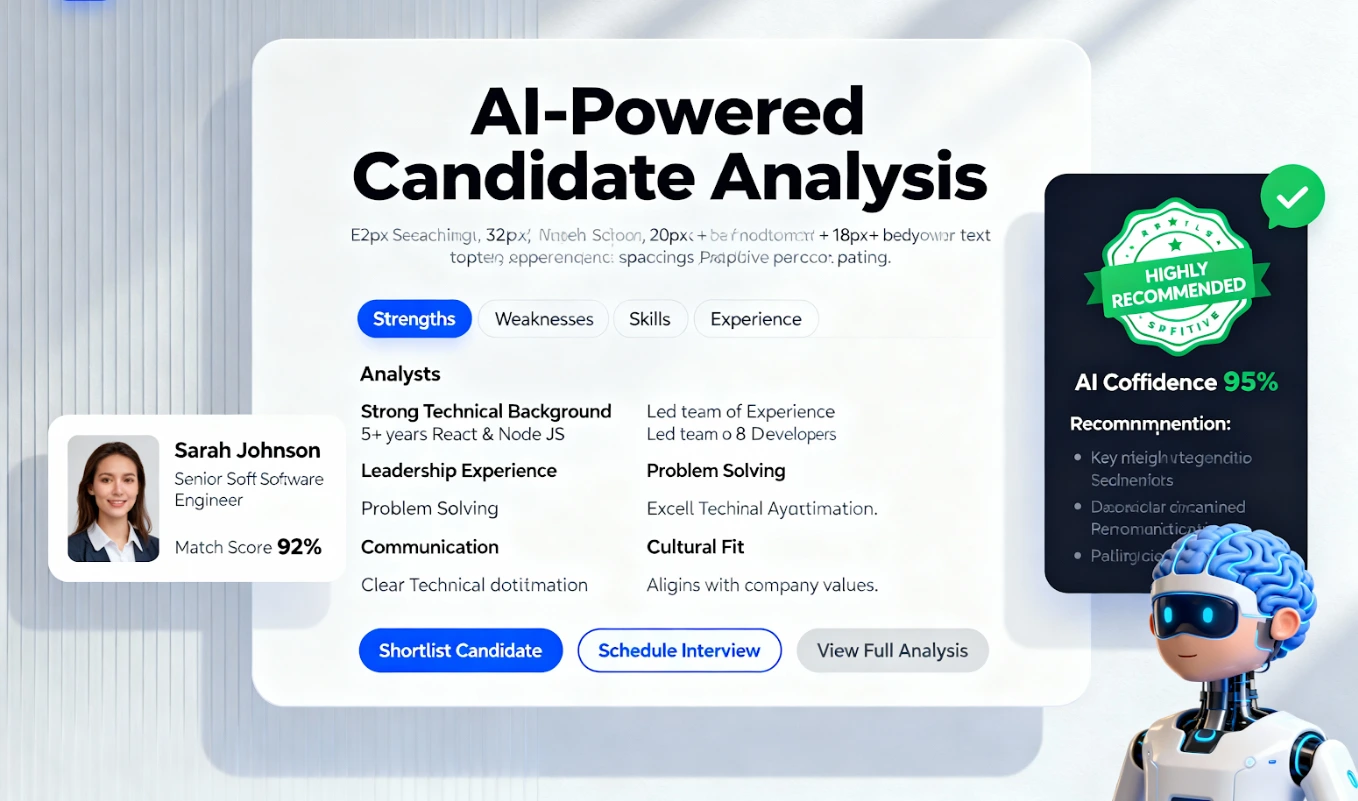
Pulls in social profiles from sites like LinkedIn and GitHub to give you a complete view of a candidate without manual searching. - Job Match Score + Job Quality Score
Instantly surfaces the most relevant applicants, dramatically improving your ATS productivity and shortlisting speed. - Automated Follow-ups
Keeps every applicant informed with branded, automated emails at each stage of the pipeline, improving candidate experience. - Employer Branding Suite
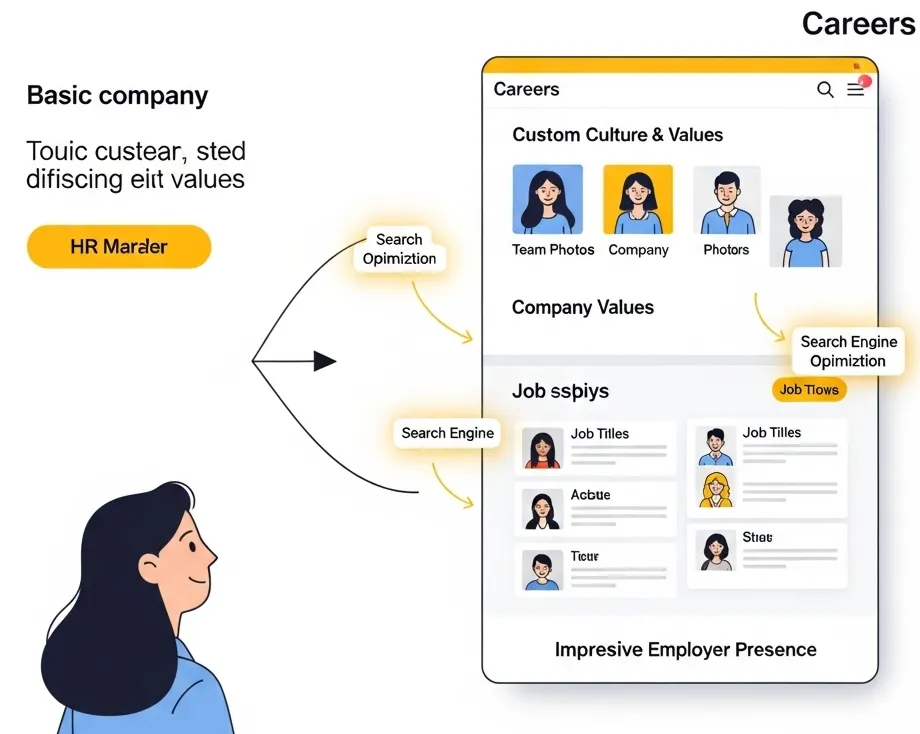
Lets you build a professional careers page and branded communications to convert more visitors into applicants.
Common Mistakes That Lead to Recruiter Burnout
Metrics are only useful if they lead to better processes. Focusing on the wrong things or using the wrong tools can burn out your team. The goal is to work smarter, not just harder. Watch out for these common traps.
- Measuring only the volume of applicants, not the quality.
- Failing to set clear expectations with hiring managers before a search begins.
- Using too many disconnected tools that don't share information.
- Manually tracking candidate progress in spreadsheets.
- Neglecting the candidate experience, which forces recruiters to work harder to overcome a bad reputation.
- Changing priorities too often without adjusting workloads or deadlines.
By avoiding these mistakes, you can create a sustainable process that helps prevent recruiter burnout and keeps your team focused and effective.
What Metrics Alone Won't Fix
Data can show you where the problems are, but it can't solve everything. Be honest about what better tracking won't fix in your organization.
- A broken or disorganized interview process.
- A non-competitive salary or benefits package.
- A negative company culture that candidates can sense.
- Poor alignment on role requirements between the recruiter and the hiring manager.
Automate Tasks, Prevent Recruiter Burnout.
Apply these metrics effectively. HireZapp's AI automates screening and scales hiring, ensuring peak output without burnout.
Frequently Asked Questions
1) What are the most important recruiter productivity metrics?
The most important metrics are often Time to Fill, Quality of Hire, Source of Hire, and Offer Acceptance Rate. These four give you a balanced view of speed, effectiveness, and hiring success.
2) How do you measure recruiter performance fairly?
To measure recruiter performance fairly, use a combination of metrics. Look at their Quality of Hire scores, time to fill for their roles, and candidate satisfaction feedback. Avoid focusing on just one number, like total hires.
3) What is a good time-to-fill benchmark?
A good benchmark for Time to Fill varies widely by industry and role complexity. However, many companies aim for 30-45 days for most professional roles. The key is to measure your own baseline and work to improve it over time.
4) How can AI recruiting tools improve efficiency?
AI recruiting tools improve efficiency by automating top-of-funnel tasks. This includes writing job descriptions, sourcing candidates, screening resumes for key skills, and scheduling initial interviews, freeing up recruiters for more strategic work.
5) What are the first signs of recruiter burnout?
Early signs include missed deadlines, a drop in communication quality with candidates and hiring managers, disengagement in team meetings, and an increase in cynical or negative comments about the workload.
6) How do talent acquisition metrics differ from general hiring metrics?
General hiring metrics often focus on the operational efficiency of filling a single role (like time to fill). Talent acquisition metrics are more strategic, looking at long-term goals like employer brand strength, candidate pipeline health, and workforce planning.
7) Can a small company benefit from tracking these recruiter KPIs?
Absolutely. Even for a founder or a single HR person, tracking simple KPIs provides crucial insight into what's working. It helps you stop wasting money on the wrong job boards and focus your limited time on activities that actually lead to great hires.