BambooHR vs HireZapp: What You're Actually Buying When You Buy an HRIS
A factual breakdown of how BambooHR and HireZapp handle candidate screening, sourcing, and pricing, the three places the gap is biggest between an HRIS and a hiring-first platform.

A founder we talked to put it well without meaning to. "We have BambooHR. It's fine. I just don't really use the hiring part."
Fair enough. BambooHR was built to be the place where employee records live, time off, performance, the whole lifecycle after someone joins. The hiring module came later, added because customers wanted one login instead of two. Here's what that actually means once you open it on a Monday with 150 applications waiting.
The Resume Pile Problem
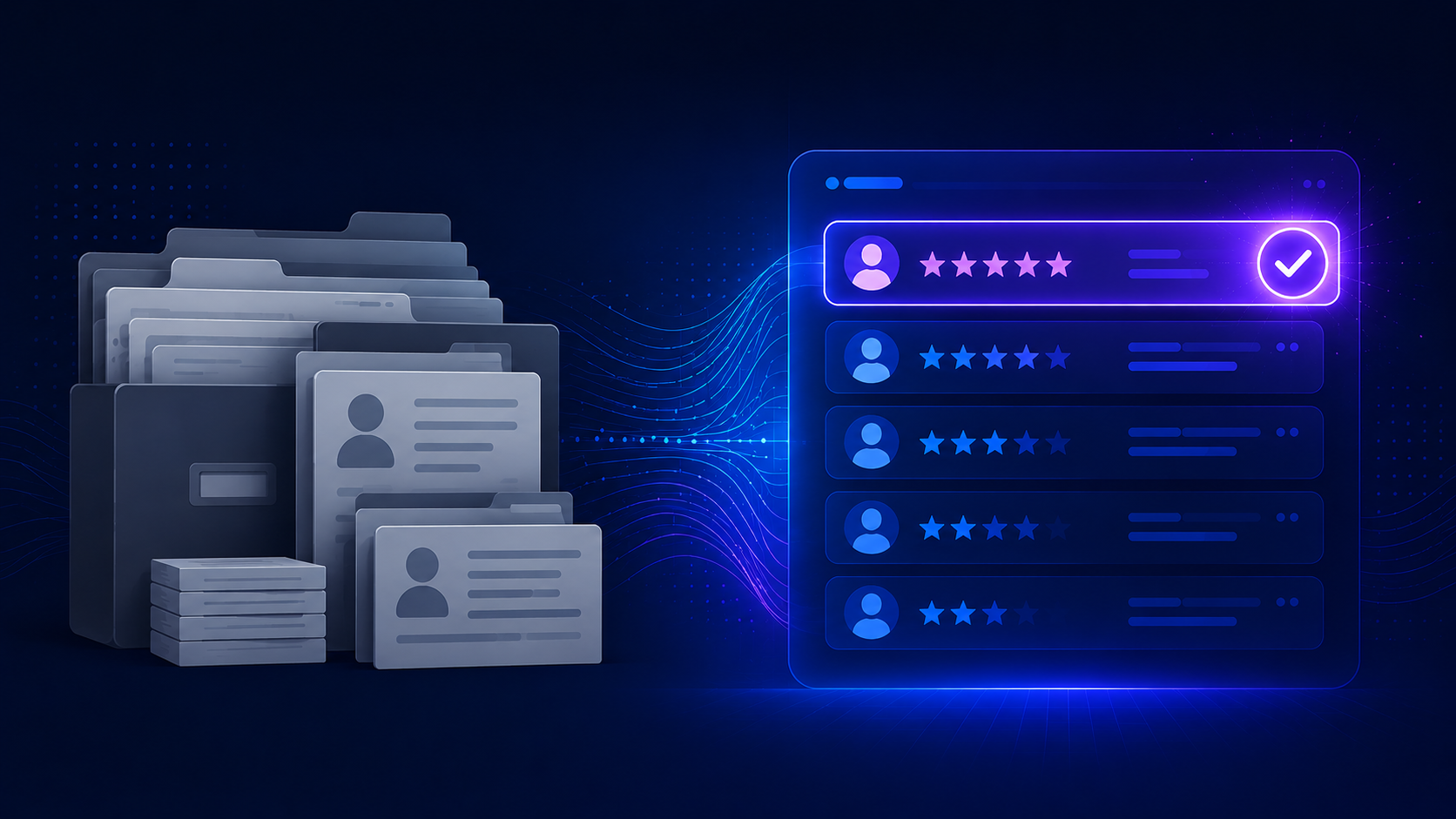
Open BambooHR's hiring module during a busy week and here's what you'll see: every application that came in, sitting in the order it arrived. Not ranked. Not scored. Not flagged for fit. Just a list.
An independent review of BambooHR's recruiting capabilities lays it out plainly: no automatic candidate scoring, no intelligent resume parsing, no candidate-job matching, no bias detection. Interview scorecards exist, but the same review describes them as basic.
So if 150 people apply for a marketing role, someone reads all 150. Not the strongest ones first. All of them, in the order they happened to land.
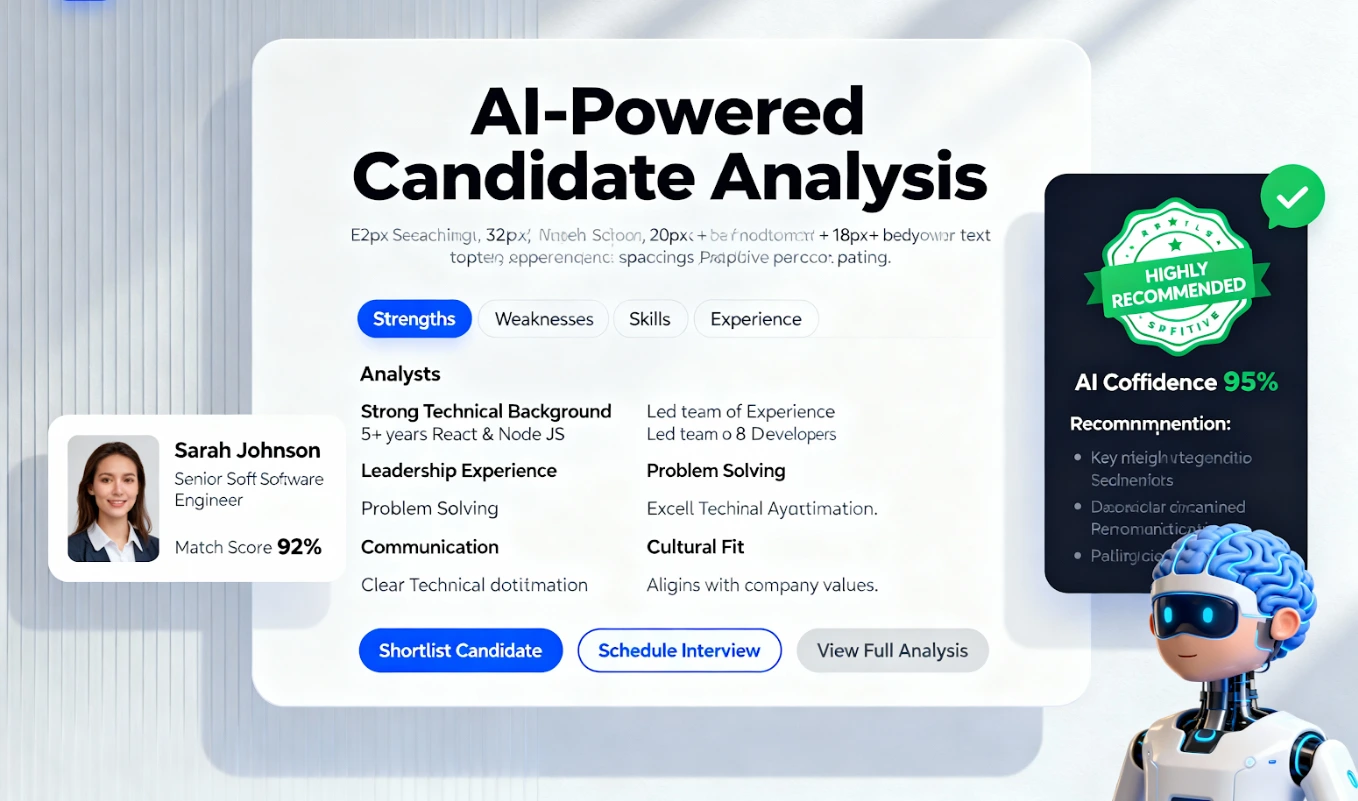
HireZapp was built around that exact moment. Every application is analyzed across 300+ data points and comes back with a Job Match Score out of 100, plus a written breakdown of where a candidate's strong and where they're not. The dashboard opens to a ranked shortlist instead of a queue.
A resume sitting unread isn't neutral. It's a decision, just one nobody made on purpose.
Where the Candidates Actually Come From
BambooHR posts your job, and then it waits for people to apply. That's the design.
The strongest candidate for a senior role often isn't the one actively scrolling job boards that week. They're employed somewhere, doing fine, and not looking, until the right opportunity finds them.
HireZapp's sourcing reaches across 100+ channels at once: college networks, WhatsApp communities, a database of over 2 million passive candidate profiles, and a Career Circle of professionals open to moving without actively job hunting. It also generates Boolean search strings automatically, so finding someone specific, an AWS engineer with 6 years and Terraform experience, doesn't mean building that search string by hand.
What This Actually Costs You
BambooHR prices per employee, across your entire company, not per recruiter and not based on hiring volume. A team of 25 employees pays a flat $250 a month minimum, whether they're filling ten roles or none at all that quarter.
HireZapp ties the bill to hiring activity instead. There's a free forever plan with no credit card required, and after that, a platform fee plus credits, where each credit covers AI screening for one application.
| BambooHR | HireZapp | |
| Entry price | $250/month flat (25 employees or fewer) | Free forever plan |
| What it scales with | Total company headcount | Actual hiring activity |
| AI candidate screening | None confirmed | Built in, every application scored |
| Sourcing reach | Job posting only, no outbound sourcing | 100+ channels, including passive candidates |
| Free trial | Not published | 14-day full feature trial |
Stop Reading Resume Ninety-Four
Try HireZapp free and see what an AI-ranked shortlist actually looks like for your next open role.
One More Stage Worth Knowing About
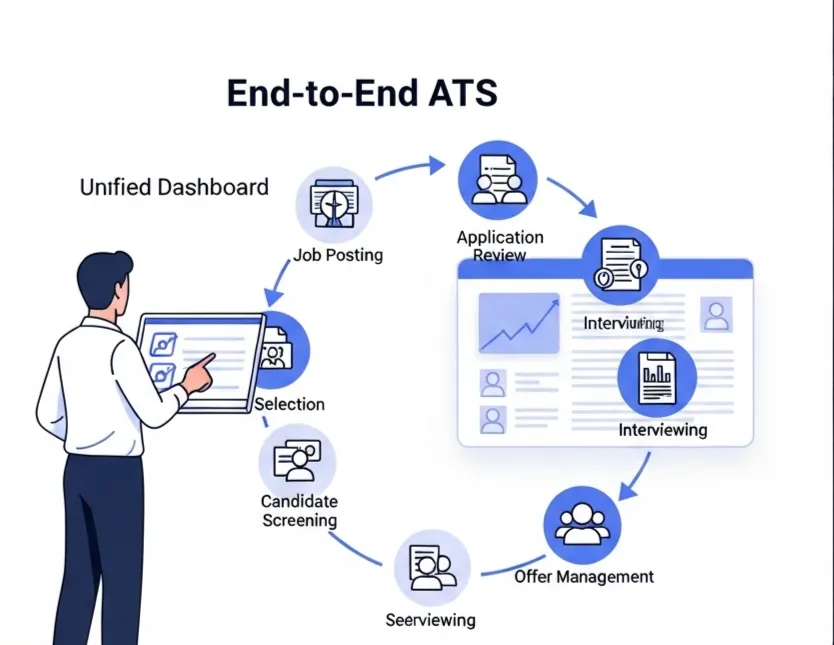
Interview scheduling inside BambooHR runs through a separate partner tool, with its own trial and its own billing once that trial ends. And the stretch between marking someone "selected" and sending an offer, collecting documents, catching a CTC that's over budget before it's a problem, tends to happen by hand, since BambooHR's own contract handling still has HR teams drafting offer letters manually. HireZapp builds both of those in as native stages. The bigger story, though, is upstream of this, in who gets found and who gets read in the first place.
Where HireZapp Is Built For
If the actual bottleneck is hiring itself, too many resumes with no fast way to know who's worth a call, or too few qualified candidates applying in the first place, HireZapp is built specifically for that problem. It's a strong fit for founders and small teams hiring without a dedicated recruiter, growing companies where hiring volume changes month to month, and anyone tired of reading every resume in the order it happened to arrive. The AI screening, the sourcing reach, and the pricing tied to actual hiring activity all point at the same thing: getting the right person in front of you faster, without needing five people or a fixed monthly bill to do it.
Where BambooHR Is Genuinely the Right Call
If the actual need is one system for employee records, performance reviews, time off, and onboarding paperwork after someone's hired, BambooHR does that well and a lot of small businesses trust it for exactly that. The onboarding tools specifically, e-signatures, progress tracking, customizable checklists, are solid and well reviewed.
The dividing line is simply where each tool starts. BambooHR runs your company once people are already in it. HireZapp is built for the stretch before that, finding the right people and knowing who's worth a conversation before you read resume number ninety-four.
Switching tools won't fix a vague job description or a salary below market. It will change how many qualified people you actually see, and how fast you know who they are.
Frequently Asked Questions
Q1) Does BambooHR have AI-powered candidate screening?
No. Independent reviews of BambooHR's recruiting module confirm there's no automatic candidate scoring, no intelligent resume parsing, no candidate-job matching, and no bias detection. Applications are organized but not ranked. HireZapp scores every application across 300+ data points with a Job Match Score out of 100.
Q2) Can BambooHR source candidates beyond people who apply directly?
No. BambooHR's recruiting module is built around managing inbound applications to a posted job, not outbound sourcing. HireZapp sources across 100+ channels including passive candidates, college networks, and a community of professionals open to new roles, plus automatically generated Boolean search strings for specific skill combinations.
Q3) Why does BambooHR's price apply to my whole company instead of just hiring?
BambooHR is priced per employee across your entire organization because it's fundamentally an HR system, not a dedicated hiring tool. A company with 25 employees or fewer pays a flat $250 monthly minimum regardless of how much hiring is actually happening that month.
Q4) What does HireZapp handle that BambooHR's hiring module doesn't?
HireZapp covers the two stages BambooHR's recruiting module leaves manual or relies on add-ons for: AI-ranked candidate screening from the moment applications come in, and a pre-offer verification stage that adjusts document requirements by candidate type and flags mismatches before an offer goes out. BambooHR's strengths sit later, in onboarding paperwork and e-signatures once a candidate has already accepted.
Q5) Does BambooHR verify documents before an offer is sent?
Not natively. Independent reviews of its contract handling note that HR teams typically draft offer letters manually and track document data outside the platform. HireZapp includes a dedicated pre-offer stage that adjusts document checklists by candidate type and flags mismatches, like a CTC exceeding budget, before the offer is drafted.
Q6) What's the simplest way to decide between the two?
Start with where the actual bottleneck is. If it's too many resumes with no fast way to know who's worth a call, or too few qualified people applying in the first place, that's the exact gap HireZapp was built to close. If the remaining need is purely employee records, performance reviews, or onboarding paperwork after someone's already accepted, that's where BambooHR's strengths apply.