Employee Onboarding Checklist: Complete 90-Day Program
You found the perfect candidate, they accepted the offer, and everyone is excited. But without a clear plan, that initial energy can fade quickly, leaving your new team member feeling lost and disconnected. A great hiring process doesn't end when the contract is signed. It flows directly into a structured onboarding journey that improves the entire candidate experience onboarding.

Your Complete 90-Day Onboarding Program for New Hires
You found the perfect candidate, they accepted the offer, and everyone is excited. But without a clear plan, that initial energy can fade quickly, leaving your new team member feeling lost and disconnected. A great hiring process doesn't end when the contract is signed. It flows directly into a structured onboarding journey that improves the entire candidate experience onboarding.
Creating a thoughtful employee onboarding checklist is the first step toward turning a promising new hire into a confident, productive, and long-term member of your team. It sets the tone for their entire journey with your company.
Why Great Hires Quietly Disengage
Many recruiters notice that the first few weeks determine if a new employee will stay for the long haul. When onboarding fails, it is usually due to a few common and preventable issues.
- Day-One Chaos
Nothing says “we weren't ready for you” like a missing laptop, no login credentials, or an empty desk. - Information Overload
New hires are hit with dozens of new names, tools, and processes at once with no clear guide to what matters first. - Inconsistent Communication
After a high-touch recruitment process, going silent leaves new employees feeling isolated and confused. - Manual Paperwork Headaches
Printing, signing, scanning, and emailing piles of forms is a frustrating first experience for anyone. - Lack of Social Connection
Onboarding that focuses only on tasks and tools misses the most important part: building relationships with the team.
The Ultimate 90 Day Onboarding Plan
A successful program breaks the journey into manageable phases. By following these onboarding process steps, you provide a clear path from new hire to fully integrated team member.
- Start with Pre-Boarding (The Week Before)
Use your ATS to send a welcome email with first-day logistics. Ship their equipment, grant access to essential systems, and get payroll and compliance paperwork completed digitally before day one. - Make Week One About Connection
Focus on introductions, not just tasks. Schedule brief meet-and-greets with key team members, assign an onboarding buddy, and walk them through your company culture and communication norms. - Set Clear Goals for the First 30 Days
Work with their manager to define a few simple, achievable goals. This helps the new hire understand what success looks like and gives them an early win. - Deepen Knowledge in the First 60 Days
This is the time for more in-depth training on products, services, and role-specific processes. Schedule a check-in to discuss their progress, answer questions, and gather feedback on their experience. - Encourage Contribution by Day 90
The new hire should now be taking ownership of small projects. Conduct a formal 90-day review to celebrate progress, set future goals, and solidify their place on the team.
Recruiter reality : “The best onboarding makes a new hire feel like they belong before they even show up. We send a welcome message from the CEO and a picture of the team. It’s small, but it makes a huge difference.”
Templates to Streamline Your Onboarding
You don't need to write everything from scratch. Use these templates to create a consistent and welcoming experience for every new hire. This is a simple way to implement onboarding best practices.
Automated Welcome Message Template
Subject: Welcome to the Team, [New Hire Name]!
Hi [New Hire Name],
We are all so excited to have you join us at [Company Name]! Your first day is [Start Date]. Please plan to arrive at [Time] at our office located at [Address], or log on for our virtual welcome call at [Link].
Your manager, [Manager Name], will connect with you to walk through your schedule for the week. In the meantime, your laptop and welcome kit are on the way. We can't wait for you to get started!
Best,
The [Company Name] Team
Downloadable Onboarding Checklist
To help you stay organized, we've created a complete hr onboarding template. You can use it to track every step from pre-boarding to the 90-day review.
- Download the Checklist
Get your free copy here: Complete 90-Day Onboarding Checklist PDF
How HireZapp Automates Onboarding
A manual onboarding process is prone to errors and delays. HireZapp helps you automate the critical steps so you can focus on the human side of welcoming a new team member. This is a core part of an effective recruiter onboarding guide.
- Automated Follow-ups
Schedule welcome emails, first-day instructions, and check-in reminders so no new hire feels lost or forgotten. - Branded Candidate Communications
Ensure every message, from the job post to the welcome email, reflects your company's brand and voice. - Centralized ATS Pipeline
Manage all pre-boarding documents and communications within the same system you used for recruiting, creating a seamless transition. - Employer Branding Suite
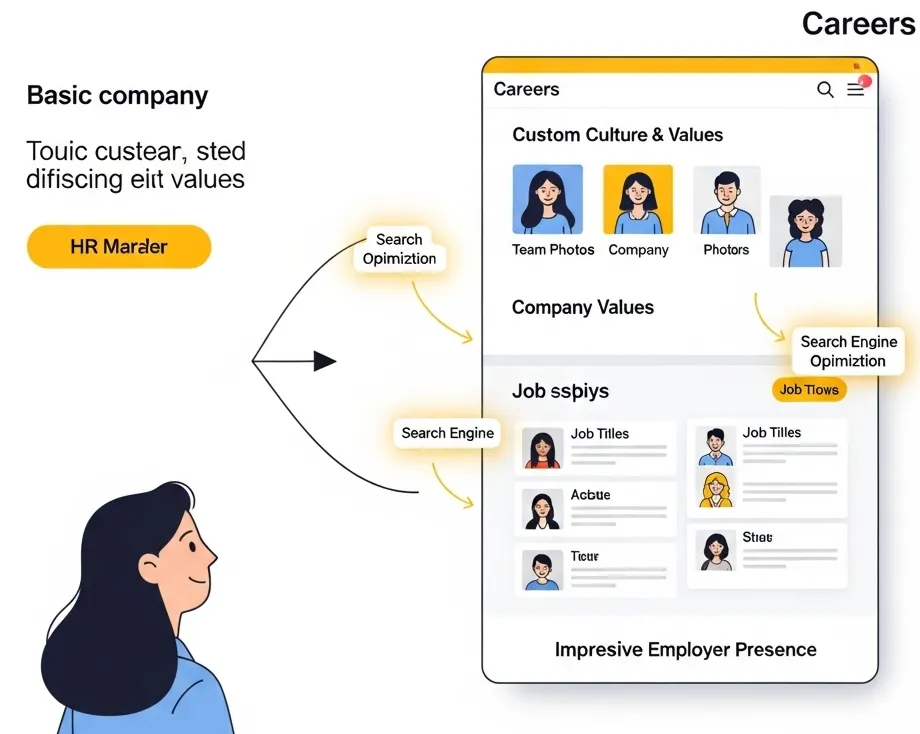
Use your careers page and job posts to set clear expectations about your company culture right from the start.
Master Onboarding: Automate Your First 90 Days
Elevate your new hire experience. HireZapp's AI-powered ATS automates pre-boarding, comms, and ensures smooth 90-day success.
Common Mistakes That Keep Teams Stuck
Even with a plan, small missteps can undermine your efforts. Watch out for these common onboarding traps.
- Forgetting about pre-boarding entirely.
- Treating onboarding as a one-day HR orientation.
- Failing to involve the new hire's direct manager.
- Neglecting to set up social introductions.
- Not asking for feedback about the onboarding process itself.
- Assuming the new hire knows who to ask for help.
What a Checklist Alone Can't Solve
A great process is essential, but it is not a cure-all. Being honest about its limitations helps you focus on what really matters.
- A Mismatch in Company Culture
If the new hire's values don't align with the team's, no amount of process will make it a good fit. - A Poor Manager Relationship
A manager is the single biggest influence on an employee's experience. A checklist cannot fix a broken dynamic. - An Inaccurate Job Description
If the role in reality is completely different from the role that was advertised, the employee will feel misled.
Frequently Asked Questions
1) What is a pre-boarding checklist?
A pre-boarding checklist covers all the tasks that need to be completed between when a candidate accepts an offer and their first day. This includes paperwork, equipment setup, and sending a welcome communication to ensure they are ready and excited to start.
2) What should be included in a new hire checklist?
A good new hire checklist should include administrative tasks like payroll setup, IT tasks like equipment and software access, role-specific training schedules, and social tasks like team introductions and a welcome lunch.
3) What are the key onboarding best practices?
The most important practices include starting before day one (pre-boarding), making it a structured program instead of a single event, personalizing the experience, involving the direct manager heavily, and collecting feedback to improve the process over time.
4) How do you structure the first 90 days for an employee?
Structure the first 90 days employee plan in three phases: The first 30 days for learning and integration, days 31-60 for guided contribution and deeper training, and days 61-90 for taking on more ownership and independent work.
5) Who is responsible for the employee onboarding process?
Onboarding is a team effort. HR typically manages the administrative process, the hiring manager oversees the role-specific training and goal setting, and an assigned buddy or team members help with the social and cultural integration.
6) How can you measure the success of your onboarding program?
Key metrics include new hire satisfaction surveys, time-to-productivity (how quickly they can work independently), manager feedback, and retention rates after 90 days, six months, and one year.
7) Why is a 90-day plan better than a 30-day plan?
A 90-day plan acknowledges that it takes time for a new hire to become fully productive and integrated. It provides a more realistic and supportive runway for them to learn the role, build relationships, and understand the company culture without feeling rushed.