Phone Screen Interview Questions: What to Ask and What to Avoid
You spend hours sifting through applications, finally find a promising candidate, and jump on a call. Fifteen minutes later, you realize they are a terrible fit. This cycle of hopeful calls and quick disqualifications slows down hiring and drains your energy. Getting the initial screen right is key to building a strong candidate pipeline.

Phone Screen Interview Questions: Your Guide to Asking the Right Things
You spend hours sifting through applications, finally find a promising candidate, and jump on a call. Fifteen minutes later, you realize they are a terrible fit. This cycle of hopeful calls and quick disqualifications slows down hiring and drains your energy. Getting the initial screen right is key to building a strong candidate pipeline.
Effective phone screening isn't just about asking questions. It's about asking the right questions in a structured way to quickly understand a candidate's skills, motivation, and potential fit. This process helps you focus your time on people who can truly succeed in the role, leading to faster, more confident hires.
Why Most Initial Interviews Don't Work
Many screening calls fail before they even begin because they lack a clear purpose. If your process feels random, you might be making one of these common mistakes that lead to bad hires or missed opportunities.
- Asking generic questions that don't reveal real skills or behaviors.
- Lacking a consistent structure, making it impossible to compare candidates fairly.
- Failing to dig deeper than surface-level resume answers.
- Ignoring red flags about motivation, salary expectations, or culture fit.
- Treating the call like an interrogation, which creates a poor candidate experience.
- Relying on scattered notes in documents or DMs instead of a central system.
A Repeatable Framework for Better Phone Screens
Stop improvising and start structuring your calls. A consistent process not only saves you time but also helps in avoiding bad hires by ensuring you cover the most critical information with every single candidate. Follow these steps for a more strategic conversation.
- Set the Stage
Start by introducing yourself, outlining the call's agenda, and confirming how much time you have. This simple step puts the candidate at ease. - Confirm the Basics Upfront
Quickly verify core details like salary expectations, location preferences or remote work needs, and their ideal start date to avoid surprises later. - Understand Their 'Why'
Ask what specifically about this role and your company caught their interest. Their answer reveals their motivation and level of research. - Probe for Core Experience
Use behavior-based questions to understand how they handled past situations. Ask for specific examples, not just theories. - Give a Realistic Job Preview
Briefly and honestly describe the role, the team, and a typical day. This helps the candidate self-select if it's not what they are looking for. - Open the Floor for Questions
Allow at least five minutes for the candidate to ask you questions. The quality of their questions shows their engagement level. - Define the Next Steps
Clearly explain what they can expect next in the hiring process and provide a timeline. This manages expectations and shows respect for their time. - Log Notes Immediately
While the conversation is fresh, enter your notes, score the candidate, and move them to the next stage in your ATS.
A Phone Screen Template You Can Use Today
Having a consistent set of initial interview questions and a scorecard helps you evaluate every candidate on the same criteria. This removes bias and makes decision-making much easier. Here are some tools to get you started.
Recruiter reality: “I used to just wing my phone screens. Once I started using a simple scorecard, I realized how many great candidates I was probably missing and how much time I wasted talking to the wrong ones.”
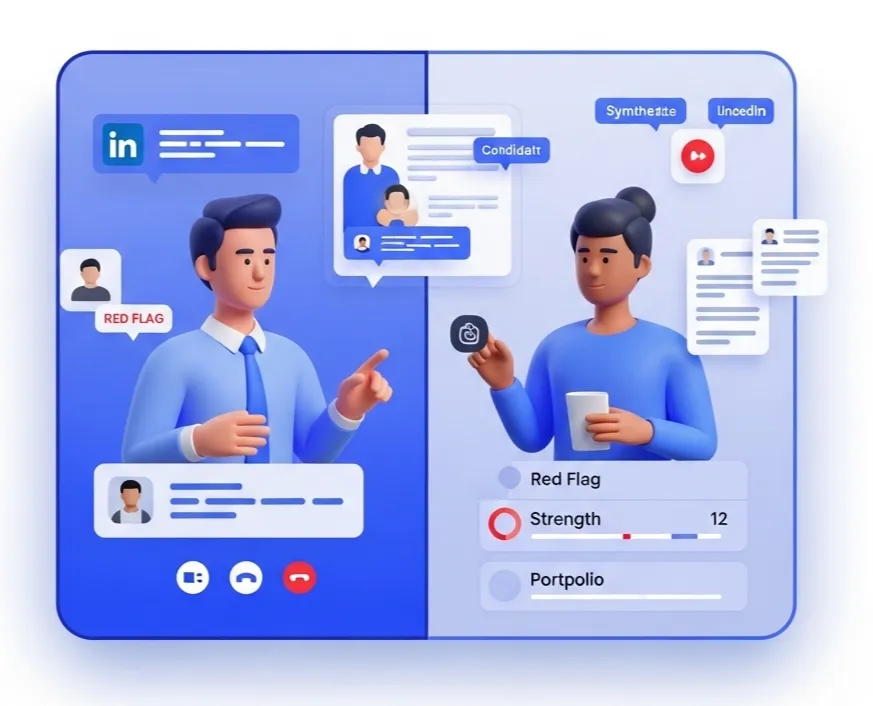
Phone Screen Scorecard Checklist
- Motivation and Interest
Did they research the company and show genuine enthusiasm for the role? - Experience Alignment
Does their past experience directly relate to the core needs of the job? - Problem-Solving Skills
Could they clearly articulate a problem they solved and the steps they took? - Communication and Clarity
Were their answers clear, concise, and easy to follow? - Salary and Logistics
Are their expectations aligned with what the company can offer? - Culture Contribution
Do their values and work style seem compatible with the team?
Key Recruiter Phone Screen Questions
- Tell me what you know about our company and what made you apply for this specific role.
- Walk me through your experience with [specific skill #1] and [specific skill #2] listed in the job description.
- Describe a time you had to overcome a major challenge at your last job. What was the outcome?
- What kind of work environment helps you do your best work?
- What are your salary expectations, and when would you be available to start?
How HireZapp Streamlines Candidate Screening
A structured process is great, but the right tools make it effortless. HireZapp is built to help recruiters and founders move from application to qualified candidate faster, without the manual work.
- AI Job Descriptions
Attracts better-fit applicants from the start, so your screening calls are more productive. - Job Match Score
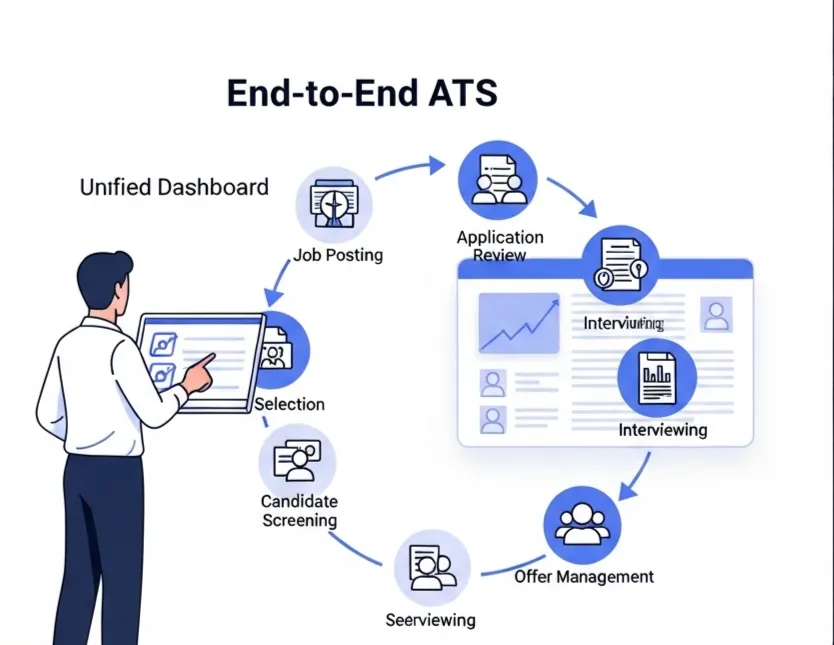
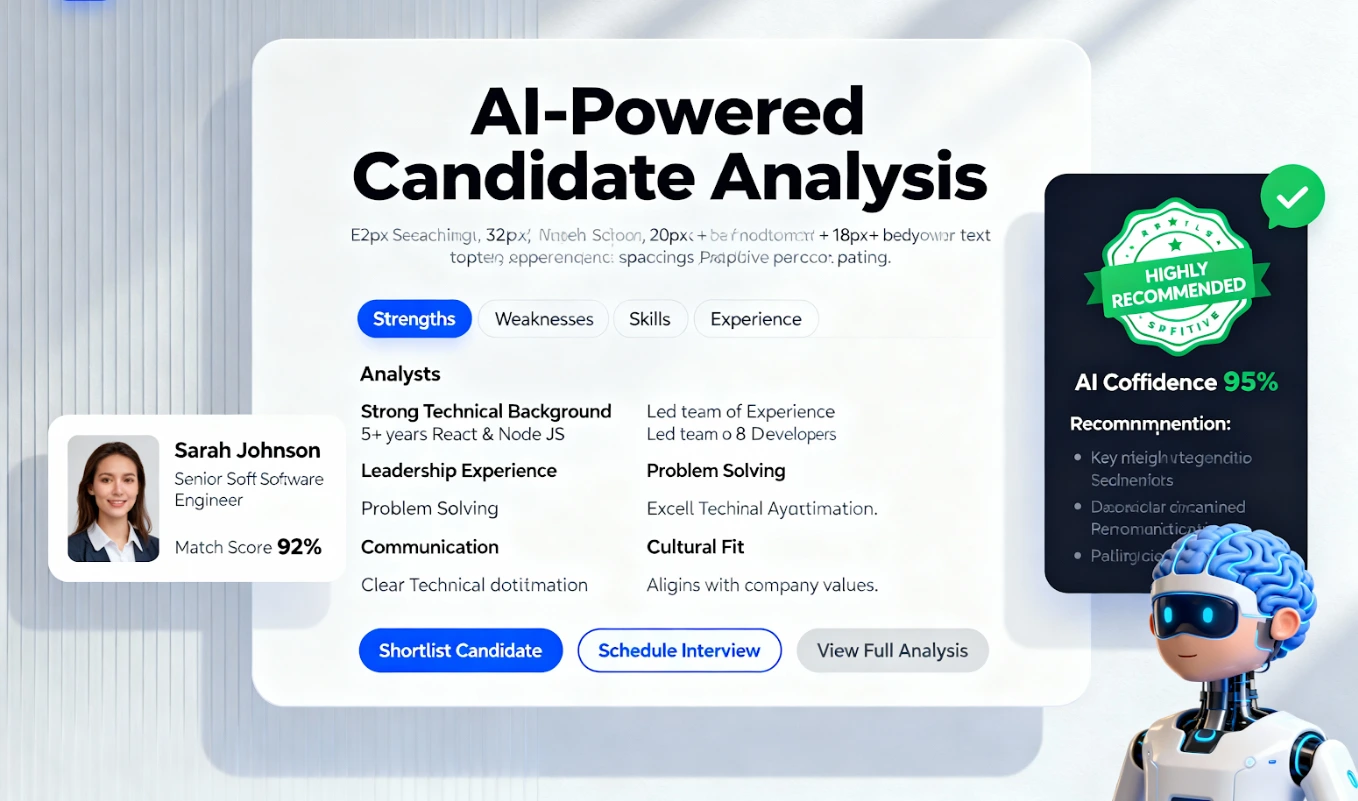
Automatically scores and ranks applicants so you know exactly who to call first. - Centralized ATS Pipeline
Keeps all your candidate notes, scores, and communications in one organized place. - Automated Follow-ups
Ensures no candidate is left waiting, protecting your employer brand and improving the experience. - Branded Communications
Presents a professional and cohesive image from the very first touchpoint.
Common Mistakes That Keep Teams Stuck
Even with the best questions, small mistakes can derail a phone screen. Watch out for these common traps that prevent you from identifying top talent.
- Dominating the conversation and not giving the candidate enough time to talk.
- Asking illegal or discriminatory questions about age, family status, or personal life.
- Sticking so rigidly to a script that the conversation feels robotic.
- Making promises about salary, benefits, or promotions that you can't guarantee.
- Failing to sell the opportunity and get the candidate excited about the next steps.
What a Great Phone Screen Can't Fix
Optimizing your phone screen is a powerful step, but it is not a silver bullet for all hiring challenges. Be aware that even the best candidate screening questions won't solve deeper issues like:
- A poorly defined role with conflicting responsibilities.
- A compensation package that is far below the market rate.
- A disorganized or slow hiring process after the initial screen.
- A negative company culture that good candidates can sense.
Your First Step to Better Hires
Mastering the phone screen is one of the highest-impact skills a recruiter or founder can develop. By creating a structured, repeatable process, you move beyond gut feelings and start making data-informed decisions. This saves you countless hours and is the first critical step toward building a team of top performers.
Cut time-to-hire in half
AI-powered screening so your team spends time on the right people.
Frequently Asked Questions
1) How long should a recruiter phone screen be?
A typical phone screen should last between 15 and 30 minutes. This provides enough time to cover the essentials without taking up too much time for you or the candidate.
2) What is the main goal of an initial phone interview?
The primary goal is to quickly assess a candidate's basic qualifications, motivation, and interest in the role. It is a filter to decide if they should move on to a more in-depth interview with the hiring team.
3) What are some red flags to watch for during a phone screen?
Key red flags include being unprepared, having no questions about the role, speaking poorly of past employers, unclear communication, and salary expectations that are completely out of range.
4) How can I ensure a good candidate experience?
Be on time, be prepared, listen more than you talk, be transparent about the role and process, and always follow up with clear next steps, even if it's a rejection.
5) Should a hiring manager phone screen be different from a recruiter's?
Yes. A recruiter screen focuses more on overall fit, motivation, and logistics. A hiring manager phone screen should dig deeper into technical skills, specific project experience, and team dynamics.
6) What are the most important phone interview best practices?
The best practices include preparing your questions in advance, finding a quiet place for the call, taking detailed notes in an ATS, and clearly outlining the next steps for the candidate at the end of the call.
7) Can I use a phone screen template for every role?
You can use a foundational template for structure, but you should always customize 2-3 questions to be specific to the role's unique requirements and skill sets. This ensures you are evaluating for what truly matters.