Scale-Up Recruitment: Hiring 50 to 500 Employees
Going from five hires a year to fifty hires a quarter is a jarring shift. The manual processes that worked for your first few hires, like using spreadsheets and personal emails, quickly turn into chaos. You start seeing great candidates drop off, your team gets buried in coordination, and you wonder if you can ever fill roles fast enough.
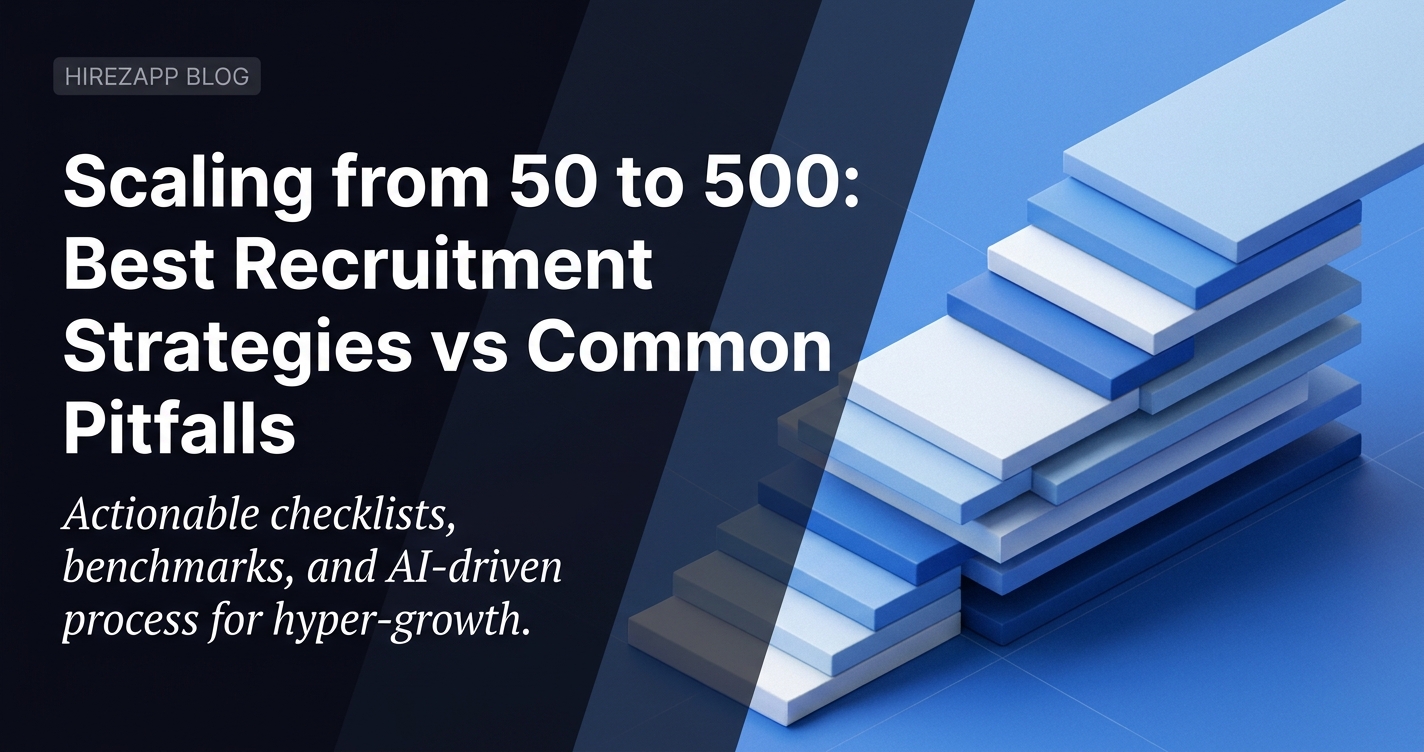

Scale-Up Recruitment: Your Playbook for Hiring 50 to 500 Employees
Going from five hires a year to fifty hires a quarter is a jarring shift. The manual processes that worked for your first few hires, like using spreadsheets and personal emails, quickly turn into chaos. You start seeing great candidates drop off, your team gets buried in coordination, and you wonder if you can ever fill roles fast enough.
The goal is not just to hire more people, but to build a repeatable system that attracts the right talent, delivers a great experience, and supports your company’s growth. This guide provides a clear playbook for doing just that.
Why Manual Hiring Breaks When You Scale
As you grow, the cracks in your early hiring process start to show. Many founders and recruiters notice that the same problems appear again and again when they hit a growth spurt. The core issue is that manual methods do not scale.
- Founder Bottlenecks
The founding team can no longer be involved in every single interview, causing delays. - Inconsistent Processes
Different hiring managers use different questions and standards, leading to biased or poor hiring decisions. - Poor Candidate Experience
Slow responses, lost applications, and confusing interview steps make your company look disorganized. - No Data for Decisions
Without a central system, you cannot see which job boards work best or where your bottlenecks are. - Scattered Communication
Managing candidates across LinkedIn DMs, emails, and forms leads to missed follow-ups and lost talent. - Time-Consuming Coordination
Simply scheduling interviews for multiple roles becomes a full-time administrative job.
A Three-Stage Framework for Hyper-Growth Hiring
A structured approach is essential for successful scale-up recruitment. Instead of trying to fix everything at once, think about your journey in three distinct stages. This is your repeatable playbook for scaling your team.
- Stage 1: Build the Foundation (Hires 50-100)
Focus on creating structure and consistency. Your goal here is to stop being reactive and start building a repeatable process. - Stage 2: Start the Engine (Hires 101-250)
With a solid process, you can now focus on proactive sourcing and building your brand. This is where you begin attracting talent instead of just posting and praying. - Stage 3: Engage the Flywheel (Hires 251-500)
Now you can optimize with data and automation. Your hiring process should become a strategic advantage that feeds itself with a pipeline of great candidates.
Recruiter reality: “I used to think an ATS was just for big companies. But once we hit 50 employees, I was spending more time organizing spreadsheets than talking to candidates. That’s when I knew we needed a real system.”
Actionable Checklists for Scaling Recruitment
Here are some simple templates you can use to bring structure to your process immediately. These are designed to create alignment and save time for your entire team.
<b>Essential Recruitment Tech Stack Checklist</b>
- Applicant Tracking System (ATS)
A central hub to manage all jobs, candidates, and communication. This is non-negotiable. - Sourcing and Screening Tools
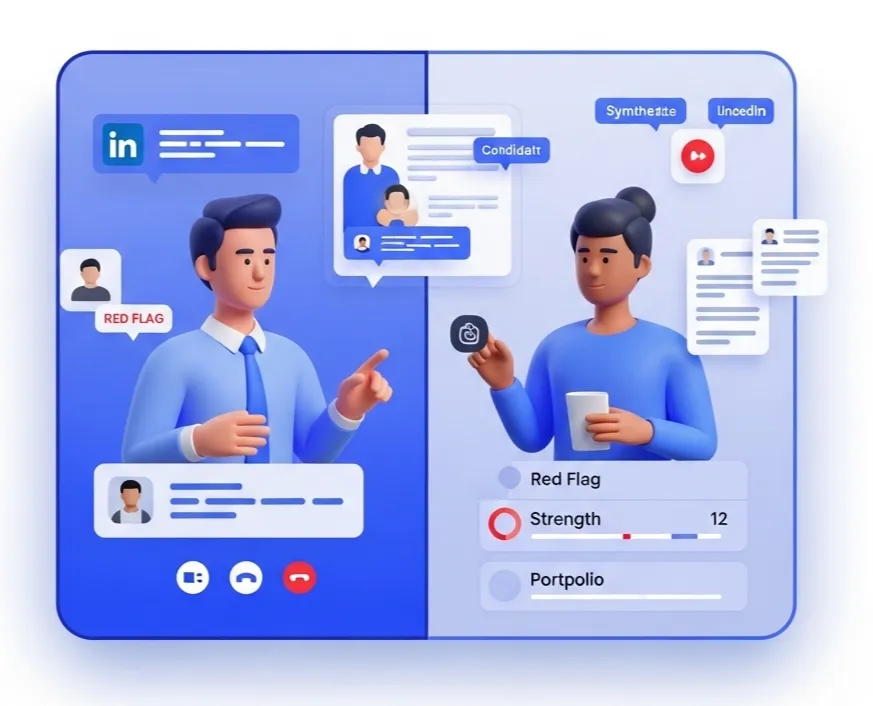
Plugins or platforms that help you find candidates on sites like LinkedIn and automatically score their fit. - Skills Assessment Platform
Tools for testing technical skills or other job-specific competencies fairly. - Careers Page Builder
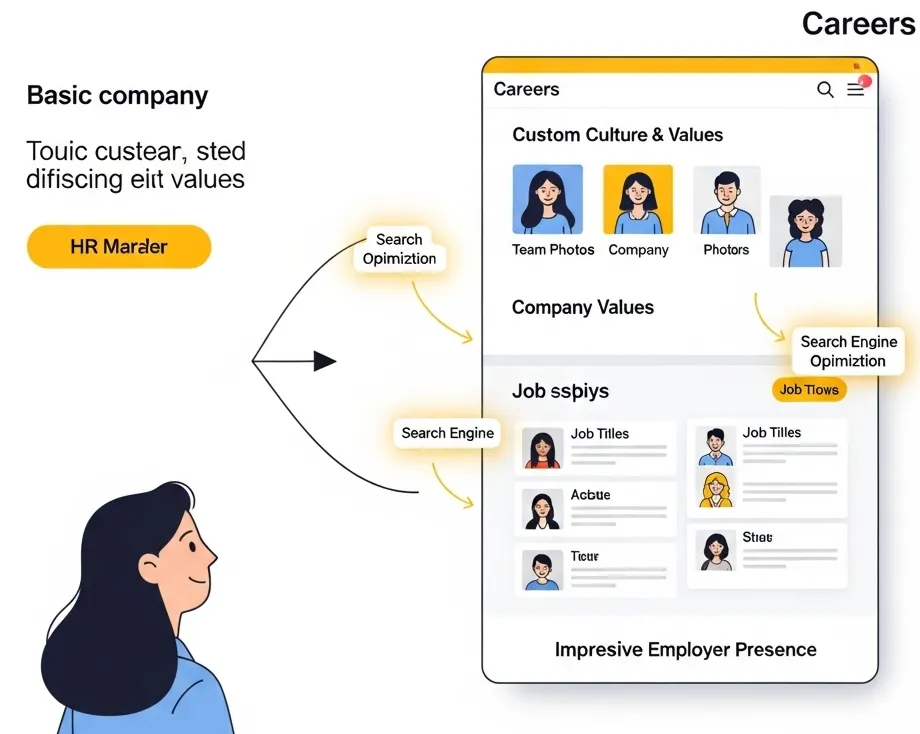
A simple tool to create a professional and branded home for all your open roles.
<b>5 Core Screening Questions for Any Growth Role</b>
- What about our company's current growth stage excites you the most?
- Describe a time you had to build something from scratch with limited direction.
- How do you stay organized when managing multiple competing priorities?
- What kind of team environment helps you do your best work and why?
- In a fast-growing company, how do you see this role evolving over the next year?
Where HireZapp Fits In Your Growth Journey
A powerful, intuitive system is the backbone of scaling your hiring. HireZapp is designed specifically for the challenges growing companies face, turning manual chaos into an automated, efficient process. It’s the ideal ATS for scale-ups.
- AI Job Description Generator
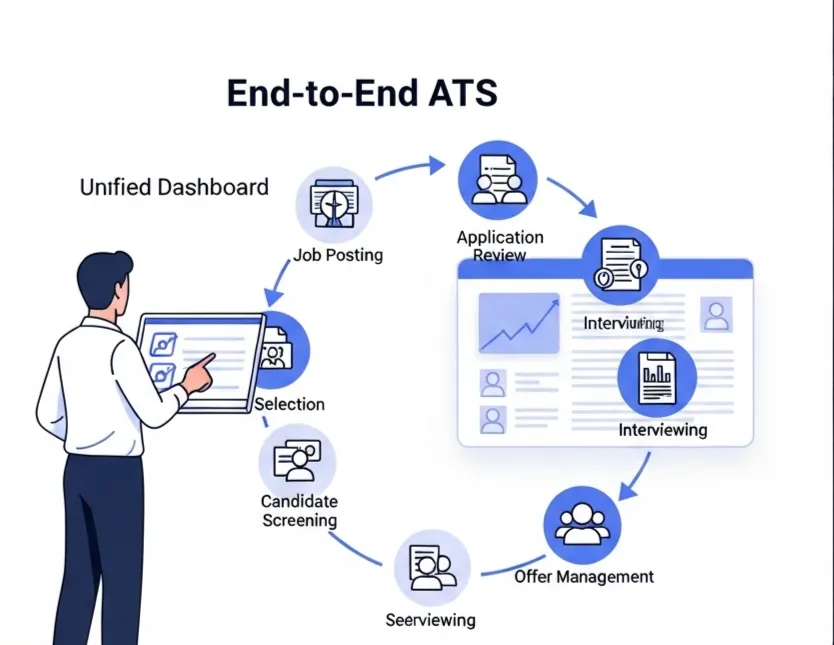
Go from a role idea to a fully optimized and inclusive job description in minutes, ensuring consistency. - Centralized ATS Pipeline
Manage every applicant from every source in one clean pipeline, eliminating spreadsheets and lost emails. - Automated Follow-ups
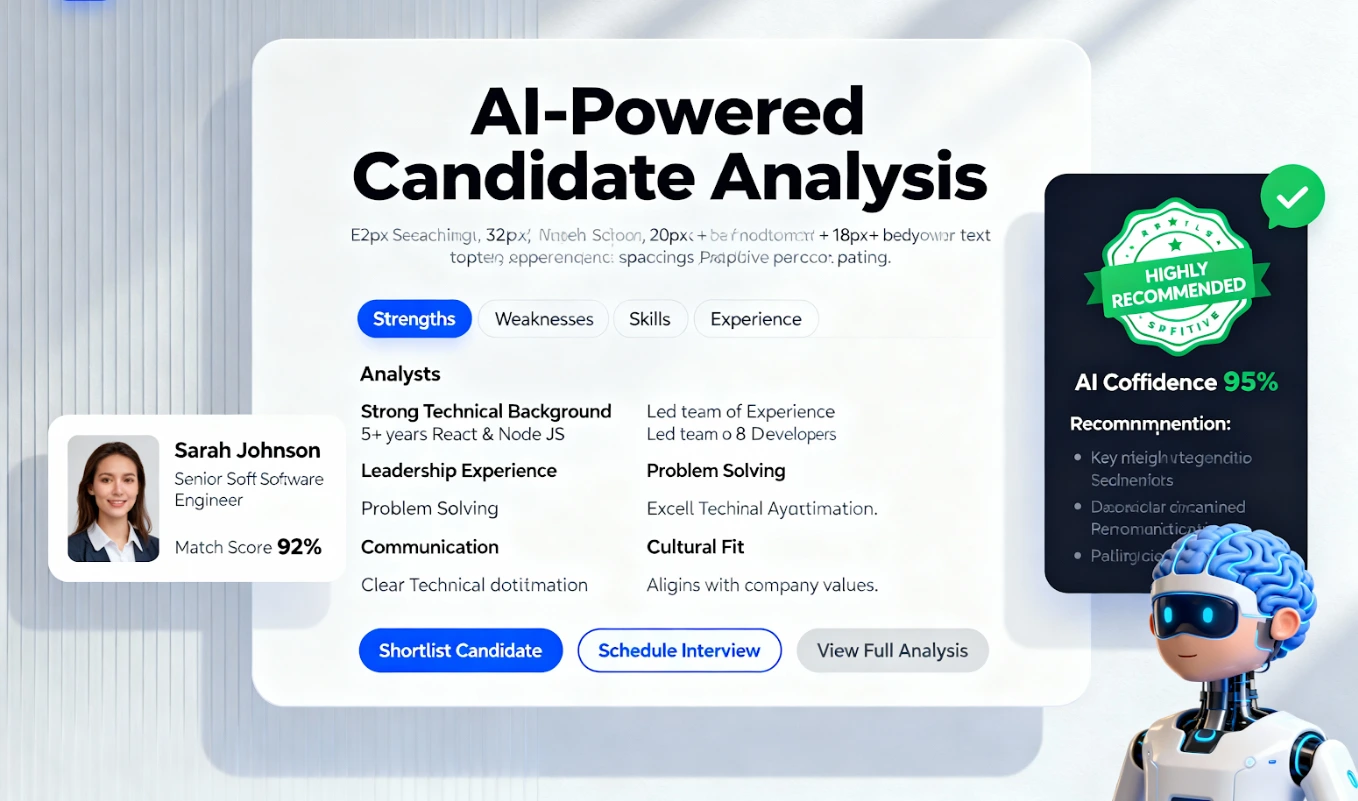
Keep every candidate informed and engaged without lifting a finger, improving your candidate experience. - Job Match and Quality Scores
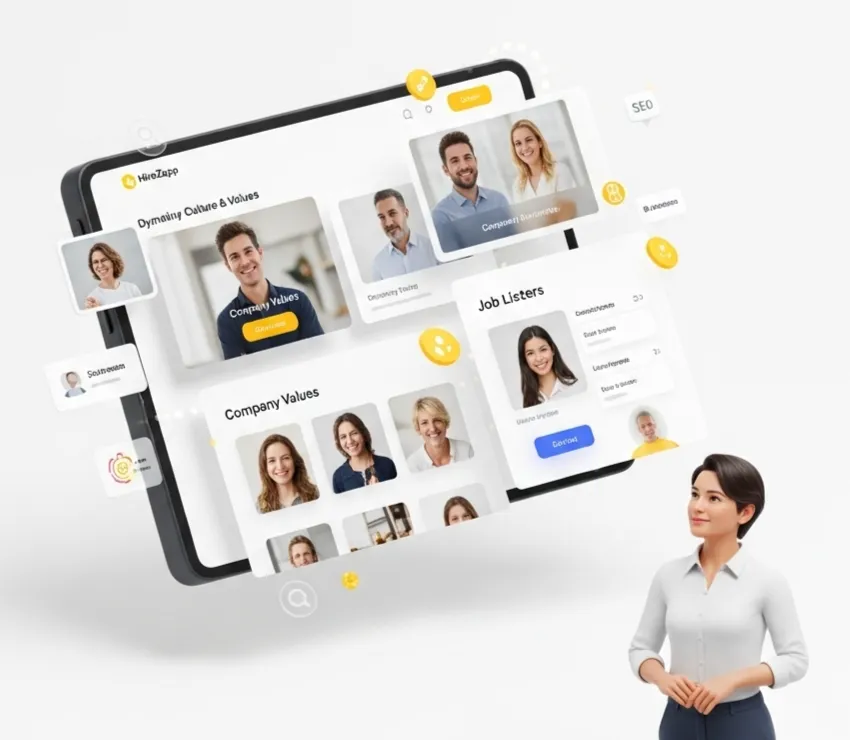
Use AI to instantly see which candidates are the best fit and how you can improve your job posts to attract more of them. - Branded Careers Page
Create a professional careers page in minutes to strengthen your employer branding for scale-ups. - Built-in Sourcing Playbooks
Give your team expert guidance on where to find top talent beyond just inbound applications.
Recruiting 500? Automate Your Scale.
HireZapp's AI automates high-volume screening and scales your recruitment, effortlessly building your hyper-growth team.
Avoid These Common Scaling Traps
Many teams stumble when trying to grow quickly. Watch out for these common mistakes that can slow you down and lead to bad hires.
- Relying only on inbound applicants and ignoring passive talent.
- Failing to properly train hiring managers on how to conduct structured interviews.
- Neglecting the candidate experience, leading to high drop-off rates and a poor reputation.
- Hiring for skills alone, without considering a candidate's adaptability and alignment with your values.
- Waiting too long to adopt a formal recruitment process for startups and letting chaos take over.
- Viewing recruitment as a simple administrative task rather than a strategic driver of company growth.
What a System Won’t Fix
Technology is a powerful enabler, but it cannot solve foundational business problems. An efficient hiring process will not fix:
- An unclear or toxic company culture.
- Poorly defined roles with no clear success metrics.
- A lack of commitment from leadership to participate in hiring.
- Compensation packages that are not competitive in your market.
Your Path to Repeatable Hiring Success
Scaling from 50 to 500 employees is a journey from manual effort to a systematic, well-run machine. By building a solid foundation with the right processes and tools, you can turn hiring into a competitive advantage. You will be able to attract and hire the great people you need to fuel your growth, without burning out your team in the process.
Frequently Asked Questions
1) What is the first step in creating a scale-up recruitment strategy?
The first step is to map out your current process and identify the biggest bottlenecks. Before buying any tool, you need to understand where you are wasting the most time, whether it's screening, scheduling, or sourcing.
2) How does an ATS help with managing high volume hiring?
An Applicant Tracking System (ATS) helps by centralizing all candidates into one database. It automates communication, allows for collaborative team feedback, and provides data to see what is working, saving hundreds of hours of manual administrative work.
3) When should a startup invest in employer branding?
You should start investing in employer branding from day one, but it becomes critical once you are actively scaling. A simple, authentic careers page and consistent messaging are key to attracting candidates who are excited by your mission.
4) What are the key differences in hiring for growth versus early-stage hiring?
Early-stage hiring often prioritizes generalists who can wear many hats. When hiring for growth, you need to hire more specialists with deep expertise who can build and scale specific functions within the company. The process must also become more structured and consistent.
5) How can AI improve the scaling talent acquisition process?
AI can dramatically speed up scaling talent acquisition by automating top-of-funnel tasks. This includes writing job descriptions, scoring resumes against job requirements, and identifying the best-fit candidates from a large pool, freeing up recruiters to focus on interviews and strategy.
6) What metrics should we track during hyper-growth hiring?
Key metrics include time-to-fill, cost-per-hire, source-of-hire, and offer acceptance rate. You should also track candidate pipeline conversion rates to identify where you are losing the best applicants.
7) How do you maintain company culture while hiring quickly?
Maintaining culture requires a structured interview process that deliberately assesses for values alignment. Define your core values, create behavioral questions to test for them, and ensure all interviewers are trained on how to conduct these assessments consistently.