Building a Shortlist From 500 Applications: The Only Way to Stay Sane
You posted the job, ran the ads, and now the moment of truth arrives. Your inbox is flooded with hundreds of applications. The initial excitement quickly turns to dread. The reality of how to screen 500 resumes without losing a week of your life, or worse, the perfect candidate, is a huge challenge for any growing company.


Building a Shortlist From 500 Applications: The Only Way to Stay Sane
You posted the job, ran the ads, and now the moment of truth arrives. Your inbox is flooded with hundreds of applications. The initial excitement quickly turns to dread. The reality of how to screen 500 resumes without losing a week of your life, or worse, the perfect candidate, is a huge challenge for any growing company.
This isn't just about being busy; it's about a broken process. Relying on spreadsheets, manual emails, and basic forms leads to missed talent and a poor candidate experience. But there is a clear path to turn this chaos into a repeatable system for efficient candidate selection.
Why Your Current Screening Process Feels Impossible
If you feel like you're drowning in applications, it's not your fault. The tools and methods that work for 20 applicants break down completely at 200 or 500. The problem usually comes down to a few core issues.
- Information Overload
Trying to compare candidates across different resume formats, cover letters, and portfolio links is mentally draining. - No Single Source of Truth
Applicant data is scattered across emails, Google Forms, DMs, and spreadsheets, making it impossible to get a clear picture. - Inconsistent Evaluation
Without a standard rubric, unconscious bias creeps in, and you end up comparing candidates based on gut feelings, not qualifications. - Communication Black Holes
You're too overwhelmed to reply to everyone, so good candidates assume the role is filled and move on. - Repetitive Manual Work
Every email, every screening question, and every status update is a manual task that steals time from high-value activities like interviewing.
The Step-by-Step Guide for Building a Shortlist From Many Applications
A structured approach is the key to managing high volume. This framework helps you focus your energy on the most promising candidates from the very beginning. It’s a simple system for recruitment workflow optimization.
- Define Your Knockout Criteria
Before you review a single resume, list 3-5 absolute must-haves. This could be location, work authorization, or a specific technical certification. - Set Up Automated Filters
Use your application form to ask these knockout questions. If a candidate answers “no” to a must-have, they are automatically filtered out. - Leverage AI to Score the Rest
Use a tool that can parse every resume and score it against the core competencies in your job description. This is the foundation of modern AI candidate screening. - Manually Review the Top 20%
Instead of reading 500 resumes, you now only need to deeply review the top 100 candidates identified by the system. - Send a Quick Pre-Screen Assessment
For your top 20-30 candidates, send a short, role-specific assessment to validate their skills. - Review Assessments and Create a Final Shortlist
Based on the assessment scores and your manual review, you can confidently build a final shortlist of 5-10 candidates for interviews. - Automate Interview Scheduling
Send a scheduling link to your final list. This eliminates the back-and-forth emails and gets interviews booked faster.
Practical Templates to Speed Up Your Workflow
Having templates ready saves you from reinventing the wheel for every role. Use these as a starting point.
<b>Sample Screening Questions (SaaS Sales Role)</b>
- Do you have at least 2 years of experience in a B2B SaaS closing role? (Yes/No)
- Are you legally authorized to work in the United States? (Yes/No)
- Are you comfortable with a role that is 80% remote and 20% travel? (Yes/No)
- Have you consistently met or exceeded a sales quota of over $500k ARR? (Yes/No)
- Describe your experience with CRM software like Salesforce or HubSpot in 1-2 sentences.
<b>Simple Candidate Scorecard Checklist</b>
- Meets all non-negotiable requirements
- Resume shows clear career progression
- Quantifiable achievements are listed
- Experience aligns with our tech stack
- Cover letter is tailored to the role (if required)
- No unexplained employment gaps
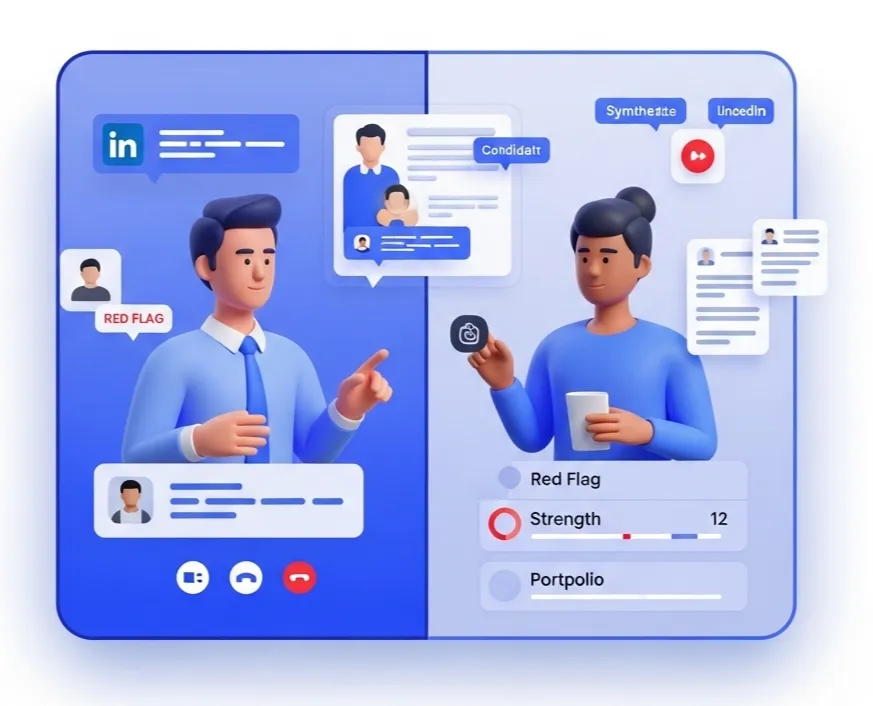
- LinkedIn profile is professional and consistent with resume
How HireZapp Delivers a Better Shortlisting Process
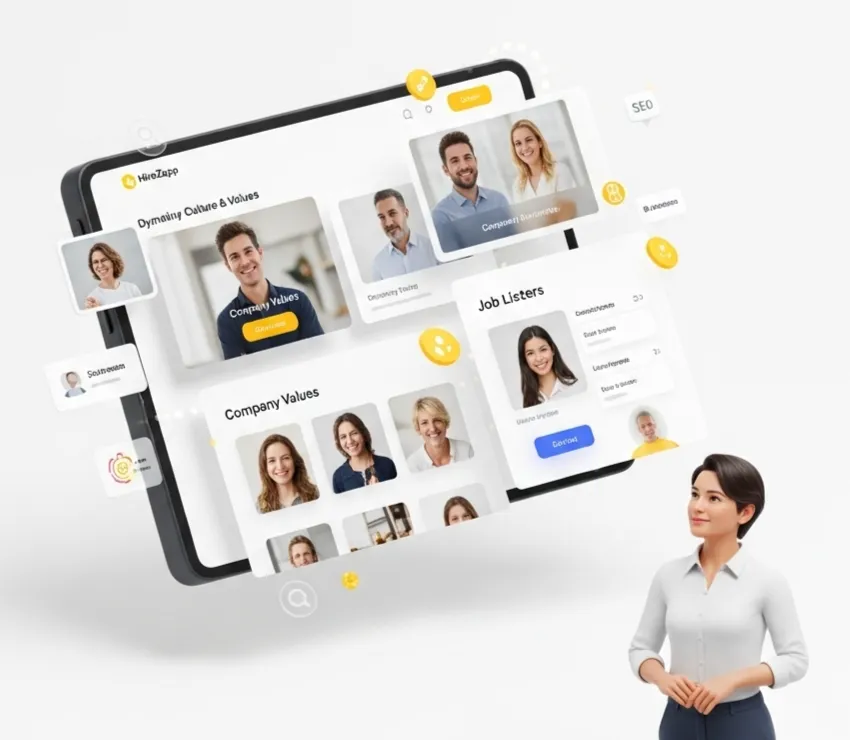
A manual process can only take you so far. HireZapp is designed to automate the repetitive parts of screening so you can focus on building relationships with top talent.
Recruiter reality : “Before we used an ATS, our whole team would spend the first two days of the week just sorting through applications. We knew we were missing people, but we just didn't have the bandwidth to be thorough.”
- AI Job Form Generation
Creates optimized job descriptions and application forms with built-in screening questions to attract and filter candidates from day one. - Job Match Score
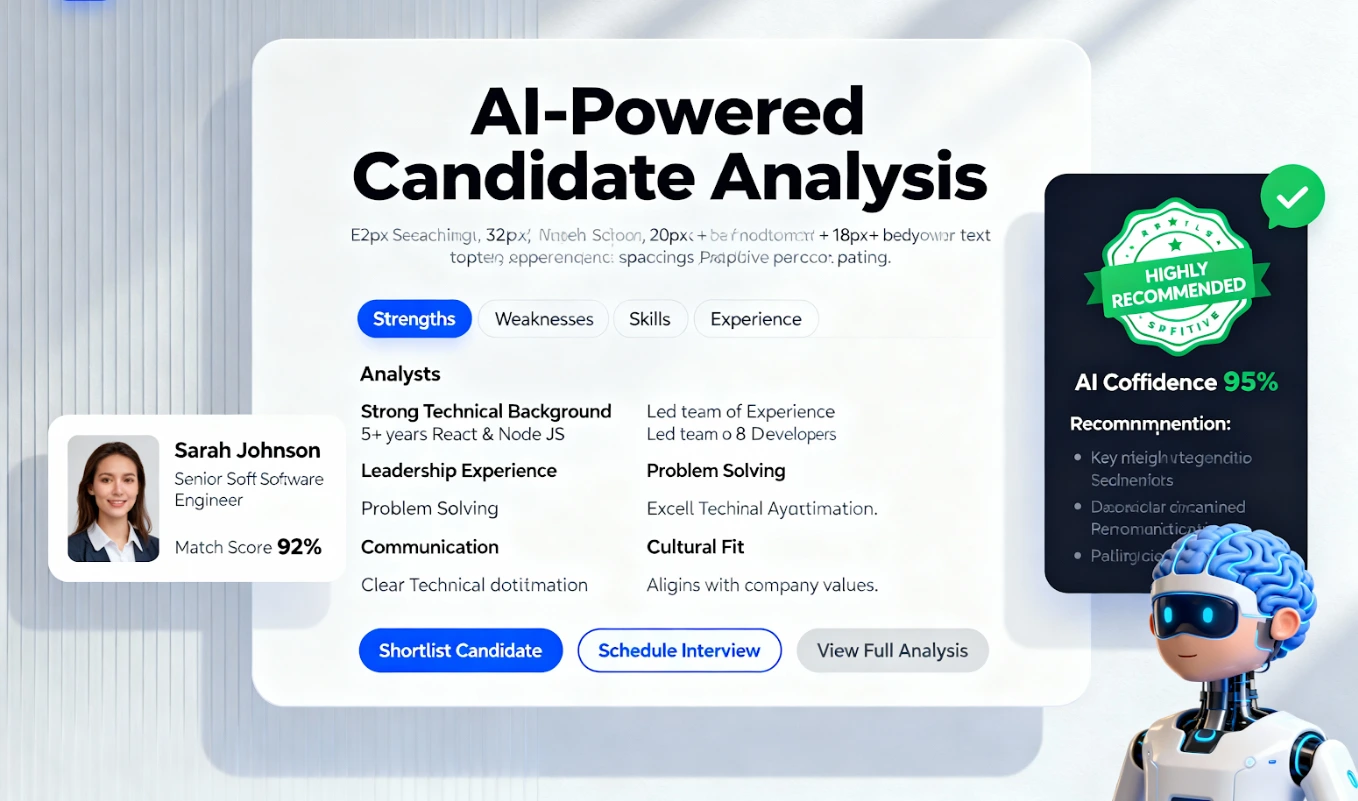
Automatically scores and ranks every applicant against your job requirements, instantly showing you who to focus on. - Centralized ATS Pipeline
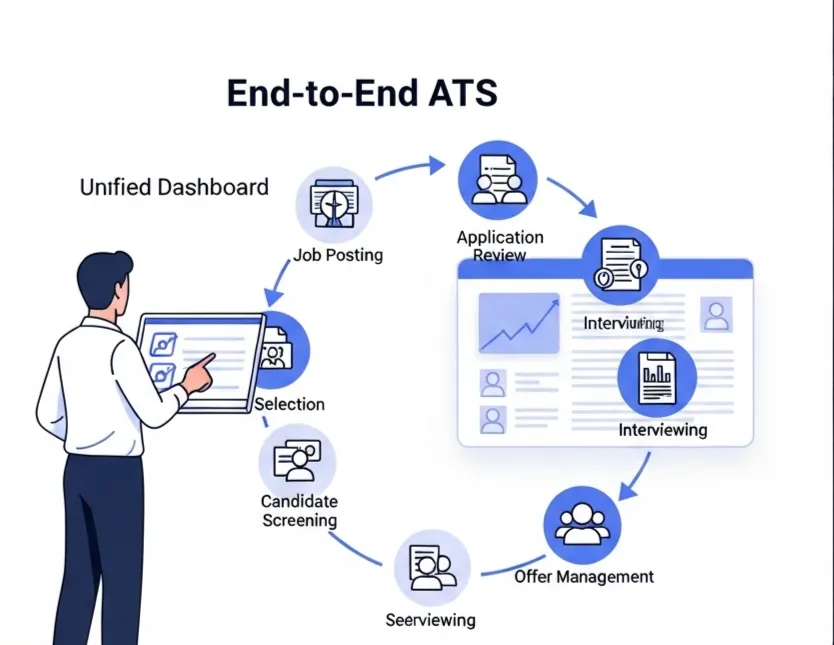
Gives you a single dashboard to track every candidate, eliminating the need for messy spreadsheets and scattered emails. - Automated Candidate Follow-ups
Keeps every applicant informed of their status, protecting your employer brand and ensuring a positive experience for everyone.
From 500 to 5: Shortlist Instantly
Tired of endless resume piles? HireZapp's AI screens 500+ applicants, delivering your top candidates instantly.
Avoid These Common Shortlisting Pitfalls
Many well-intentioned teams get stuck because of small, avoidable mistakes. Watch out for these common traps.
- Screening for “culture fit” instead of “culture add.”
- Relying exclusively on resumes without skills assessments.
- Creating an application process that takes more than five minutes.
- Failing to communicate with rejected candidates.
- Letting perfect become the enemy of good and moving too slowly.
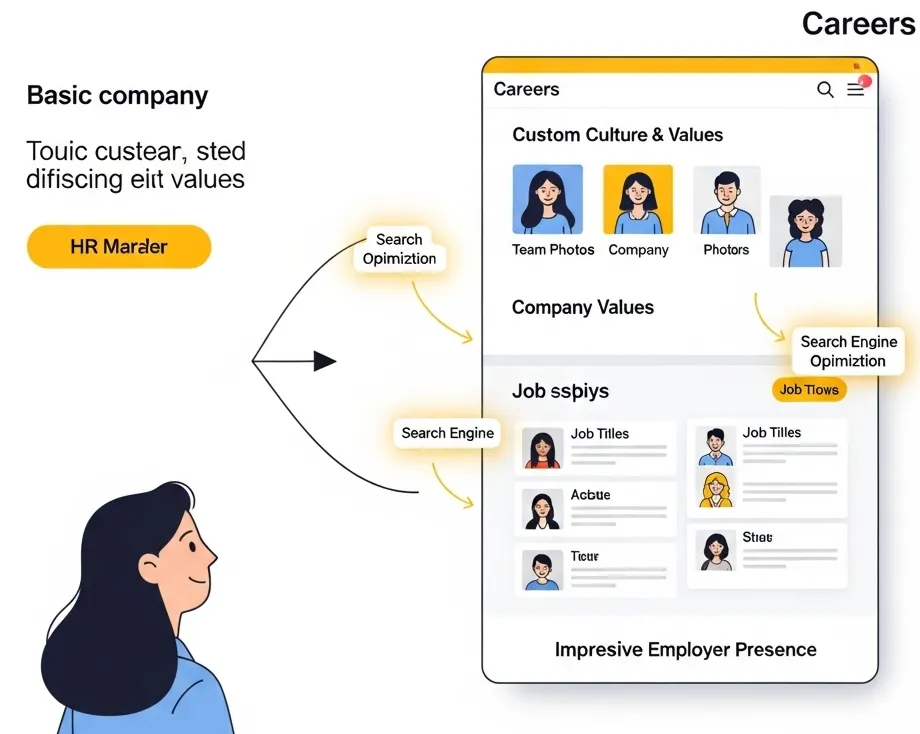
- Ignoring the power of a strong employer brand on your careers page.
A Fair Warning: What Automation Can't Do
Tools are powerful, but they aren't magic. An automated system is only as good as the strategy behind it. Technology won't fix everything.
- It cannot fix a poorly defined role or unrealistic expectations.
- It cannot replace the human judgment needed in final interview rounds.
- It cannot create a positive and inclusive company culture for you.
- It cannot make a compelling offer that a top candidate will accept.
Ready to see how you can build your next shortlist in hours, not days? Explore HireZapp's free plan or book a demo with our team to see our ATS shortlisting features in action.
Frequently Asked Questions
1) What is the first step in the candidate shortlisting process?
The very first step is to define your non-negotiable criteria before looking at any applications. These are the 3-5 absolute must-haves that a candidate must possess to be considered, such as work authorization, specific certifications, or location.
2) How can AI help reduce time to shortlist?
AI helps by automating the most time-consuming part of the process: reading and ranking resumes. It can parse hundreds of applications in minutes, scoring each one against your job description's key requirements so you can immediately focus on the top 10-20% of candidates.
3) What are some key ATS shortlisting features to look for?
Look for features like automated knockout questions on the application form, AI-powered resume scoring (like HireZapp's Job Match Score), a visual drag-and-drop pipeline, and automated email templates for communication. These are critical for an effective system.
4) Is it possible to manage a high volume recruiting strategy without an ATS?
While technically possible using spreadsheets and forms, it is highly inefficient and prone to error. Without an ATS, you risk losing great candidates in the clutter, providing a poor candidate experience, and making inconsistent, biased decisions.
5) What are some applicant screening best practices for tech roles?
For tech roles, go beyond the resume. Use short, practical coding assessments early in the process to validate skills. Also, screen for experience with specific methodologies (like Agile) and check public profiles on sites like GitHub or Stack Overflow for real-world examples of their work.
6) How do I keep candidates engaged during a long shortlisting process?
The key is automated communication. Use an ATS to send automated updates acknowledging their application, informing them when they've moved to the next stage, and politely letting them know if they are not selected. Transparency prevents good candidates from dropping out.
7) Can a better shortlisting process improve my job quality score?
Yes. A structured process ensures you are evaluating candidates against the core requirements of the job itself, not just resume keywords. This leads to better-aligned interviews and ultimately, hires who are more likely to succeed and stay in the role, improving quality over time.
8) What's the best way to handle unqualified applicants politely?
Use a professional, kind, and automated rejection email template. Thank them for their interest, let them know you are moving forward with other candidates, and invite them to connect or apply for future roles. An ATS can send these emails automatically at the right stage.